Loading this page…

Loading this page…
About
Private Yacht Solutions provides yacht maintenance services in the Fremantle area and includes rope splicing and pen-rigging work in its service mix. It is relevant for owners who want mooring or dock-line arrangements considered as part of the way the yacht is actually berthed.
Service area: Fremantle, Perth and Western Australia
Private Yacht Solutions provides yacht maintenance services in the Fremantle area and includes rope splicing and pen-rigging work in its service mix. It is relevant for owners who want mooring or dock-line arrangements considered as part of the way the yacht is actually berthed.
Private Yacht Solutions currently offers Rope splicing; pen rigging; yacht maintenance; marine systems; mooring and dock-line solutions. The workshop or operating location is 5/10 Strang Street, Beaconsfield WA 6162, with service coverage described as Fremantle, Perth and Western Australia. The business is broader than this directory category, but its current marine service range explicitly includes rope splicing; pen rigging; yacht maintenance; marine systems; mooring and dock-line solutions.
It remains relevant because boat owners can obtain these services directly from an established marine business. Custom splicing is particularly useful for halyards, sheets, dock lines, anchor rodes and other applications where a compact finished eye or purpose-made termination is preferable to a bulky knot. Mooring and pen-line work needs enough strength, elasticity and chafe protection for the berth and local exposure, so finished assemblies should be selected around the vessel rather than diameter alone.
This company operates more broadly within the marine industry, with rope, rigging, trimming or cover work forming one part of its service range. That can be convenient when a refit also involves chandlery supply, mechanical work, general maintenance or other vessel systems. For YouSail users, that classification is useful because 'rope, canvas and upholstery' covers several very different trades. A commercial mooring-rope supplier, a performance yacht rigger, a sailmaker producing boom bags and a marine upholsterer may all belong in the same broad directory section, but they solve different problems and should not be presented as interchangeable businesses.
Keep exploring
For rope or rigging enquiries, owners should provide the boat type, intended use, approximate length, current diameter, existing hardware and any preferred end treatment. Halyards, sheets, reefing lines, furling lines and mooring lines have different stretch, handling and abrasion requirements. Boat-specific work should be quoted against the actual vessel wherever possible. Dimensions, access, existing fittings, condition of mounting points and the amount of removal, repair or fabrication required can materially change the job.
For canvas and upholstery, material selection should consider UV exposure, salt, moisture, ventilation, cleaning and how the item will be stored. For rope and rigging, line construction, diameter, stretch, chafe, working load and compatibility with winches, clutches, sheaves or terminals all matter.
Private Yacht Solutions is relevant to boat owners in Fremantle, Perth and Western Australia. A location-based directory entry is valuable because custom marine work often requires the vessel to be inspected, measured or visited at its marina. For supply businesses that ship Australia-wide, the listing is still useful because specialist cordage, fabricated rope assemblies and niche marine materials can be difficult to source locally in some cruising regions.
Dangar Island sits in the lower Hawkesbury River close to Brooklyn and is one of Sydney’s small, boat‑access communities. From the water it reads as a wooded, low island with sandy foreshore, a public jetty and private moorings; its position at the mouth of Cowan Creek and close to the main river channel makes it an attractive short‑cruise destination for trailer sailors, runabouts and small cruisers but also one that requires careful local knowledge and respect for resident berths, ferry operations and tidal currents.

In gusty, changeable Tasmanian winds, approach docks or a alongside berth slowly on a controlled angle, keep propulsion and steerage ready to counter gusts, use crew to control fenders and lines, and choose a lee side or sheltered spot where possible. Prioritise maintaining steerage and being able to power off quickly rather than trying to hold a precise position with engines idle.
Explore →
Use a sensible scope (line length), pick good ground, set the anchor with a controlled reverse to load it, and check you’re not dragging by noting fixed references and using a stern line or anchor alarm if needed.
Explore →
Train your pet with short, reward‑based sessions that build confidence in the boat’s motions (boarding, heel, anchor swing and docking) — start in calm conditions, use consistent cues, plenty of positive reinforcement, and practise each manoeuvre separately before combining them.
Explore →
Do regular rinsing, inspection, gentle cleaning and proper stowage for sails; wash, inspect and replace lines as needed; and clean, lubricate and check blocks and sheaves — these simple routines will greatly extend their life.
Explore →A practical guide for recreational sailors planning voyages to Esperance and the Recherche Archipelago: what to expect, key planning considerations, common anchorages, safety and communications, equipment recommendations and sensible steps for a successful trip in this remote southern WA cruising area.
Explore →A practical, Australian-focused guide explaining how sails generate drive, the points of sail, and how to trim sails for different conditions. Includes simple explanations of aerodynamic concepts, step-by-step trim checks, common mistakes and clear next steps for practice on the water.
Explore →
Practical guidance for recreational sailors planning day trips or short cruises in Moreton Bay — local weather patterns, tides, safe anchorages, common hazards, equipment checklists and sensible trip planning for islands such as Moreton, North Stradbroke and the smaller bayside islands.
Explore →A concise, practical introduction to the essential parts of a recreational sailing boat for beginners in Australia. Covers hull, deck, rigging, sails, steering, below-decks spaces and safety equipment, with simple explanations, common mistakes and a pre-decast checklist to help new sailors communicate and get underway.
Explore →Burke Yachtsman Gear Bag 40L - Shop Now Zip Pay | Tamar Marine Skip to content 59 – 63 Holbrook Street, Invermay Online Shop Open 24/7 Products search Contact us 1300 MARINE $ 0.00 0 Cart Burke Yachtsman Gear Bag 40L $ 79.90 Colour Choose an option Black Blue Black Blue Clear - Burke Yachtsman Gear Bag 40L quantity + Add to cart Enquire about this product SKU BAGB-Y24/BLACK* Category Bags - Sail & Gear A Burke classic and customer favourite, the Yachtsman’s Gear Bag is built tough to handle wet, salty conditions while keeping your gear dry and protected. Made from double coated waterproof…
Explore →
Self-contained, battery-powered plug‑and‑play autopilot designed for standard hydraulic steering systems.
Explore →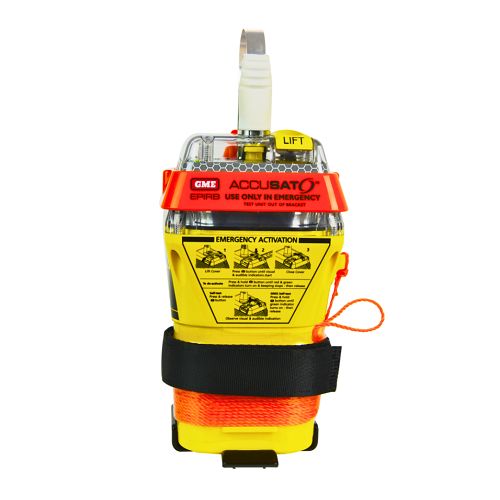
A 10‑year battery EPIRB with integrated GNSS (supports GPS and Galileo), infrared strobe and 121.5 MHz homing signal. Approved for worldwide COSPAS‑SARSAT operation.
Explore →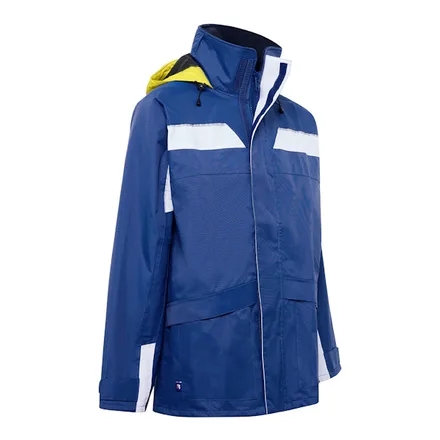
Burke Super Dry Jacket in Blue. Product codes shown: DRY228-XS, DRY228-S, DRY228-M, DRY228-L, DRY228-XL, DRY228-XXL. Available sizes listed: XS, S, M, L, XL, XXL.
Explore →