Loading this page…

Loading this page…
Chandlery
About
Splicing & Cutting Services has decades of experience supplying rope and cordage for boating, marine, transport and industrial applications. Its strength for sailors is the ability to supply rope by specification and turn it into finished assemblies through professional splicing and cutting.
Service area: Sydney, New South Wales and Australia-wide supply
Splicing & Cutting Services has decades of experience supplying rope and cordage for boating, marine, transport and industrial applications. Its strength for sailors is the ability to supply rope by specification and turn it into finished assemblies through professional splicing and cutting.
Splicing & Cutting Services currently offers Marine rope; cordage; custom splicing; cutting; rope assemblies; commercial rigging supplies. The workshop or operating location is Unit 3, 23 Eddie Road, Minchinbury NSW 2770, with service coverage described as Sydney, New South Wales and Australia-wide supply. Current company material explicitly identifies marine or boating work in the areas of marine rope; cordage; custom splicing; cutting; rope assemblies; commercial rigging supplies.
This is a direct category match rather than an inferred use of a general-purpose product. Custom splicing is particularly useful for halyards, sheets, dock lines, anchor rodes and other applications where a compact finished eye or purpose-made termination is preferable to a bulky knot.
The strongest reason to include this business is its access to purpose-specified rope, wire or yacht rigging equipment. A specialist rope supplier can help owners choose construction and fibre by application rather than simply buying a line that looks similar to the one being replaced. Polyester, nylon, UHMWPE and wire all behave differently under stretch, chafe, UV exposure and repeated bending. For YouSail users, that classification is useful because 'rope, canvas and upholstery' covers several very different trades.
Keep exploring
A commercial mooring-rope supplier, a performance yacht rigger, a sailmaker producing boom bags and a marine upholsterer may all belong in the same broad directory section, but they solve different problems and should not be presented as interchangeable businesses.
For rope or rigging enquiries, owners should provide the boat type, intended use, approximate length, current diameter, existing hardware and any preferred end treatment. Halyards, sheets, reefing lines, furling lines and mooring lines have different stretch, handling and abrasion requirements. Commercial or offshore products can be engineered around certification, inspection and much higher design loads than normal recreational equipment.
Yacht owners should explain their actual use case rather than assuming the largest commercial specification is automatically the best choice. Boat-specific work should be quoted against the actual vessel wherever possible. Dimensions, access, existing fittings, condition of mounting points and the amount of removal, repair or fabrication required can materially change the job. For canvas and upholstery, material selection should consider UV exposure, salt, moisture, ventilation, cleaning and how the item will be stored.
For rope and rigging, line construction, diameter, stretch, chafe, working load and compatibility with winches, clutches, sheaves or terminals all matter.
Splicing & Cutting Services is relevant to boat owners in Sydney, New South Wales and Australia-wide supply. A location-based directory entry is valuable because custom marine work often requires the vessel to be inspected, measured or visited at its marina. For supply businesses that ship Australia-wide, the listing is still useful because specialist cordage, fabricated rope assemblies and niche marine materials can be difficult to source locally in some cruising regions.
Dangar Island sits in the lower Hawkesbury River close to Brooklyn and is one of Sydney’s small, boat‑access communities. From the water it reads as a wooded, low island with sandy foreshore, a public jetty and private moorings; its position at the mouth of Cowan Creek and close to the main river channel makes it an attractive short‑cruise destination for trailer sailors, runabouts and small cruisers but also one that requires careful local knowledge and respect for resident berths, ferry operations and tidal currents.

Before your first sail in South Australian waters check the weather and tide, make sure the boat and safety equipment are fit for the trip, confirm local rules and any area-specific hazards, and tell someone your plan.
Explore →
Watch for shallow entrance bars, shifting sandbanks and channels, tidal streams that accelerate through narrow channels or around headlands, drying mudflats and sills that expose at low water, and localised eddies or overfalls — and always confirm conditions for the specific estuary before you enter.
Explore →
Legal safety equipment for recreational boats in South Australia depends on the type, size and where you operate; you must check the current SA government requirements for your vessel. Independently of legal minimums, carry a sensible set of recommended items (lifejackets, means of communication, signaling, fire protection, anchor and basic tools) and make them usable and maintained.
Explore →
Choose an anchor type and size matched to your boat, seabed and expected conditions; set it by lowering steadily, backing down under power to bury the fluke or hook, and scope the rode to suit tidal range and wind/sea state. Regularly inspect your set and use trip lines or secondary anchors where risk of wind or current change is high.
Explore →
A concise, practical guide to the points of sail and how to trim sails effectively for common Australian conditions. Learn the basics of wind angles, sail shape, telltales, reefing considerations and simple steps to improve boat speed and balance.
Explore →Practical guide for recreational sailors planning passages, anchorages and visits to Ningaloo Reef and the Exmouth coast. Covers anchoring considerations, marine park rules and how local weather, tides and currents affect safety and enjoyment.
Explore →Practical guide for recreational sailors navigating the Swan River and coastal waters around Perth. Covers local weather patterns, tides and currents, river navigation, launching and berthing options, safety equipment, common hazards, and step-by-step pre-departure and on-water checklists tailored to Western Australian
Explore →A practical guide for recreational sailors planning voyages to Esperance and the Recherche Archipelago: what to expect, key planning considerations, common anchorages, safety and communications, equipment recommendations and sensible steps for a successful trip in this remote southern WA cruising area.
Explore →Burke Yachtsman Gear Bag 40L - Shop Now Zip Pay | Tamar Marine Skip to content 59 – 63 Holbrook Street, Invermay Online Shop Open 24/7 Products search Contact us 1300 MARINE $ 0.00 0 Cart Burke Yachtsman Gear Bag 40L $ 79.90 Colour Choose an option Black Blue Black Blue Clear - Burke Yachtsman Gear Bag 40L quantity + Add to cart Enquire about this product SKU BAGB-Y24/BLACK* Category Bags - Sail & Gear A Burke classic and customer favourite, the Yachtsman’s Gear Bag is built tough to handle wet, salty conditions while keeping your gear dry and protected. Made from double coated waterproof…
Explore →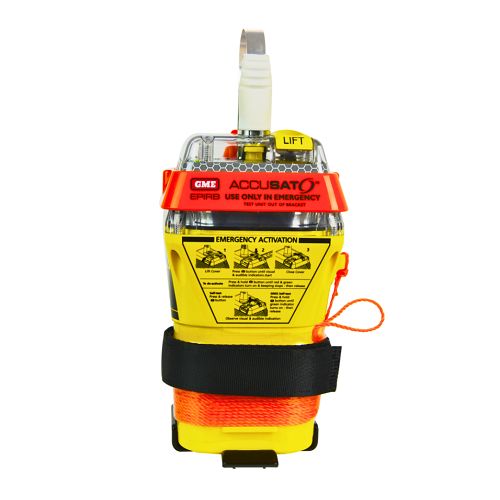
A 10‑year battery EPIRB with integrated GNSS (supports GPS and Galileo), infrared strobe and 121.5 MHz homing signal. Approved for worldwide COSPAS‑SARSAT operation.
Explore →
Self-contained, battery-powered plug‑and‑play autopilot designed for standard hydraulic steering systems.
Explore →Imported from Tamar Marine. This draft has no editorial summary yet.
Explore →