Loading this page…

Loading this page…
Marina service
About
Kingscote has public jetties, a mooring area and nearby Bay of Shoals launching facilities rather than a conventional marina. SA Government lists Kingscote Main, Fishermen's, Mooring and Old Screwpile jetties as state-owned wharves; state wharf mooring permission and ordinary four-hour limits apply unless signage or an authorised officer says otherwise.
Service area: Kingscote, Kangaroo Island, SA
Keep exploring
Kingscote's waterfront is a group of state-government jetties and mooring facilities serving the main Kangaroo Island town. SA Government lists Kingscote Fishermen's jetty, Main jetty, Mooring jetty and Old Screwpile jetty as state-government jetties/wharves. Kangaroo Island Council's current boating facilities page lists Bay of Shoals (Kingscote) separately with boat-launching infrastructure. This record should stay clear that there is no commercial marina with bookable serviced pens verified here.
State wharf rules require owner permission before mooring, and ordinary stays at state-owned wharves are limited to four hours per day unless signs or authorised directions allow otherwise. Kangaroo Island Council lists Bay of Shoals (Kingscote) with self-registration, temporary free launching, mooring pontoon and breakwater. No fuel, pump-out, power, shower, laundry or marina office is verified for the Kingscote jetties listing.
Kingscote is the main resupply town on Kangaroo Island. Use jetties and moorings under posted rules and do not assume marina-style visitor berth services.
Satellite imagery at four heights, from the wider harbour to the berths.
Recently received AIS vessel positions around Kingscote Jetties & Moorings. The traffic display loads automatically.
Live traffic will appear after Kingscote Jetties & Moorings has verified map coordinates.
A practical cruising guide to Keppel Bay (QLD) covering geography, winds, anchorages, marinas, hazards, regulations, suggested cruises and who the area suits. Emphasis on Rosslyn Bay / Keppel Bay Marina as the main gateway, the cluster of islands including Great Keppel and North Keppel, public moorings and national park restrictions, and seasonal sailing character for sheltered versus exposed waters.

Anchor in rocky coves, sandy bays and tidal flats by choosing the right ground and anchor, giving plenty of scope, setting the anchor slowly and testing it, and planning for tidal change and swing room.
Explore →
Treat a southerly buster as a rapid-onset windshift with a strong increase in wind and sea state; prepare the boat and crew by reducing sail area early, securing loose gear, briefing crew on roles, and identifying shelter or an upwind recovery plan. Respond quickly but deliberately — keep boat controllable, avoid last-minute heavy-handed moves, and prioritise mainsail and crew safety over speed.
Explore →
Late spring to summer is usually the best time for beginners to start learning to sail in Tasmania because the weather is generally warmer, days are longer and conditions are often more settled. Expect lighter to moderate winds with regular afternoon sea breees in summer, while spring and autumn bring more changeable and sometimes stronger conditions; winter is colder, wetter and typically windier with more fronts and swell.
Explore →
Expect the usual IALA-B lateral system (red and green), cardinal and isolated-danger marks, safe-water and special marks, plus harbour-specific fairway buoys, leading/transit marks and exclusion or speed‑limit buoys. Check local harbour charts and Notices to Mariners for exact positions and light characteristics before entry.
Explore →A practical guide for recreational sailors planning passages to, from or around Eden and Twofold Bay. Covers sheltered anchorages, shore facilities, local weather and tidal considerations, preparing for Bass Strait conditions and a focused equipment and safety checklist.
Explore →A practical guide for recreational sailors planning passages to and around Rottnest Island. Covers anchoring and mooring options, local weather and sea conditions, tide and current considerations, passage planning tips and clear safety checklists tailored to Australian sailing conditions.
Explore →A practical guide for recreational sailors planning short trips or multi-day cruises around Port Stephens, the Myall Coast and nearby offshore waters. Covers local geography, common conditions, navigation considerations, anchoring and mooring tips, and safety checklists tailored to Australian conditions.
Explore →
A concise, practical guide to the points of sail and how to trim sails effectively for common Australian conditions. Learn the basics of wind angles, sail shape, telltales, reefing considerations and simple steps to improve boat speed and balance.
Explore →Burke Yachtsman Gear Bag 40L - Shop Now Zip Pay | Tamar Marine Skip to content 59 – 63 Holbrook Street, Invermay Online Shop Open 24/7 Products search Contact us 1300 MARINE $ 0.00 0 Cart Burke Yachtsman Gear Bag 40L $ 79.90 Colour Choose an option Black Blue Black Blue Clear - Burke Yachtsman Gear Bag 40L quantity + Add to cart Enquire about this product SKU BAGB-Y24/BLACK* Category Bags - Sail & Gear A Burke classic and customer favourite, the Yachtsman’s Gear Bag is built tough to handle wet, salty conditions while keeping your gear dry and protected. Made from double coated waterproof…
Explore →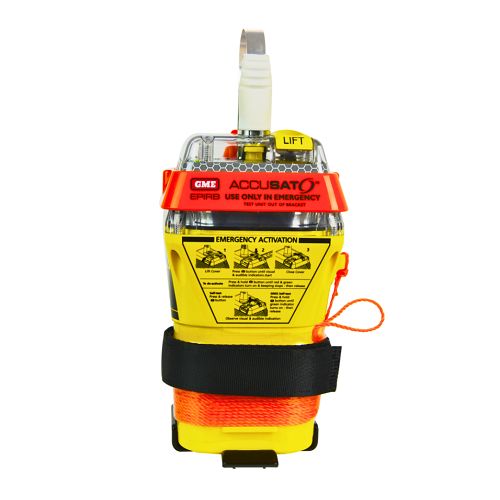
A 10‑year battery EPIRB with integrated GNSS (supports GPS and Galileo), infrared strobe and 121.5 MHz homing signal. Approved for worldwide COSPAS‑SARSAT operation.
Explore →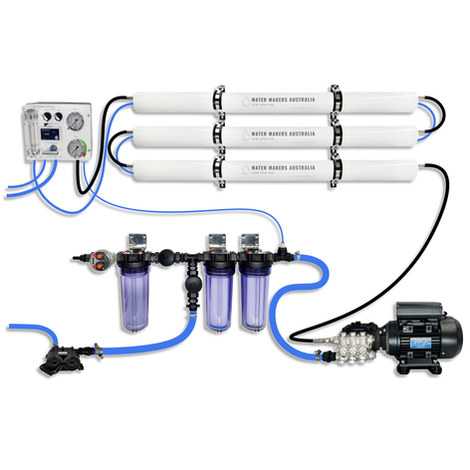
A three-membrane modular watermaker with 200 L/h nominal output and up to 240 L/h family-level marketing, for larger crews and heavy use.
Explore →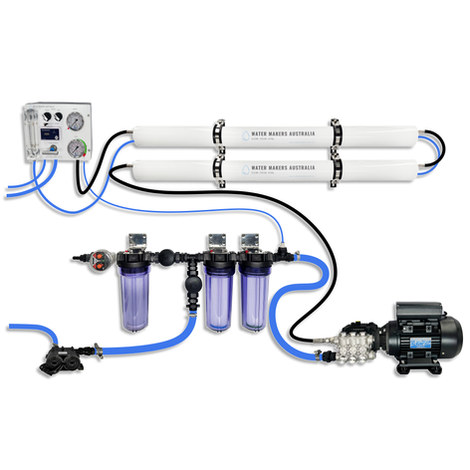
A two-membrane modular watermaker with 140 L/h nominal output, aimed at families and liveaboards that want more water per run.
Explore →