Loading this page…

Loading this page…
Marina service
About
Port Lincoln Marina / Lincoln Cove Marina is a major Eyre Peninsula marina in Boston Bay with commercial and recreational berths available for rent or sale.
Service area: Port Lincoln, SA
Keep exploring
Sarin Property Group's berth site lists commercial and recreational marina berths, short-term rental options and visitor marina maps/resources. Third-party references describe roughly 174 berths, commonly in the 12 m to 18 m range, serving one of South Australia's key boating and seafood ports.
Recreational berths cater to vessels up to 14 metres with power and water at every berth, while the commercial arm takes larger vessels and supplies three-phase power; all piers sit behind locked gates with access codes issued to berth holders and guests. Sarin publishes its rental rates, which is unusually transparent for a private marina: as of January 2024 an 8 metre berth costs $53 for the first day then $28 daily, $135 weekly or $515 monthly, a 12 metre berth $63 then $39 daily, $202 weekly or $770 monthly, a 14 metre berth $72 then $44 daily, $235 weekly or $900 monthly, and commercial berths run $82 then $53 daily, $320 weekly or $1,185 monthly, all GST inclusive.
Berths are also sold outright, with recent listings between $13,500 and $79,000 in the recreational arm and around $50,000 plus GST commercially. A 24-hour credit-card fuel berth operates just outside the marina entrance, and a service station nearby handles jerry-can runs. Waste facilities include a locked FM Waste skip bin beside the Marina Hotel, a waste collection point at South Point Drive near Pier 5, pump-out and waste oil disposal.
There are no showers in the marina itself; berth holders use the council-run toilets and showers, for a small fee, at the Port Lincoln Leisure Centre behind the hotel. A genuine range of marine trades works in the surrounding precinct, and short-term rentals are also brokered through Marina Exchange. Dinghy access is practical too: crews can tie up at the pontoon just outside the Marina Hotel, which sits a short walk from the South Point Drive side of the basin. Enquiries for both rental and purchase go through the property administrator on 0429 885 265.
The marina entrance, at roughly 34 degrees 44.5 minutes south and 135 degrees 52.8 minutes east, opens off Boston Bay and the basin gives shelter from all directions, one reason the commercial fleet chose it. Boston Bay itself is broad and deep with a straightforward approach from Spencer Gulf, though the bay can throw up a steep chop in a hard southerly and the town's grain wharves and tuna farms keep the water busy.
The marina's one genuine drawback is distance: it sits several kilometres south of the town centre, so a provisioning run to the supermarkets means a taxi or a long walk, and experienced cruisers stock up before berthing or use the hotel and Cruisers Cafe at the precinct for meals. Ashore, Port Lincoln offers the full services of the Eyre Peninsula's largest town, including chandlers, engineers and slipways elsewhere around the harbour for jobs beyond the marina's scope.
The fishing is the famous part; Boston Bay and the offshore islands produce King George whiting, snapper, tuna and kingfish, and charter operators run from the precinct. For visiting yachts the marina also makes a logical staging point before crossing Spencer Gulf to Whyalla or Wallaroo, or heading south round the capes toward Coffin Bay, and during Lincoln Week in February expect the berths to be booked solid well ahead.
Fishing and sightseeing charters, including shark-cage operators bound for the Neptune Islands, work from the broader waterfront, and the Fishermen's Memorial near the marina is a sobering reminder of the fleet's losses. Properly sheltered in all winds, the cove is also a useful storm refuge for boats caught on this coast.
Satellite imagery at four heights, from the wider harbour to the berths.

Taking pets between Australian states and into marinas or national parks is governed by state and territory biosecurity/quarantine rules, local council and marina policies, and the management rules of parks. Requirements vary by jurisdiction and by the species of animal, so check the relevant state/territory biosecurity office, the park management agency and the marina operator before you travel.
Explore →
Pick a ramp that matches your boat size and trailer setup, has safe approach and exit conditions (depth, slope, surface), good onshore parking and flow, and follow simple ramp etiquette: queue, help others, rig off the trailer when clear, and secure your vessel quickly.
Explore →
Progress gradually by increasing exposure, practising specific skills, sailing with more experienced crew/skippers, and deliberately training for each new step—start in calm sheltered bays, then move to longer trips, busier waters, stronger winds and finally open coastal passages when you and your crew are consistently competent and comfortable.
Explore →
Write a one‑page plan with the who/what/when/where/how of your trip, keep a copy on board and leave the main copy with a responsible person ashore (and optionally with your club, marina office or local volunteer rescue service).
Explore →A practical guide for recreational sailors planning trips in Jervis Bay. Covers typical weather patterns, sheltered anchorages, common hazards, marine park considerations, anchoring techniques and sensible trip planning for day sails and short cruises.
Explore →A practical guide for recreational sailors planning trips around Shark Bay, focusing on Denham, Dirk Hartog Island and nearby protected anchorages. Covers local conditions, route planning, anchoring, hazards, tides, wildlife considerations and sensible trip planning for coastal cruising in this unique West Australian,́
Explore →A concise, practical introduction to the essential parts of a recreational sailing boat for beginners in Australia. Covers hull, deck, rigging, sails, steering, below-decks spaces and safety equipment, with simple explanations, common mistakes and a pre-sail checklist to help new sailors communicate and get underway.
Explore →Practical guidance for recreational sailors planning to cross coastal bars in New South Wales. Explains how to assess conditions, plan a crossing, prepare equipment and crew, recognise hazards and manage emergencies, with checklists and realistic examples relevant to NSW waters.
Explore →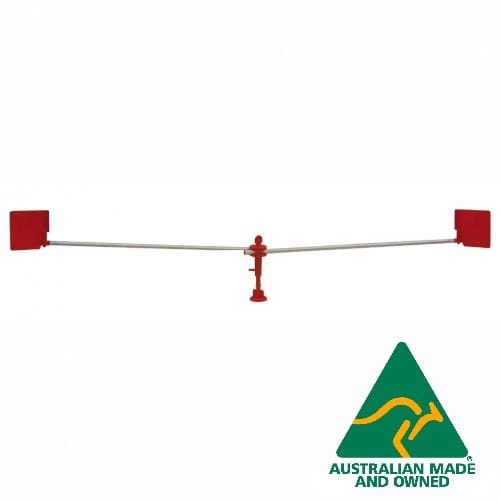
Wind-driven bird repeller with 1 metre rotating arms for smaller areas such as a boom, a solar panel or a small bimini. UV stabilised, with a bayonet base and a 12 month warranty.
Explore →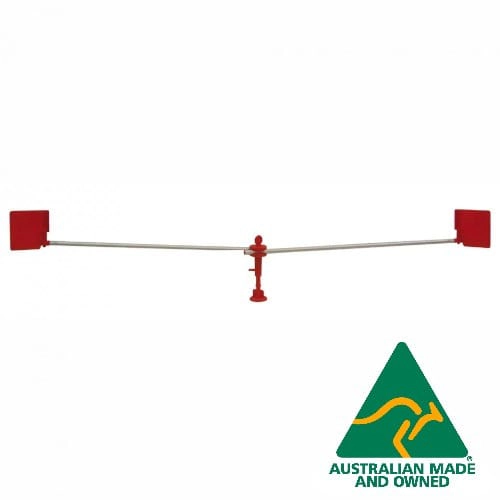
Wind-driven bird repeller with 2 metre rotating arms that keeps birds from roosting on hardtops, biminis, booms and decks. UV stabilised, with a bayonet base and a 12 month warranty.
Explore →
Push-to-talk radio that uses 4G mobile networks where there is coverage and a built-in 16-channel analog radio where there is none, with GPS and SOS. Sold as a two-pack.
Explore →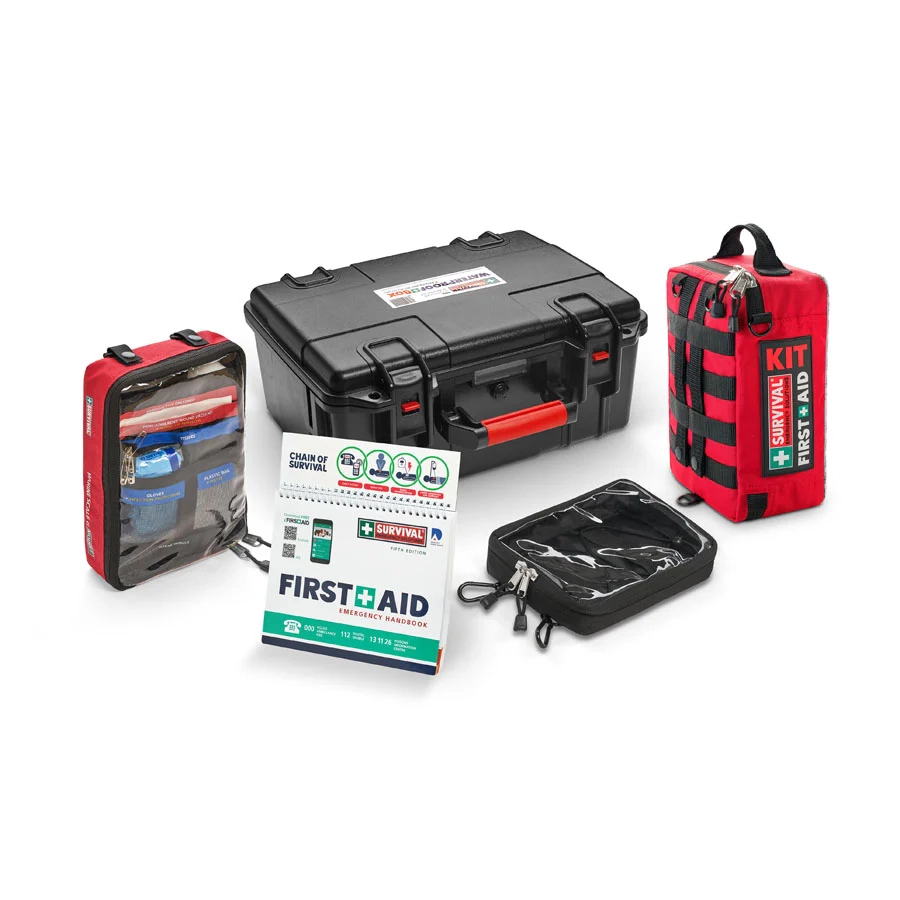
A 142-item marine first aid kit built around the Australian Scale G requirement, with a workplace kit, a Scale G module and a handbook packed in a large waterproof box.
Explore →