Loading this page…

Loading this page…
Marina service
About
Port Vincent Marina is a Yorke Peninsula marina with secure serviced berths, amenities, laundry, picnic/BBQ facilities and hotel pickup/delivery arrangements.
Service area: Port Vincent
Keep exploring
CYCSA marina information describes a modern facility with amenities building, fully equipped laundry, secure berths, picnic and BBQ facilities and hotel pickup/delivery service. Other references note serviced berths with water, power, electronic security access and CCTV.
The marina's 90 floating berths come in a wide range of sizes, laid out in rows A through E plus T-heads, with power and water available and secure access to the pontoons. The CYCSA publishes its casual rate card, which is refreshingly specific: nightly rates run from $40 for a row A berth up to $90 for a T-head, with discounted nightly rates of $35 to $70 for boats attending club-approved events; standard weekly rates run $160 to $360, and off-peak weekly rates, applying from 1 June to 31 August, halve to between $80 and $180.
Peak surcharges apply over the January and October long weekends, New Year, Easter and the King of the Gulf weekend. Berths are also available for lease and purchase through the club's berthing office at North Haven, while casual and short-term bookings go through the marina manager, Rob Marner, on 0414 611 110. Ashore there is a modern amenities building with toilets and showers, a fully equipped laundry, and picnic and barbecue facilities beside the basin. There is no fuel berth, lift or hardstand; the nearest fuel is by road in town.
Two services punch above the marina's weight: the local supermarket will deliver supplies to the berth, and the Ventnor Hotel runs a courtesy minibus that collects crews from the marina and drops them back after dinner. A real-time wind instrument at the marina feeds data to the WeatherLink and Windy apps for passage planning. Monthly and long-term arrangements are negotiated individually with berth owners rather than set by a fixed tariff, so pricing for extended stays varies. A boat ramp serves the marina precinct for trailer boats.
The marina's Achilles heel is its entrance, which has silted considerably and carries only about two metres at the lowest astronomical tide; deeper yachts should time arrival for the top half of the tide and keep to the marked line. Approaching from Adelaide, the standard transit crosses the gulf through the gap in the Orrontes Bank, roughly 275 degrees true from North Haven to the gap near 34 degrees 45.5 minutes south, then about 265 degrees true to round the Middle Spit pole before heading in; a lit beacon on the end of the sand spit extending north-east from Surveyor Point must be given a wide berth when coming from the south.
The old wheat-port channel nearer town is marked but badly silted, and the bay's shallows on its landward side are littered with chain from abandoned private moorings, making anchoring there risky; the RSAYS keeps two substantial, well-maintained moorings near 34 degrees 46.4 minutes south that are the better option outside the marina. A safer anchorage still lies on the seaward side of the channel close to the spit, comfortable in the prevailing summer south-easterlies.
Ashore, the township is a fifteen-minute walk and covers the essentials: hotel, general store, bakery and a safe white-sand swimming beach. Both Telstra and Optus phones work in the basin. Port Vincent also makes the natural first hop in a longer peninsula cruise south to Stansbury and Edithburgh. Historical colour is close at hand: Port Vincent shipped bagged wheat from its jetty until the mid twentieth century, and the leads and beacons of that old channel still stand as a navigation mark and a reminder of the port era.
Fishing from the marina breakwater and the nearby jetty is a standard evening pastime, with whiting the usual target.
Satellite imagery at four heights, from the wider harbour to the berths.
Yorke Peninsula is the boot-shaped peninsula between Spencer Gulf and Gulf St Vincent in South Australia. Small ports and jetties line both coasts, and the southern end faces Investigator Strait.

Taking pets between Australian states and into marinas or national parks is governed by state and territory biosecurity/quarantine rules, local council and marina policies, and the management rules of parks. Requirements vary by jurisdiction and by the species of animal, so check the relevant state/territory biosecurity office, the park management agency and the marina operator before you travel.
Explore →
Write a one‑page plan with the who/what/when/where/how of your trip, keep a copy on board and leave the main copy with a responsible person ashore (and optionally with your club, marina office or local volunteer rescue service).
Explore →
Confirm the measurements that define how the sail or cover will fit your specific boat and rig, plus material, attachment details and any interaction with existing hardware (e.g. reefing points, battens, hatches). Measure on the boat and list serial or model details for spars and deck fittings if available.
Explore →
Prioritise practising abandoning-ship and man-overboard drills, fire and flooding control, engine/fuel failures, emergency steering, communications and MOB recovery with the full crew and kit you’ll use on passage.
Explore →A practical guide for recreational sailors planning passages to, from or around Eden and Twofold Bay. Covers sheltered anchorages, shore facilities, local weather and tidal considerations, preparing for Bass Strait conditions and a focused equipment and safety checklist.
Explore →Practical guidance for recreational sailors planning to cross coastal bars in New South Wales. Explains how to assess conditions, plan a crossing, prepare equipment and crew, recognise hazards and manage emergencies, with checklists and realistic examples relevant to NSW waters.
Explore →A concise, practical introduction to the essential parts of a recreational sailing boat for beginners in Australia. Covers hull, deck, rigging, sails, steering, below-decks spaces and safety equipment, with simple explanations, common mistakes and a pre-sail checklist to help new sailors communicate and get underway.
Explore →Practical guide for recreational sailors approaching Fremantle Harbour: what to expect on the approaches, local weather and tidal influences, navigational considerations, berthing and facilities, communications and safety checks, common mistakes and sensible next steps.
Explore →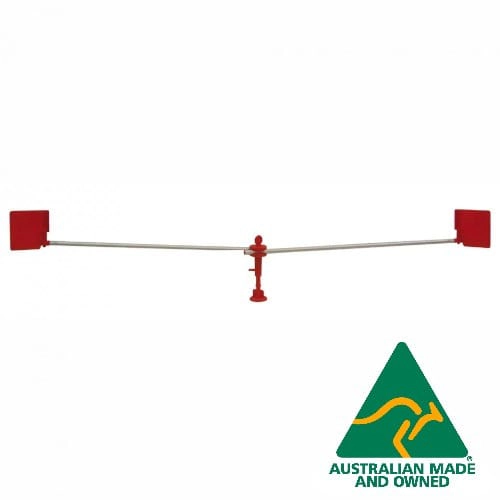
Wind-driven bird repeller with 2 metre rotating arms that keeps birds from roosting on hardtops, biminis, booms and decks. UV stabilised, with a bayonet base and a 12 month warranty.
Explore →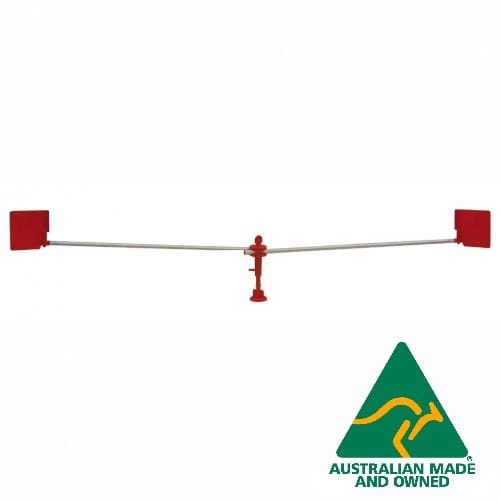
Wind-driven bird repeller with 1 metre rotating arms for smaller areas such as a boom, a solar panel or a small bimini. UV stabilised, with a bayonet base and a 12 month warranty.
Explore →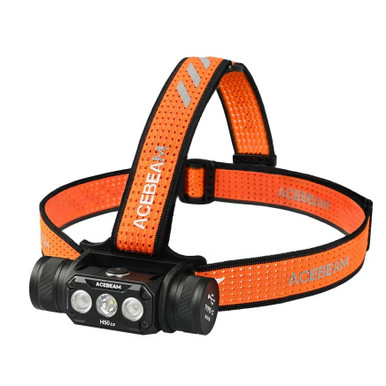
A 2000 lumen headlamp with spot and flood beams, rated IP68 and submersible to 2 metres, with a 141 metre beam and up to 30 hours on low.
Explore →
Push-to-talk radio that uses 4G mobile networks where there is coverage and a built-in 16-channel analog radio where there is none, with GPS and SOS. Sold as a two-pack.
Explore →