
Marine technology · In conversation
A clearer view after dark.
Founder Dhru Shah on the accident that inspired BoatEye360, affordable full-colour night vision and seeing more from the helm.
Dhru Shah
“I wanted a camera I would put on my own boat, at a price more boaters could justify.”
What's the story behind BoatEye360? How did you get started, and why did you want to make marine night vision more affordable?
BoatEye360 started after I was involved in a boating accident about 20 miles offshore, in broad daylight. We ended up being rescued by TowBoatUS and the U.S. Coast Guard. That experience changed how I looked at boating safety.
Afterwards, I started looking into marine night vision cameras. I kept thinking: if something like that can happen during the day, how much are we missing at night?
There was technology available, but a lot of the pricing was hard to justify for an everyday boater. I come from a systems and network engineering background, so I started looking at what it would take to build something practical, durable, and more affordable.
That's how BoatEye360 began. I wanted a camera I would put on my own boat, at a price more boaters could justify.
Florida boaters deal with floating debris, unlit markers, crab trap floats, and other hazards. Beyond the accident, what problem were you trying to solve?
Think about leaving before sunrise to go fishing, or staying out a little later than you planned. You still have to get through the channel and get home. A familiar stretch of water can look completely different after dark.
You might know where the channel is on your chartplotter, but you still want to see what's actually in front of the boat. Another vessel, a marker, or something floating in the water doesn't always stand out to your eyes.
That was the practical problem I wanted to address: give boaters a better visual picture of their surroundings, without making the equipment so expensive or complicated that they never install it.
For someone who has never used a marine night vision camera, what does BoatEye360 do? What could a sailor see through it that they might miss with the naked eye?
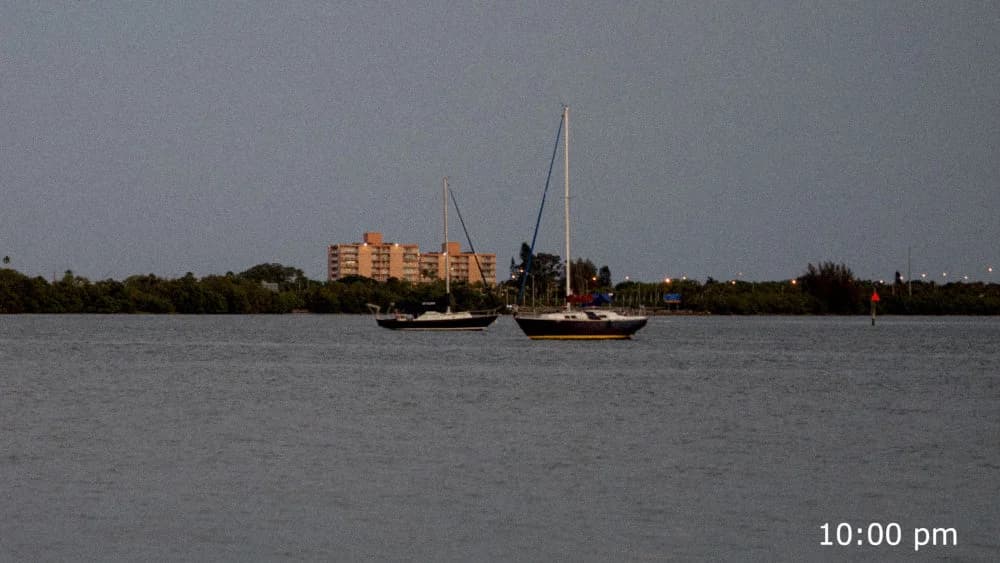
It gives you a live, full-color view of what's ahead when your eyes are struggling to see it. You can be looking out over what appears to be pitch-black water, then look at the screen and make out boats, channel markers, buoys, the shoreline, and details you couldn't distinguish before.
That's what makes it so useful. You get a better idea of what you're approaching and what's around it, whether you're leaving before sunrise, coming home after sunset, or entering an anchorage.
People sometimes hear that the camera needs ambient light and imagine it needs a well-lit area. It takes much less than that. Our sensor is extremely sensitive, and tiny amounts of starlight, moonlight, or distant lighting can make a big difference. What looks dark to your eyes can look very different through the camera.
It also works during the day, so you can use it whenever you're on the water.
How does the C-1080 produce full-color images in very low light, and how does that compare with infrared or thermal cameras?
The C-1080 combines an ultra-sensitive sensor, a lens that lets in a lot of light, and image processing that makes the most of that light. The result is a full-color picture from surprisingly little illumination.
In our testing, we've had nights with only around 10% moon illumination where the screen lit up with color and detail that looked remarkably like daytime. That really shows how much the camera can do with light your eyes barely notice.
The advantage of full color is that the picture feels familiar. You can see the appearance of a boat, the surrounding shoreline, and visual details that help you understand the scene.
Thermal cameras detect thermal radiation and can produce an image without visible light. They're useful tools as well. With the C-1080, we're giving boaters a natural-looking visual picture, day and night, in a compact and affordable package. It uses available light and doesn't require a special infrared illuminator.
Imagine a yacht approaching an unfamiliar Australian anchorage at night, with no moon. What could BoatEye360 help the crew see, and what conditions matter?
A moonless night can still give the camera plenty to work with. Stars, distant shore lighting, nearby buildings, and marinas can all contribute light, even when the water looks completely dark to your eyes. That can help bring the shoreline, anchored boats, markers, and the approach into view.
One thing we've learned from testing is how difficult it can be to get away from every tiny source of ambient light. Conditions with too little light for a useful picture have been unusual in our testing. For many recreational boaters, that may never be something they encounter on their normal trips.
Think of a more demanding example: you're 100 miles offshore on a moonless night, under heavy cloud cover, far from shore lighting. In a situation like that, an ordinary marine spotlight can give the camera extra light to work with. You don't need fancy infrared lights; normal visible light is useful to this sensor.
We're open about that because we want people to understand the technology. The takeaway is how little light the camera needs, and how often useful light is already there even when you can't see much yourself.
Where does BoatEye360 fit alongside radar, AIS, and chartplotters?
The camera gives you the visual picture. That's a big addition to the information you're already getting from your other electronics.
Radar is a valuable tool, but it can miss smaller targets such as crab trap floats and small buoys, particularly when they're low in the water or surrounded by sea clutter. Even when you have a return on the screen, you may still be asking, “Is that a marker, a small boat, or something else?”
BoatEye360 helps you put a picture to what you're approaching. It gives you another opportunity to spot smaller objects and adds visual detail that can make the scene much easier to understand.
Your chartplotter shows your position and charted information. AIS gives you information about vessels transmitting a signal. Radar helps you locate targets, and the camera helps you take a closer visual look. I like having those tools working together. You have more information in front of you and a better view of what's happening around the boat.
How easy is the C-1080 to connect to systems from Raymarine, Garmin, Simrad, and B&G? What should owners check before buying?
Compatibility is one of the big strengths of the C-1080. We include both HDMI and analog video connections, so it works with a broad range of marine chartplotters from Garmin, Raymarine, Simrad, B&G, Furuno, and other major brands. Many owners can use the screen they already have on the boat.
HDMI gives you the full 1080p picture, and analog gives you another straightforward connection option for displays with a compatible composite video input. Depending on the display, you may need its manufacturer's video cable or harness.
Checking is simple: look up your exact model on our compatibility page, or do a quick search for the model's video-input specifications. You're looking for HDMI input or composite analog video input. You can also send us the model number and we'll help you confirm the connection.
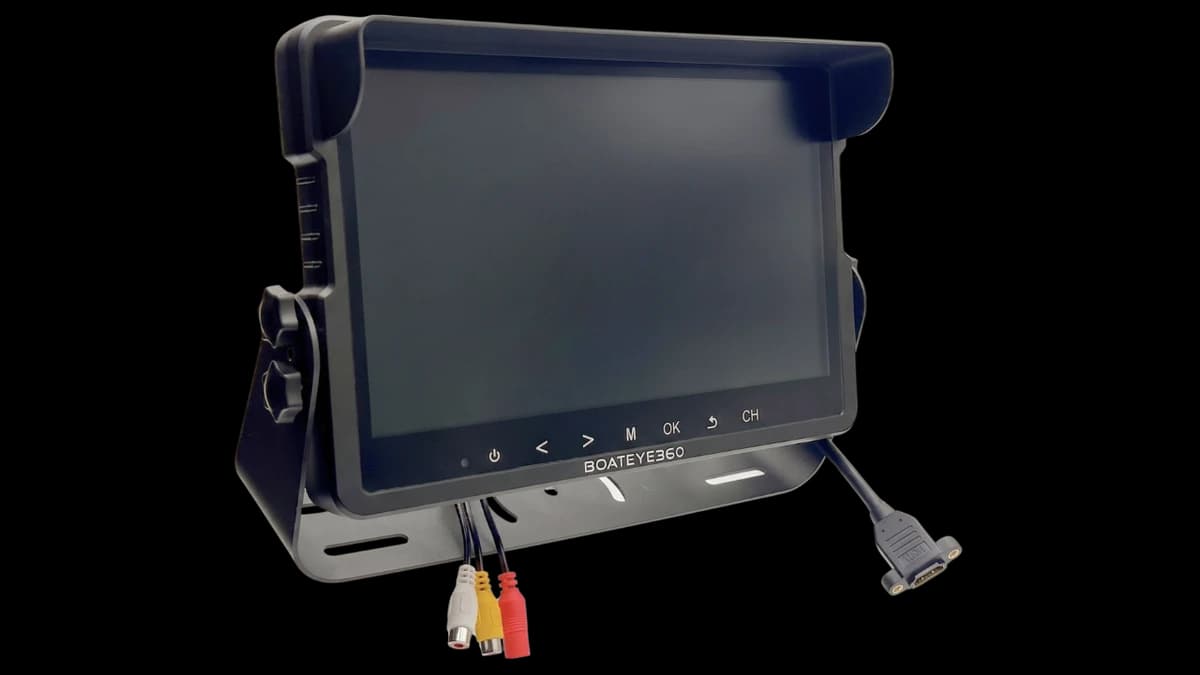
We offer a dedicated monitor too, which is a convenient option if you want a separate camera screen or your chartplotter doesn't have a suitable input. That lets you keep the camera view open while using your chartplotter for navigation.
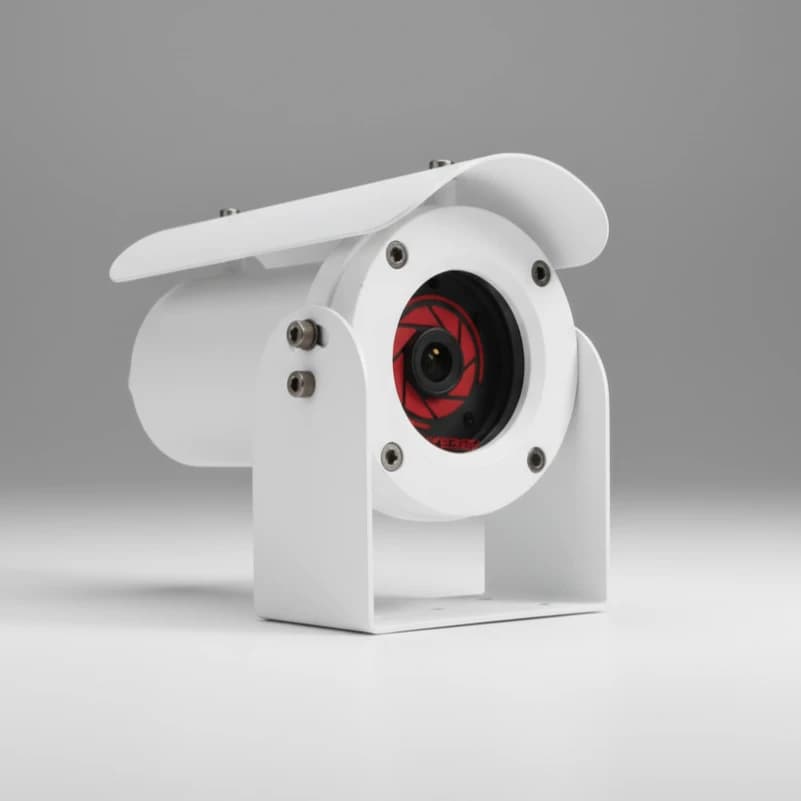
The C-1080 uses a 316L stainless steel housing and titanium screws. What are the challenges of building a camera for saltwater, vibration, and harsh weather?
We build it for the environment it's going to live in. That means a 316L stainless steel housing, titanium screws, and attention to the seals, cable connections, and heat management inside the camera.
I want someone to feel good about putting this on their boat and using it regularly. The compact size makes it easier to find a clean mounting position, and the materials are chosen for exposure to salt spray, rain, and sun.
A lot of the engineering is in getting all those details to work together. You want the image quality, the housing, and the installation to make sense as one product.
Testing never really ends for us. We're out using the cameras during the day and at night, looking for ways to keep improving them. That's part of building equipment we want on our own boats.
Why has marine night vision traditionally been expensive, and how have you made BoatEye360 more accessible?
I've always felt you shouldn't need a million-dollar yacht to benefit from better visibility at night. A person on a small fishing boat or cruising sailboat has just as much reason to want a better view of what's ahead.
Some marine vision systems include thermal sensors, motorized mounts, stabilization, and other features that add to the cost. With the C-1080, we focused on a compact, fixed camera with strong low-light performance, full-color video, durable construction, and easy connections to existing displays.
At US$1,495, the camera includes the stainless steel housing and both HDMI and analog connection options. We're putting the features many boaters need into a package that's easier to justify and straightforward to add to a boat.
That has always been the goal: make useful marine night vision accessible to more people.
What feedback means the most to you? Have customers found the cameras useful in real situations?
The feedback I care about most is people telling us they can see more of what's around them when they're heading home in the dark. That's a practical benefit they can use every time they're on the water.
We hear from boaters using the camera to get home after dark, including along the Intracoastal Waterway. Everyday situations like that are a big part of why I started the company.
We also have cameras operating aboard Tampa Bay Pilots' boats, day and night. Seeing professionals use our equipment as part of their daily operations means a lot to us. Our cameras are also being used to support search and rescue work, which is personal to me because I've been on the other side of a rescue.
That's the kind of use I care about: helping people get more useful visual information when it matters.
Where would you mount the camera on a 40- to 50-foot sailing yacht? How much do height, position, and vessel movement matter?
I'd start with a solid mounting point that gives you a clear view over the bow, with sails and rigging out of the way. The camera is compact, so you have flexibility to find a position that works for your boat.
My usual advice is to keep only a sliver of bow in the image, roughly 1% where practical. That keeps the picture focused on the water ahead and helps keep reflections from your own deck, rails, and lights out of the lens.
The best height depends on the boat's layout, the cable run, and how stable the mounting position is. A rigid mount helps keep vibration down, while a well-chosen angle gives you a useful view as the boat moves.
Check the live image during the day and after dark before finishing the installation. Often, a small adjustment is all it takes to get a much better view. We're happy to look at installation photos and help customers get it right.
Do you see AI, automated hazard detection, or deeper navigation-system integration becoming part of BoatEye360's future?
Absolutely, I see a lot of potential. A camera that can draw your attention to something worth looking at, or work more closely with the electronics already on the boat, could be very useful.
We're continually working on the image itself: more useful detail, better color, less noise, and keeping moving objects clear. Those improvements matter every time someone uses the camera.
I'm also interested in how software can make that picture more useful to the person at the helm. The ocean is constantly moving, so the goal is features that make sense in that environment and are simple for the customer to use.
That's the direction I want to keep going: better visibility, easier integration, and more useful information without making the system complicated.
What partners are you looking for in Australia, and what does becoming a BoatEye360 dealer involve?
We're interested in marine businesses that understand their customers and can support the product properly. That includes marine electronics installers, chandleries, boatbuilders, suitable yacht brokers, and established marine distributors.
A good partner can help a customer check display compatibility, choose a sensible mounting position, and understand what to expect in different conditions. That support makes a difference to the customer's experience.
The starting point is the dealer application on our support website. We review the business, discuss the opportunity, and provide the current dealer pricing and purchasing requirements. Approved dealers can then access their account and support resources.
Distribution is a separate arrangement, with a minimum order quantity of 50 cameras. For a business looking to supply other marine dealers, we can discuss the appropriate distributor setup.
We're happy to talk with Australian businesses that see a fit and want to build a long-term relationship.
How important is Australia to your plans, and what would you like to achieve there?
Australia is a great fit for BoatEye360. There's a strong boating culture and a huge range of people out fishing, sailing, cruising, and working on the water. Early departures, evening returns, and exploring new anchorages are all situations where a better visual picture can be valuable.
I'd like to build a dependable local network of dealers, installers, boatbuilders, and distributors who know the product and can support their customers. Local stock, knowledgeable installers, and someone nearby to answer questions all make ownership easier.
We see a real opportunity to bring affordable full-color marine night vision to more Australian boaters. We're looking for partners who share that enthusiasm and want to grow with us.
What are you working toward next, and what should Australian sailors understand before choosing a night vision system?
We're continuing to improve our full-color cameras, and we're also exploring networked camera systems and AI. I'm excited about giving boaters more options for seeing around the boat and getting that picture onto the screens they use. We'll share more as those developments are ready.
The direction stays the same: useful technology, durable hardware, simple installation, and a price that makes sense for the customer.
For anyone considering night vision, I'd encourage them to watch real footage and see what these cameras can do. Look at early-morning departures, coastal cruising, approaches to anchorages, and offshore use. Tell us how you use your boat and what display you have, and we can help you put together the right setup.
I think a lot of boaters will be surprised by how much more they can see once they have a camera on board. That's what I want them to experience.
Is there anything else you'd like to add about BoatEye360 and safer boating?
I'm a boater, and I've been the person offshore waiting for help. That's a big part of why this matters to me.
I want to build equipment people can afford, enjoy using, and feel confident adding to their boat. Better visibility is useful whether you're fishing before sunrise, cruising after sunset, or bringing the family home after a day on the water.
We're also big on being honest and transparent. We'll explain how the technology works, show real footage, and help you get the most out of your installation. Customers deserve to understand what they're buying, and we have plenty to be proud of when we show what these cameras can do.
For me, the goal is simple: help more people see what's around them, enjoy their time on the water, and get home safely.