
Sailing schools · In conversation
You never know where your first sail will take you.
Gary Shea on learning to skipper, building confidence on the West Australian coast, and the sailing journey from your first day aboard to Yachtmaster.
Gary Shea
“Don’t wait until you think you’re ready.”
How did Oceanwest get started, and what made you set up on the west coast?
I started sailing in the UK in 2001 when I was in the Royal Navy. I had my own boat and very quickly became hooked. I enjoyed it so much that I started working my way through the RYA training scheme, eventually gaining my Yachtmaster Offshore and becoming an instructor in 2007.
When I left the Navy, I moved to Perth and spent two years working for a sailing school, which gave me my first real experience of teaching sailing professionally in Australia.
Joeanne and I then took a couple of years out and travelled around Australia. When we came back to WA, I knew sailing and teaching was what I wanted to continue doing, and in 2011 we started Oceanwest.
Since then, it's grown into an RYA Training Centre offering courses from complete beginner through to Yachtmaster level. What hasn't really changed is the reason I started it – I loved sailing, enjoyed teaching it, and wanted to give other people the opportunity to get as much out of it as I had.
You spent 22 years in the Royal Navy as an engineer before this. How does that background shape the way you teach?
The Navy teaches you to be systematic, to understand why you're doing something and to stay calm when things don't go according to plan. All of that transfers very well to sailing.
My engineering background also means I like people to understand what's happening rather than simply memorise a procedure. A skipper doesn't need to be an engineer, but understanding the boat and its systems makes you much more self-reliant.
Ultimately, that's what skippering is about – thinking ahead and having another plan available.
You're an RYA Yachtmaster Instructor and Examiner. What does sitting on both sides of the exam table teach you about preparing candidates?
It gives you a good understanding of what an examiner is looking for.
At Yachtmaster level we're not looking for someone who can simply demonstrate a collection of manoeuvres. We're looking at whether that person can actually skipper a yacht.
When I'm preparing someone for an exam, I focus on decision-making, awareness, communication and command. Things don't always go perfectly on boats, and an examiner knows that. What's important is recognising when something isn't working and doing something about it.
Someone has never sailed and they're looking at a learn to sail weekend with you. Walk us through what their first day looks like.
First of all, they don't need to know anything about sailing before they arrive.
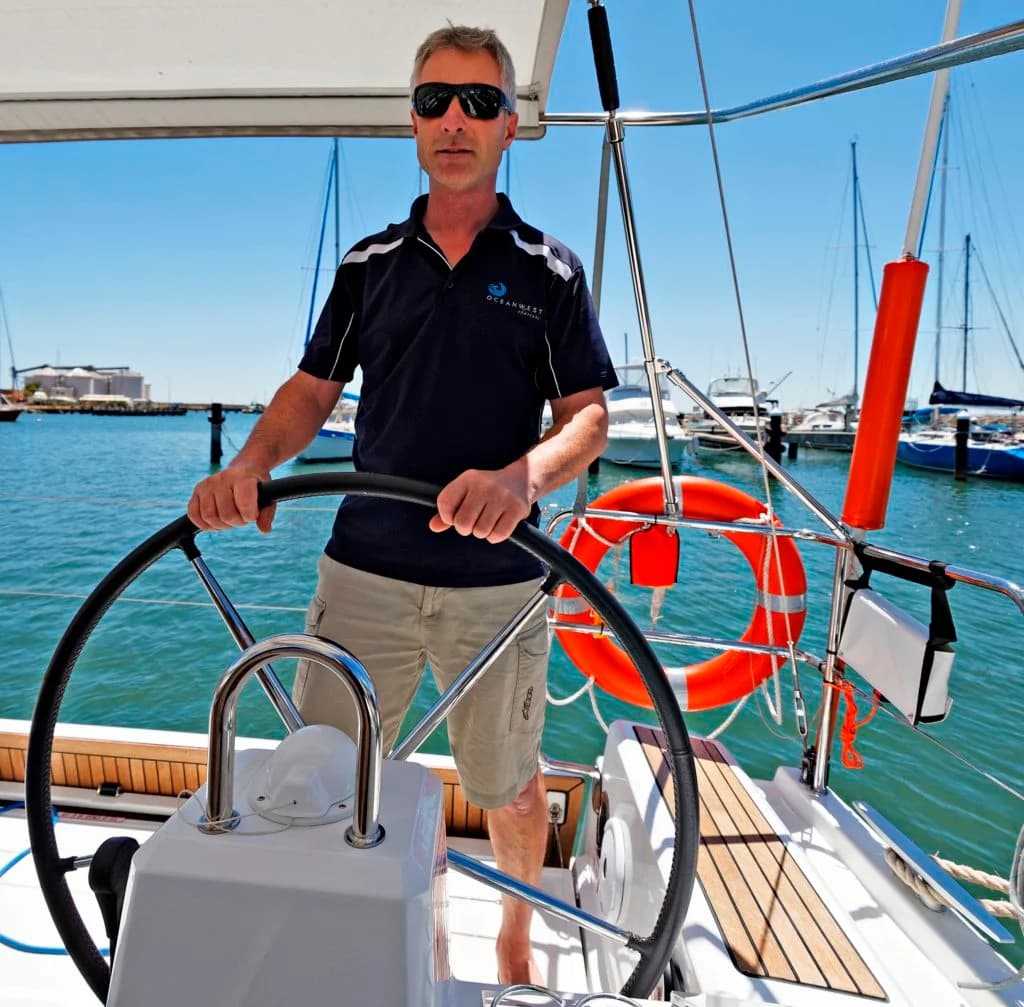
We'll start by getting them comfortable with the yacht – how to move around safely, some basic terminology and a safety briefing, then we'll get out sailing. Pretty quickly they'll be steering the yacht, handling ropes, hoisting sails and learning how to trim them.
We keep introducing things as the day progresses, so they're learning by actually doing it.
That's one of my favourite parts of teaching beginners. Someone can arrive in the morning knowing virtually nothing about sailing and by the afternoon they're steering the yacht and starting to understand how everything works together.
Day Skipper through to Yachtmaster and Cruising Instructor is a long pathway. Where do most people join it, and how far do they usually go?
People come into the RYA scheme at all sorts of levels.
A complete beginner might start with Competent Crew or one of our introductory sailing courses. A lot of people come to us because their real goal is to be able to skipper a yacht themselves, perhaps buy their own boat or charter overseas. For them, Day Skipper is often the important milestone as this allows them to charter overseas and gain the ICC.
Some are perfectly happy at that level. Others get the bug and want to keep progressing through Coastal Skipper and eventually Yachtmaster.
Then you have people with professional ambitions who may go on to Yachtmaster Offshore, commercial endorsement and perhaps become an instructor themselves.
There's no need for everybody to become a Yachtmaster. The important thing is developing the skills and confidence for the sailing you actually want to do.
For a Yachtmaster candidate, what separates the ones who sail through from the ones who struggle?
Experience – but particularly experience actually being the skipper.
You can accumulate thousands of sea miles without necessarily having made many decisions. What matters at Yachtmaster level is having been responsible for the yacht, the passage, making decisions about the weather, the navigation and the crew.
Good candidates tend to look outside the boat and think ahead. They communicate clearly and they're rarely surprised by what's happening because they've already considered what might happen next.
My advice is always to get miles, but more importantly it’s miles as the skipper.
Tell us about the yachts. What are people training on and why those?
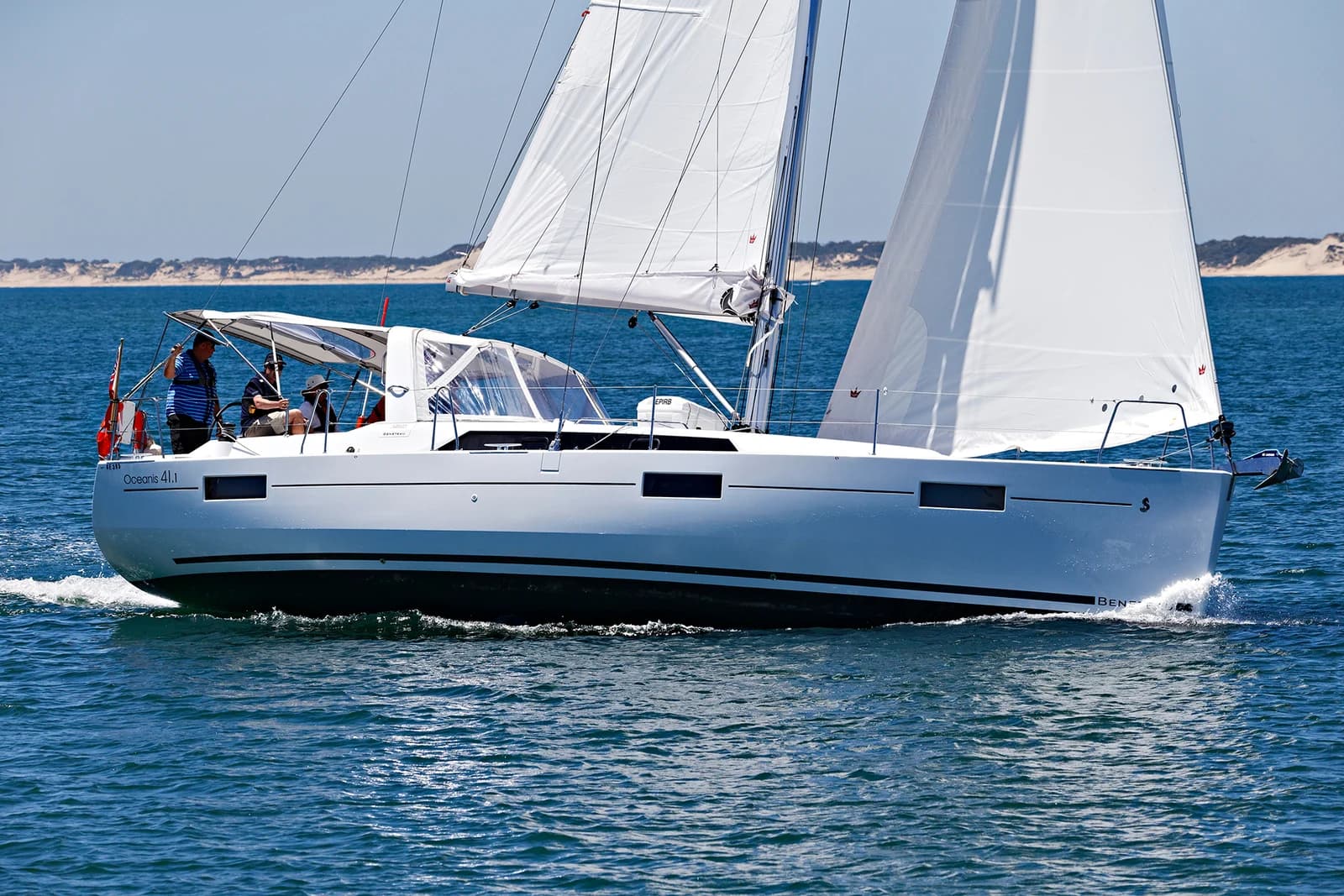
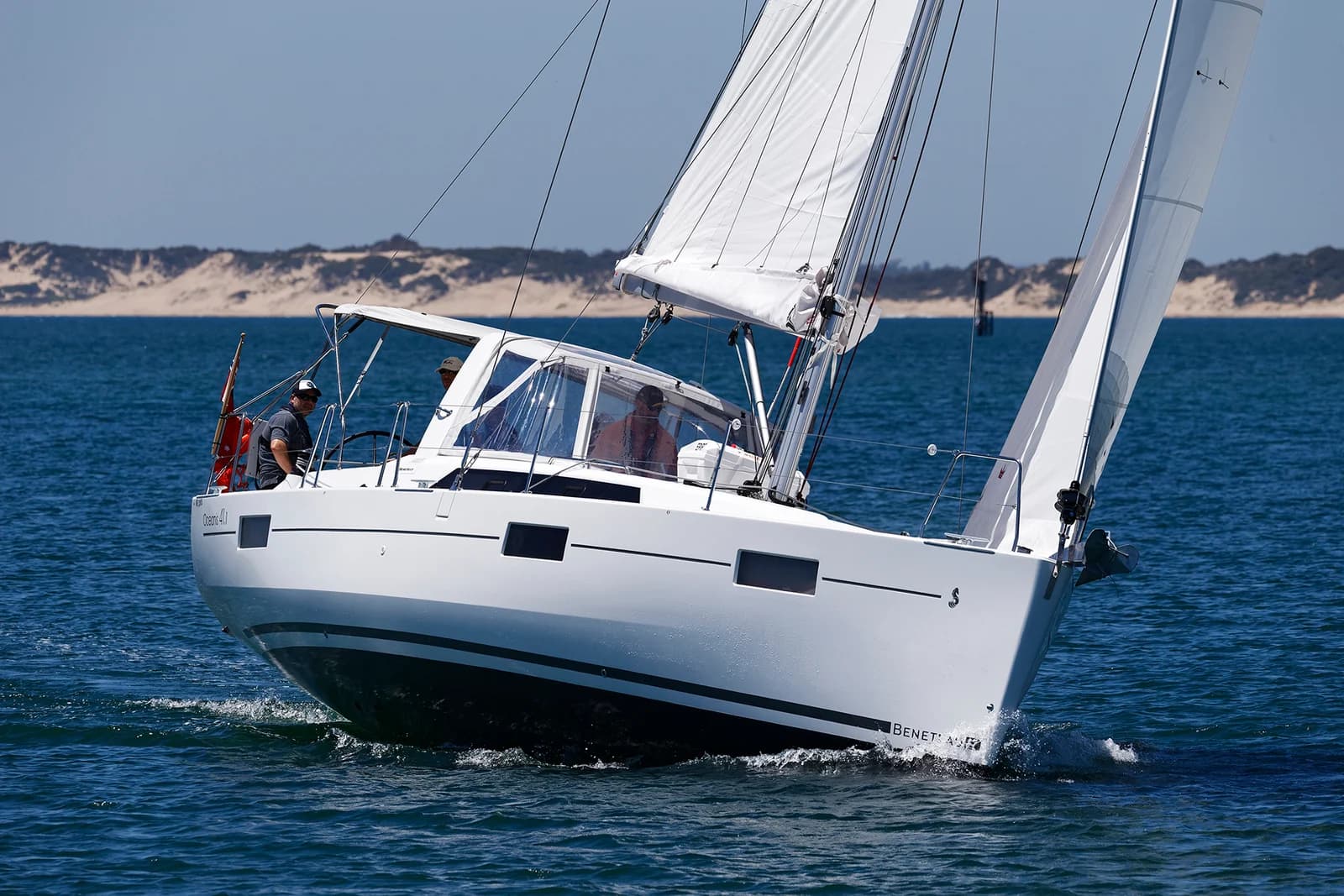
Our main monohull is Samsara, a Beneteau Oceanis 41.1. She's a modern cruising yacht and a very good training platform because she's representative of the sort of yacht many of our students will eventually own or charter.
She's large enough that you need to think properly about boat handling, particularly around marinas, but she's also manageable for a small crew.
We also have Feisty, our 49-foot Schionning performance cruising catamaran.
Catamarans have become extremely popular, particularly in the charter market, and they're quite different to monohulls in the way they manoeuvre and sail. Having access to both gives us the opportunity to expose people to two very different types of cruising yacht.
You run own boat training too. How does that work, and who gets the most out of it?
Own-boat tuition is something I really enjoy because every boat and every owner is different.
We come aboard your yacht and tailor the training around what you actually need. That could be marina handling, sail handling, anchoring, navigation, passage planning, understanding the boat's systems or a combination of everything. We can even run an RYA course on your own boat with your family and friends.
It's particularly useful for someone who's recently bought a yacht. You might have done the RYA training courses and have the knowledge, but suddenly you're responsible for your own boat and that's quite a different feeling.
It's also very useful for couples. We can look at how they operate the boat together and make sure both people are comfortable with the important jobs aboard rather than one person automatically becoming “the skipper” and doing everything.
Your cruising grounds stretch from the southwest up to the Abrolhos, Coral Bay and Exmouth. What's each stretch of coast like to sail, and which one is your favourite?
I've been fortunate enough to sail a good part of the WA coast, and we've previously run mile-building passages all the way up to Exmouth. It's a fantastic coastline because the experience changes so much as you head north.
The Southwest gives you fantastic sailing conditions and a spectacular coastline. Geographe Bay itself is relatively protected, which makes it a great training area, but once you leave the bay you're dealing with a much more exposed ocean coastline.
Heading north, the Abrolhos Islands are a real highlight with remote islands, reefs, clear water and some interesting navigation. It's the sort of place where passage planning and pilotage really come into their own.
Further north again, around Coral Bay and Exmouth, you're into warmer weather and the Ningaloo coast. It feels completely different to sailing in the Southwest.
They're all special for different reasons, but for everyday sailing I still love Geographe Bay because we have such a good sailing area right on our doorstep.
The west coast has a reputation for solid conditions. What does a sailor need to understand about sailing out of Busselton?
You need to understand the weather rather than just look at the forecast wind speed.
During the warmer months the sea breeze is a major part of sailing in WA, and conditions can change significantly during the day. Timing your sailing can make a huge difference.
Geographe Bay gives us some protection, but the wider Southwest coastline is exposed to the Southern and Indian Oceans. Once you start making longer passages, weather interpretation and passage planning become very important.
For a sailing school, that's actually a great combination. We can find relatively sheltered conditions for somebody starting out while still having challenging conditions available as their experience develops.
Joeanne runs operations and the catering, and you have a team of RYA qualified instructors. What's the feel on board with your crew?
We're a small school and I think that's an important part of Oceanwest. Students aren't just a number moving through a large training organisation.
Joeanne looks after a huge amount behind the scenes and does the catering for our liveaboard courses, with Nicole looking after the catamaran and we have a small team of RYA instructors who all bring their own experience and personality to the courses.
On board we want people to be comfortable asking questions and having a go. There'll usually be plenty of laughs along the way.
What's the best time of year to sail out there, and how do conditions change through the seasons?
Our main Southwest training season runs from October through to May.
Spring can give us some lively conditions as the winter weather starts to settle down. Through summer we get warmer weather and the classic WA sea-breeze pattern, so understanding the time of day becomes important.
Autumn can be fantastic. The weather is still warm but the strong summer sea-breeze cycle starts to ease, and we can get some beautiful sailing days.
Winter is quite different in the Southwest. We get more frequent frontal systems and periods of much stronger weather, which is why most of our regular training programme runs through the warmer months.
There's no single “perfect” month though. Different conditions teach you different things.
What's something students worry about before they come aboard that turns out to be a non issue?
Probably that everyone else is going to know more than they do.
Beginners sometimes arrive thinking they're going to be surrounded by experienced sailors speaking another language. Then they realise very quickly that everybody had a first day.
You don't need to know all the terminology, understand navigation or know which rope does what before you arrive. That's why you're doing the course.
Some people also worry that they're not strong enough. Modern cruising yachts don't require huge amounts of physical strength. Good technique and working together as a crew are much more important.
Anything on the horizon for the next 12 months, new courses, boats or voyages, that people should know about?
One thing we're hoping to bring back for 2027 is our mile-building passages up the WA coast.
The plan is to use our 49-foot catamaran Feisty during June to September and offer passages north from Busselton, with destinations including Dongara and Geraldton and, hopefully, the opportunity to explore the Abrolhos Islands.
We've run mile builders further up the WA coast to Exmouth in the past, and they're a very different experience from a normal five-day course. You're living aboard, making real passages, dealing with the weather and navigation as it happens and sharing watches as part of the crew.
For anyone working towards Coastal Skipper or Yachtmaster, it's also an opportunity to build meaningful sea miles and passage-making experience rather than simply collecting miles for the logbook.
Our January-May 2027 sailing programme is live on our website and you can explore the upcoming RYA courses and sailing opportunities, and also keep an eye out for our catamaran mile-building programme, coming soon.
Anything we didn't ask that you'd want a would-be sailor to know?
Don't wait until you think you're ready.
I meet so many people who say, “I've always wanted to learn to sail,” and sometimes they've been thinking about it for twenty years.
You don't need any experience to start. Come aboard, learn the basics and find out whether you enjoy it.
The great thing about sailing is that you decide how far you want to take it. You might simply enjoy crewing on somebody else's yacht. You might want to charter a yacht on holiday, buy your own boat, sail offshore or eventually become a Yachtmaster or instructor.
I started in 2001 with my own boat because I discovered that I loved sailing. I had no idea then that it would eventually become my career and that I'd end up running a sailing school on the other side of the world.
You never really know where that first day sailing might take you.