
Marine technology · In conversation
A window beneath your boat.
Charlo Carabott on live underwater viewing, checking anchors and hulls, and connecting sailors with the world below the surface.
Charlo Carabott
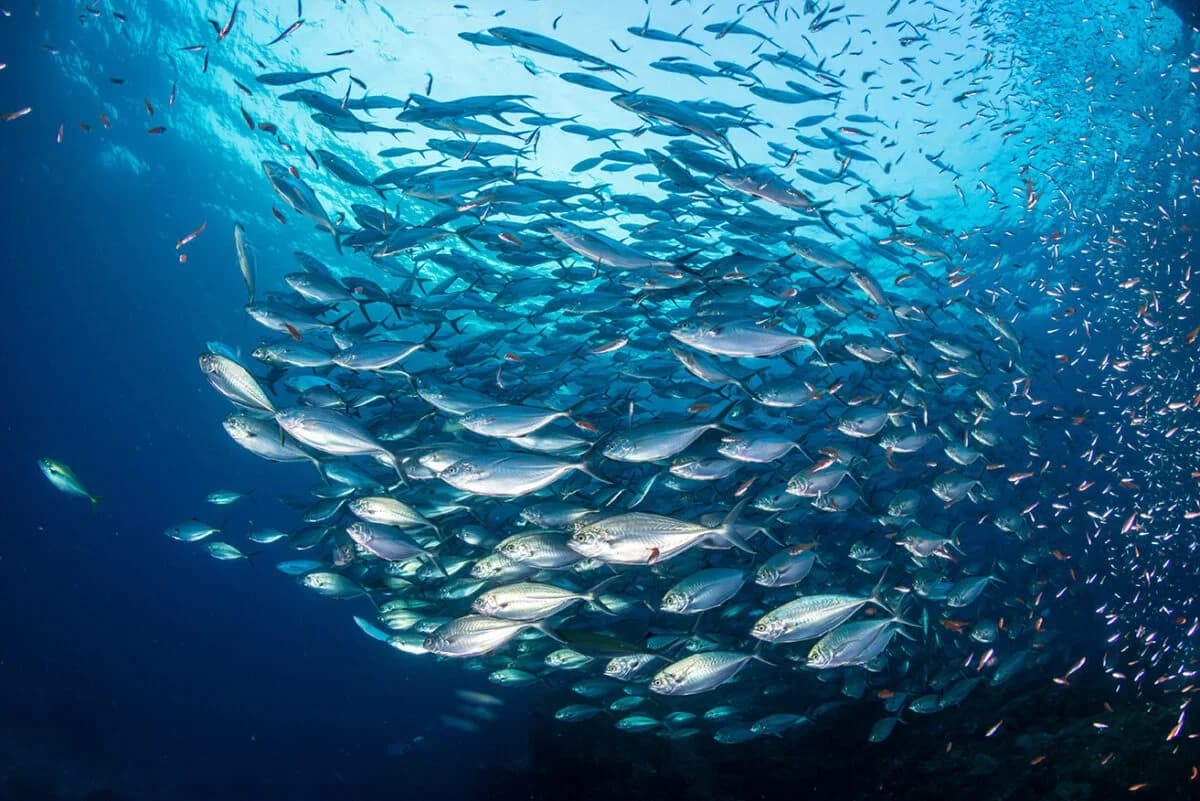
“When you can see more, you understand more. And when you understand more, you care more. If we can help people see the beauty beneath their boat, we can inspire them to look after it.”
What's the story behind SEAVU? I read that the original idea came from your frustration with fish finders showing objects underwater without being able to tell exactly what they were. How did that experience turn into developing your own underwater camera technology?
Ever since I was a kid I’ve been fascinated by what happens beneath the surface. It’s calm, alive and full of surprises. A fish finder could tell me something was down there, but never what it was, and I wanted to see it.
The real magic is seeing it live. When you’re connected to what’s happening below in that exact moment, it feels personal. I wanted to make that possible for anyone, without diving or complicated gear.
That’s what Seavu does: it shows you what’s underwater in real time, straight to your phone or tablet.
Your story mentions years of development, prototypes and testing before SEAVU became a commercial product. What was the hardest part of turning that original idea into something people could actually buy and use?
Making it simple. My background helped here. I spent most of my career in mobile technology, so building around the phone people already carry felt like the obvious answer rather than adding another screen to the boat.
It took three years and a significant investment in development, prototypes and testing to make live underwater viewing work with the gear people already owned and loved. Getting a picture in testing is one thing. Getting a stable live feed every time, in salt water, in current and from a moving boat, is another.
When I saw it working properly for the first time, I knew we were onto something special. That moment was the beginning of Seavu.
For someone who has never heard of SEAVU, how would you explain the technology? Most people know that WiFi and Bluetooth signals don't travel well underwater, so how have you managed to get live footage from a submerged GoPro or DJI camera onto a phone or tablet?
WiFi doesn’t travel through water, so we had to find another way to get the signal to the surface. We developed our own very low loss receiver, custom cable and transmitter that carry the camera’s WiFi signal up to 52m. The whole system is passive, so there are no batteries, no power supply and nothing to charge. The camera sits underwater in its housing, and you use its own app on your phone or tablet exactly as you normally would, so recording, settings and live view all work as normal.
You have several systems, including the Seeker Marine Kit and Explorer Adventure Kit. What are the main differences, and which would you recommend to someone who owns a cruising yacht and wants a practical underwater inspection tool?
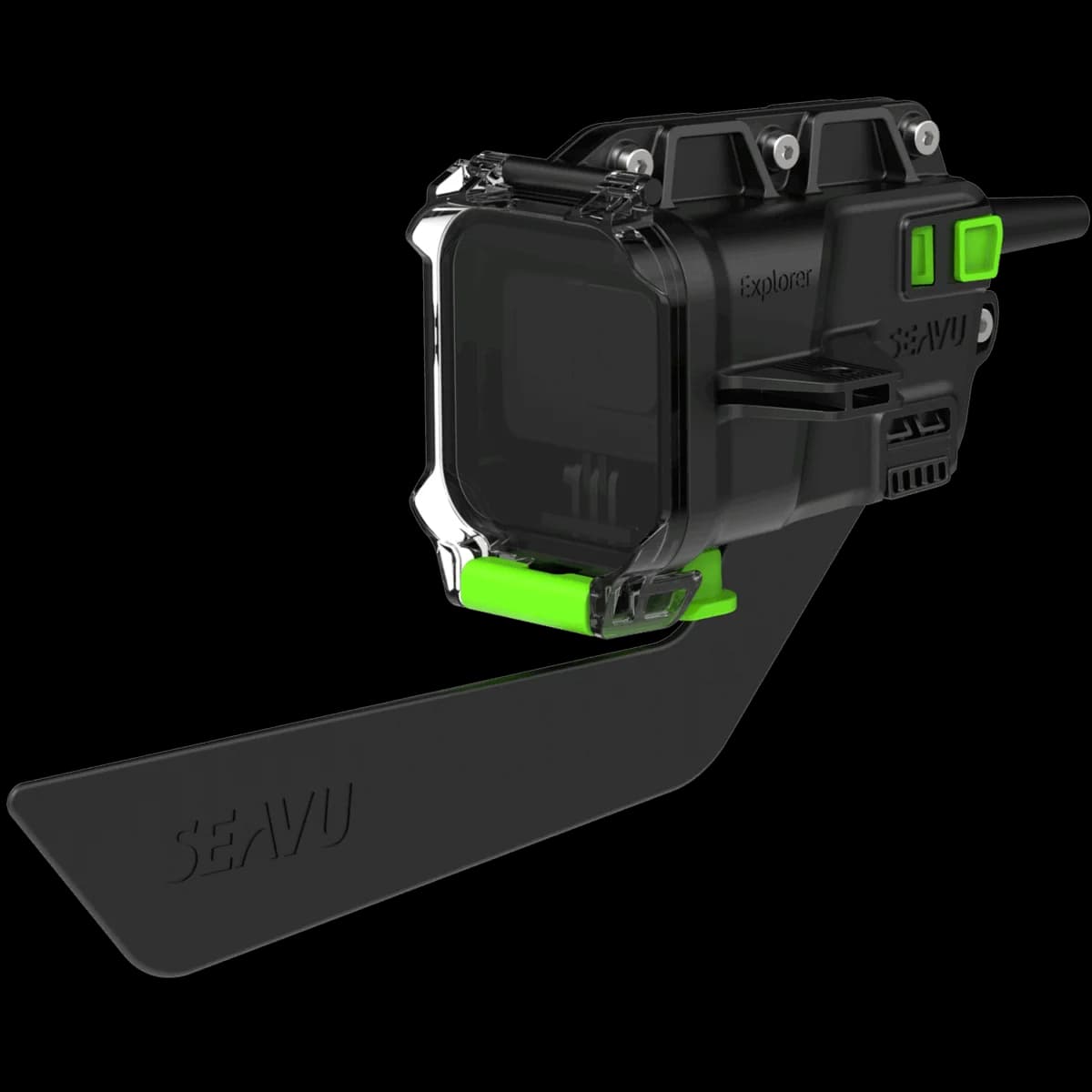
The Seeker range is compact and versatile, with the Seeker Marine Kit (drop camera on a cable) and the Seeker Pole Kit. The Explorer Adventure Kit is our multifunction system built around a cable reel, with options like lights. We’ve also just launched the Orbit 360 Kit for the DJI Osmo 360, available on an Invisible Pole that disappears from the 360 footage or as a Drop Rig on a cable.
For a cruising yacht I’d start with the Seeker Marine Kit. It’s small, stores easily on board and covers anchor checks, seabed viewing and general exploring. If hull and running gear inspection is the main job, the Seeker Pole Kit gives you more control up close.
And for anyone who wants to capture the whole scene around the boat, the Orbit 360 is the one to look at.
One application that particularly interests me is yacht maintenance. Could someone realistically use SEAVU to inspect a hull for marine growth, check a propeller for tangled fishing line, examine a rudder or inspect a keel without having to dive? What are the practical limitations?
Yes, and it’s one of the most practical uses. Our 4.2m angled pole is ideal for this, as the angle lets you reach under the hull and get the camera looking at the surfaces you actually want to see. You can run along the hull, check growth, look at anodes, check the prop for line and inspect the rudder and keel, all from on board. It tells you in a minute whether everything is in good shape or whether you need to get wet or call a diver. It’s also handy before a survey or insurance inspection, so you know what you’re dealing with before the boat comes out of the water, and recorded footage gives you a dated record of the hull’s condition.
Anchoring is another interesting possibility. Imagine a yacht anchored in the Whitsundays or a remote bay in Tasmania. Could an owner lower a SEAVU camera to inspect the seabed, identify rocks or coral, or check how well their anchor has set? Have customers already started using it this way?
Absolutely. Drop the camera down the chain and you can see whether the anchor has dug in, what the bottom is (sand, weed, rock or coral) and whether the chain is wrapped around anything. It’s also useful before dropping anchor in an unfamiliar bay to avoid coral and seagrass.
Your systems offer different cable lengths, with the Seeker reaching up to 52 metres of cable and the Explorer offering other configurations. What determines the maximum usable depth, and how do pressure, cable length and underwater conditions affect performance?
Usable depth is set by the camera’s waterproof housing, and the housings we supply are rated to around 50m. In practice current, drift and surface slack mean the camera sits shallower than the full cable length, so we supply weights and fins to keep it where you want it.
Water clarity must make an enormous difference. How does the system perform in murky harbours, strong currents, poor light or at night? And how much improvement can someone realistically expect from adding underwater lighting?
The camera can only see what the water lets it see. In clear water the view is excellent. In a murky harbour you’ll need to be close to the subject, often within a metre or two. Lights make a big difference at close range and are essential at night, but they won’t cut through heavy sediment. Strong current mainly affects stability, which is where weights and fins come in.
You've developed accessories such as drift fins, pole mounts, weights and the DeepScope towing rig. How important are these accessories in getting stable footage, particularly when the camera is being used from a moving boat or in a current?
They make a big difference. A camera on a cable will spin and swing in current, so drift fins keep it pointing in one direction and weights keep it down. Pole mounts give precise control for inspections. The DeepScope rig is designed for drift and slow speed work and is mostly used by researchers for surveys.
I noticed SEAVU also supports viewing footage on larger screens through a wireless HDMI adapter, including compatible marine multifunction displays. Could this eventually become a useful addition to a yacht's navigation station, allowing an owner to monitor underwater activity from the cockpit?
Yes, this already works. Using a wireless HDMI adapter, the phone screen can be mirrored to any display with an HDMI input, including MFDs that accept HDMI. So you can watch from the cockpit or nav station while someone handles the camera.
SEAVU seems to have attracted users from several industries, including marine researchers, filmmakers, commercial operators, fishing enthusiasts and recreational boat owners. What's the most unusual or unexpected application you've seen someone develop for your technology?
One that stands out is an aquarium that needed to transport a shark by road. They used a Seavu kit to monitor the shark live in its transport tank, straight from the driver’s seat, so they could keep an eye on it the whole journey without stopping. Another is a toy photographer in California who uses Seavu to create incredible underwater shots of toys for some of the largest toy makers in the world. Being able to frame each shot live from the surface makes that kind of precise work possible. It’s a good example of how people keep finding uses we never designed for.
Marine research is a fascinating area for underwater cameras. How are organisations using SEAVU for reef monitoring, marine life observation or underwater surveys, and have you seen projects where real-time viewing has changed the way researchers work?
Research has become one of our biggest markets. We supply researchers across Australia, including the Australian Institute of Marine Science, and the kits are also popular with researchers in the UK, Finland, Norway and across the Nordics. They’re widely used for benthic, coral and seagrass surveys.
The big change for researchers is that our kits are effective, compact and affordable. They’re a great alternative to large, complex rigs that are very expensive and often need a large vessel to run. Seeing the footage live also means you know what you’ve got while you’re still on site, rather than finding out back at base that it missed the target.
One of the advantages of your approach is using existing GoPro and DJI cameras rather than requiring customers to purchase a completely proprietary camera. Was that a deliberate decision from the beginning, and how do you manage compatibility as camera manufacturers keep releasing new models?
Yes, deliberate from day one. Most people already own a good action camera, and GoPro and DJI make better cameras than we ever could. Their image quality, stabilisation and features are ahead of most dedicated underwater camera systems, often at a fraction of the price.
It keeps the cost down and means your camera keeps working for everything else. We test every camera on our compatibility list extensively before adding it, and that list is published on our website. My own camera of choice is the DJI Osmo Action 6.
Looking ahead, where do you see underwater camera technology going over the next five to ten years? Could we eventually see underwater AI object recognition, automated hull inspections, or systems that help recreational sailors identify hazards beneath their boats? And are there any developments at SEAVU you're particularly excited about?
A lot of it will come from the cameras themselves. Action cameras are getting larger sensors and much better low light performance, which matters enormously underwater. Faster WiFi is already arriving, which means sharper, smoother live feeds, and battery life keeps improving for longer sessions.
AI is the big one. Subject tracking and scene detection are already appearing, and fish ID, hazard detection and automated hull checks are all realistic over the next five to ten years. Because Seavu is built around existing cameras, our customers get every one of those advances simply by upgrading their camera, without replacing their kit.
Finally, what advice would you give someone buying their first underwater camera system, particularly a sailor who wants to use it for both practical inspections and exploring marine life? And is there anything we haven't asked that you'd want Australian boat owners to know about SEAVU?
Seavu is used for so many things, including fishing, research, inspections, swim coaching, search and rescue, charter operations and diving, so we offer a wide range of kits and add-ons. The easiest way to find the right one is to shop by activity on our website, which narrows things down to the kits and accessories we recommend for that use. If you’d like a hand, our Find My Kit questionnaire asks a few multiple choice questions and we’ll recommend the perfect setup for you. And because our kits work with the action camera you already own and its official app, there’s no new gear to learn and no new app to download. If you do need help, there’s a full library of how to videos and user guides on our site to help you get the most out of it.