Loading this page…

Loading this page…
Marina service
About
North Harbour Marina (formerly Davis Marina) is a marina located in Balgowlah on Sydney Harbour, NSW. The business name and local reports identify it as a marina undergoing redevelopment/upgrade activity; it appears to provide marina facilities and shoreside support for recreational vessels in the North Harbour/Balgowlah area.
Service area: Balgowlah, Sydney Harbour, NSW
Keep exploring
On the Balgowlah shoreline of North Harbour, a pocket of Sydney Harbour just inside the Heads near Manly, this small marina has been a family affair for most of its life. Steve Davis, a wartime pilot, founded a boatbuilding and repair business here in 1946, completing the boatshed in 1947 and building the first marina in 1966, when the surrounding streets were still sparse.
His son Bruce took over as manager in 1982 and, with his wife Pam, ran the marina for 41 years, servicing the moorings themselves into their seventies and teaching generations of local kids to sail at Manly Yacht Club. The old pile wharves were replaced with a modern floating marina around 2011-2012, but the 1947 boatshed still stands among ancient angophoras that lean over the beach. The marina holds 28 berths and 51 licensed swing moorings between Forty Baskets Beach and North Harbour Reserve.
In 2023 the Davis family sold to developer Addenbrooke, whose managing director Ned O'Neil rebranded it North Harbour Marina. The site has genuine sailing pedigree: Kay Cottee departed from here in 1988 on the first solo non-stop unassisted circumnavigation by a woman, and Don McIntyre left from the same wharves for his 1993 Antarctic expedition. A redevelopment approved by the Northern Beaches Local Planning Panel in July 2025 will expand the marina from 35 to 44 berths capped at 15 metres, add a small public kiosk and rack storage for 72 dinghies, a plan that drew 250 opposing submissions and had superyacht berths and a liquor licence stripped out before approval.
Current operations centre on the 28-berth floating marina and 51 swing moorings laid across the bay on concrete blocks, chain and rope, with the mooring field historically serviced by the owners themselves. Fuel bowsers sit on the western jetty, and two slipways have provided haul-out capacity for decades, although repair operations were scaled back after the sub-tenant running them relocated to the Central Coast. Parking comprises 27 angled bays at the end of Gourlay Avenue, with a steep access ramp down to the foreshore.
The approved redevelopment will reconfigure berthing in detail: the western arm grows from 22 to 23 berths with new finger pontoons and berths from 6.5 to 12 metres, while the eastern arm expands from 13 to 21 berths with sizes from 8 to 15 metres, bringing the total to 44. Four soft-stand berths will be removed, the two slipways and their rails will be demolished, and ten commercial swing moorings relinquished to widen a navigation channel into adjacent Jillings Cove, for a net drop in total boat capacity from 86 to 85.
A hole-in-the-wall kiosk for up to 20 patrons will operate 7am to 4pm daily without alcohol, the marina building gains an extended deck, and racks over the old slipway footprint will store 72 dinghies and passive craft to clear the foreshore. Marina operating hours under the consent are 9am to 4pm weekdays and 9am to 5pm weekends, with berth and mooring holders retaining access outside those hours. Mooring servicing remains part of the operation, with the licensed moorings requiring regular inspection of blocks, chain and rope.
The batch of approved works signals where the services are heading: more berths in the popular sub-15-metre range, dinghy storage to clean up the foreshore, and a modest kiosk rather than the superyacht and licensed-cafe concept first proposed.
North Harbour is one of Sydney Harbour's quieter corners, a bush-edged bight on the northern side between Dobroyd Head and Manly Cove, well inside the Heads so there is no bar and ocean swell rarely penetrates. The bay shoals gently around its edges, the mooring field occupies the middle ground, and Jillings Cove alongside the marina is shallow enough that the approved works include widening its channel by pulling out moorings.
Tides follow the standard Sydney Harbour pattern of roughly two metres on springs, and the main traffic is weekend sailors, kayakers and the odd superyacht anchor-out further towards the entrance. Forty Baskets Beach, named for the fish catches once hauled there, lies a short walk east, and North Harbour Reserve gives a grassy foreshore with a playground. Provisioning is easy by Sydney standards: Balgowlah's supermarkets and shops are up the hill, buses run to Manly and the city, and Manly's wharf, pubs and restaurants are a few minutes away by car or ferry.
Manly Yacht Club and its active dinghy and keelboat scene sit just around the corner, which explains the marina's long association with sailing families. For visiting boats the moorings offer a calm, cheap night compared with the harbour's commercial marinas, with a dinghy row to the beach. Southerlies fetch across the bay and can make the outer moorings lively, but the inner berths under the angophoras are among the most sheltered berths on the northern harbour.
Kayakers and paddleboarders use the bay heavily on weekends, and the rocks around the headlands hold respectable fish for those who know the tides. Parking at Gourlay Avenue is limited, which keeps visitor numbers manageable even in summer.
Satellite imagery at four heights, from the wider harbour to the berths.
Recently received AIS vessel positions around North Harbour Marina (formerly Davis Marina). The traffic display loads automatically.
Live traffic will appear after North Harbour Marina (formerly Davis Marina) has verified map coordinates.
Bathurst Harbour (Port Davey system), in south‑west Tasmania, is a vast, almost land‑locked estuarine harbour inside the Southwest National Park and World Heritage Area. It offers a remote, sheltered anchoring environment protected from the Roaring Forties, but demands careful planning, an awareness of marine‑reserve rules, and a willingness to operate in shallow, tannin‑stained waters. Best suited to experienced coastal cruisers and small expedition yachts prepared for self‑sufficiency, Bathurst Harbour is more a place to linger and explore on foot and by tender than a port of call for busy,

Plan to transit Sydney Heads and northern NSW estuary entrances to take advantage of favourable tidal streams or slack water; account for local acceleration over shoals, eddies, wind-on-current effects and river discharge, and always check the latest local observations and tide/stream products before departure.
Explore →
Expect the usual IALA-B lateral system (red and green), cardinal and isolated-danger marks, safe-water and special marks, plus harbour-specific fairway buoys, leading/transit marks and exclusion or speed‑limit buoys. Check local harbour charts and Notices to Mariners for exact positions and light characteristics before entry.
Explore →
Plan to use tide and local knowledge, slow and steerable power, and deliberate positioning to work with—rather than fight—strong streams and eddies when entering or leaving Tasmanian harbours.
Explore →
Taking pets between Australian states and into marinas or national parks is governed by state and territory biosecurity/quarantine rules, local council and marina policies, and the management rules of parks. Requirements vary by jurisdiction and by the species of animal, so check the relevant state/territory biosecurity office, the park management agency and the marina operator before you travel.
Explore →A practical guide for recreational sailors planning visits to Albany and King George Sound. Covers the main anchorage areas, typical local weather patterns, tidal and current considerations, navigational hazards, on-the-water etiquette and a pre-departure checklist to help you plan a safe passage and enjoyable stopover
Explore →Practical guide for recreational sailors planning a coastal cruise from Sydney north to the Queensland border. Covers route options, weather and tidal considerations, planning checklists, common hazards, anchorages and practical examples for a safe, enjoyable trip.
Explore →A practical, step‑by‑step guide for recreational sailors on Sydney Harbour covering navigation, local weather and tides, safe anchoring, berthing, common routes, rules of the road, and useful checklists tailored to Australian conditions.
Explore →Practical guide for recreational sailors approaching Fremantle Harbour: what to expect on the approaches, local weather and tidal influences, navigational considerations, berthing and facilities, communications and safety checks, common mistakes and sensible next steps.
Explore →Burke Yachtsman Gear Bag 40L - Shop Now Zip Pay | Tamar Marine Skip to content 59 – 63 Holbrook Street, Invermay Online Shop Open 24/7 Products search Contact us 1300 MARINE $ 0.00 0 Cart Burke Yachtsman Gear Bag 40L $ 79.90 Colour Choose an option Black Blue Black Blue Clear - Burke Yachtsman Gear Bag 40L quantity + Add to cart Enquire about this product SKU BAGB-Y24/BLACK* Category Bags - Sail & Gear A Burke classic and customer favourite, the Yachtsman’s Gear Bag is built tough to handle wet, salty conditions while keeping your gear dry and protected. Made from double coated waterproof…
Explore →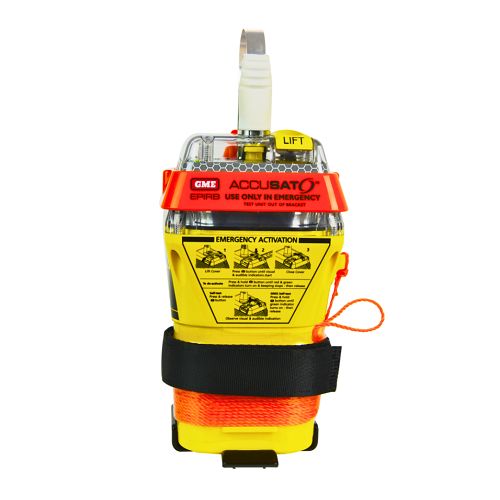
A 10‑year battery EPIRB with integrated GNSS (supports GPS and Galileo), infrared strobe and 121.5 MHz homing signal. Approved for worldwide COSPAS‑SARSAT operation.
Explore →
Self-contained, battery-powered plug‑and‑play autopilot designed for standard hydraulic steering systems.
Explore →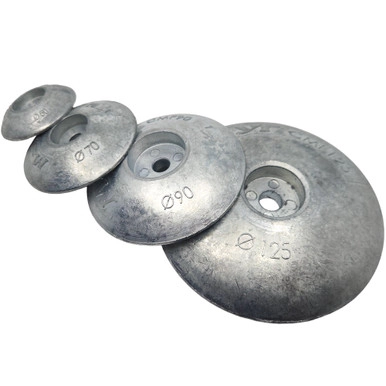
Imported from All Marine Spares. This draft has no editorial summary yet.
Explore →