Loading this page…

Loading this page…
Marina service
About
Pier 21 Marina is a sheltered Swan River marina in North Fremantle with around 174-176 rentable pens and berths suitable for motor boats from about 7 m to 24 m.
Service area: North Fremantle, Perth Metro, WA
Keep exploring
Current operator material describes 174 rentable mooring pens with wide jetty access and power, while marina berth listings reference 176 berths and sizes from about 7 m to 24 m. It is well suited to Swan River and Fremantle-based owners seeking protected wet berthing.
The marina offers around 175 rentable pens, a mixture of fixed and floating berths sized for vessels from 7 to 24 metres, all reached by wide, clean jetty walkways. Every pen has a permanent 15-amp single-phase power connection and water, and free ice is available to pen holders, a small but practical touch for boats heading offshore. Parking is a genuine differentiator: a 24-hour secure car park with electronic key access sits beside the marina, so owners can leave vehicles for extended periods while away on the boat.
Showers, toilets and laundry facilities serve pen holders, free wifi covers the site, and the office is staffed during the week for arrivals, maintenance coordination and security oversight. Pens are let on both short-term and long-term arrangements, which makes the marina one of the more accessible casual berthing options on the lower Swan for visiting craft under 24 metres.
Fuel is listed among the marina's services in published directories; in practice the nearest full fuelling berth is Molfetta Quay in the Fremantle Fishing Boat Harbour just downstream, where Baileys Marine Fuels dispenses diesel and unleaded petrol around the clock on a fuel-card system (phone 1300 224 539). There is no travel lift, slipway or hardstand within Pier 21 itself; haul-outs and refit work are handled a kilometre or two away at the Northport marine services precinct at Rous Head, where SFM Marine operates lift, launch, spray-down and refit facilities, or at the boat lifters in the Fishing Boat Harbour such as Blue HQ.
The adjoining Pier 21 Apartment Hotel effectively extends the amenity list: pen holders and their guests can use the breakfast lounge, restaurant, pools and gym, and family can stay on site during boat works. A redevelopment of the marina site has been flagged by the owner, though berthing operations continue as normal in the meantime.
The run to sea from Pier 21 could hardly be simpler. Three kilometres downstream the Swan meets the Indian Ocean between the North and South Moles; from there Rottnest Island is roughly 25 kilometres across Gage Roads, with Carnac and Garden islands to the south. The river reach past the marina carries commercial traffic, including tugs, barges and ships manoeuvring to the Inner Harbour berths, so skippers should keep a proper lookout and mind their wash near the marina's fixed pens.
Upstream, the Swan offers days of sheltered cruising past East Fremantle's yacht clubs, Bicton, Point Walter and on to Perth Water, but mast-up yachts need to check air draft against the bridges; the old Fremantle Traffic Bridge in particular limits what can pass, and its replacement project has altered navigation arrangements in recent years. Speed limits apply along much of the river and are policed.
Ashore, North Fremantle has become a good provisioning stop: cafes and small bars line Queen Victoria Street and Stirling Highway within walking distance, the North Fremantle train station connects to both Fremantle and Perth, and the Cottesloe and Leighton beach strip is a short hop for a swim. For larger shopping runs, central Fremantle is a few minutes by car over the bridge.
Visiting crews often use the marina as a base for the islands: fuel and ice on the way out, an overnight anchor at Rottnest's Thomson Bay or a booked mooring at Carnac, then back into the pen with the secure car park waiting. Winter fronts can send surge up the lower river, and the fixed-pen berths feel it more than the floating ones, so lines and fenders deserve attention ahead of strong westerly weather.
Satellite imagery at four heights, from the wider harbour to the berths.
Dangar Island sits in the lower Hawkesbury River close to Brooklyn and is one of Sydney’s small, boat‑access communities. From the water it reads as a wooded, low island with sandy foreshore, a public jetty and private moorings; its position at the mouth of Cowan Creek and close to the main river channel makes it an attractive short‑cruise destination for trailer sailors, runabouts and small cruisers but also one that requires careful local knowledge and respect for resident berths, ferry operations and tidal currents.

Expect very different seasonal systems across Western Australia: the south‑west (Perth to Albany) has a strong summer afternoon sea breeze (the “Fremantle Doctor”) and winter westerly fronts, while northern WA follows a wet/dry monsoonal cycle with strong seasonal onshore winds, thunderstorms and cyclone risk in the wet season. Local headlands, estuaries and tidal flows often change what you actually feel on the water, so learn the local timing and sheltered venues first.
Explore →
Before you head offshore from WA have a reliable primary VHF with DSC, a charged and registered 406 MHz EPIRB, at least one waterproof mobile phone and a separate handheld VHF as a backup; write and practise a clear escalation procedure so everyone knows which device to use and when.
Explore →
There are legal obligations in Western Australia for recreational boat owners and skippers covering vessel registration, carriage of safety equipment and general skipper responsibilities, but the exact requirements depend on vessel type, size, where you sail and whether the vessel is commercial or recreational. Check the Western Australian Department of Transport (DoT WA) and the national authority for the precise checklist that applies to your boat and voyage.
Explore →
Increase inspection and cleaning frequency, use correctly sized and positioned sacrificial anodes or maintain impressed-current systems, select antifouling and application timing for local WA fouling pressure, and treat stainless and electrical connections proactively to break the corrosion chain.
Explore →A practical guide for recreational sailors planning passages to, from or around Eden and Twofold Bay. Covers sheltered anchorages, shore facilities, local weather and tidal considerations, preparing for Bass Strait conditions and a focused equipment and safety checklist.
Explore →A practical guide for recreational sailors planning passages to and around Rottnest Island. Covers anchoring and mooring options, local weather and sea conditions, tide and current considerations, passage planning tips and clear safety checklists tailored to Australian sailing conditions.
Explore →Practical guide for recreational sailors navigating the Swan River and coastal waters around Perth. Covers local weather patterns, tides and currents, river navigation, launching and berthing options, safety equipment, common hazards, and step-by-step pre-departure and on-water checklists tailored to Western Australian
Explore →Practical guidance to help recreational cruising sailors choose and use anchorages around Western Australia. Covers types of sheltered anchorages, seasonal and tidal considerations, anchoring technique, local conditions, common mistakes and a checklist for planning stays from sheltered south coast bays to remote Kimber
Explore →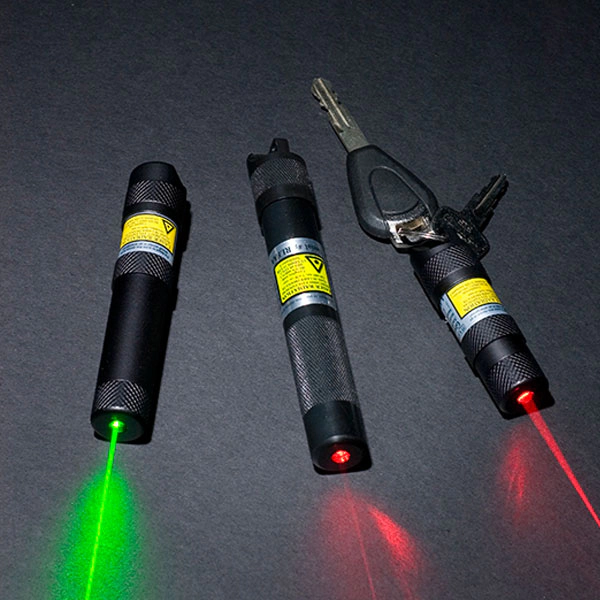
Hand-held, non-flammable laser signalling devices for day and night use, in red, green and Magnum versions, waterproof to 24 m and running for 5 to 72 hours on a battery.
Explore →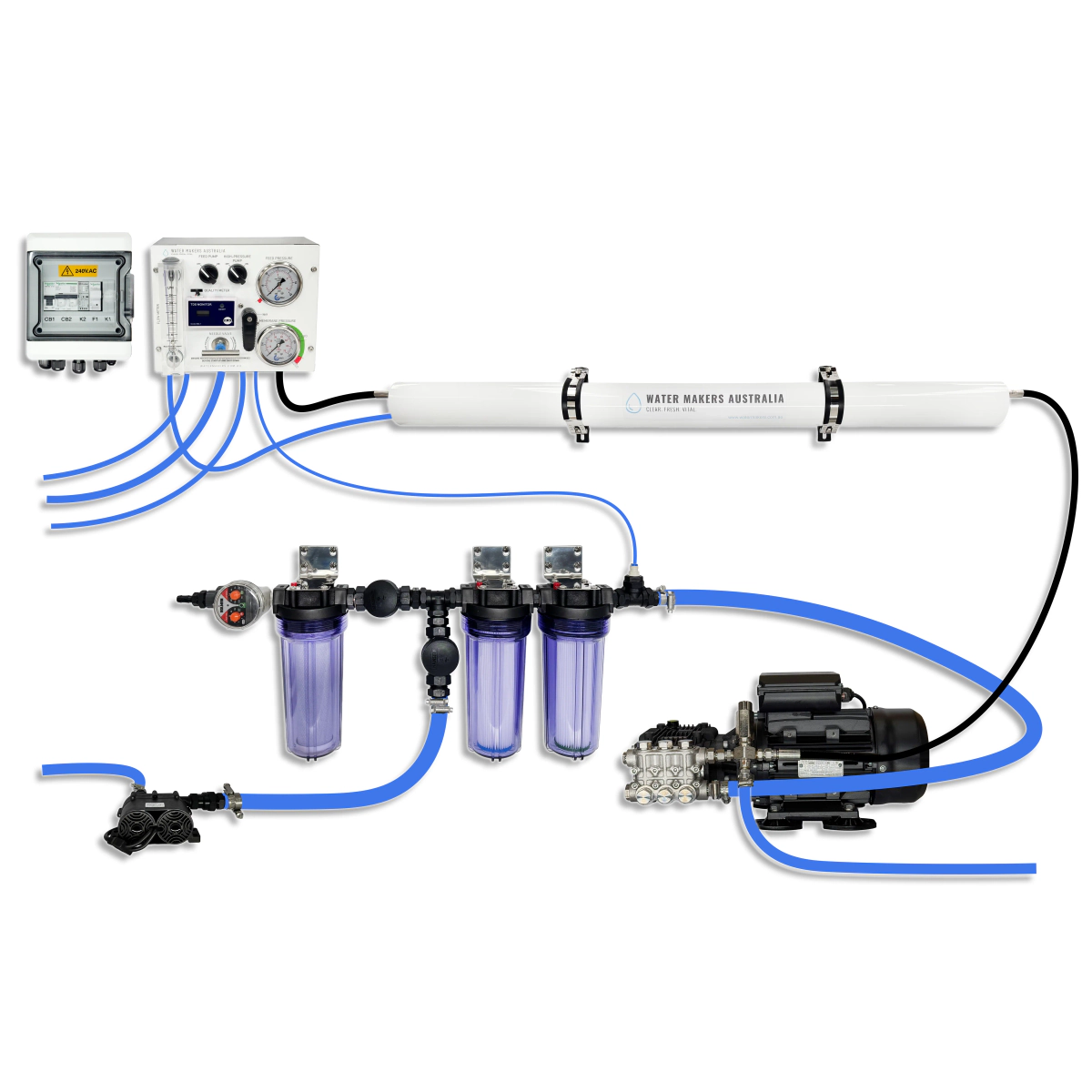
Single-membrane 240 V reverse-osmosis watermaker producing a nominal 80 L/h, built to order in Sydney for cruising boats of about 10 to 15 m with a generator or inverter.
Explore →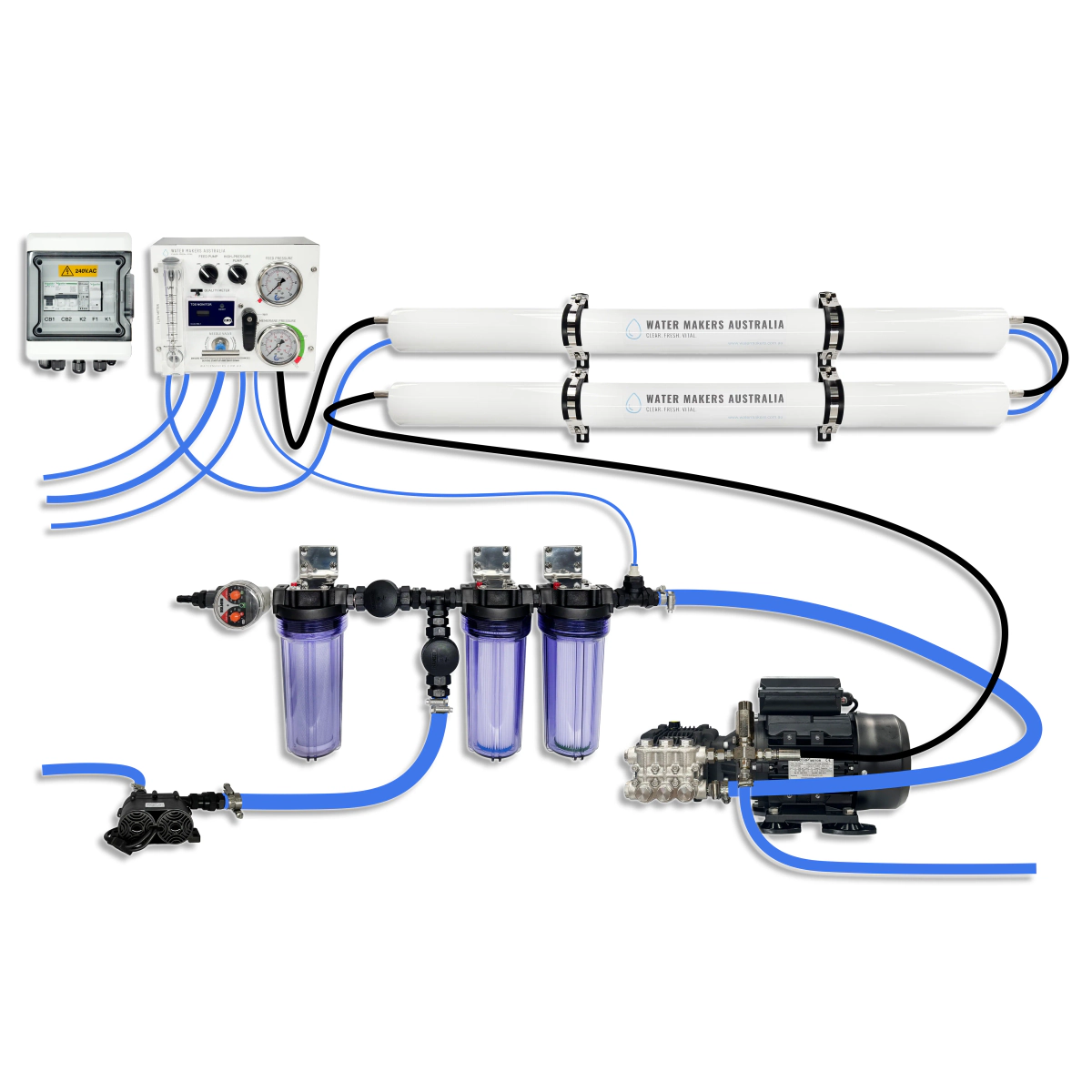
Twin-membrane reverse-osmosis watermaker with a 1.1 kW motor, producing a nominal 110 L/h from a 2 kVA inverter or small generator, for boats of about 10 to 16 m.
Explore →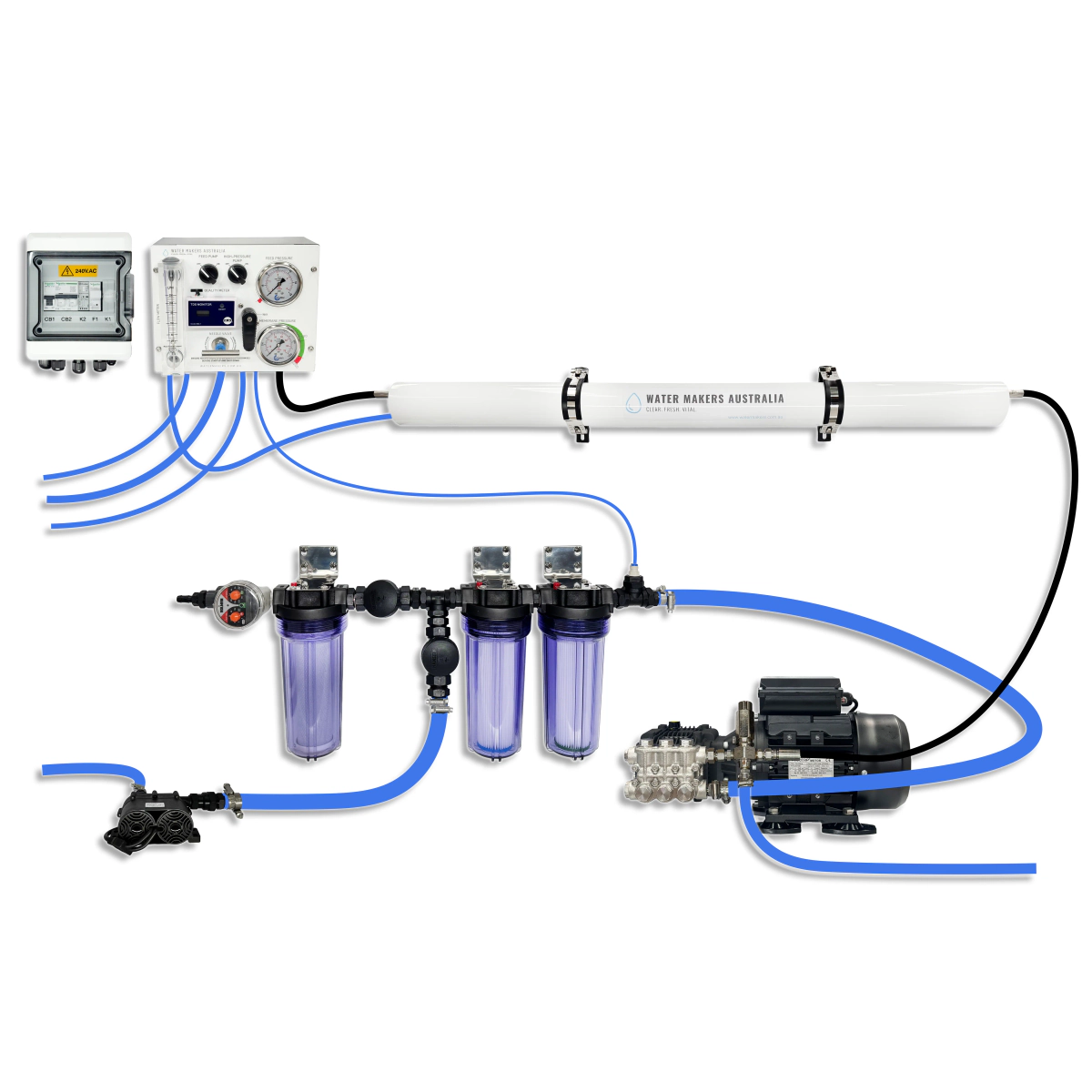
Single-membrane reverse-osmosis watermaker with a 1.1 kW motor, producing a nominal 60 L/h from a 2 kVA inverter or small generator, for cruising couples on boats of about 9 to 14 m.
Explore →