Loading this page…

Loading this page…
Marina service
About
Port Huon Marina, formerly Kermandie Marina, has 80 wet berths on the Huon River with water and power, three-phase power on request, showers and toilets. Its onsite boatyard provides a 63-tonne travel lift, hardstand and ramp; nearby hotel amenities are offsite.
Service area: Port Huon, TAS
Keep exploring
Port Huon Marina is an 80-berth facility on the Huon River at Port Huon. The operator states that all berths have water and power, with three-phase available on request, and advertises dock security, showers, toilets and parking. Its onsite 63-tonne travel lift serves a boatyard and hardstand. Laundry is in Geeveston or Franklin, and the Kermandie Hotel is adjacent rather than part of the marina. Maximum advertised berth length is 82 feet (about 25 m) and maximum draw is 11 feet (about 3.35 m); confirm draft and approach conditions with the marina.
All 80 berths have water and power; three-phase can be supplied on request. The operator advertises dock security, onsite showers, toilets and car parking, plus a 63-tonne travel lift, hardstand and boat ramp. Laundry is offsite in Geeveston or Franklin. A hotel with accommodation and dining is adjacent, not a marina amenity. Confirm haul-out bookings and vessel limits before arrival.
Port Huon is on the Huon River. Confirm the approach, tide, berth and lift dimensions directly with the operator; an older cruising-guide channel-depth claim is not used here.
Satellite imagery at four heights, from the wider harbour to the berths.
Recently received AIS vessel positions around Port Huon Marina (formerly Kermandie Marina). The traffic display loads automatically.
Live traffic will appear after Port Huon Marina (formerly Kermandie Marina) has verified map coordinates.
A practical cruising guide for the Moyne River port at the mouth of the Moyne River on Victoria’s south-west coast. It explains harbour geometry, seasonal conditions, principal sailing zones, anchorages, visitor facilities, known local hazards (bar, reefs, strong currents, surf and commercial traffic), regulatory controls and realistic experiences for day sailors, trailer-sailors and coastal cruisers. The guide draws on local port plans, state boating authorities, the yacht club’s visiting-boat practice and regional marine management documents.

Expect light to moderate, thermally-driven sea breezes in summer with afternoon strengthening; more changeable and often stronger winds with frontal systems in autumn and spring; and the windiest, roughest conditions in winter when cold fronts and sou’westers are most frequent. Gulf St Vincent is more sheltered than the exposed coast but can still produce steep chop and sudden changes near Adelaide and headlands.
Explore →
A regular, layered maintenance routine combining hull cleaning, targeted anti-fouling management, cathodic protection and systems checks will substantially reduce marine growth and corrosion for boats kept year‑round in South Australian waters. Focus on preventing attachment and electrochemical attack, then inspect and act more often if you’re in warm, nutrient-rich or high‑traffic sheltered waters.
Explore →
Treat Tasmanian waters as cold year-round: prevent immersion where possible, wear appropriate layers and a lifejacket, carry reliable distress equipment, and have clear procedures to recover and rewarm anyone who gets wet.
Explore →
Choose a life jacket sized for your pet’s weight and body shape, with a snug but comfortable fit, grab-handle and secure straps; try it on and, if possible, test in shallow water before heading offshore.
Explore →A practical guide for recreational sailors planning visits to Albany and King George Sound. Covers the main anchorage areas, typical local weather patterns, tidal and current considerations, navigational hazards, on-the-water etiquette and a pre-departure checklist to help you plan a safe passage and enjoyable stopover
Explore →A practical guide for recreational sailors planning day sails or short cruises around Batemans Bay, Broulee and the Clyde River. Covers local conditions, safe approaches, anchorages, launching, tides, common hazards, and checklists for trip planning and on-water decisions.
Explore →Practical guide for recreational sailors navigating the Swan River and coastal waters around Perth. Covers local weather patterns, tides and currents, river navigation, launching and berthing options, safety equipment, common hazards, and step-by-step pre-departure and on-water checklists tailored to Western Australian
Explore →Practical guide for recreational sailors planning passage on the Hawkesbury River: how to plan around tides, choose anchorages, read local conditions and prepare the boat and crew for a safe, comfortable trip.
Explore →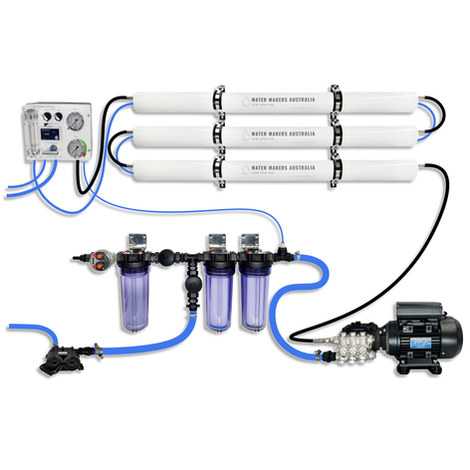
A three-membrane modular watermaker with 200 L/h nominal output and up to 240 L/h family-level marketing, for larger crews and heavy use.
Explore →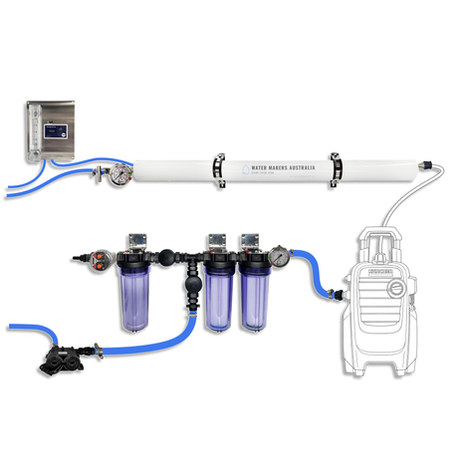
A one-membrane modular marine watermaker with 80 L/h nominal output, remote stainless control panel, standard consumables and direct Australian support.
Explore →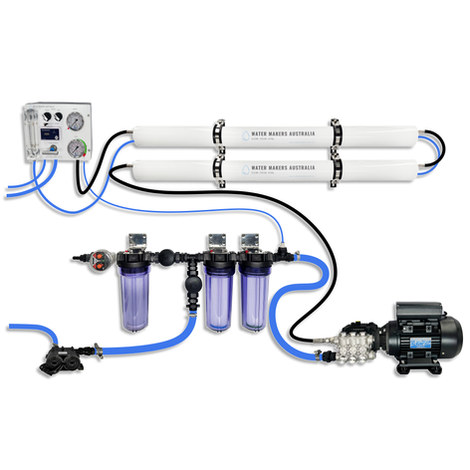
A two-membrane modular watermaker with 140 L/h nominal output, aimed at families and liveaboards that want more water per run.
Explore →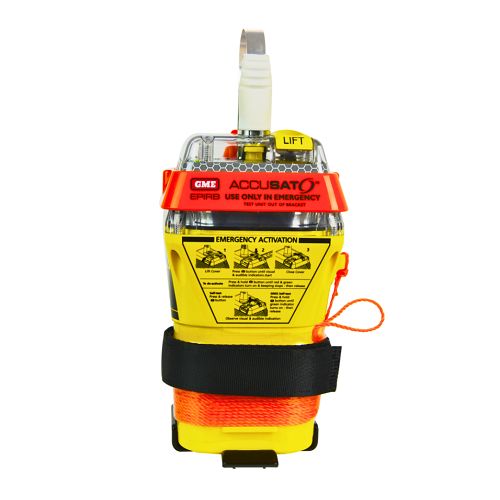
A 10‑year battery EPIRB with integrated GNSS (supports GPS and Galileo), infrared strobe and 121.5 MHz homing signal. Approved for worldwide COSPAS‑SARSAT operation.
Explore →