Loading this page…

Loading this page…
Marina service
About
Stanley is a working boat harbour, not a full-service marina. MAST's current cruising guidance identifies a TasPorts-managed pontoon with four short-term recreational berths. Ask TasPorts VTS on VHF 14 or call 0427 383 672 before arrival; vessels drawing about 3 m should plan entry from half tide to high tide.
Service area: Stanley, North West Tasmania, Tasmania
Keep exploring
Stanley Boat Harbour shelters local working boats and visiting recreational craft on Tasmania's north-west coast. MAST's cruising guidance describes a TasPorts-owned pontoon with four short-term recreational berths and directs enquiries to TasPorts VTS on VHF channel 14 or 0427 383 672. It says an approximately 3 m-draft vessel can enter from half tide to high tide; that is approach guidance, not a universal marina draft limit. Fuel may be arranged separately through Arnolds Fuel, not assumed as an onsite public bowser. Confirm space and local conditions before entering.
MAST identifies four short-term pontoon berths for recreational boats. TasPorts VTS can be contacted on VHF 14 or 0427 383 672 for a berth. MAST lists Arnolds Fuel as a separate fuel contact for Stanley; no 24-hour onsite fuel, pump-out or yard facility is verified for this listing.
MAST advises that boats drawing around 3 m can enter from half tide to high tide. Check current tide, chart and TasPorts VTS instructions rather than treating 3 m as an all-tide depth guarantee; shops are a short walk from the harbour.
Recently received AIS vessel positions around Stanley Boat Harbour. The traffic display loads automatically.
Live traffic will appear after Stanley Boat Harbour has verified map coordinates.
Ballina sits at the mouth of the Richmond River on NSW’s far‑north coast. It’s a working river entrance with a compact boat harbour, exposed ocean beaches and a changeable, sand‑dominated bar. For coastal cruisers it offers a useful stop between Tweed Heads and Yamba, sheltered estuary cruising upriver and easy access to open ocean passages — but the river entrance is highly condition‑dependent and demands respectful planning and local knowledge.

Plan the trip by setting a clear route and timeline, checking tides and currents for your passage times, identifying safe anchorages/harbours as escape options, and building a conservative margin for delays and weather changes.
Explore →
Plan to use tide and local knowledge, slow and steerable power, and deliberate positioning to work with—rather than fight—strong streams and eddies when entering or leaving Tasmanian harbours.
Explore →
Legal safety equipment for recreational boats in South Australia depends on the type, size and where you operate; you must check the current SA government requirements for your vessel. Independently of legal minimums, carry a sensible set of recommended items (lifejackets, means of communication, signaling, fire protection, anchor and basic tools) and make them usable and maintained.
Explore →
A regular, layered maintenance routine combining hull cleaning, targeted anti-fouling management, cathodic protection and systems checks will substantially reduce marine growth and corrosion for boats kept year‑round in South Australian waters. Focus on preventing attachment and electrochemical attack, then inspect and act more often if you’re in warm, nutrient-rich or high‑traffic sheltered waters.
Explore →A practical guide for recreational sailors planning day sails or short cruises on Lake Macquarie. Covers the entrance, navigation considerations, popular anchorages, local weather and tide influences, mooring etiquette, safety checks and suggested itineraries around the lake.
Explore →
Practical, safety-focused guidance for taking children, casual guests or inexperienced crew on Australian recreational sailboats. Covers preparation, simple briefings, boat roles, supervision, suitable activities, watchkeeping, and common mistakes to avoid.
Explore →A practical guide for recreational sailors on using VHF marine radios safely and effectively in Australian waters: basic operation, channel use, emergency procedures, DSC basics, common mistakes and a ready checklist for pre-departure and on-water use.
Explore →A concise, practical introduction to the essential parts of a recreational sailing boat for beginners in Australia. Covers hull, deck, rigging, sails, steering, below-decks spaces and safety equipment, with simple explanations, common mistakes and a pre-decast checklist to help new sailors communicate and get underway.
Explore →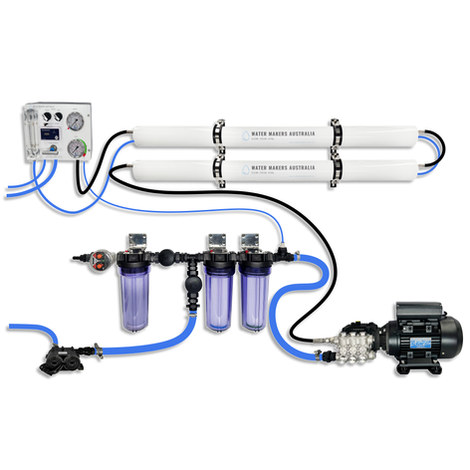
A two-membrane modular watermaker with 140 L/h nominal output, aimed at families and liveaboards that want more water per run.
Explore →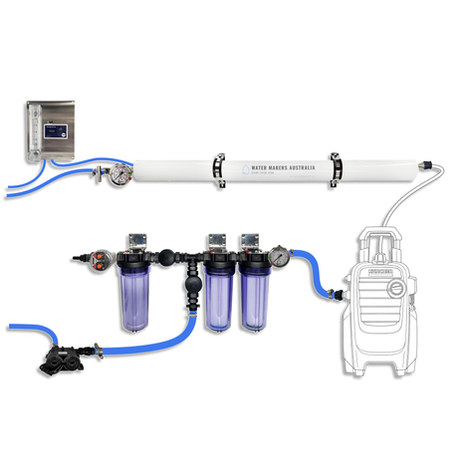
A one-membrane modular marine watermaker with 80 L/h nominal output, remote stainless control panel, standard consumables and direct Australian support.
Explore →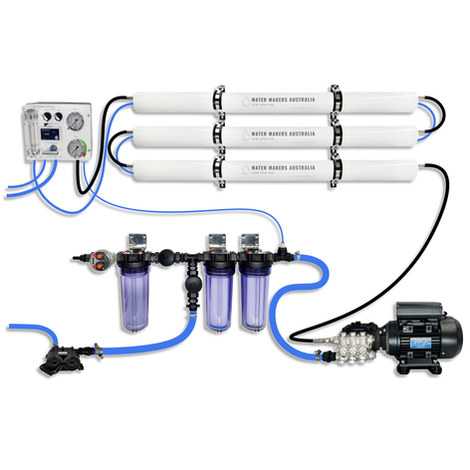
A three-membrane modular watermaker with 200 L/h nominal output and up to 240 L/h family-level marketing, for larger crews and heavy use.
Explore →Burke Yachtsman Gear Bag 40L - Shop Now Zip Pay | Tamar Marine Skip to content 59 – 63 Holbrook Street, Invermay Online Shop Open 24/7 Products search Contact us 1300 MARINE $ 0.00 0 Cart Burke Yachtsman Gear Bag 40L $ 79.90 Colour Choose an option Black Blue Black Blue Clear - Burke Yachtsman Gear Bag 40L quantity + Add to cart Enquire about this product SKU BAGB-Y24/BLACK* Category Bags - Sail & Gear A Burke classic and customer favourite, the Yachtsman’s Gear Bag is built tough to handle wet, salty conditions while keeping your gear dry and protected. Made from double coated waterproof…
Explore →