Loading this page…

Loading this page…
About
Anchor Marine is a Victorian sailing chandlery with dedicated rope and splicing services alongside its broader marine-equipment catalogue. It is relevant to sailors sourcing halyards, sheets and control lines together with the blocks, shackles or deck hardware that those lines need to work with.
Service area: Melbourne, Victoria and Australia-wide online supply
Anchor Marine is a Victorian sailing chandlery with dedicated rope and splicing services alongside its broader marine-equipment catalogue. It is relevant to sailors sourcing halyards, sheets and control lines together with the blocks, shackles or deck hardware that those lines need to work with.
Anchor Marine currently offers Sailing rope; rope splicing; chandlery; deck hardware; sailing and marine equipment. The workshop or operating location is Melbourne VIC, with service coverage described as Melbourne, Victoria and Australia-wide online supply. Current company material explicitly identifies marine or boating work in the areas of sailing rope; rope splicing; chandlery; deck hardware; sailing and marine equipment. This is a direct category match rather than an inferred use of a general-purpose product.
Custom splicing is particularly useful for halyards, sheets, dock lines, anchor rodes and other applications where a compact finished eye or purpose-made termination is preferable to a bulky knot. For sailing yachts, coordination between sails, boom bags, lazy jacks, dodgers and running rigging can prevent one refit item from interfering with another.
The strongest reason to include this business is its access to purpose-specified rope, wire or yacht rigging equipment. A specialist rope supplier can help owners choose construction and fibre by application rather than simply buying a line that looks similar to the one being replaced. Polyester, nylon, UHMWPE and wire all behave differently under stretch, chafe, UV exposure and repeated bending. For YouSail users, that classification is useful because 'rope, canvas and upholstery' covers several very different trades.
Keep exploring
A commercial mooring-rope supplier, a performance yacht rigger, a sailmaker producing boom bags and a marine upholsterer may all belong in the same broad directory section, but they solve different problems and should not be presented as interchangeable businesses.
For rope or rigging enquiries, owners should provide the boat type, intended use, approximate length, current diameter, existing hardware and any preferred end treatment. Halyards, sheets, reefing lines, furling lines and mooring lines have different stretch, handling and abrasion requirements. Boat-specific work should be quoted against the actual vessel wherever possible. Dimensions, access, existing fittings, condition of mounting points and the amount of removal, repair or fabrication required can materially change the job.
For canvas and upholstery, material selection should consider UV exposure, salt, moisture, ventilation, cleaning and how the item will be stored. For rope and rigging, line construction, diameter, stretch, chafe, working load and compatibility with winches, clutches, sheaves or terminals all matter.
Anchor Marine is relevant to boat owners in Melbourne, Victoria and Australia-wide online supply. A location-based directory entry is valuable because custom marine work often requires the vessel to be inspected, measured or visited at its marina. For supply businesses that ship Australia-wide, the listing is still useful because specialist cordage, fabricated rope assemblies and niche marine materials can be difficult to source locally in some cruising regions.
Comprehensive sailing guide to the Bundaberg region covering the Burnett River, Burnett Heads and nearby reefs and islands. Includes geography, seasonal conditions, principal sailing areas, anchorages and visitor berths, arriving and harbour navigation, facilities ashore, local hazards and limitations, regulatory and conservation constraints and suggested sailing experiences suited to day sailors through to passagemakers. Concludes with who the area suits and a short list of authoritative sources consulted.

Choose an anchor that penetrates the seabed you expect, carry enough chain and scope, set by reversing under control until the anchor bites, then test and monitor frequently — in sand and clean mud a plough or fluke-style can work well, in weed look for clean patches or use a claw/Delta-style or dedicated weed anchor and more scope.
Explore →
Use a sensible scope (line length), pick good ground, set the anchor with a controlled reverse to load it, and check you’re not dragging by noting fixed references and using a stern line or anchor alarm if needed.
Explore →
Local rules, marine‑park zoning and permit needs vary by reserve around South Australia’s coast — check the relevant marine park zoning map and SA Department for Environment and Water (DEW) information for the exact area before you go.
Explore →
Prioritise practising abandoning-ship and man-overboard drills, fire and flooding control, engine/fuel failures, emergency steering, communications and MOB recovery with the full crew and kit you’ll use on passage.
Explore →
A practical checklist and explanation of the safety equipment recreational sailors should carry in Australian waters, with how to choose gear, use it correctly, and common mistakes to avoid.
Explore →A concise, practical introduction to the essential parts of a recreational sailing boat for beginners in Australia. Covers hull, deck, rigging, sails, steering, below-decks spaces and safety equipment, with simple explanations, common mistakes and a pre-decast checklist to help new sailors communicate and get underway.
Explore →A practical guide for recreational sailors planning voyages to Esperance and the Recherche Archipelago: what to expect, key planning considerations, common anchorages, safety and communications, equipment recommendations and sensible steps for a successful trip in this remote southern WA cruising area.
Explore →Practical guidance for recreational sailors planning to cross coastal bars in New South Wales. Explains how to assess conditions, plan a crossing, prepare equipment and crew, recognise hazards and manage emergencies, with checklists and realistic examples relevant to NSW waters.
Explore →Burke Yachtsman Gear Bag 40L - Shop Now Zip Pay | Tamar Marine Skip to content 59 – 63 Holbrook Street, Invermay Online Shop Open 24/7 Products search Contact us 1300 MARINE $ 0.00 0 Cart Burke Yachtsman Gear Bag 40L $ 79.90 Colour Choose an option Black Blue Black Blue Clear - Burke Yachtsman Gear Bag 40L quantity + Add to cart Enquire about this product SKU BAGB-Y24/BLACK* Category Bags - Sail & Gear A Burke classic and customer favourite, the Yachtsman’s Gear Bag is built tough to handle wet, salty conditions while keeping your gear dry and protected. Made from double coated waterproof…
Explore →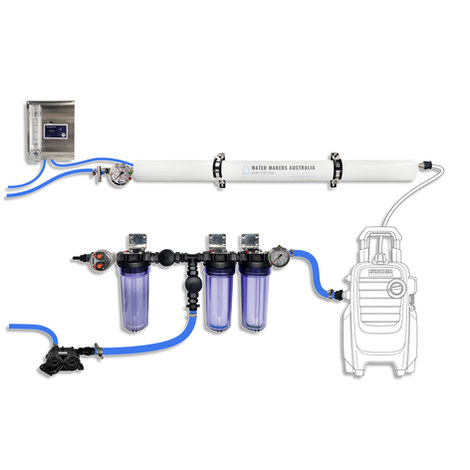
A one-membrane modular marine watermaker with 80 L/h nominal output, remote stainless control panel, standard consumables and direct Australian support.
Explore →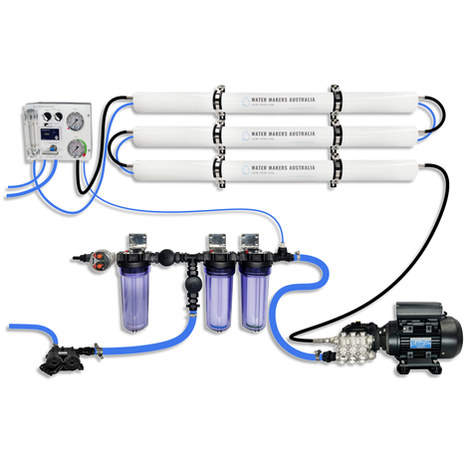
A three-membrane modular watermaker with 200 L/h nominal output and up to 240 L/h family-level marketing, for larger crews and heavy use.
Explore →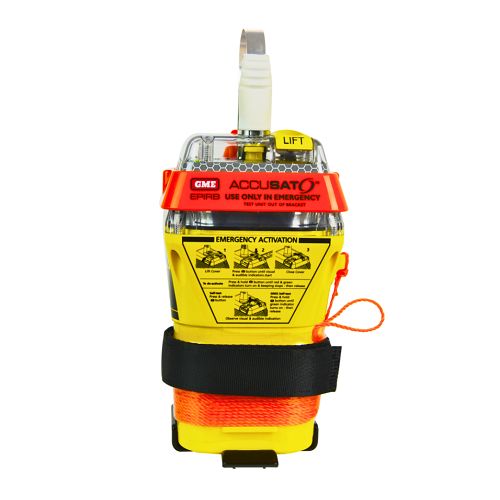
A 10‑year battery EPIRB with integrated GNSS (supports GPS and Galileo), infrared strobe and 121.5 MHz homing signal. Approved for worldwide COSPAS‑SARSAT operation.
Explore →