Loading this page…

Loading this page…
Other marine service
About
BBU is a Melbourne upholstery business with more than 40 years of experience across marine and specialist applications. Its marine work includes custom seating and soft-furnishing refurbishment for boats requiring durable, fitted upholstery.
Service area: Melbourne and Victoria
BBU is a Melbourne upholstery business with more than 40 years of experience across marine and specialist applications. Its marine work includes custom seating and soft-furnishing refurbishment for boats requiring durable, fitted upholstery.
BBU currently offers Custom marine upholstery; boat seating; cushions; vinyl; interior refurbishment; specialist upholstery. The workshop or operating location is 40 Goodyear Drive, Thomastown VIC 3074, with service coverage described as Melbourne and Victoria. The current business material explicitly advertises marine work, including custom marine upholstery; boat seating; cushions; vinyl; interior refurbishment; specialist upholstery.
The company also works outside boating, so it is classified as a mixed-service business with a genuine marine offering rather than as a marine-only specialist. Marine upholstery should be considered as a system of covering, thread, foam, backing and drainage; replacing only the visible vinyl can leave old waterlogged or collapsed foam underneath.
The business is not marine-only, but its boat work is an explicit part of the current service offering. That makes it a legitimate directory entry while still distinguishing it from workshops whose entire operation is focused on yachts and powerboats. For users, the useful question is whether the workshop's marine capability matches the scale and complexity of the intended project. For YouSail users, that classification is useful because 'rope, canvas and upholstery' covers several very different trades.
Keep exploring
Other marine service
Bass Coast Boat & Caravan StorageGlen Forbes, VIC5.0 · 85 Google reviews
View profileA commercial mooring-rope supplier, a performance yacht rigger, a sailmaker producing boom bags and a marine upholsterer may all belong in the same broad directory section, but they solve different problems and should not be presented as interchangeable businesses.
For trimming work, photographs are useful for an initial conversation, but custom canvas and upholstery normally need accurate measurement or patterning on the actual boat. The quote should identify the fabric or vinyl, thread, clear material, foam where relevant, zippers, fasteners, frame work and whether removal and installation are included. Boat-specific work should be quoted against the actual vessel wherever possible.
Dimensions, access, existing fittings, condition of mounting points and the amount of removal, repair or fabrication required can materially change the job. For canvas and upholstery, material selection should consider UV exposure, salt, moisture, ventilation, cleaning and how the item will be stored. For rope and rigging, line construction, diameter, stretch, chafe, working load and compatibility with winches, clutches, sheaves or terminals all matter.
BBU is relevant to boat owners in Melbourne and Victoria. A location-based directory entry is valuable because custom marine work often requires the vessel to be inspected, measured or visited at its marina. For supply businesses that ship Australia-wide, the listing is still useful because specialist cordage, fabricated rope assemblies and niche marine materials can be difficult to source locally in some cruising regions.
American River (Kangaroo Island, SA) is a small, sheltered inlet and township on the north‑eastern side of Kangaroo Island that acts as a calm staging point for cruising the eastern part of the island and for short hops through Backstairs Passage. It’s distinctive for its protected anchorage inside Eastern Cove and the adjacency of Pelican Lagoon — a shallow, ecologically important lagoon with sanctuary zoning — which shapes how and where boats can move. The area suits sheltered day sailing, weekend cruising and short coastal passages; it’s appropriate for trailer sailors, small cruisers and a

Choose an anchor that penetrates the seabed you expect, carry enough chain and scope, set by reversing under control until the anchor bites, then test and monitor frequently — in sand and clean mud a plough or fluke-style can work well, in weed look for clean patches or use a claw/Delta-style or dedicated weed anchor and more scope.
Explore →
Check the seller’s identity, product authenticity and safety standards, payment/security measures and customer feedback before buying marine safety gear online.
Explore →
Warranties, returns and repairs for boating gear bought overseas depend on the seller’s terms, the manufacturer’s international support, and your rights under Australian consumer law — expect longer timeframes, extra cost for shipping and customs, and possible limits on local repairs. Always check the seller’s returns policy and the manufacturer’s warranty before buying.
Explore →
Before the season: confirm seaworthiness — hull, rig, engine, electrics, sails and safety gear — and replace or service wearable items. After the season: wash, dry and protect gear, service consumables and record what you did so the boat’s ready and reliable next season.
Explore →A practical, Australian-focused guide explaining how sails generate drive, the points of sail, and how to trim sails for different conditions. Includes simple explanations of aerodynamic concepts, step-by-step trim checks, common mistakes and clear next steps for practice on the water.
Explore →A practical guide for recreational sailors on using VHF marine radios safely and effectively in Australian waters: basic operation, channel use, emergency procedures, DSC basics, common mistakes and a ready checklist for pre-departure and on-water use.
Explore →A concise, practical introduction to the essential parts of a recreational sailing boat for beginners in Australia. Covers hull, deck, rigging, sails, steering, below-decks spaces and safety equipment, with simple explanations, common mistakes and a pre-decast checklist to help new sailors communicate and get underway.
Explore →A practical guide for recreational sailors planning passages to, from or around Eden and Twofold Bay. Covers sheltered anchorages, shore facilities, local weather and tidal considerations, preparing for Bass Strait conditions and a focused equipment and safety checklist.
Explore →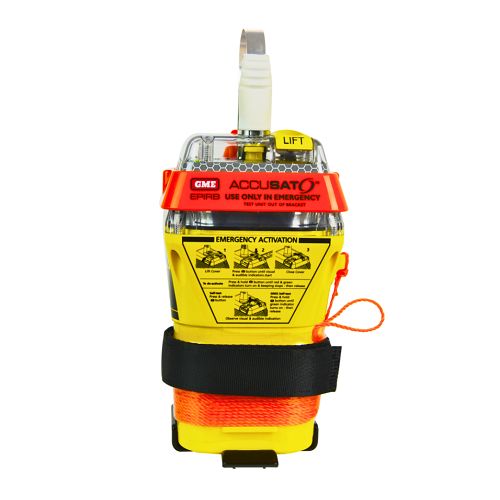
A 10‑year battery EPIRB with integrated GNSS (supports GPS and Galileo), infrared strobe and 121.5 MHz homing signal. Approved for worldwide COSPAS‑SARSAT operation.
Explore →
Self-contained, battery-powered plug‑and‑play autopilot designed for standard hydraulic steering systems.
Explore →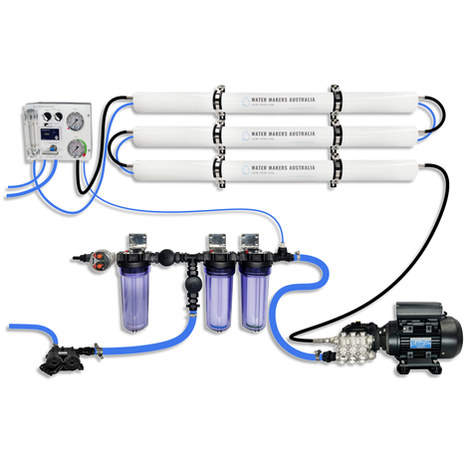
A three-membrane modular watermaker with 200 L/h nominal output and up to 240 L/h family-level marketing, for larger crews and heavy use.
Explore →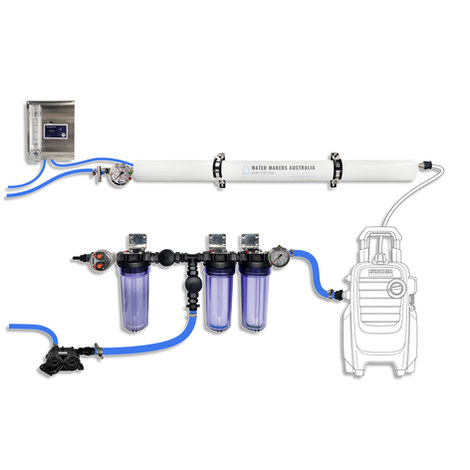
A one-membrane modular marine watermaker with 80 L/h nominal output, remote stainless control panel, standard consumables and direct Australian support.
Explore →