Loading this page…

Loading this page…
Featured on YouSail. Get in touch with Flying Fish Sailing directly: call, or visit their website.
About
A long-established Middle Harbour training centre where complete beginners can start hands-on and progress through RYA Yachtmaster, AMSA Sailing Master and professional yacht-career pathways.
Service area: Sydney Harbour and Middle Harbour; offshore passages along the NSW coast and to Tasmania, Lord Howe Island and the Whitsundays
Flying Fish grew from a pioneering UK–Australia Yachtmaster Fast Track programme into a permanent Sydney training centre. Middle Harbour gives students varied wind, protected bays, the main harbour and quick access to the Tasman Sea—all within one practical training base.
Its teaching philosophy is participation first. Beginners rotate through positions and sail the boat from day one; professional candidates combine theory, teamwork and meaningful command experience. RYA/MCA and AMSA pathways are explained according to where and how a student intends to work, rather than presented as interchangeable certificates.
Keep exploring
A hands-on start: safety, equipment, steering, points of sail and rotating through real crew positions rather than watching from the rail.
Theory and practical training for taking charge of short passages in familiar waters.
Advanced boat handling and passage-making for skippers extending into more demanding coastal sailing.
Theory, practical coaching and team immersion for experienced candidates approaching an independent exam.
Career-focused progression towards internationally used RYA/MCA qualifications and Australian commercial sailing work.
Practical handling and local licensing for powered craft.
Essential communications and emergency-response skills for safer crews.
Build sea miles and experience on iconic events and offshore voyages, including Sydney–Hobart and longer coastal adventures.
Training and career preparation, supported by an international network of graduates working as captains and senior crew.
The clearest thread through the school is progression without pretending the certificate is the finish line: start actively, study seriously, then build the sea time and command experience that turn a qualification into capability.
Andy talks about building a Sydney training centre, why Middle Harbour works as a classroom, and how complete beginners can progress towards confident cruising or a professional career at sea.
In conversation with Andy, Founder of Flying Fish
Question 1
The story goes back nearly 30 years. I created Flying Fish in the UK, and we were looking for a destination that would let us make better use of the British winter. I already had connections in Australia and at Middle Harbour, so we developed a UK–Australia Yachtmaster Fast Track programme—a concept Flying Fish pioneered in the UK.
It proved so popular that the programme evolved into a permanent local training centre at Middle Harbour. Today we have a strong Australian customer base, while students still arrive through Flying Fish UK and European agents for professional Fast Track programmes.
Many graduates are now captains and senior crew around the world. They have become part of the network that helps the next generation get started.
Question 2
It is visually spectacular, but it is also excellent and surprisingly challenging. The bays produce different wind effects, there is generally plenty of breeze, and we can quickly reach either the Tasman Sea for offshore training or the main harbour.
Sydney has less tide than many UK training areas, but the harbour and Tasman Sea provide plenty of other challenges. For an international student, there is also something special about leaving a cold European winter and sailing on Sydney Harbour.
Question 3
That advice is a big part of the conversation before someone books. For international work on sailing yachts or in the superyacht industry, the RYA/MCA Yachtmaster is generally the key qualification. For commercial work on sailing vessels in Australia, the AMSA Sailing Master pathway matters. Many professional candidates will ultimately benefit from both.
Australian Sailing is particularly strong in areas such as dinghy sailing and Safety & Sea Survival. We are also an Australian Registered Training Organisation delivering AMSA-related training, with further programmes under development.
Question 4
A typical starting point is an RYA Start Yachting weekend. Students meet the instructor and crew, receive a safety briefing and learn the basic equipment—winches, clutches and lines—then we get sailing quickly.
We begin by reaching across the wind, tacking at each end and rotating everyone through the positions. From there we introduce sailing upwind, the no-go zone, tacking towards an objective and sailing downwind. By the end of the day, students have actually sailed the boat rather than watched somebody else do it.
Question 5
It is a broad mix of Australians and international students who want to make sailing their career. Some aim for superyachts; others want to become charter skippers, instructors, mates or professional skippers in Australia.
Former students have gone on to skipper in the Clipper Round the World Yacht Race and work on commercial and private yachts around the world. Yachtmaster is not really the end of the journey—it is the beginning of being a professional skipper.
Question 6
You get out what you put in. There is substantial theory as well as practical sailing, so people who study, participate, work as part of the team and immerse themselves in the programme generally do well.
People learn at different speeds. We sometimes call one option the ‘slow-track Fast Track’: a student spreads the programme out, sails independently between modules and builds experience progressively. Motivation and participation matter more than arriving as a sailing superstar.
Question 7
One route is to complete a Fast Track programme, gain Yachtmaster and potentially an AMSA Sailing Master qualification, then build professional experience. Some graduates become RYA Cruising Instructors and build command time by teaching. Others enter the superyacht industry as deckhands and progress from there.
I think of a newly qualified Yachtmaster like a newly qualified pilot: you have earned the licence, but the important next step is experience and command time. I like the route where people skipper smaller vessels early and build genuine command experience before moving to larger boats.
Question 8
It creates a useful international pathway. A student can train in Sydney, complete STCW training in the UK and then head into the European superyacht industry, including through our connections in Antibes. Others combine sailing qualifications here with Yachtmaster Power training in the UK.
British and European students also come to Sydney for part of their training. It turns professional training into an international adventure as well as a qualification.
Question 9
Our principal training yachts include Beneteau First 40.7s and a First 40, which provide a strong balance of performance and comfort. We want boats that actually teach people to sail and give students a feel for the raw sailing skills.
For offshore work we also have Arctos, a locally built 55-foot Radford cutter. It is a substantial, capable offshore training yacht.
Question 10
Personality is key. Qualifications and experience matter, but we want supportive leaders, good communicators and team players who genuinely enjoy teaching. A good skipper looks after both the boat and the crew: happy boat, happy crew, happy skipper.
Practical and technical skills add another layer. Someone with an engineering or diesel-mechanic background, for example, brings valuable knowledge to a yacht.
Question 11
The key is understanding what each person is trying to achieve. Course outcomes need to be clear, but good service and instruction also mean understanding the individual.
Someone who wants an enjoyable first day has a very different objective from a Yachtmaster candidate or career changer. We need to deliver appropriately for both.
Question 12
Sydney is a good place to sail all year. I particularly like autumn—March, April and May—when the water is still warm and the strong summer southerlies have usually eased, provided there is no East Coast Low.
Spring is excellent too, and winter can produce beautiful sailing days. You simply need to watch for the stronger winter westerlies.
Question 13
People often worry that everybody else will know more, or that they will not fit into the crew. They quickly discover that everyone brings different strengths and that becoming a crew is part of learning to sail.
A crew forms much like any team: people learn to communicate, establish routines and gradually perform together. That process is a big part of the fun.
Question 14
We are expanding the online academy with short courses that support practical training. The aim is not to replace time on the water, but to make it more effective by helping students arrive better prepared.
We are also considering a larger RIB and, potentially, another offshore yacht.
Question 15
Sailing is much more accessible than people imagine. You do not need to have grown up sailing, own a boat or know all the terminology before you start.
Complete beginners regularly become very capable sailors and, in some cases, professional skippers. Whether the goal is a weekend on Sydney Harbour, confidence to charter on holiday or an entirely new career, it starts the same way: get on a boat and have a go.
Ashmore Reef is a remote, uninhabited oceanic reef and low-lying island group in the Timor Sea that offers a stark, conservation-led sailing environment rather than typical recreational cruising. It is distinctive for its exposed coral reef, vegetated sand islands and strong legal protections, including tightly controlled access and traditional Indonesian fishing arrangements. Visiting from a recreational yacht is logistically challenging, subject to regulatory limits, and suited only to well-prepared offshore passages or research/management charters rather than casual day sails.

Look for a friendly club with beginner-focused training, accessible facilities and boats, a supportive community, clear safety practices, and opportunities to progress at your own pace.
Explore →
Give everyone a simple, clearly defined role (helm, main trimmer, headsail trimmer, lookout/tactician and bow/lines), use short standard calls for manoeuvres, and keep communications positive and concise so the day stays safe and relaxed.
Explore →
Pick a protected bay, estuary or river reach where you can rig, launch and arrive on calm water within a short, sheltered transit; choose a site with a good ramp or jetty, clear recovery options and a nearby sailing club, marina or commercial operator for local knowledge and help.
Explore →
Pick a stable, simple, forgiving dinghy with a single sail or basic sloop rig, affordable handling and easy maintenance—ideally one with a local class or school nearby so you can access coaching and spare parts.
Explore →
A practical guide for new sailors on picking the right Australian sailing club: training, boat access, racing, social fit, costs and the key questions to ask before joining.
Explore →
A concise, practical guide to the points of sail and how to trim sails effectively for common Australian conditions. Learn the basics of wind angles, sail shape, telltales, reefing considerations and simple steps to improve boat speed and balance.
Explore →A practical guide for recreational sailors planning visits to Albany and King George Sound. Covers the main anchorage areas, typical local weather patterns, tidal and current considerations, navigational hazards, on-the-water etiquette and a pre-departure checklist to help you plan a safe passage and enjoyable stopover
Explore →Practical guide for recreational sailors planning a coastal cruise from Sydney north to the Queensland border. Covers route options, weather and tidal considerations, planning checklists, common hazards, anchorages and practical examples for a safe, enjoyable trip.
Explore →Burke Yachtsman Gear Bag 40L - Shop Now Zip Pay | Tamar Marine Skip to content 59 – 63 Holbrook Street, Invermay Online Shop Open 24/7 Products search Contact us 1300 MARINE $ 0.00 0 Cart Burke Yachtsman Gear Bag 40L $ 79.90 Colour Choose an option Black Blue Black Blue Clear - Burke Yachtsman Gear Bag 40L quantity + Add to cart Enquire about this product SKU BAGB-Y24/BLACK* Category Bags - Sail & Gear A Burke classic and customer favourite, the Yachtsman’s Gear Bag is built tough to handle wet, salty conditions while keeping your gear dry and protected. Made from double coated waterproof…
Explore →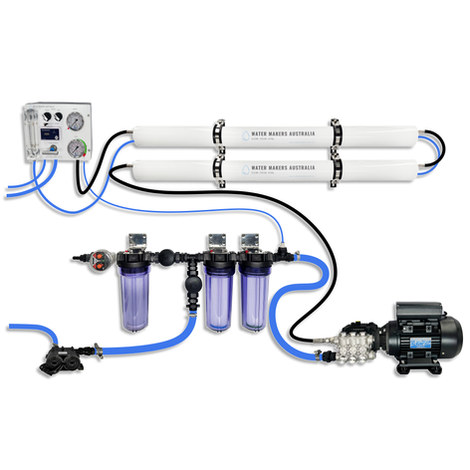
A two-membrane modular watermaker with 140 L/h nominal output, aimed at families and liveaboards that want more water per run.
Explore →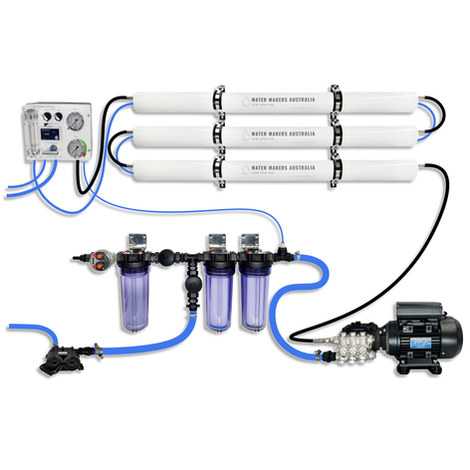
A three-membrane modular watermaker with 200 L/h nominal output and up to 240 L/h family-level marketing, for larger crews and heavy use.
Explore →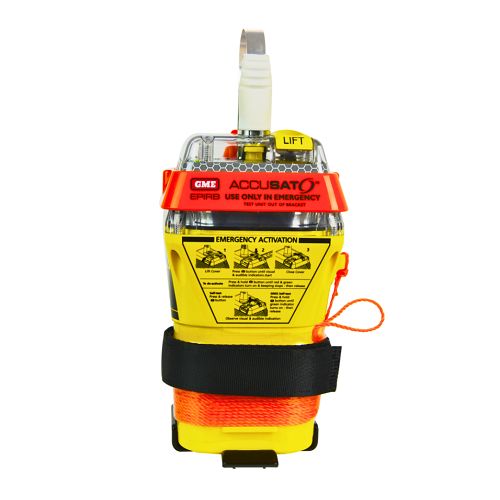
A 10‑year battery EPIRB with integrated GNSS (supports GPS and Galileo), infrared strobe and 121.5 MHz homing signal. Approved for worldwide COSPAS‑SARSAT operation.
Explore →