Loading this page…

Loading this page…
Featured business
Sailing academy / training
Featured on YouSail. Get in touch with Mainstay Sailing directly: call, or visit their website.
About
Liveaboard sailing training from Coral Sea Marina, Airlie Beach, with RYA and Australian Sailing courses, cruising yachts and practical learning through the Whitsunday islands.
Service area: Whitsunday Islands (Coral Sea Marina, Airlie Beach), with Coastal Skipper passages south to Percy Island
Mainstay Sailing offers both RYA and Australian Sailing training. Its small-group approach connects lessons with the real work of running a cruising yacht: sail handling, navigation, anchoring, meals and shared responsibility aboard.
Students train on Kayami, a Jeanneau 44, and Mohawk, a Beneteau Oceanis 40.1. Routes through Nara Inlet, Hook Passage and farther north towards Gloucester Island and Bowen provide varied settings for learning about anchoring, tides, weather and passage decisions.
Keep exploring
A short liveaboard introduction to steering, sails, ropework and safety for complete newcomers.
Five days of hands-on learning designed to turn a passenger into a confident, involved crew member.
Build the judgement and boat-handling skills to skipper a small yacht by day in familiar waters.
Online navigation and seamanship knowledge that supports the practical skipper course.
Advanced skippering on longer passages, including more demanding pilotage and night sailing.
Higher-level online navigation, meteorology and passage planning for experienced sailors.
Preparation for the certificate often needed to charter a boat internationally.
Focused practical coaching before assessment by an independent RYA examiner.
Specialist courses that round out a skipper's emergency, mechanical and communications knowledge.
Mainstay pairs serious instruction with the kind of liveaboard week people remember for years—an excellent way to gain a certificate and genuinely grow into it.
Mainstay Sailing talks about liveaboard learning, its cruising yachts, RYA and Australian Sailing training, island navigation and building confidence at any age.
In conversation with Mainstay Sailing, School team
Question 1
When we looked at Airlie Beach, we saw a gap in the market. There wasn’t an RYA sailing school here, despite the Whitsundays being such an incredible place to learn to sail.
We wanted to create something a little different — a niche sailing school focused on quality rather than volume. The idea was to combine internationally recognised RYA training with the unique experience of learning to sail in the Whitsundays.
From the beginning, we wanted Mainstay Sailing to be about more than simply getting people through a course. We wanted people to spend time on the boat, learn by doing, build confidence and actually experience what sailing is all about.
The Whitsundays are an amazing classroom, and having that environment on our doorstep gives us the opportunity to teach sailing in a way that is both practical and memorable.
Question 2
We actually offer both RYA and Australian Sailing training. We chose to become an RYA recognised centre because of the international reach of the RYA system.
Australian Sailing qualifications are primarily focused on the Australian sailing environment, whereas RYA qualifications are internationally recognised and provide a pathway that can take a sailor well beyond Australia.
The RYA system also offers a broader range of internationally recognised certificates and qualifications, including the International Certificate of Competence (ICC), which can be particularly useful for people who want to charter or sail overseas.
For a student, it means that what they learn with us isn’t just relevant to sailing in the Whitsundays. They’re working towards qualifications that can form part of a sailing pathway internationally — whether their goal is to sail in Australia, charter a yacht overseas or continue all the way through to Yachtmaster.
Question 3
From the moment you step onto the dock, you’re stepping into the sailing experience. You’re not just coming down for a few hours of instruction and then going home — you’re living aboard the yacht and becoming part of the crew.
The first day is about settling in, getting to know the boat and the other people on board, and learning the fundamentals. Very quickly, everyone gets involved. There are sails to hoist, lines to handle, navigation to learn, meals to organise and a boat to look after.
As the week progresses, the students become increasingly involved in running the yacht. We spend our days sailing between the islands, practising manoeuvres, navigation, anchoring and the many practical skills that go into being a competent sailor. Evenings are generally spent at anchor, where there’s time to relax, talk about the day’s sailing and prepare for the next day.
One of the great advantages of the liveaboard format is that the learning doesn’t stop when the engine is switched off. You’re constantly experiencing what it’s actually like to live and operate on a yacht — from managing the boat and your own space to understanding weather, tides, anchoring and life aboard.
By the end of the course, you’ve spent several days and nights working as part of a crew and putting the theory into practice. When you finally hand the boat back, you’ve hopefully not only completed your course but come away with a much better understanding of what sailing is really about.
Question 4
Most people join us at the RYA Competent Crew level. It’s a great starting point because you don’t need previous sailing experience, and it gives people the opportunity to learn the fundamentals while actually living aboard and sailing the yacht.
From there, some people continue through RYA Day Skipper and eventually Coastal Skipper and Yachtmaster. Others complete Competent Crew and have achieved exactly what they wanted — the confidence and skills to go sailing with friends or family.
There isn’t really a requirement to follow the entire pathway. It depends on what someone wants to do with their sailing.
For some, Competent Crew is the beginning of a lifelong journey. For others, it’s about gaining enough knowledge and confidence to enjoy sailing independently. And for those who want to take sailing further, the RYA pathway provides a structured progression right through to Yachtmaster.
Question 5
They’re signing up for a very hands-on introduction to sailing. You don’t need to have sailed before — that’s exactly what the course is designed for.
You’re going to learn how a yacht works, how to move around safely on board, how to handle sails and lines, steer the boat, assist with manoeuvres, anchor, and become part of a functioning crew. You’ll also learn some of the basics of navigation, weather and seamanship.
But it’s not classroom-based learning. You’re learning by actually doing it, on the water, every day.
Because our courses are liveaboard, you’re also experiencing what it’s like to live on a yacht. You’ll be cooking, eating, sleeping and spending your days aboard with the rest of the crew. That can sound a little daunting beforehand, particularly if you’ve never done it before, but most people settle into it very quickly.
The biggest thing is to come with an open mind and be prepared to get involved. You don’t need to know anything about sailing when you arrive. By the end of the course, you should have a solid foundation of sailing skills, a much better understanding of how a yacht operates and, hopefully, a real desire to get back out on the water.
Question 6
That really depends on where they are in the RYA pathway and what they want to do with their sailing.
For many people, the qualification is the beginning of their sailing journey rather than the end. They can continue building experience and progress through the RYA pathway, from Competent Crew through Day Skipper, Coastal Skipper and eventually Yachtmaster.
The international recognition of the RYA system is one of its attractions. If you want to sail or charter overseas, having an internationally recognised qualification can be very useful, although the exact requirements can vary between countries, charter companies and the type of sailing you’re planning to do.
The RYA also offers qualifications such as the International Certificate of Competence, or ICC, which is specifically relevant to people who want to operate pleasure craft internationally.
So ultimately, an RYA qualification can open up quite a few possibilities. You might use your skills to sail with friends and family here in Australia, charter a yacht on a holiday overseas, continue your training, or work towards professional qualifications such as Yachtmaster.
For us, that’s one of the great things about the RYA pathway — where you take it after leaving Mainstay Sailing is really up to you.
Question 7
We currently train on two yachts — Kayami, a Jeanneau 44, and Mohawk, a Beneteau Oceanis 40.1.
We deliberately chose proper cruising yachts rather than boats that are set up purely for training. We want students to learn how to sail and operate a real cruising yacht — because that’s ultimately what many of them want to do after completing their courses.
Both boats are comfortable liveaboard yachts, but they’re also very capable sailing boats. They give students the opportunity to learn everything from sail handling and manoeuvring to anchoring, navigation and general yacht management.
There’s also something important about learning on a boat where you’re actually going to live for the week. You learn how the systems work, how to organise yourself and the crew, how to keep the boat tidy and safe, and what it’s like to operate a yacht as a complete package. And, of course, they’re very well suited to the Whitsundays. We’re able to use them not just as training platforms, but as genuine cruising yachts while we’re exploring the islands.
The aim is that when someone finishes with us, they’ve learned on a boat that feels familiar to the type of yacht they may eventually charter, sail or even own themselves.
Question 8
The simple answer is: you haven’t.
Sailing isn’t something you have to start when you’re 20 or 30. In fact, some of our best students have come to us later in life. They often bring patience, life experience and a willingness to learn, which can be just as valuable as physical ability.
You don’t need to be incredibly fit or athletic to learn to sail. What matters is being able to participate safely, listen to your instructor and gradually build your skills and confidence.
We’ve had students in their sixties and beyond who started with very little experience and went on to achieve their RYA qualifications and become confident sailors.
There really is no particular age at which you have to stop learning something new. If sailing is something you’ve always wanted to try, I’d say don’t worry about your age — just get on the boat.
Question 9
It can actually be one of the most enjoyable parts of the experience.
You’re putting several people who may have never met before onto a relatively small yacht, so we spend some time at the beginning establishing how we’re going to operate as a crew. Everyone has a role, everyone gets involved, and we encourage people to communicate with each other.
A yacht works best when everyone understands that you’re a crew rather than a collection of individuals.
There are also the practical things — keeping the boat tidy, sharing cooking and other jobs, respecting each other’s space and understanding that everyone is there to learn.
And interestingly, people often arrive as strangers and leave having made some very good friends.
Five days on a yacht gives you plenty of opportunity to get to know people. You’re sailing together, navigating together, sitting around the cockpit in the evening and sharing the experience.
Question 10
The Whitsundays really are our classroom. One of the great advantages of learning to sail here is that you’re not just doing exercises in an artificial training environment — you’re actually sailing between islands, navigating passages, anchoring in different conditions and making real decisions on the water.
We regularly use places such as Nara Inlet, which is a fantastic location for learning about anchoring, boat handling and manoeuvring. It’s sheltered, beautiful and gives students the opportunity to really understand how a yacht behaves under power and at anchor.
Hook Passage is another great classroom. It gives students the opportunity to work with tides, navigation and the effects of wind and current. You begin to appreciate that navigation isn’t simply following a line on a chart — you need to understand what the water, weather and surrounding islands are doing as well.
We also head further north to Gloucester Island and the Bowen area. That’s something that makes our training particularly interesting. These areas sit outside the main bareboat charter zones, so you don’t have the same concentration of charter yachts moving around the anchorages.
For students, that creates a very different experience. There’s more opportunity to explore, practise navigation and experience sailing in areas that aren’t simply following the well-worn charter routes. It also means students get to see another side of the Whitsundays and the mainland coast.
Question 11
The great thing about the Whitsundays is that we can sail throughout the year, but the character of the sailing does change with the seasons.
The winter months generally bring some beautiful sailing conditions — cooler temperatures, comfortable days and often good, consistent trade winds.
Spring and early summer can also be fantastic, although conditions can become more variable as we move towards the wetter season.
Then during the summer months, we have warmer temperatures and different weather patterns to consider. It’s also important to remember that tropical weather can change quickly, so regardless of the season, weather awareness is an important part of sailing here.
And that’s actually part of the attraction for our students. We’re not just teaching them to sail in perfect conditions. We’re teaching them how to understand the weather, make decisions and adapt to what’s happening around them.
Question 12
The biggest piece of advice is pack light.
You don’t need a huge suitcase on a yacht. Soft bags are much easier because they can be folded away when you’re on board.
Bring comfortable clothes, swimwear, a hat, sunscreen, sunglasses, a light jacket or fleece, appropriate footwear and any personal medication you need.
We provide the important things you need on the yacht, and for our live-aboard training we also take care of the food, so there’s no need to arrive with a suitcase full of supplies.
And something people often bring that they don’t really need? Too many clothes!
You’re going to be spending your time on a yacht in the Whitsundays. Keep it simple.
Question 13
Probably “I’m going to be the least experienced person on the boat.”
People often worry that everyone else will know more than they do, or that they’ll somehow hold the group back.
But that’s exactly why you’re doing a course.
Nobody expects you to arrive knowing how to sail. Even on a course where people have some previous experience, everyone has different strengths and weaknesses.
The other big one is that people sometimes think sailing is going to be physically exhausting.
There are certainly times when sailing is physical, but modern yachts have excellent equipment and systems that make handling them much more manageable.
The biggest change we see is usually confidence. Someone might step aboard on day one saying, “I’m not sure I can do this,” and a few days later they’re confidently taking the helm, navigating and becoming part of the crew.
That’s a pretty satisfying transformation to watch.
Question 14
We’re continuing to develop Mainstay around what we believe we do particularly well — small-group, practical sailing education and private sailing experiences in the Whitsundays.
We’re looking at expanding some of our private training options and continuing to develop our RYA pathway, from Competent Crew through to the more advanced qualifications.
We’re also putting more emphasis on private and couples’ sailing experiences, because we’ve found that there are people who don’t necessarily want a traditional group sailing holiday. They want something more personal, with an experienced instructor or skipper and the opportunity to learn at their own pace.
And, of course, we’re always looking at boats and opportunities that allow us to improve what we offer.
Question 15
A lot of people spend years saying, “I’d love to learn to sail one day.”
Then they keep putting it off.
You don’t need to know everything before you start. That’s what the courses are for.
At Mainstay Sailing, we’re not just interested in teaching someone how to sail a boat around the Whitsundays. We want people to leave with an understanding of sailing that they can take anywhere in the world.
The RYA qualification is part of that, but the real goal is confidence — being able to step aboard a yacht, understand what’s happening around you, make good decisions and become a useful member of a crew.
And once you get that feeling of being out on the water, working with the wind rather than against it, it’s very easy to understand why people become addicted to sailing.

Expect light to moderate, thermally-driven sea breezes in summer with afternoon strengthening; more changeable and often stronger winds with frontal systems in autumn and spring; and the windiest, roughest conditions in winter when cold fronts and sou’westers are most frequent. Gulf St Vincent is more sheltered than the exposed coast but can still produce steep chop and sudden changes near Adelaide and headlands.
Explore →
Pack sun protection and lightweight, quick-drying layers for summer; insulation, waterproof outer layers and warm accessories for winter — plus basic safety and comfort gear for both seasons.
Explore →
Plan as a chain of conservative daily legs tied to your boat’s real-world fuel and speed in the expected sea state, with confirmed primary and alternate anchorages/berths, fuel legs and back-up fuel options, and a documented emergency/diversion plan (comms, tow and med-evac). Build tidal and weather gates into each leg and carry chart and comms redundancy.
Explore →
Late spring to summer is usually the best time for beginners to start learning to sail in Tasmania because the weather is generally warmer, days are longer and conditions are often more settled. Expect lighter to moderate winds with regular afternoon sea breees in summer, while spring and autumn bring more changeable and sometimes stronger conditions; winter is colder, wetter and typically windier with more fronts and swell.
Explore →
A practical guide for new sailors on picking the right Australian sailing club: training, boat access, racing, social fit, costs and the key questions to ask before joining.
Explore →
A practical guide to Queensland’s top sailing areas, what to expect from each region, seasonal and safety considerations, suggested itineraries and useful planning checklists for recreational sailors.
Explore →Practical guide for recreational sailors planning a coastal cruise from Sydney north to the Queensland border. Covers route options, weather and tidal considerations, planning checklists, common hazards, anchorages and practical examples for a safe, enjoyable trip.
Explore →A concise, practical guide for recreational sailors in New South Wales that explains southerly busters, sea breezes and east coast lows, how they form, how they affect coastal sailing, common signs to watch for, equipment and preparation, and clear next steps to plan safer outings.
Explore →Burke Yachtsman Gear Bag 40L - Shop Now Zip Pay | Tamar Marine Skip to content 59 – 63 Holbrook Street, Invermay Online Shop Open 24/7 Products search Contact us 1300 MARINE $ 0.00 0 Cart Burke Yachtsman Gear Bag 40L $ 79.90 Colour Choose an option Black Blue Black Blue Clear - Burke Yachtsman Gear Bag 40L quantity + Add to cart Enquire about this product SKU BAGB-Y24/BLACK* Category Bags - Sail & Gear A Burke classic and customer favourite, the Yachtsman’s Gear Bag is built tough to handle wet, salty conditions while keeping your gear dry and protected. Made from double coated waterproof…
Explore →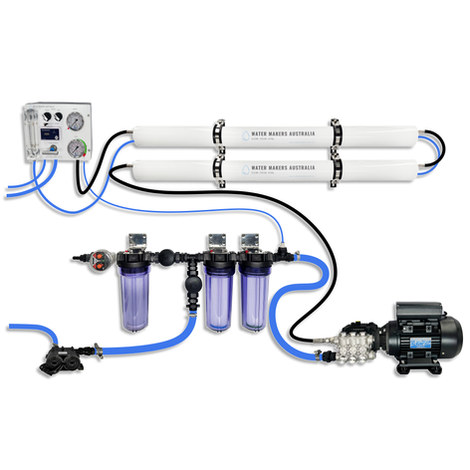
A two-membrane modular watermaker with 140 L/h nominal output, aimed at families and liveaboards that want more water per run.
Explore →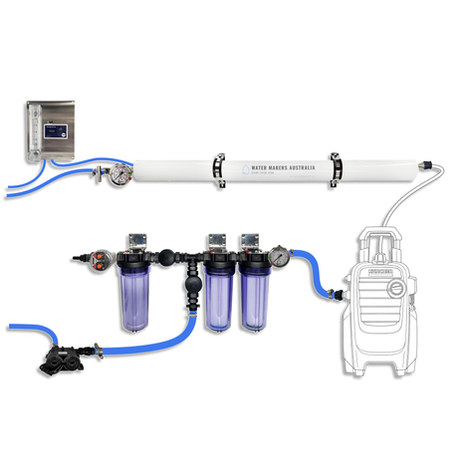
A one-membrane modular marine watermaker with 80 L/h nominal output, remote stainless control panel, standard consumables and direct Australian support.
Explore →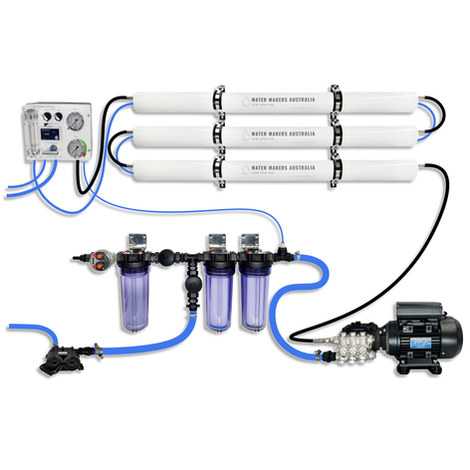
A three-membrane modular watermaker with 200 L/h nominal output and up to 240 L/h family-level marketing, for larger crews and heavy use.
Explore →Then there are the passages between the islands, where students start bringing everything together. That’s where they’re learning to steer, trim the sails, navigate, communicate with the crew and keep an eye on the weather — often all at the same time.
We also like to vary the itinerary depending on the weather and the conditions. That’s an important part of learning to sail. You can’t always follow a fixed plan, and sometimes the best lesson is learning to look at the conditions, assess your options and make a sensible decision about where to go next.
That’s really what we’re trying to achieve. By the end of a course, we don’t want someone who can simply perform a set of sailing exercises because they’ve been told what to do. We want them to start looking at a chart, the weather and the boat and thinking, “Okay, this is what we’ve got — what’s the best way to approach it?”
That’s when the Whitsundays stop being just a beautiful place to sail and become a very effective classroom.