Loading this page…

Loading this page…
Marina service
About
Frances Bay Mooring Basin, known as the Duck Pond, is a tide-free Darwin locked basin with about 85 berths for vessels up to 30 m, showers/toilets and cyclone procedures.
Service area: Frances Bay, Darwin, NT
Keep exploring
Use this listing for the government-managed Frances Bay / Duck Pond mooring basin. NT Government and marina references identify it as a locked, tide-free basin, included in Darwin Port cyclone procedures, with an estimated 85 berths for vessels up to 30 m and basic amenities but no fuel.
Services reflect a government-run commercial boat harbour rather than a leisure marina. The 85 pens take vessels to 30 metres in the tide-free basin, accessed through the 35 by 16-metre lock on VHF channel 6 under the lockmaster's instruction, with at least an hour's notice the norm and call-out fees for after-hours work. Berthing is arranged through Darwin Port's small ships scheduler (08 8922 0617, smallships.scheduler@nt.gov.au), and published NT Government pen rates run on a daily basis for permanent tenants, with 20-metre and 25-metre pens listed at $16.95 and $21.69 per day respectively in recent schedules, plus charges for lock movements, electricity and water.
Power is available at pens, and there are showers and toilets for tenants; the batch records laundry among the amenities, but beyond that there is deliberately little: no fuel facility inside the basin, no chandlery, no wifi, no cafe strip. Fuel is next door at the Fishermans Wharf fuel jetty, operated by Baileys Marine Fuels, which serves the fishing fleet in all tides.
What the Duck Pond offers instead is heavy-duty practicality: drive-on dock access for cars, trucks, cranes and forklifts, hard-standing working room beside the basin, and a tolerance for grinding, welding and slipping-adjacent maintenance that private marinas refuse. During the recent lock upgrade, temporary barge facilities operated from Fishermans Wharf to keep industry moving through lock closures.
The basin also figures in the NT's cyclone planning for commercial vessels, its locked, tide-free water making it a designated heavy-weather refuge for the fleet. Berth holders are allocated pens by the scheduler and vessel placement can shift as the commercial fleet's needs change; cruising yachts accepted on short stays should expect to move pens or raft alongside fishing boats if asked.
For a visiting yacht the Duck Pond's value is location and tolerance. It sits on Frances Bay between Stokes Hill Wharf and Tipperary Waters, an easy dinghy ride from the Frances Bay anchorage and a 15 to 20-minute walk to the Smith Street Mall, so crews can live aboard within sight of the CBD without paying leisure-marina rates. Access is through the same Frances Bay approach used by Tipperary Waters and Bayview traffic, with the usual Darwin caveats: an eight-metre tidal range outside the lock, powerful water movement inside the chamber, and lines tended constantly on both sides as the level changes, with heavy ropes on the lock wall to tie to at low water.
The lockmaster directs where you tie up; stay on channel 6. Chandleries and marine trades cluster within a kilometre: Darwin Ship Stores near Fishermans Wharf and Nautical Supplies toward Tipperary Waters cover most needs, and the Fishermans Wharf precinct handles fuel and ice. Historically the basin grew with Darwin's pearling industry, and on any given day the pens still tell that story, from pearl farm motherships working the Arafura to prawn trawlers between Gulf seasons.
Recreational boats should ring the small ships scheduler before assuming a berth; when the fleet is home for the wet, the basin fills and visitors are turned toward Cullen Bay or Tipperary Waters. Crocodiles turn up in Frances Bay often enough that trap floats are a routine sight, and the working harbour's etiquette is simple: commercial traffic has right of way in practice if not in law.
Satellite imagery at four heights, from the wider harbour to the berths.
Recently received AIS vessel positions around Frances Bay Mooring Basin (Duck Pond). The traffic display loads automatically.
Live traffic will appear after Frances Bay Mooring Basin (Duck Pond) has verified map coordinates.
American River (Kangaroo Island, SA) is a small, sheltered inlet and township on the north‑eastern side of Kangaroo Island that acts as a calm staging point for cruising the eastern part of the island and for short hops through Backstairs Passage. It’s distinctive for its protected anchorage inside Eastern Cove and the adjacency of Pelican Lagoon — a shallow, ecologically important lagoon with sanctuary zoning — which shapes how and where boats can move. The area suits sheltered day sailing, weekend cruising and short coastal passages; it’s appropriate for trailer sailors, small cruisers and a

Use ramps and beaches with respect for local conditions: check ramp layout, tide and swell, wind direction, vehicle access and crowding; prepare boat and crew before you launch or retrieve; and follow local signage, courtesy and safety practices. Specifics vary by ramp and beach, so confirm details for the exact site before you go.
Explore →
Use a sensible scope (line length), pick good ground, set the anchor with a controlled reverse to load it, and check you’re not dragging by noting fixed references and using a stern line or anchor alarm if needed.
Explore →
Plan to use tide and local knowledge, slow and steerable power, and deliberate positioning to work with—rather than fight—strong streams and eddies when entering or leaving Tasmanian harbours.
Explore →
Anchor in rocky coves, sandy bays and tidal flats by choosing the right ground and anchor, giving plenty of scope, setting the anchor slowly and testing it, and planning for tidal change and swing room.
Explore →A practical guide for recreational sailors planning voyages to Esperance and the Recherche Archipelago: what to expect, key planning considerations, common anchorages, safety and communications, equipment recommendations and sensible steps for a successful trip in this remote southern WA cruising area.
Explore →A practical guide for recreational sailors planning visits to Albany and King George Sound. Covers the main anchorage areas, typical local weather patterns, tidal and current considerations, navigational hazards, on-the-water etiquette and a pre-departure checklist to help you plan a safe passage and enjoyable stopover
Explore →
Practical guidance for recreational sailors in Australia on assessing swell, tide and wind, choosing the safest time to cross a coastal bar, preparing crew and gear, and making the decision to go or turn back.
Explore →A practical guide for recreational sailors planning passages to, from or around Eden and Twofold Bay. Covers sheltered anchorages, shore facilities, local weather and tidal considerations, preparing for Bass Strait conditions and a focused equipment and safety checklist.
Explore →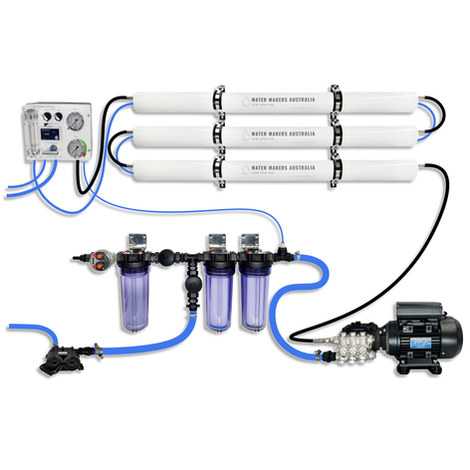
A three-membrane modular watermaker with 200 L/h nominal output and up to 240 L/h family-level marketing, for larger crews and heavy use.
Explore →Burke Yachtsman Gear Bag 40L - Shop Now Zip Pay | Tamar Marine Skip to content 59 – 63 Holbrook Street, Invermay Online Shop Open 24/7 Products search Contact us 1300 MARINE $ 0.00 0 Cart Burke Yachtsman Gear Bag 40L $ 79.90 Colour Choose an option Black Blue Black Blue Clear - Burke Yachtsman Gear Bag 40L quantity + Add to cart Enquire about this product SKU BAGB-Y24/BLACK* Category Bags - Sail & Gear A Burke classic and customer favourite, the Yachtsman’s Gear Bag is built tough to handle wet, salty conditions while keeping your gear dry and protected. Made from double coated waterproof…
Explore →
Self-contained, battery-powered plug‑and‑play autopilot designed for standard hydraulic steering systems.
Explore →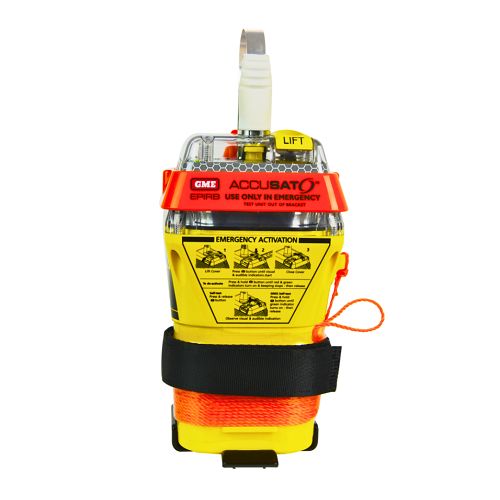
A 10‑year battery EPIRB with integrated GNSS (supports GPS and Galileo), infrared strobe and 121.5 MHz homing signal. Approved for worldwide COSPAS‑SARSAT operation.
Explore →