Loading this page…

Loading this page…
About
Brisbane liferaft and marine-safety specialist since 1991. Liferaft sales and servicing, lifejacket and EPIRB servicing, and agents for Viking, Ocean Safety, Spinlock, Ocean Signal and more. Run by Peter Campbell-Burns, who has more than 40 years in the industry.
Service area: Brisbane, south-east Queensland
Marinesafe Australia has been looking after liferafts and safety gear for Queensland boaties since 1991. Owner and director Peter Campbell-Burns has more than 40 years' experience in the sale and servicing of liferafts and related equipment.
Keep exploring
Inflatable lifejackets need regular checks and servicing to stay reliable. A specialist like Marinesafe can service the whole kit (liferaft, lifejackets and beacon) in one visit before an offshore season.
21 Rowland Street, Slacks Creek QLD 4127 (near IKEA Springwood) · (07) 3808 1988 · sales@marinesafe.com.au
See the VIKING, Spinlock and Ocean Signal brand pages, or more safety equipment specialists.
Last checked: September 2026.
The Arnhem Land Coast (Northern Territory) is a large, remote Top End seascape of rugged sandstone headlands, wide tidal flats, mangrove-fringed estuaries and scattered islands. Distinctive for its strong cultural ownership by Aboriginal Traditional Owners, extensive marine country and seasonally dramatic tides and winds, it offers adventurous cruising and exploration rather than marina-based boating. Best suited to experienced coastal cruisers, well-equipped trailable or fly-in/boat-out excursions and small commercial charters who have organised the necessary access permits and local advice.

Carry wearable lifejackets (one per person that fits), a reliable means of distress communication, basic firefighting and bilge items, navigation lights and charts, plus sensible clothing, sun protection and drinking water. Exact legal requirements vary by state and vessel — check the relevant regulator before you go.
Explore →
Prioritise practising abandoning-ship and man-overboard drills, fire and flooding control, engine/fuel failures, emergency steering, communications and MOB recovery with the full crew and kit you’ll use on passage.
Explore →
A good float plan and a well-stocked emergency kit significantly improve your chances of a safe outcome when cruising remote parts of South Australia’s coastline. The float plan should give someone ashore all the information they need to find you and raise help if you don’t return; the emergency kit should allow you to stabilise the boat, care for injuries, signal for rescue and survive until help arrives.
Explore →
Legal safety equipment for recreational boats in South Australia depends on the type, size and where you operate; you must check the current SA government requirements for your vessel. Independently of legal minimums, carry a sensible set of recommended items (lifejackets, means of communication, signaling, fire protection, anchor and basic tools) and make them usable and maintained.
Explore →Practical guide for recreational sailors planning passages, anchorages and visits to Ningaloo Reef and the Exmouth coast. Covers anchoring considerations, marine park rules and how local weather, tides and currents affect safety and enjoyment.
Explore →Practical guidance for recreational sailors planning coastal and remote cruising in Western Australia, focusing on tidal planning, reef awareness, navigation and safety preparation tailored to local conditions.
Explore →
A practical, Australia-focused guide for planning and sailing around the Whitsunday Islands: weather and seasons, navigation and anchoring, moorings and parks, provisioning and charters, safety and common mistakes, plus checklists and next steps.
Explore →A practical guide for recreational sailors planning a multi-day coastal passage along Western Australia: what to consider, how to plan for weather, tides and currents, required equipment and safety checks, route-planning steps, common mistakes and sensible next steps.
Explore →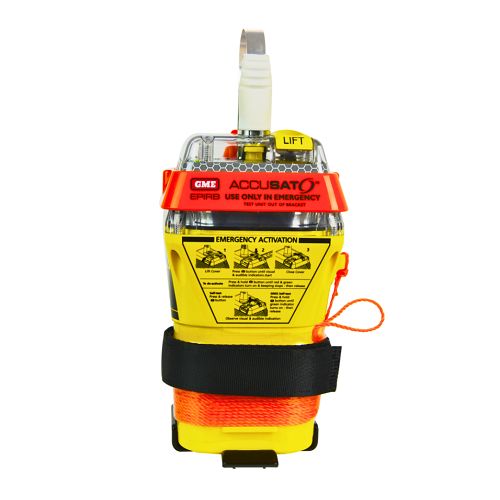
A 10‑year battery EPIRB with integrated GNSS (supports GPS and Galileo), infrared strobe and 121.5 MHz homing signal. Approved for worldwide COSPAS‑SARSAT operation.
Explore →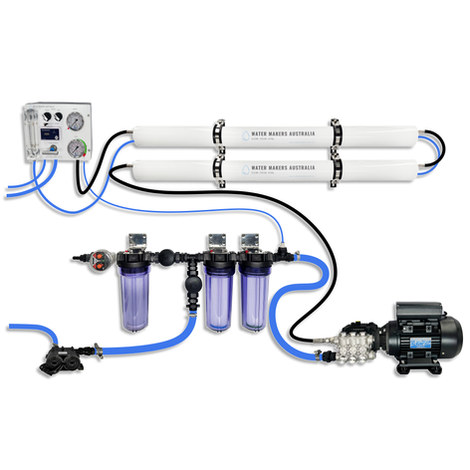
A two-membrane modular watermaker with 140 L/h nominal output, aimed at families and liveaboards that want more water per run.
Explore →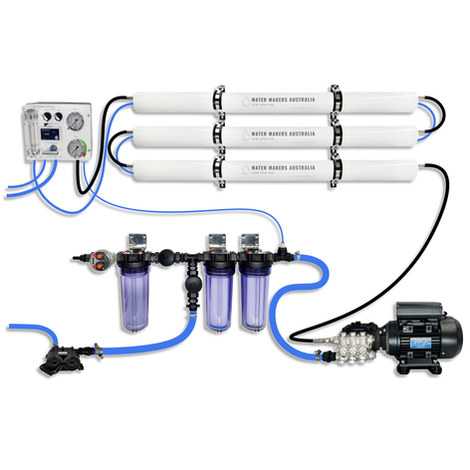
A three-membrane modular watermaker with 200 L/h nominal output and up to 240 L/h family-level marketing, for larger crews and heavy use.
Explore →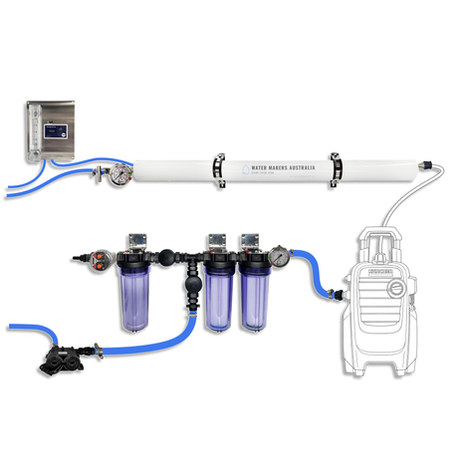
A one-membrane modular marine watermaker with 80 L/h nominal output, remote stainless control panel, standard consumables and direct Australian support.
Explore →