Loading this page…

Loading this page…
Marina service
About
Redcliffe Marina is a Moreton Bay marina on the Redcliffe Peninsula with berth availability handled through the marina manager and pump-out available to berth holders.
Service area: Redcliffe, Moreton Bay, QLD
Keep exploring
TMR confirms bilge/sullage pump-out service is available to berth holders and directs berth availability enquiries to the marina manager.
Services are basic, transparent and priced by the metre. The 74 floating berths are stern-to pens taking vessels to 15 metres and, at a surcharge, beyond; every berth has power and water, with wi-fi, toilets and an electronic security gate, for which access tags carry a $25 refundable deposit. A bilge and sullage pump-out service is available to berth holders.
The published schedule (which includes GST) starts a 10-metre monohull at $595 per month or $5,650 per year, rising to $880 per month or $7,000 annually for 15 metres, with multihulls over five metres of beam charged roughly half as much again. Berth applications do not confer liveaboard rights: living aboard requires a separate approval, numbers are limited, and the charges are deliberately light, $60 a week for a single or $80 for a couple, and $220 to $280 per calendar month, with the first days complimentary.
Casual berthing exists but is constrained by low vacancy. Depth in the marina is under two metres at low water, manoeuvring room is rated tight, and tidal flow through the harbour arm demands attention when berthing. There is no fuel wharf, travel lift, hardstand or chandlery within the TMR marina; those needs are met next door at the private Scarborough Marina, which runs a 35-tonne travel lift, a Wiggins forklift, hardstand and drystack launching for power boats to 10 metres plus tenant marine trades.
The marina manager is reachable by mobile for berth enquiries, and berth layout and navigation plans are published on the department's site.
Scarborough Boat Harbour is the most protected all-weather harbour on the northern Moreton Bay shore, and the cruising ground at its doorstep explains the waiting lists. Moreton Island's western anchorages, the Tangalooma wrecks and the Big Sandhills lie a comfortable day sail across the bay; northward, the leads into Pumicestone Passage open the sheltered run to Caloundra; and the bay's island-fringed waters hold mackerel, snapper and whiting, with humpback whales passing through from June to November.
Inside the harbour the quirks are practical: depths are modest, so deeper keelboats work the tides, and the marina's low-water depths of under two metres rule out big draughts. Ashore, the Redcliffe Peninsula operates as a self-contained seaside town. Scarborough's cafes and takeaway strip front the harbour, the Sunday markets fill Redcliffe Parade, Suttons Beach and the Settlement Cove lagoon handle swimming days, and the Bee Gees Way display on the foreshore marks the suburb where the Gibb brothers signed their first contract.
Supplies, marine hardware and public transport are all close, with Brisbane's CBD about 35 kilometres away by road or reachable by bus and the Redcliffe Peninsula rail line, and whale-watching boats work the bay from the harbour in season. Local history runs deep for those interested: the 1824 convict settlement at Redcliffe was Queensland's first European foothold before it shifted to the Brisbane River the following year.
For berth holders the appeal is simple arithmetic: government-scale fees, an honest pump-out, a quiet liveaboard policy and a bay full of weekend destinations.
Satellite imagery at four heights, from the wider harbour to the berths.

Plan the trip by setting a clear route and timeline, checking tides and currents for your passage times, identifying safe anchorages/harbours as escape options, and building a conservative margin for delays and weather changes.
Explore →
Taking pets between Australian states and into marinas or national parks is governed by state and territory biosecurity/quarantine rules, local council and marina policies, and the management rules of parks. Requirements vary by jurisdiction and by the species of animal, so check the relevant state/territory biosecurity office, the park management agency and the marina operator before you travel.
Explore →
Reef as soon as the boat becomes hard to steer, uncomfortable, or when sails start flogging — reduce the mainsail first (to keep balance), then reduce headsail area; practise the reefing sequence and check sail trim and helm balance afterwards.
Explore →
Learn boat-handling basics (steering, points of sail and sail trim), safety and seamanship (personal flotation, wind awareness, man-overboard procedure), and simple anchoring/mooring — these give you the core skills to sail safely and enjoyably.
Explore →
Practical guidance for recreational sailors in Australia on assessing swell, tide and wind, choosing the safest time to cross a coastal bar, preparing crew and gear, and making the decision to go or turn back.
Explore →
A concise, practical guide to the points of sail and how to trim sails effectively for common Australian conditions. Learn the basics of wind angles, sail shape, telltales, reefing considerations and simple steps to improve boat speed and balance.
Explore →A concise, practical introduction to the essential parts of a recreational sailing boat for beginners in Australia. Covers hull, deck, rigging, sails, steering, below-decks spaces and safety equipment, with simple explanations, common mistakes and a pre-sail checklist to help new sailors communicate and get underway.
Explore →A practical guide to preparing, planning and executing a recreational offshore passage along the New South Wales coast. Covers route selection, weather and tidal considerations, vessel and crew checks, safety equipment, communication, watchkeeping and common mistakes, with clear pre‑departure and underway checklists.
Explore →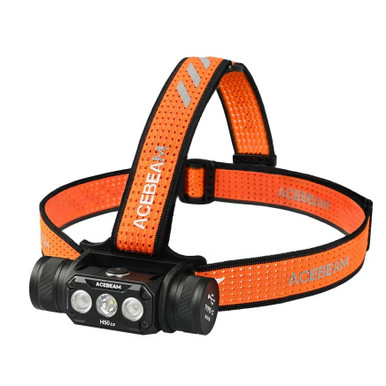
A 2000 lumen headlamp with spot and flood beams, rated IP68 and submersible to 2 metres, with a 141 metre beam and up to 30 hours on low.
Explore →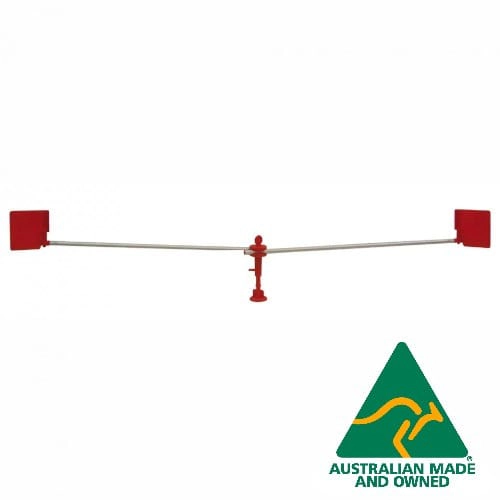
Wind-driven bird repeller with 2 metre rotating arms that keeps birds from roosting on hardtops, biminis, booms and decks. UV stabilised, with a bayonet base and a 12 month warranty.
Explore →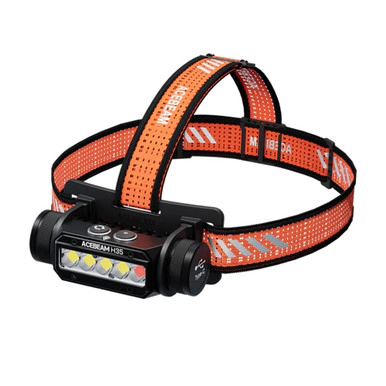
A 2600 lumen wide-beam headlamp with a red light, rated IP68 and submersible to 2 metres, with a 170 metre beam and USB-C charging.
Explore →
Metal-bodied 4G push-to-talk radio with GPS and SOS in the GPS variant and a lifetime SIM plan included. Sold as a two-pack.
Explore →