Loading this page…

Loading this page…
Marina service
About
Royal Victorian Motor Yacht Club is a Williamstown yacht club with an 80-berth marina for vessels up to 18 m. Current club material advertises permanent, casual and visitor berthing, with water and shore power available to all berths, alongside the club's boating, dining and events facilities.
Gallery status: no editorially approved marina photographs are available yet.
Service area: Williamstown, VIC
Keep exploring
Royal Victorian Motor Yacht Club (RVMYC) is a Williamstown-based motor yacht club with marina, boating, dining and events facilities. The current club marina page says its 80 berths cater for boats up to 18 metres (60 feet), with permanent, casual and visitor accommodation. All berths have access to water and shore power. This listing should present RVMYC as a club marina rather than a commercial boatyard; fuel, pump-out and haul-out are not verified as onsite services in this pass.
Verified services include club marina berths, permanent/casual/visitor accommodation, shore power, water and club facilities. Fuel, pump-out, boatyard and travel-lift services are not verified for RVMYC in this pass.
Williamstown is a busy northern Port Phillip boating precinct. Confirm visitor access, member rules and berth availability with the club before arrival.
Recently received AIS vessel positions around Royal Victorian Motor Yacht Club. The traffic display loads automatically.
Live traffic will appear after Royal Victorian Motor Yacht Club has verified map coordinates.
Bathurst Harbour (Port Davey system), in south‑west Tasmania, is a vast, almost land‑locked estuarine harbour inside the Southwest National Park and World Heritage Area. It offers a remote, sheltered anchoring environment protected from the Roaring Forties, but demands careful planning, an awareness of marine‑reserve rules, and a willingness to operate in shallow, tannin‑stained waters. Best suited to experienced coastal cruisers and small expedition yachts prepared for self‑sufficiency, Bathurst Harbour is more a place to linger and explore on foot and by tender than a port of call for busy,

Write a one‑page plan with the who/what/when/where/how of your trip, keep a copy on board and leave the main copy with a responsible person ashore (and optionally with your club, marina office or local volunteer rescue service).
Explore →
Pick a protected bay, estuary or river reach where you can rig, launch and arrive on calm water within a short, sheltered transit; choose a site with a good ramp or jetty, clear recovery options and a nearby sailing club, marina or commercial operator for local knowledge and help.
Explore →
Do a seasonal inspection and servicing routine that focuses on hull and antifouling, through-hulls and seacocks, rigging and sails, engine and fuel systems, electricals and batteries, safety gear and bilge systems. Tailor exact tasks to your boat type, age and where you sail in South Australia, and follow manufacturer and marine service advice for anything technical.
Explore →
Increase inspection and cleaning frequency, use correctly sized and positioned sacrificial anodes or maintain impressed-current systems, select antifouling and application timing for local WA fouling pressure, and treat stainless and electrical connections proactively to break the corrosion chain.
Explore →A practical guide for recreational sailors planning visits to Albany and King George Sound. Covers the main anchorage areas, typical local weather patterns, tidal and current considerations, navigational hazards, on-the-water etiquette and a pre-departure checklist to help you plan a safe passage and enjoyable stopover
Explore →A practical guide for recreational sailors planning passages to, from or around Eden and Twofold Bay. Covers sheltered anchorages, shore facilities, local weather and tidal considerations, preparing for Bass Strait conditions and a focused equipment and safety checklist.
Explore →A practical guide for recreational sailors planning passages to and around Rottnest Island. Covers anchoring and mooring options, local weather and sea conditions, tide and current considerations, passage planning tips and clear safety checklists tailored to Australian sailing conditions.
Explore →A practical guide for recreational sailors planning voyages to Esperance and the Recherche Archipelago: what to expect, key planning considerations, common anchorages, safety and communications, equipment recommendations and sensible steps for a successful trip in this remote southern WA cruising area.
Explore →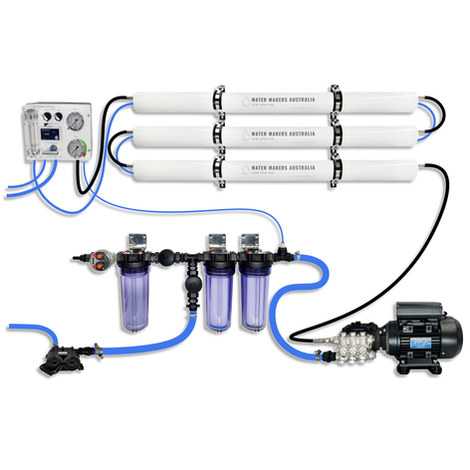
A three-membrane modular watermaker with 200 L/h nominal output and up to 240 L/h family-level marketing, for larger crews and heavy use.
Explore →
Self-contained, battery-powered plug‑and‑play autopilot designed for standard hydraulic steering systems.
Explore →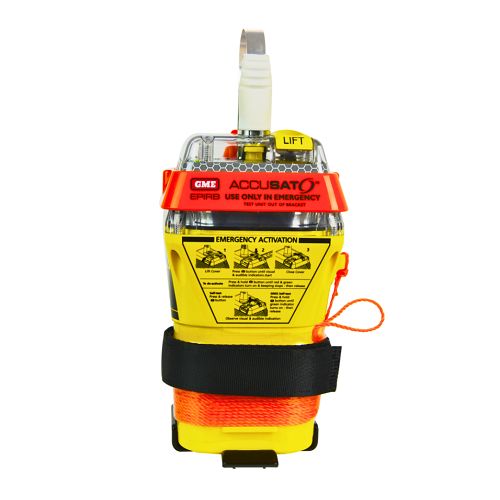
A 10‑year battery EPIRB with integrated GNSS (supports GPS and Galileo), infrared strobe and 121.5 MHz homing signal. Approved for worldwide COSPAS‑SARSAT operation.
Explore →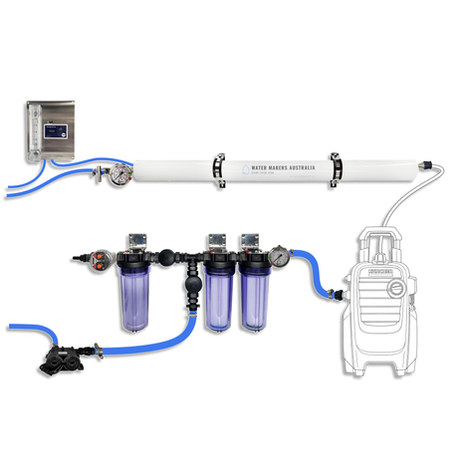
A one-membrane modular marine watermaker with 80 L/h nominal output, remote stainless control panel, standard consumables and direct Australian support.
Explore →