YouSail category guide
What this category includes and why it matters
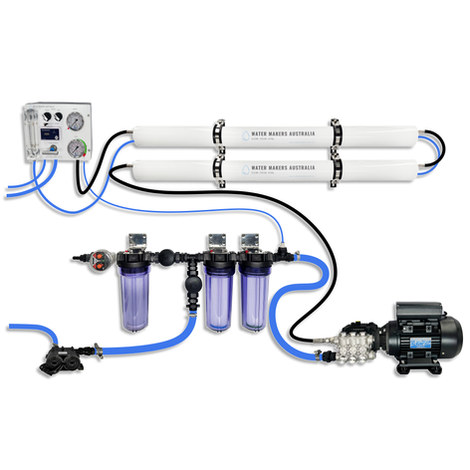
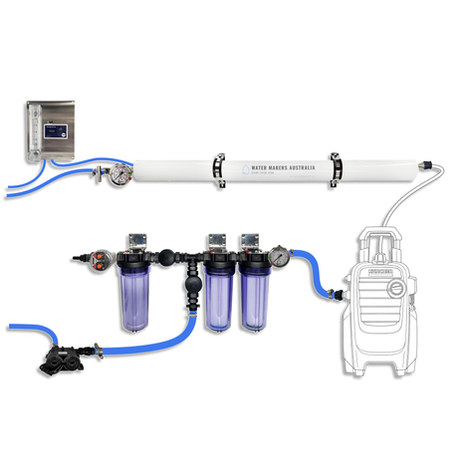
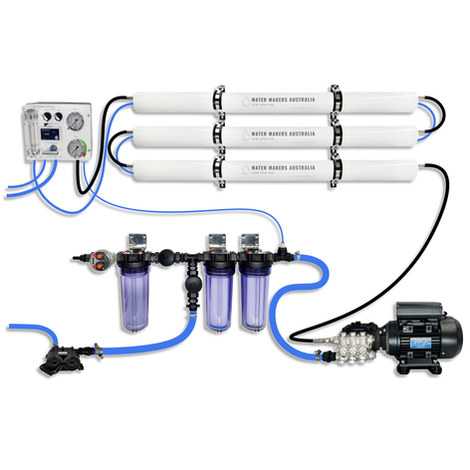
Watermakers are onboard desalination systems designed to produce potable water from seawater. On recreational yachts they are used to reduce dependence on shore water, decrease the number of water stops, extend time at anchor or at sea and lighten the storage burden of heavy water tanks. The category covers permanently installed reverse-osmosis units, portable systems intended for occasional use, and alternative desalting technologies such as thermal distillers. It also includes ancillary items that are integral to operation: prefilters, high-pressure pumps, pressure vessels and membranes, conductivity/TDS monitors, automatic flush systems and dedicated plumbing and sea strainers.
Purpose aboard a sailing boat
A watermaker’s primary role is to provide a continuous supply of fresh water for drinking, cooking, cleaning and, depending on output, limited deck or engine-room use. For many cruising sailors, the ability to generate potable water reliably can change trip planning, permitting longer legs between ports and reducing the need to carry large water reserves—important because water is heavy and occupies valuable tank space.
Where and how watermakers are normally used
Watermakers are commonly used while at anchor, moored, or underway. Small portable units are often used near sheltered anchorages or alongside when shore-sourced water is unavailable. Permanently installed units are typically plumbed into the boat’s tank system so produced water can be stored and distributed through onboard plumbing. Systems are usually operated intermittently rather than continuously, with regular flush cycles to protect membranes.
Main product types and configurations
The principal configurations are:
- Reverse-osmosis (RO) high-pressure systems – the most common on recreational boats; seawater is forced through a semipermeable membrane at high pressure.
- Low-pressure, energy-recovery RO – variants that include energy recovery devices to reduce electrical draw on larger systems (more common on larger vessels but increasingly seen on bigger cruising boats).
- Thermal distillers/evaporators – use heat to evaporate seawater and condense fresh water; usually heavier and more energy intensive but can be viable in specific installations.
- Portable and hand-pump units – smaller, moveable RO units designed for limited production and temporary use; often used by day-sailors or as a backup.
What is included and excluded
This category focuses on units designed to make potable water from seawater for use aboard recreational craft. It excludes shore-based desalination, freshwater makers intended for industrial or municipal use, simple water filtration systems that only treat existing freshwater, and accessories such as bottled-water storage that are not part of the desalination process.
Essential, performance or convenience?
Whether a watermaker is essential depends on the style of sailing. For short day sails or coastal hops with easy access to ports, a watermaker is a convenience or luxury. For extended coastal cruising, liveaboard life or long offshore passages it becomes a significant piece of safety and comfort equipment—subject to considerations of redundancy, power and maintenance.
Key decisions that matter before buying
Choosing a watermaker is a systems decision as much as a product choice. Consider these factors and why each matters:
- Intended use and cruising range – How long you will be away from reliable water sources determines required daily output and the need for redundancy. Offshore passages demand more dependable, serviceable systems than occasional coastal use.
- Boat size, displacement and tank capacity – Larger boats can carry larger installed systems and have space for mounting pumps and pressure vessels. Smaller boats may be limited to portable or compact installations.
- Crew size and daily water use – Estimate realistic daily freshwater consumption for drinking, cooking, washing and other uses. This affects the required production rate and determines whether the system needs to run frequently or can be used to top up tanks occasionally.
- Available electrical power and charging capacity – Reverse‑osmosis systems demand electrical energy (for pumps and control electronics). Confirm alternator, battery bank and inverter capacity to support the unit, including the startup draw of high-pressure pumps.
- Installation space and mounting options – Consider physical dimensions, access for service, ventilation and routing of plumbing and electrical cables. Poor access will make routine maintenance and membrane replacement difficult while cruising.
- Weight and centre-of-gravity effects – Heavy components and additional water produced will change load distribution. Placement should minimise negative effects on trim and balance.
- Water quality requirements and feed-water variability – Expect different feed water conditions—warm tropical water, cold southern ocean water, or turbid coastal water with high organic content—each of which affects prefiltration and membrane life.
- Ease of operation and automation – Decide whether you want a largely automatic unit with conductivity monitoring and automatic flushes, or a simpler manual unit that requires more hands‑on control and monitoring.
- Maintenance accessibility and spare parts availability – Offshore sailors should prioritise units using widely available consumables and proven service networks. Consider how easy it is to replace prefilters, membranes and seals while cruising.
- Budget over lifetime – Beyond purchase price, include installation, electrical upgrades, consumables, spare parts and anticipated maintenance when comparing options.
Product types and how they compare
High-pressure reverse-osmosis (RO) systems
How it works: A high-pressure pump forces seawater through a semipermeable membrane. Fresh water passes through the membrane while concentrated brine is discharged. These units are the mainstream choice for recreational yachts because membranes provide high-quality potable water.
Where used: Permanently installed on cruising and liveaboard boats; also made as portable units for short-term use.
Advantages: Efficient at producing potable water, modular (separate prefilters, pump, membranes), widely supported service networks and consumables.
Limitations: Requires significant electrical power for the high-pressure pump, regular prefilter changes and membrane care; vulnerable to feedwater with heavy sediment or biological fouling without adequate prefiltration.
Suited to: Coastal cruisers and offshore sailors who can support the electrical and maintenance demands.
RO with energy recovery
How it works: Similar to standard RO but includes devices that capture energy from the brine stream to reduce overall electrical demand on larger units.
Where used: Larger cruising yachts where production rates are higher and electrical efficiency becomes important.
Advantages: Lower electrical draw per litre produced at higher capacities.
Limitations: More complex mechanically—additional moving parts and potential points of failure—and generally not available for compact, low-capacity units.
Thermal distillers/evaporators
How it works: Heat evaporates seawater; the vapour is condensed and collected as freshwater. Some marine units use engine heat or electric heaters.
Where used: Installations where heat is readily available or where membranes are unsuitable due to feedwater quality.
Advantages: Less sensitive to feedwater turbidity and some fouling types; can be robust where membranes fail quickly.
Limitations: Heavy, bulky and typically higher energy use; require careful integration with waste-heat sources to be practical on recreational boats.
Portable and hand-pump RO units
How it works: Compact RO systems designed to be moved and operated intermittently, some driven by hand pumps, others by 12 V powerpacks.
Where used: Day boats, trailer sailors or as emergency backups.
Advantages: Low installation cost, flexible placement, useful as a backup or for occasional freshwater needs.
Limitations: Low production rate, often labour‑intensive or slow, and less convenient for continuous use by liveaboards.
Understanding specifications and terminology
- Production rate – Quoted as volume per time (commonly per hour or per day). It indicates how much freshwater the unit can produce under specified test conditions. Real-world production will vary with feedwater salinity, temperature and pump efficiency; compare units by realistic expected output for your cruising conditions.
- Recovery rate – The percentage of feedwater converted to fresh water. Higher recovery sounds good but may increase fouling and brine concentration; sometimes lower recovery with simpler plumbing is preferable on small boats.
- Feed pressure and pump type – Pressure required to drive the RO membrane. Pressure dictates pump selection and electrical draw; ensure the boat’s electrical system can handle the pump’s operational and startup current.
- Membrane element size and type – Membrane length and element configuration affect replacement cost and availability. Confirm the membrane format is a common size that can be serviced at ports you visit.
- Prefiltration rating – Micron rating of prefilters: finer filtration protects membranes from particulates but requires more frequent change when water is dirty. Balance prefilter choice with expected feedwater quality.
- Conductivity/TDS monitor – Built‑in monitors measure freshwater salt content; essential for ensuring potable quality. Understand how the monitor reports results and whether it can trigger automatic shutdowns if values exceed limits.
- Automatic flush and antifouling features – Systems that can automatically flush membranes with freshwater reduce fouling and chemical cleanings. Consider whether the unit supports automatic flushing and whether chemicals for cleaning are easy to source.
Compatibility and installation considerations
Before purchase confirm:
- Physical space – Location for the high-pressure pump, pressure vessels and prefilters with adequate ventilation and access for servicing and replacing membranes.
- Sea strainer and raw-water intake – A properly sited intake with a robust sea strainer is vital. Intake location affects feedwater quality and the risk of debris and marine growth.
- Electrical system – Verify voltage compatibility, cable sizes for starter and running currents, fuse protection and whether you need an inverter for AC units. Consider the alternator and charging system’s ability to sustain the watermaker’s load.
- Plumbing and tank integration – Whether the unit will fill a dedicated fresh-water tank, a common tank, or a day tank; ensure materials, valves and fittings are compatible with potable water standards and that brine discharge is routed safely overboard.
- Structural mounting – Securely fasten pumps and pressure vessels to avoid vibration and movement; consider vibration isolators where appropriate.
- Service access – Mount where membranes and prefilters can be removed and cleaned without dismantling large areas of boat interior.
- Regulatory and environmental considerations – Ensure brine discharge does not conflict with local rules or create unacceptable ecological impacts close to shore.
Day sailing, coastal cruising and offshore differences
Day sailing
Priorities: Simplicity, portability and minimal installation. Portable or small fixed units are generally appropriate. Ease of setup and low maintenance outweigh high production capacity.
Coastal cruising
Priorities: Reliable daily production, moderate automation, good prefiltration and manageable maintenance. Expect varying feedwater quality—silted anchorages and algal growth require effective prefilters and the ability to chemically clean membranes when needed.
Offshore and remote cruising
Priorities: Redundancy, proven serviceability and spare parts, low-operational complexity, and energy efficiency. Offshore sailors should favour systems with widely available consumables, straightforward manual override, and the ability to flush and preserve membranes for long stretches without service.
Racing, trailer sailing and multihulls
Racing boats typically avoid installing heavy permanent systems because of weight and complexity; portable units or reliance on carried water may be preferable. Trailer sailors are constrained by space and weight and may only consider small, portable units. Multihulls often have more available tankage but watch for weight distribution and the location of heavy components.
Trade-offs to weigh
- Production versus power consumption – Larger capacity yields more water but draws more energy; balance production needs with your charging resources.
- Simplicity versus automation – Automated systems are convenient but add complexity and potential failure points; manual systems are simpler to repair but require more crew attention.
- Permanent installation versus portability – Permanent units offer convenience and integration but cost and take space; portable units are flexible but limited in output.
- High recovery versus fouling risk – Pushing for higher recovery from feedwater can accelerate fouling and increase cleaning frequency.
- Low maintenance design versus repairability – Some systems minimise routine maintenance but are difficult to repair afloat; prefer designs that you or local technicians can service in areas you visit.
Maintenance and expected service life considerations
Routine care is central to reliable operation:
- Regularly inspect and change prefilters; clogged prefilters are a leading cause of premature membrane wear.
- Flush membranes with fresh water or preservative solution after use, especially when production is intermittent or feedwater is poor.
- Watch for signs of membrane fouling: rising feed pressure, falling freshwater output for a given pump speed, or increasing conductivity in the product water.
- Keep spare consumables aboard: prefilters, O‑rings, basic service seals and a spare membrane if space and budget permit.
- Protect electrical connections from corrosion and ensure bilge and ventilation systems minimise moisture around pumps and electronics.
- Understand which parts are replaceable on passage and which will require returning to a port with service facilities.
Common mistakes and how to avoid them
- Buying to headline production figures only – Consequence: You may end up with a unit that cannot deliver the quoted output under your real feedwater and temperature. Avoid by asking for realistic production estimates based on your cruising conditions.
- Neglecting electrical demands – Consequence: Insufficient charging capacity or undersized wiring can lead to frequent system trips and damage. Avoid by measuring actual system current draw and ensuring charging systems can sustain it.
- Ignoring intake location and sea-strainer design – Consequence: Recurrent clogging or ingestion of debris that damages pumps. Avoid by planning an intake with good water flow and a robust, serviceable strainer.
- Choosing inaccessible mounting locations – Consequence: Difficult maintenance and longer downtimes. Avoid by mock-fitting components and confirming service clearances before purchase.
- Underestimating consumable availability – Consequence: Long waits for replacement membranes or specialised parts while cruising. Avoid by choosing common element formats or carrying spares.
- Relying on a single system for long offshore passages – Consequence: Complete loss of freshwater production if the system fails. Avoid by carrying contingency water and considering a secondary portable unit or conservative water-use planning.
Before buying: a practical checklist
- Define intended use: day use, coastal cruising, offshore passages or liveaboard; estimate typical daily water demand for your crew.
- Measure available mounting space and service clearance where the unit, pump and pressure vessels will sit.
- Check existing electrical system capacity: alternator output, battery bank size and inverter capability; measure starting and running currents for candidate units.
- Inspect likely intake locations and plan a sea strainer and plumbing route; consider risk of silt and marine growth.
- Confirm plumbing options to integrate produced water into tanks and route brine safely overboard with appropriate valves and vents.
- Ask about consumable sizes, membrane formats and local or regional availability of spares and service support.
- Plan for maintenance: access, spare parts to carry, cleaning chemicals and tools required for membrane servicing.
- Discuss installation with a marine electrician or rigger if you lack experience; some installations need professional mounting and electrical work for safety and warranty compliance.
- Request documentation on expected production under a range of feedwater temperatures and salinities so you can judge real-world capability.
Prioritise the decision based on intended use: for occasional coastal use a portable or small fixed unit with straightforward maintenance is often the best compromise; for extended cruising and offshore passages pick a system that trades higher reliability, easier field service and spare-parts availability for convenience. Always plan redundancy into your freshwater strategy—be it carried water, a small portable backup or conservative water-use habits—because a watermaker is an enabling piece of equipment, not a replacement for prudent provisioning and seamanship.