Loading this page…

Loading this page…
Sailing club
Adelaide Sailing Club is a large family-focused beach-launching club with keelboat facilities at West Beach, South Australia. Based at 9 Barcoo Road inside the Holdfast Shores / West Beach Parks precinct, the club runs a full program of learn-to-sail courses (Tackers and Start Sailing), junior and youth training, broad club racing for off‑the‑beach and keelboat classes, major regattas including national and international events, and an established Sailability programme using Hansa-class boats. The clubhouse includes lawn rigging areas, protected launching, boat storage, wash-down facilities and a professionally run restaurant and function venue on site.
About
Adelaide Sailing Club is a large family-focused beach-launching club with keelboat facilities at West Beach, South Australia. Based at 9 Barcoo Road inside the Holdfast Shores / West Beach Parks precinct, the club runs a full program of learn-to-sail courses (Tackers and Start Sailing), junior and youth training, broad club racing for off‑the‑beach and keelboat classes, major regattas including national and international events, and an established Sailability programme using Hansa-class boats. The clubhouse includes lawn rigging areas, protected launching, boat storage, wash-down facilities and a professionally run restaurant and function venue on site.
Service area: West Beach, City of Charles Sturt (Adelaide metropolitan coast)
Keep exploring
What sets Adelaide Sailing Club's training operation apart is its Sailability work. The club keeps a fleet of Hansa Class yachts for free annual Sailability sessions and — according to Australian Sailing's Club in Focus profile — is the only club anywhere on the Adelaide metropolitan coast equipped to launch and retrieve these accessible boats, a capability resting on its sheltered harbour and a dock that gives sailors with disability safe access to the water.
Around that anchor sits a complete learn-to-sail pathway. ASC is an accredited Australian Sailing Discover Sailing Centre, with qualified instructors taking adults and young people through their first courses side by side. Children come in through the national Tackers scheme across its three levels, then progress to Start Sailing 1 and 2, while schools are served by dedicated courses and school teams racing programs. A Junior and Youth Training Program carries keen sailors onward, and the Sailing School's courses are blended with Discover Sailing activities across the whole year rather than squeezed into a summer burst.
The breadth of that work shows in the club's regatta calendar. Neighbouring club programs for the 2025/26 season list ASC as host of the SA Youth Championships and the Optimist State Heats, and the 2024 ILCA World Championship regatta — the event behind the Sports Promotion award — proved the same volunteer base that teaches children their first tack can also run a world championship. Few beach clubs anywhere could point to a pathway that begins in an Optimist and ends with hosting one of the sport's biggest one-design world titles.
Adelaide Sailing Club stands on Kaurna land at West Beach, facing Gulf St Vincent from inside the West Beach Parks holiday precinct, with Adelaide Airport immediately alongside. It is an unusual setting even by metropolitan standards: holiday accommodation on one side, arriving aircraft on the other, and open gulf water straight out front.
The onshore set-up is organised around getting boats off the sand. Lawned rigging and storage areas give dinghy sailors room to work, launching is protected, and deep-water harbour access handles the keelboats — the combination behind the club's claim to be both a beach and a keelboat venue. A sailors' canteen, change rooms and showers, wash-down areas and three separate boat storage areas round out the working infrastructure, and one interior space carries a heavier meaning: the Sunny South Boardroom, which honours the memory of the Sunny South tragedy of 1932, in which five yachtsmen drowned — a loss that still resonates in South Australian sailing.
Gulf St Vincent supplies the racing water, and it has answered at every level. Summer afternoons on this coast are built for the off-the-beach classes that make up most of the fleet, while the harbour access means the bigger boats are never hostage to conditions on the sand. The same stretch of coast where juniors sail their first regattas hosted the 2024 ILCA World Championship, drawing international one-design fleets to West Beach. Administratively the club falls within the City of Charles Sturt, in the state seat of Colton and the federal seat of Hindmarsh, and its postal address remains PO Box 28, Glenelg — a nod to the parent clubs whose merger created it.
The lineage of Adelaide Sailing Club runs through two of South Australia's oldest sailing families. The first shoot appeared on 21 August 1874 with the formation of the Glenelg Yachting Club; the second came on 12 October 1883, when a meeting at Glenelg's Pier Hotel created the Holdfast Bay Yacht & Boat Club, renamed the Holdfast Bay Yacht Club fourteen years later. A third thread arrived in 1898 with the Glenelg Dinghy & Aquatic Club, born at a gathering at the Jetty Hotel and known from 1909 as Glenelg Sailing Club.
Between them these clubs left deep marks. In 1949 the Holdfast Bay camp produced the Holdfast Trainer, a training dinghy adapted from the Sabot for local conditions. The same club shifted to new premises on Barcoo Road, West Beach, officially opened by F. A. Lewis on 4 December 1966. Glenelg Sailing Club, meanwhile, staged the World Fireball Championships in March 1974, with HRH the Duke of Edinburgh performing the opening, and a decade later sent two sailors — Chris Tillett and Chris Pratt — to the 1984 Olympic Games.
The modern chapter began on 1 June 1998, when the two clubs formally amalgamated; racing under the new name commenced that October, and the Governor of South Australia, His Excellency Sir Eric Neal, opened the new premises on 6 December 1998. Built as part of the Holdfast Shores development, the clubhouse has since seen the club reach its greatest heights: the 2024 ILCA World Championship regatta and, later that year, the national Club of the Year title that crowned a run of four national and four state awards in six years.

Legal safety equipment for recreational boats in South Australia depends on the type, size and where you operate; you must check the current SA government requirements for your vessel. Independently of legal minimums, carry a sensible set of recommended items (lifejackets, means of communication, signaling, fire protection, anchor and basic tools) and make them usable and maintained.
Explore →
Do a seasonal inspection and servicing routine that focuses on hull and antifouling, through-hulls and seacocks, rigging and sails, engine and fuel systems, electricals and batteries, safety gear and bilge systems. Tailor exact tasks to your boat type, age and where you sail in South Australia, and follow manufacturer and marine service advice for anything technical.
Explore →
Tidal streams and local wind patterns can change trip time, fuel use, helm balance and safety margins on short coastal runs — plan your departure and route to use favourable tidal flow, allow margin for wind-driven sea and gusts, and check up-to-date local tide and weather information before you go.
Explore →
A good float plan and a well-stocked emergency kit significantly improve your chances of a safe outcome when cruising remote parts of South Australia’s coastline. The float plan should give someone ashore all the information they need to find you and raise help if you don’t return; the emergency kit should allow you to stabilise the boat, care for injuries, signal for rescue and survive until help arrives.
Explore →
A practical, Australia‑focused introduction to sailing: key terms, common boat types, basic manoeuvres, where to learn, licence and club options, and planning your first trips with safety and local conditions in mind.
Explore →
A practical guide for new sailors on picking the right Australian sailing club: training, boat access, racing, social fit, costs and the key questions to ask before joining.
Explore →
A practical, Australia-focused guide for planning and sailing around the Whitsunday Islands: weather and seasons, navigation and anchoring, moorings and parks, provisioning and charters, safety and common mistakes, plus checklists and next steps.
Explore →A concise, practical introduction to the essential parts of a recreational sailing boat for beginners in Australia. Covers hull, deck, rigging, sails, steering, below-decks spaces and safety equipment, with simple explanations, common mistakes and a pre-sail checklist to help new sailors communicate and get underway.
Explore →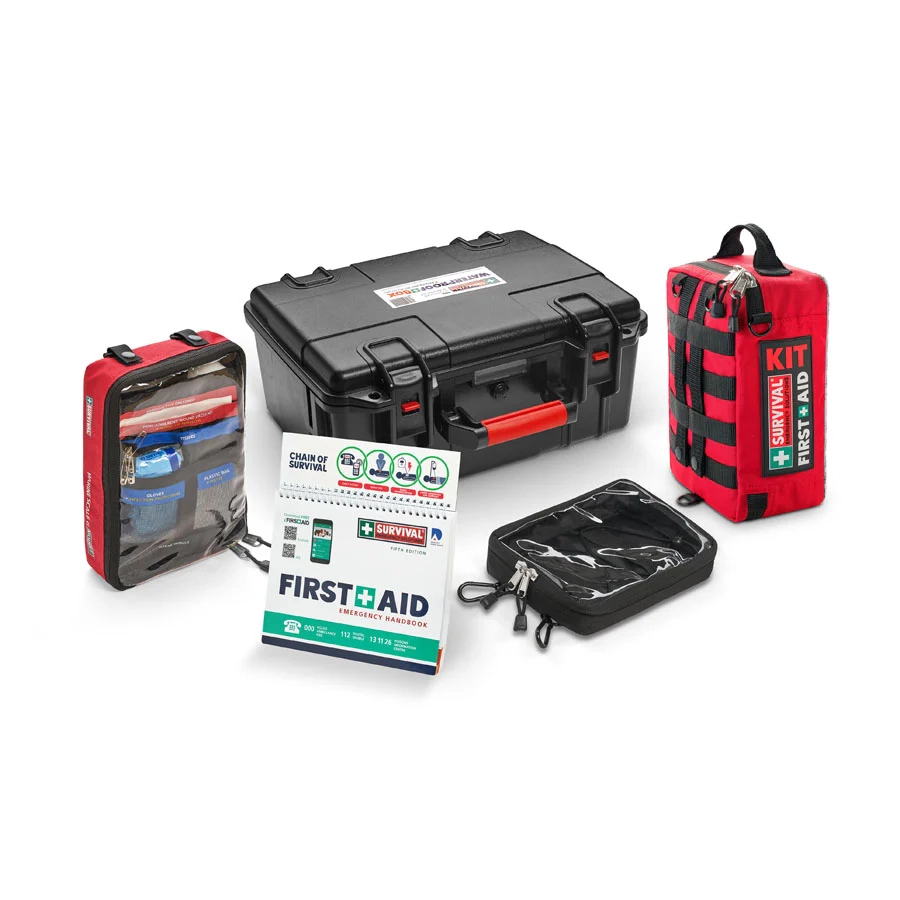
A 142-item marine first aid kit built around the Australian Scale G requirement, with a workplace kit, a Scale G module and a handbook packed in a large waterproof box.
Explore →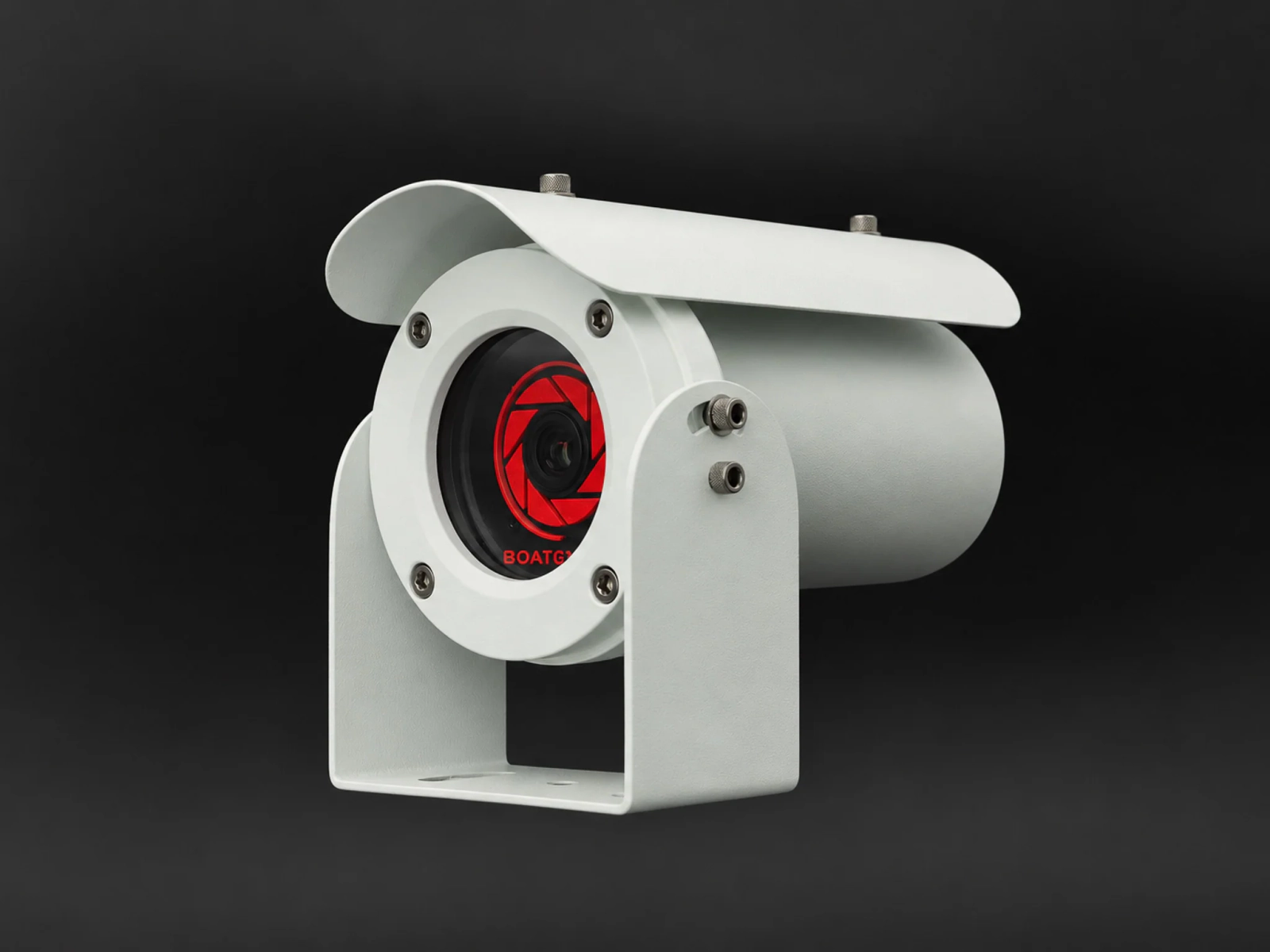
The original BoatEye360 full-colour low-light camera: the same 0.0001 lux sensor as the V2 in a larger 316L stainless housing, with HDMI and analog output, at a lower price.
Explore →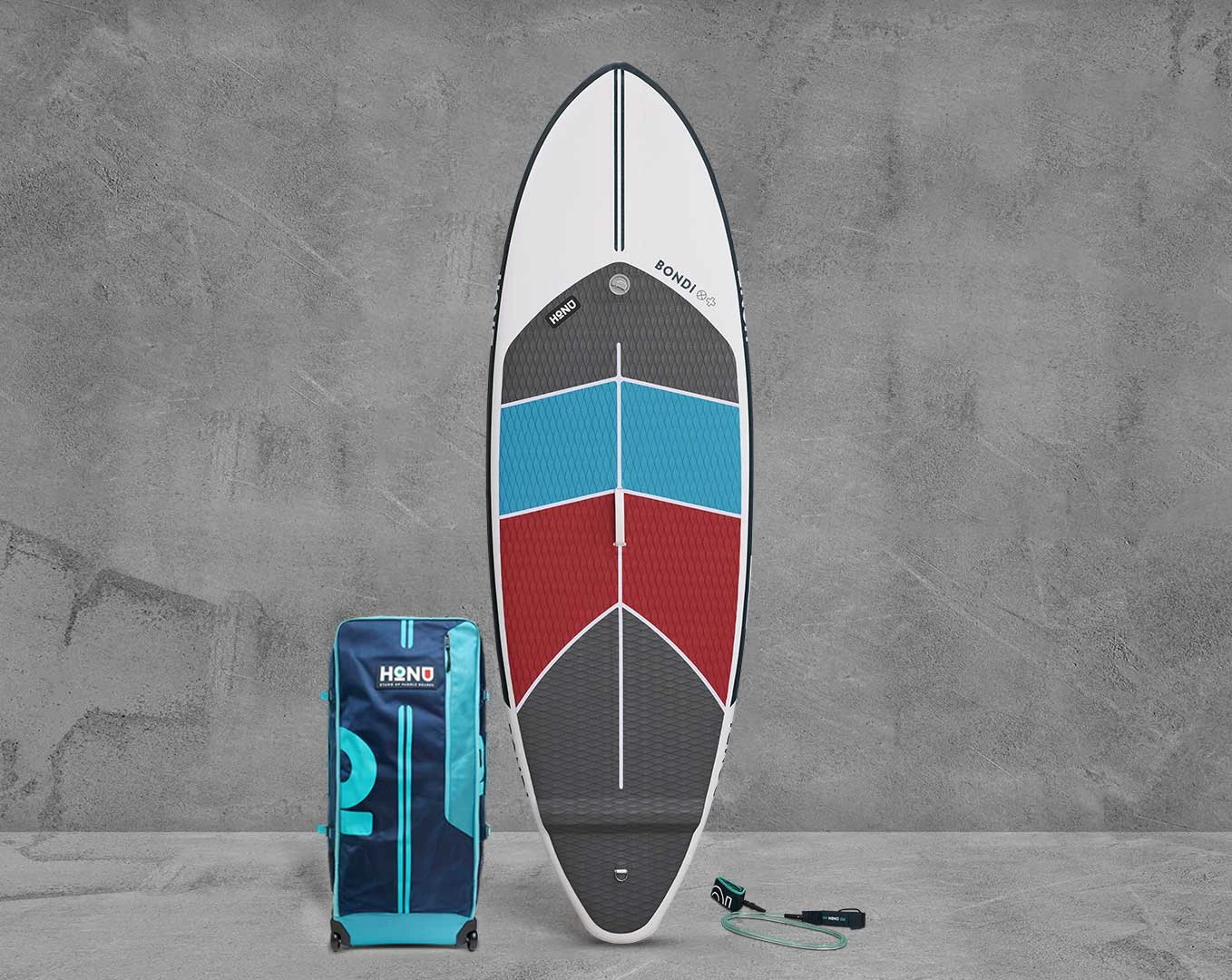
A surf-oriented inflatable paddle board in 8'8 and 9'5 sizes, only 4 inches thick with welded carbon rails, a pronounced rocker and a twin plus one fin setup.
Explore →
A 4000 lumen quick-detach headlamp with a magnetic base and a red light, powered by a 6400 mAh 21700 battery with USB-C charging.
Explore →