Loading this page…

Loading this page…
Featured business
Sailing club
From its Rushcutters Bay waterfront, the Cruising Yacht Club of Australia runs year-round harbour, coastal and offshore racing, newcomer and youth pathways, a 213-berth marina, and the Rolex Sydney Hobart Yacht Race.
Featured on YouSail. Get in touch with Cruising Yacht Club of Australia directly: call, or visit their website.
About
From its Rushcutters Bay waterfront, the Cruising Yacht Club of Australia runs year-round harbour, coastal and offshore racing, newcomer and youth pathways, a 213-berth marina, and the Rolex Sydney Hobart Yacht Race.
Service area: Darling Point / Rushcutters Bay, Sydney Harbour (New South Wales)
Keep exploring
The Cruising Yacht Club of Australia is known around the world for the Rolex Sydney Hobart Yacht Race, but the race occupies one week of a much larger sailing year. From its home at Darling Point on Rushcutters Bay, the club runs Monday and Wednesday twilights, winter pursuit racing, coastal passages and a full offshore program.
The club's clearest entry point is crewing. Its free Sailing Concierge places newcomers on boats for selected race days, while Crew Connect evenings introduce sailors to owners looking for regular crew. A sailor can begin on the harbour, build a regular role, step into coastal racing, complete safety training and work towards the Blue Water Pointscore without owning a yacht.
The waterfront clubhouse and 213-berth marina support that sailing program throughout the week. The Youth Sailing Academy, women's training and racing, offshore pathway sessions and multiple membership categories give sailors several ways to enter and progress. Program dates, fees and berth availability can change, so confirm current details with the club.
Newcomers can start through the free Sailing Concierge on selected Wednesday twilight and winter race days, then use Crew Connect to find a regular boat. The practical offshore pathway is to become dependable harbour crew, move into coastal passages and short offshore series, complete Safety and Sea Survival training, and build experience through the Blue Water Pointscore.
The Youth Sailing Academy accepts 13 to 18 year olds through a four-day School Holiday Course, including complete beginners, before progression to winter squads and representative racing. The club also runs a Women's Sailing Training Program, women's racing and Offshore Pathways information evenings.
The club sits on Rushcutters Bay with direct access to Sydney Harbour. Its racing spans harbour twilights and winter pursuit races, coastal passages and offshore events into the Tasman Sea. The marina provides 213 deep-water floating berths, hardstand for Etchells, J/70s and J/24s, and casual berths for visiting yachts.
Founded in 1944, the CYCA staged the first Sydney to Hobart race in 1945 and has remained its organising club ever since. The race now closes the Blue Water Pointscore and requires year-round work across race documentation, safety audits, crew eligibility, training, briefings, broadcasting and on-water tracking. Volunteers remain central to delivering it.
Featured interview
The Cruising Yacht Club of Australia explains what happens during the other 51 weeks of its year, how newcomers find a boat, and the honest pathway from a harbour twilight to offshore racing.
Interview with Cruising Yacht Club of Australia
That the race is one week of our year, and the other 51 are spent getting people on the water. The CYCA runs one of the busiest sailing programs in the country, from Monday and Wednesday twilights on Sydney Harbour to coastal passages and a full offshore season.
The part most people don't expect is how open it is. You don't need a boat, experience or a membership to sail here. Our Concierge Program puts newcomers on a yacht on race day at no cost, and our free Crew Connect evenings introduce sailors to owners who need crew. The club that started the Hobart is also one of the easiest places in Sydney to go sailing for the first time.
Relaxed, busy and a lot less formal than the name suggests. On a Thursday in summer you'd find the waterfront deck full, steak frites on special, crews debriefing Wednesday's twilight and planning the weekend, and 213 boats sitting on our marina a few metres from your table.
Thursday is also when a lot of our off-water program runs. Crew Connect and our Offshore Pathways information evenings are often Thursday night events, so there's a fair chance the room next door is full of people meeting the skipper they'll sail with all season. You'll see Hobart veterans with 30 races behind them talking to someone who went sailing for the first time last week. That mix is the character of the place.
It never really stops. Entries for the 2026 race opened on 26 May, seven months before the start, and the work behind them — notice of race, safety regulations, marketing, communications, partner and government planning — begins well before that.
Through winter and spring the Blue Water Pointscore does two jobs. It is a championship in its own right, and it is where boats and crews qualify and prove they are ready. Alongside it run safety audits, crew eligibility checks, briefings and training.
December adds the Australian Maxi Championship, the Sydney Hobart Classic Yacht Regatta, the race village, the compulsory race and weather briefings and a live national broadcast of the start. Then a race management team tracks every boat for 628 nautical miles until the last one is safely in Hobart. A large share of that is done by volunteers.
There is racing most weeks of the year, at every level.
Not sure where you fit? The Race Series Finder on our website will point you to the right one.
It takes a season or two, not a weekend, and nearly all of it can be done without owning a boat.
1. Start on the harbour. Come through the Concierge Program on a Wednesday twilight or a winter Sunday. It's free, and no experience is needed. 2. Become a regular. Find a boat you like, turn up every week and learn a job properly. Crew Connect is the quickest way to find a skipper for a full series. 3. Go coastal. Step up to the Summer Short Offshore Series, the Coastal Pointscore and a Pittwater passage. You'll find out how you go at night, in swell and out of sight of land. 4. Get trained.
Complete a Safety and Sea Survival Course, and come to our Offshore Pathways information evenings, where experienced offshore sailors cover preparation over six sessions. 5. Do the Blue Water Pointscore. Start with the shorter races and build to the Noakes Sydney Gold Coast.
By then you won't be asking whether you're ready for Hobart. A skipper will be asking you.
Founded in 1993, the YSA has trained more than 500 young sailors on its own fleet of Elliott 7 keelboats, and it starts with an open door.
The entry point is the School Holiday Course: four days on the water for 13 to 18 year olds of any level, including those who have never sailed. From there sailors progress into the Winter Squads and on to representing the club at state, national and international regattas. Coaching covers rules, tactics, fitness, sail trim, boat maintenance and how to run a campaign.
Where they end up: Olympic gold medallist Will Ryan, Olympic silver medallists Olivia Price and Lucinda Whitty, America's Cup and SailGP winners Kyle Langford and Sam Newton, and Youth America's Cup skipper Cole Tapper are all graduates. YSA teams have won four Youth Match Racing World Championships and five Governor's Cups.
Most graduates don't turn professional, and that is the point. They become the crew, skippers and boat owners who keep the sport going.
Removing the three things that keep people out: cost, contacts and not knowing where to start.
Beyond that, the Women's Sailing Training Program is a three-day keelboat course for women building confidence on the water, and it leads into the Women's Winter Series and the Sydney Harbour Women's Keelboat Series. The School Holiday Course does the same job for teenagers. And Crew and Pathway memberships mean that when someone is ready to join, the step is a small one.
Two ways, both free, and neither requires membership, although of course we'd love you to join!
The Concierge Program is for getting on a boat this week:
1. Register your interest online. 2. Sign up for a free SailPass. 3. Come to the club at least two hours before the race start and find the Sailing Concierge on the upper deck of the Clubhouse. 4. The Concierge introduces you to a skipper looking for crew, and you go racing.
It runs on Wednesday evenings from October to March for the twilights, and on Sunday mornings from April to July for the Winter Series.
Crew Connect is for finding a boat for the season. It's a relaxed two-hour evening in the Clubhouse, held several times a year ahead of the major series, that puts owners and crew in the same room across inshore, coastal and offshore racing.
Many offshore berths start exactly this way: a twilight, then a regular spot, then an invitation to do a coastal race.
A home on the harbour, minutes from the city. The marina has 213 deep-water floating berths plus hardstand for Etchells, J/70s and J/24s, with casual berths for visiting yachts. Berths are licensed to members, and the old assumption of a ten-year wait no longer holds: they can come up quickly.
The Clubhouse sits on the water at Rushcutters Bay and is open for breakfast, lunch and dinner seven days a week, with a waterfront deck, main dining room and members' bar. Members get a discount on food and drink, access to reciprocal clubs around the world, and a calendar that runs from Friday night Deck After Dark to post-race Sunday Sessions.
The Sailing Office is on site and staffed on race days.
You apply online in about ten minutes, and there is a category for each stage of life and sailing.
| Category | Who it's for | Annual fee | Joining fee |
|---|---|---|---|
| Junior | Under 18, the way into the Youth Sailing Academy | $130 | None |
| Crew | Ages 18 to 29 | $299 | None |
| Pathway | Ages 30+, new to the club | $499 | $250 |
| Member | Full membership, including racing and marina berthing entitlements | $999 | $500 |
| Associate | Partners of members | $299 | None |
| Country | Living more than 300km from the club |
That the door is open. People assume a club with this history must be hard to get into, and it's the opposite.
Every sailor in the Rolex Sydney Hobart was once the new person on someone else's boat. The CYCA's job is to keep making that first invitation possible, for teenagers in the Youth Sailing Academy, for women coming through our training program, and for anyone who walks up to the Concierge on a Wednesday afternoon and says they'd like to have a go.
If you've ever watched the Boxing Day start and wondered what it would be like, come and find out. It won't cost you anything.

Look for a friendly club with beginner-focused training, accessible facilities and boats, a supportive community, clear safety practices, and opportunities to progress at your own pace.
Explore →
Progress gradually by increasing exposure, practising specific skills, sailing with more experienced crew/skippers, and deliberately training for each new step—start in calm sheltered bays, then move to longer trips, busier waters, stronger winds and finally open coastal passages when you and your crew are consistently competent and comfortable.
Explore →
Carry wearable lifejackets (one per person that fits), a reliable means of distress communication, basic firefighting and bilge items, navigation lights and charts, plus sensible clothing, sun protection and drinking water. Exact legal requirements vary by state and vessel — check the relevant regulator before you go.
Explore →
Write a one‑page plan with the who/what/when/where/how of your trip, keep a copy on board and leave the main copy with a responsible person ashore (and optionally with your club, marina office or local volunteer rescue service).
Explore →A practical guide to the coastal weather systems that affect sailing along Western Australia's coast, focusing on the Fremantle Doctor, local sea breezes, and linked coastal phenomena. Explains how these systems form, when they tend to occur, how they influence boat handling and passage planning, common mistakes, and a
Explore →Practical, safety-focused cruising guidance for recreational sailors planning a coastal voyage from Sydney to Eden. Covers trip planning, common routes, weather and tidal considerations, safe anchorages and ports of refuge, provisioning, and sensible watchkeeping for Australian conditions.
Explore →Practical guide for recreational sailors planning a coastal cruise from Sydney north to the Queensland border. Covers route options, weather and tidal considerations, planning checklists, common hazards, anchorages and practical examples for a safe, enjoyable trip.
Explore →
Practical guidance for recreational sailors in Australia on assessing swell, tide and wind, choosing the safest time to cross a coastal bar, preparing crew and gear, and making the decision to go or turn back.
Explore →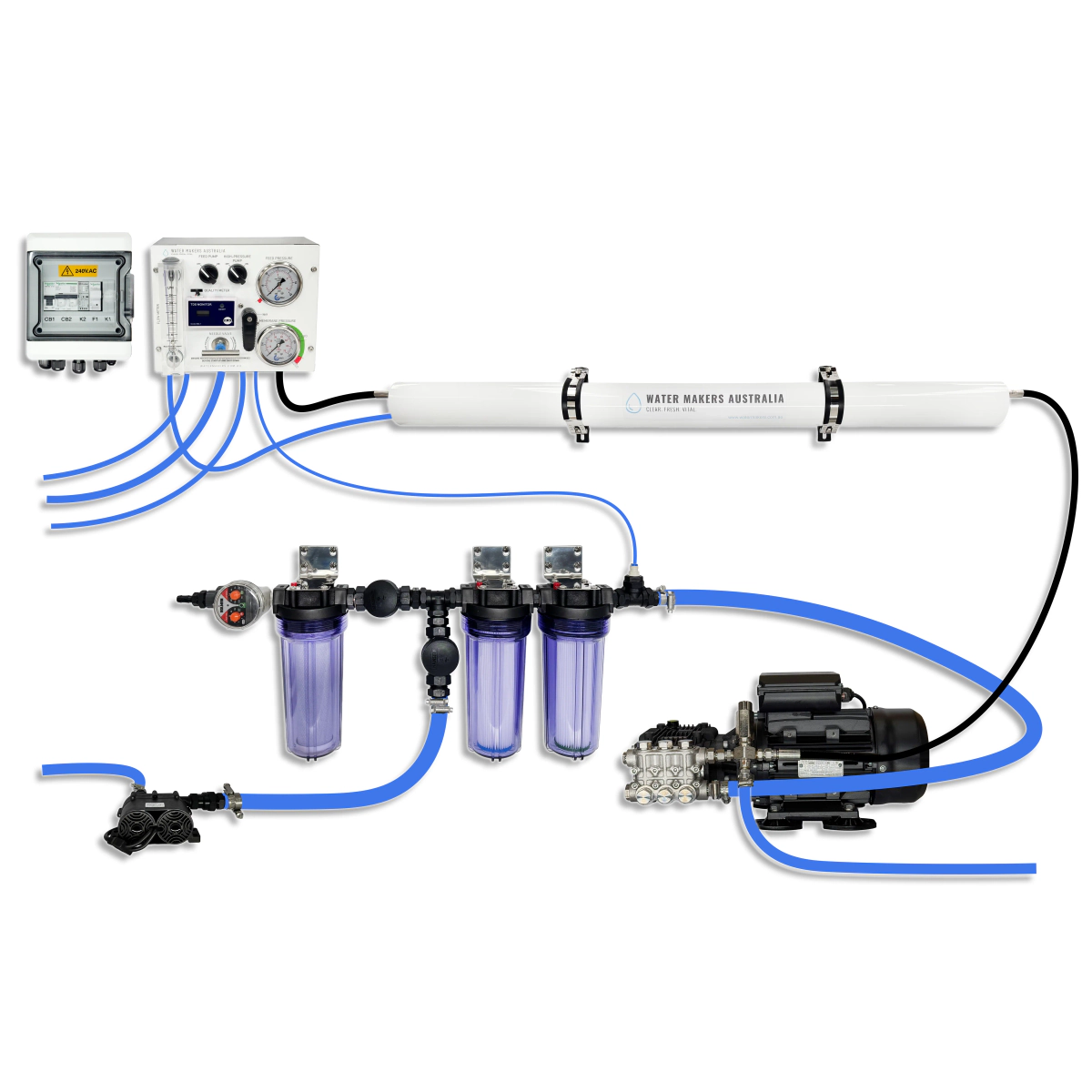
Single-membrane 240 V reverse-osmosis watermaker producing a nominal 80 L/h, built to order in Sydney for cruising boats of about 10 to 15 m with a generator or inverter.
Explore →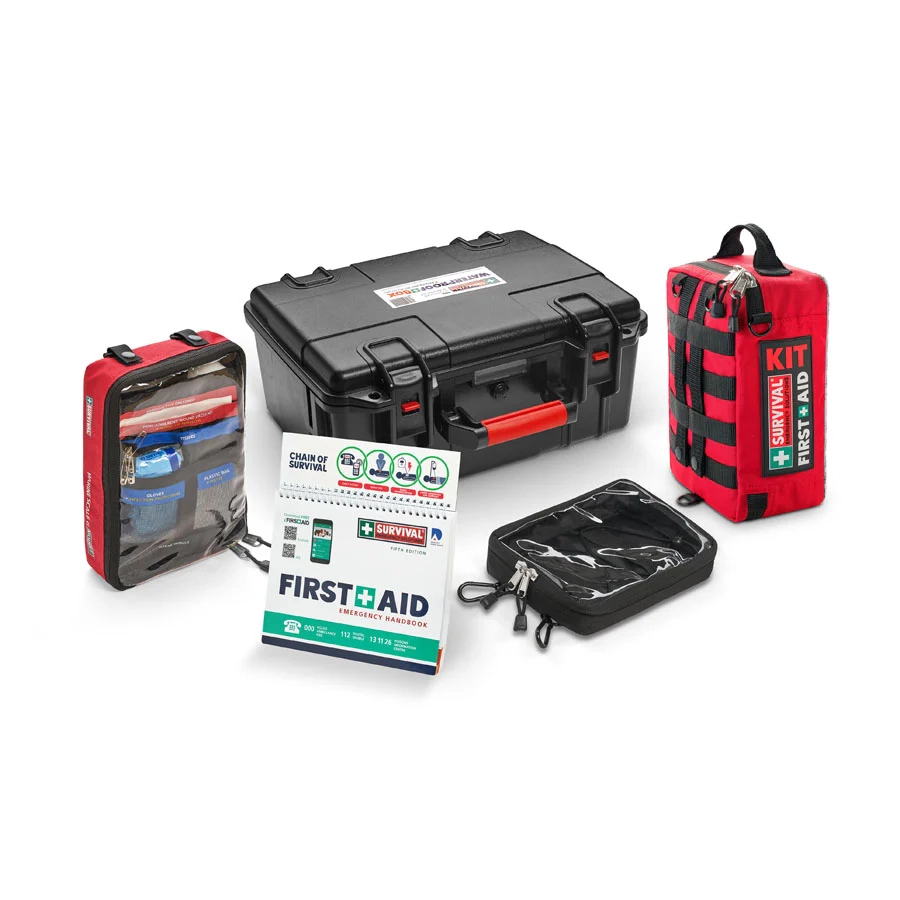
A 142-item marine first aid kit built around the Australian Scale G requirement, with a workplace kit, a Scale G module and a handbook packed in a large waterproof box.
Explore →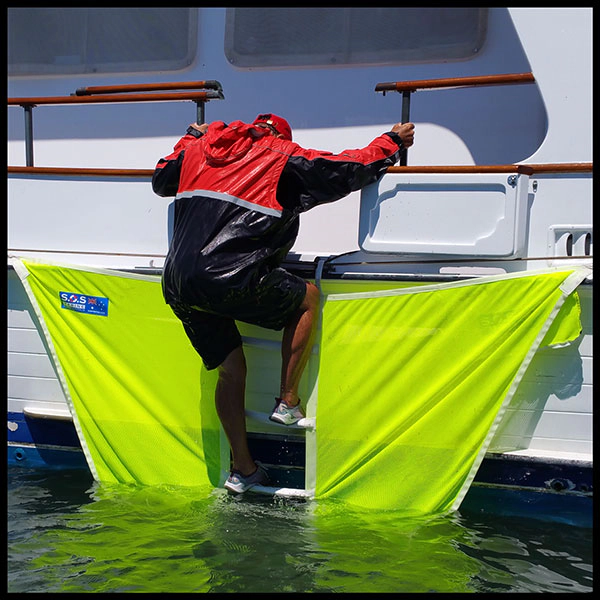
Soft five-step man-overboard recovery ladder made of knitted polyester mesh. It weighs 3.3 kg, folds to 500 x 300 mm and suits boats with up to six feet of freeboard.
Explore →
A 3.35 m inflatable catamaran that weighs about 34 kg bare, carries 500 kg and takes up to a 15 HP short-shaft outboard. Sold boat-only or as a full fishing package.
Explore →| $500 |
| Overseas | Living permanently outside Australia | $448 | $500 |
Junior members move to Crew at 18 and Crew members to Pathway at 30. Pathway members become eligible for full membership after three years. The membership year runs from 1 April, and you pay pro rata when you join.
You don't have to join to start, though. Come sailing through the Concierge Program first, and join when the club feels like yours.