Loading this page…

Loading this page…
Sailing club
Brighton & Seacliff Yacht Club (BSYC) is an off-the-beach dinghy-focused club on Seacliff Beach, Adelaide, combining active racing and junior development with a clubhouse that operates as a community function venue, bistro and bars. The club runs extensive weekend racing, supports a wide range of classes and hosts major state and national junior events.
About
Brighton & Seacliff Yacht Club (BSYC) is an off-the-beach dinghy-focused club on Seacliff Beach, Adelaide, combining active racing and junior development with a clubhouse that operates as a community function venue, bistro and bars. The club runs extensive weekend racing, supports a wide range of classes and hosts major state and national junior events.
Service area: Seacliff / Holdfast Bay, Gulf St Vincent (Adelaide metropolitan coast)
Keep exploring
Brighton & Seacliff is a Yachting Australia training centre, and junior development is the engine room of the club. The entry point is the national Tackers program for children aged seven to twelve, run across its three levels with all equipment supplied; Saturday-morning and April school-holiday courses for 2026 are listed at $490, and the club promotes a well-earned local reputation for the quality of these sessions at Seacliff Beach.
From there the pathway is deliberate. Youth coaching runs most Saturday mornings through the season, graduating sailors out of Tackers and into Green Fleet racing in the Optimist, and the club's youth sailing structures are designed to carry kids from around age eight right through to adulthood. A dedicated development fund, established to improve services for members and guests, directs money specifically toward junior and youth sailing — as does the club's current Australian Sports Foundation partnership, which counts youth sailing among its nominated causes.
The proof sits in the events the club is trusted to run. In January 2024, BSYC hosted the Musto Optimist Australian Championships, an eight-day national title that drew the country's best young Optimist sailors to Seacliff. Clubs do not get handed a national junior championship without a functioning pathway underneath it, and a century-long habit of producing elite sailors — the club won its place in Australian sailing lore largely through home-grown talent — — most famously Jim Hardy — suggests the pipeline from first tack to the top of the fleet is in good working order.
Seacliff, the last beach suburb of Adelaide's inner metropolitan coast, gives Brighton & Seacliff Yacht Club a front-row seat on Gulf St Vincent from its Esplanade clubhouse. It is strictly an off-the-beach operation: there are no permanent wet berths here, and boats launch and retrieve across the sand with the help of club-operated tractors. Sailors wanting a formal boat ramp must look about five nautical miles away, to West Beach in one direction and O'Sullivan's Beach in the other.
The beach that defines the club also shapes its sailing. Prevailing summer sea breezes can build a large chop offshore and a small-to-moderate shore break on the sand — conditions that produce capable, surf-smart dinghy sailors and make the tractor crews as important as any race official. Onshore, the club provides secure undercover boat storage and wash-down areas, so the fleet stays close at hand despite the lack of moorings.
Then there is the clubhouse itself. Downstairs, the club keeps what it describes as one of the last true wet bars, where dripping sailors can walk straight in from the sand without ceremony; upstairs, a bistro and bar open onto a large balcony overlooking the course area. The club takes bookings as a function centre, and with the gulf as wallpaper it is not hard to see why. It is an arrangement that captures the club's character — serious about the sailing, relaxed about everything else — and it has made the Seacliff clubrooms a favoured function venue well beyond the sailing fraternity.
Brighton & Seacliff Yacht Club began with an October 1919 merger, when Seacliff Sailing Club joined forces with a group of sailors from neighbouring Brighton and appointed Benjamin Benny as the combined club's first Commodore. Eight years later the club built its clubrooms on land bought by Tom Mayfield Hardy, the Hardys wine company's managing director and himself a club commodore before his death in the 1938 Kyeema air disaster.
The Hardy family connection runs deeper than real estate. Jim Hardy — later Sir James — sharpened his sailing at Seacliff, and in 1966 he took the 505 world crown in Adelaide as the club became the first in Australia to stage a 505 World Championship. It remains the club's defining achievement, and it has been repeated twice since, with the worlds returning in 1983 and again in 2007. Hardy himself went on to represent Australia at two Olympic Games, in 1964 and 1968.
The centenary came around in 2019 and was marked with a Centenary Regatta, and the modern program still honours the club's own: the 2025/26 calendar, opened on 11 October 2025, includes club heats and trophy races alongside memorial races for Mike Faraday, Fred Neill and Mike Thomas, plus the City of Holdfast Bay Race. Trailer yachts race every Saturday afternoon, the Sabres remain the largest single fleet, and the Windsurfer LT boards and Impulse dinghies keep growing. A club that made national yachting history in 1966 shows no sign of living off the memory; if anything, the packed trophy cabinet of memorial races suggests a place that treats its past as fuel rather than furniture.
Deen Maar (the island and adjacent coastal region off south‑west Victoria) is a small but significant offshore island and coastal protected area offering dramatic cliffs, important seabird and seal habitat, cultural values for Gunditjmara and Eastern Maar Traditional Owners, and a clear contrast between exposed Bass Strait seascape and the comparatively sheltered waters inside the Moyne/Port Fairy approaches. From the water it is best treated as an ecological and cultural landmark rather than a place for casual landings: recreational boating activity is concentrated at Port Fairy, Killarney, Y

Use ramps and beaches with respect for local conditions: check ramp layout, tide and swell, wind direction, vehicle access and crowding; prepare boat and crew before you launch or retrieve; and follow local signage, courtesy and safety practices. Specifics vary by ramp and beach, so confirm details for the exact site before you go.
Explore →
Write a one‑page plan with the who/what/when/where/how of your trip, keep a copy on board and leave the main copy with a responsible person ashore (and optionally with your club, marina office or local volunteer rescue service).
Explore →
Pick a stable, simple, forgiving dinghy with a single sail or basic sloop rig, affordable handling and easy maintenance—ideally one with a local class or school nearby so you can access coaching and spare parts.
Explore →
Rig and de-rig a small dinghy by following a consistent, step-by-step sequence: prepare the boat on shore, fit spars and foils in a stable order, control sails and running rigging so lines don’t tangle, check fittings and safety gear, and reverse the process when coming ashore—always working with a partner when possible and staying aware of wind and tide.
Explore →
A practical guide for new sailors on picking the right Australian sailing club: training, boat access, racing, social fit, costs and the key questions to ask before joining.
Explore →A practical guide for recreational sailors planning visits to Albany and King George Sound. Covers the main anchorage areas, typical local weather patterns, tidal and current considerations, navigational hazards, on-the-water etiquette and a pre-departure checklist to help you plan a safe passage and enjoyable stopover
Explore →A practical guide to preparing, planning and executing a recreational offshore passage along the New South Wales coast. Covers route selection, weather and tidal considerations, vessel and crew checks, safety equipment, communication, watchkeeping and common mistakes, with clear pre‑departure and underway checklists.
Explore →A practical guide to the coastal weather systems that affect sailing along Western Australia's coast, focusing on the Fremantle Doctor, local sea breezes, and linked coastal phenomena. Explains how these systems form, when they tend to occur, how they influence boat handling and passage planning, common mistakes, and a
Explore →Burke Yachtsman Gear Bag 40L - Shop Now Zip Pay | Tamar Marine Skip to content 59 – 63 Holbrook Street, Invermay Online Shop Open 24/7 Products search Contact us 1300 MARINE $ 0.00 0 Cart Burke Yachtsman Gear Bag 40L $ 79.90 Colour Choose an option Black Blue Black Blue Clear - Burke Yachtsman Gear Bag 40L quantity + Add to cart Enquire about this product SKU BAGB-Y24/BLACK* Category Bags - Sail & Gear A Burke classic and customer favourite, the Yachtsman’s Gear Bag is built tough to handle wet, salty conditions while keeping your gear dry and protected. Made from double coated waterproof…
Explore →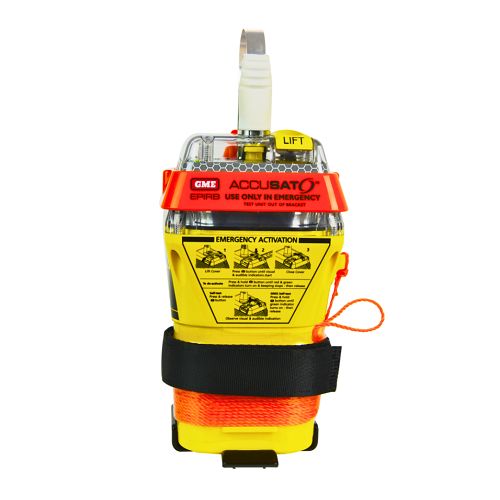
A 10‑year battery EPIRB with integrated GNSS (supports GPS and Galileo), infrared strobe and 121.5 MHz homing signal. Approved for worldwide COSPAS‑SARSAT operation.
Explore →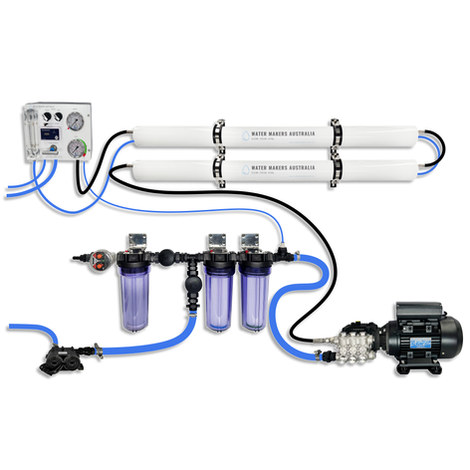
A two-membrane modular watermaker with 140 L/h nominal output, aimed at families and liveaboards that want more water per run.
Explore →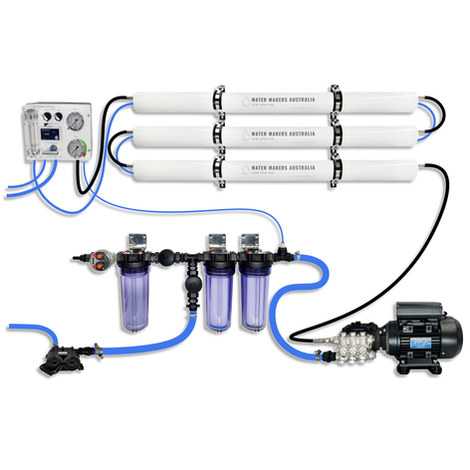
A three-membrane modular watermaker with 200 L/h nominal output and up to 240 L/h family-level marketing, for larger crews and heavy use.
Explore →