Loading this page…

Loading this page…
Sailing club
Small, volunteer-run yacht club on the Arno Bay foreshore, halfway between Whyalla and Port Lincoln on Eyre Peninsula, where racing on Spencer Gulf can be watched close-up from the two-storey clubroom.
About
Small, volunteer-run yacht club on the Arno Bay foreshore, halfway between Whyalla and Port Lincoln on Eyre Peninsula, where racing on Spencer Gulf can be watched close-up from the two-storey clubroom.
Service area: Arno Bay, SA
Keep exploring
From its two-storey clubroom on the foreshore, Arno Bay Yacht Club reckons it enjoys a vantage point almost no other club can match. By its own account it belongs to a tiny handful of clubs anywhere where racing can be watched close-up from the clubhouse itself — a claim that says plenty about how intimate sailing is at this small Spencer Gulf port.
Arno Bay sits on the eastern side of Eyre Peninsula, close to halfway between Whyalla to the north and Port Lincoln to the south. The yacht club is affiliated with Yachting SA, recognised as a sporting organisation within the District Council of Cleve, and run, in its own words, by a small and dedicated band of volunteers. It is a smoke-free club and a participant in the Good Sports program, with bar and catering duties organised through member rosters and a clubroom available for hire.
Summer racing runs each Sunday, and visitors are expressly welcome. Paper Tiger catamarans are the main class on the water, joined by 125s and the junior Tackers boats, while downstairs in the clubhouse there is room to store yachts — and canoes as well, with canoe fun days floated as a possible addition to the season. A defibrillator unit mounted near the boat shed door hints at the practical, self-reliant spirit of a club a long way from big-city services. Commodore Pete Darling heads the listed committee, with Greg McDonald as Vice Commodore, Robert Preiss as Secretary, Naomi Carrick Hobbs as Treasurer and Rod Carrick managing the bar.
Formal coaching structures are thin on the ground in a town the size of Arno Bay, so the club keeps its training simple, regular and open. Every Sunday from 10.30am it runs a come-and-learn sailing session, with the wider club program following from two until six in the afternoon — a rhythm that folds instruction straight into the day's sailing rather than walling it off as a separate product.
Sail training is listed as a core service of the club, sitting alongside social sailing and racing in its community directory entry, and the junior Tackers classes sail among the club's fleet. Beyond that, the offering is deliberately informal, in the manner of many small country clubs across South Australia: newcomers generally learn by turning up on a Sunday, sailing with experienced members and graduating into the racing fleet as confidence grows. That mentoring model is common in regional sailing, and in a place like Arno Bay — where, as the club points out, the racing is visible from the clubhouse — it has the advantage that learners can watch exactly how the locals do it before ever leaving the beach.
There are signs of quiet ambition, too. The club has mused publicly about adding canoe fun days to the season, and it can already store canoes alongside yachts downstairs. For a volunteer-run club on this stretch of coast, the weekly session represents a genuine commitment: every Sunday, all season, someone is on the beach teaching. And because the same morning leads directly into the afternoon's club activities, a learner's first lesson can end with them watching — or joining — the day's racing, which is about as smooth an introduction to the sport as regional sailing can offer.
Arno Bay faces Spencer Gulf from the eastern flank of Eyre Peninsula, and the yacht club's own website will happily tell you what the town trades on: white sandy beaches and fishing it calls legendary. The club's foreshore address at 352 Centenary Lane puts it right at the water's edge — close enough, as members like to point out, that Sunday's race can be followed from the comfort of the clubroom.
For a small club the practical kit is impressive. Arno Bay operates its own weather station, publishing live readings online through WeatherLink, so sailors and visiting travellers alike can check gulf conditions before they leave home. The two-storey clubhouse doubles as boat storage downstairs, with room for canoes as well as yachts, and the foreshore setting means launching is a matter of metres rather than minutes.
The sailing water is Spencer Gulf, a broad, sheltered arm of the sea shared with a string of clubs — Whyalla, Port Augusta, Tumby Bay and, further around, Ceduna — with which Arno Bay has long swapped regatta visits. The bay itself is a working fishing port as much as a sailing one, which gives the clubroom view an extra layer of interest on the days when the racing fleet is away. Weather on the gulf can shift quickly, making the club's own station more than a novelty: it is the first thing sensible sailors consult.
Civic life runs through the District Council of Cleve, the state electorate of Flinders and federally Grey, and even the postal address, PO Box 132, Cleve, reflects the region's spread-out character: the club's mail travels via the district's main service town while the boats stay firmly at the beach.
Ask when Arno Bay Yacht Club was founded and the record goes quiet: no founding year is given on the club's own website, its SAcommunity listing or the District Council of Cleve's register of sporting bodies. What can be said with certainty is that organised yacht racing was thriving here by the late 1960s, because the newspaper archive proves it.
In April 1968 an Easter Regatta at Arno Bay drew a reported record fleet of 102 starters, the sharpies from neighbouring Tumby Bay dominant among them — a remarkable turnout for a small gulf port, and clear evidence of an established sailing scene. Nearly two decades on, in 1986, Arno Bay was still at the heart of gulf sailing, joining Ceduna, Tumby Bay, Whyalla and Port Augusta in a Spencer Gulf regatta covered by the Port Lincoln Times.
The modern era is anchored by the Paper Tiger catamaran, now the mainstay of Sunday racing. The club has twice stepped onto the class's bigger stages: hosting the 49th Australian Paper Tiger Championships across the 2018–19 season, with full results published on Sailwave, and running Paper Tiger State Titles, the results of which appear on the club's own website. That Paper Tiger connection has given this small club a national footprint few towns of its standing could claim. For a club that cannot tell you the year it was born, Arno Bay has assembled an impressively documented recent story — written in race results, regatta reports and the Sunday habits of a small volunteer community.
A practical cruising guide for the Moyne River port at the mouth of the Moyne River on Victoria’s south-west coast. It explains harbour geometry, seasonal conditions, principal sailing zones, anchorages, visitor facilities, known local hazards (bar, reefs, strong currents, surf and commercial traffic), regulatory controls and realistic experiences for day sailors, trailer-sailors and coastal cruisers. The guide draws on local port plans, state boating authorities, the yacht club’s visiting-boat practice and regional marine management documents.

Plan passages across Spencer Gulf or to Kangaroo Island by basing fuel on your boat’s actual consumption plus a generous reserve, choosing sensible staging/stop options that match your boat and crew, and prioritising shelter and weather windows (gale fronts, strong winds and tidal streams can make the gulf uncomfortable or unsafe). Confirm fuel availability, safe anchorages or marinas on your route, and check up-to-date local weather, tide and navigation information before you go.
Explore →
Look for a friendly club with beginner-focused training, accessible facilities and boats, a supportive community, clear safety practices, and opportunities to progress at your own pace.
Explore →
Before your first sail in South Australian waters check the weather and tide, make sure the boat and safety equipment are fit for the trip, confirm local rules and any area-specific hazards, and tell someone your plan.
Explore →
Measure yourself and check the seller’s size guide, certification labels and return policy; prefer buying from reputable Australian retailers or authorised dealers and ask for photos or a video try-on before you commit.
Explore →
A practical guide for new sailors on picking the right Australian sailing club: training, boat access, racing, social fit, costs and the key questions to ask before joining.
Explore →A practical guide for recreational sailors planning day sails or short cruises around Batemans Bay, Broulee and the Clyde River. Covers local conditions, safe approaches, anchorages, launching, tides, common hazards, and checklists for trip planning and on-water decisions.
Explore →A practical guide for recreational sailors planning visits to Albany and King George Sound. Covers the main anchorage areas, typical local weather patterns, tidal and current considerations, navigational hazards, on-the-water etiquette and a pre-departure checklist to help you plan a safe passage and enjoyable stopover
Explore →Practical guide for recreational sailors planning day sails and short cruises in Geographe Bay, focusing on launching, local conditions, anchorages and safety around Busselton, Dunsborough and Cape Naturaliste.
Explore →Burke Yachtsman Gear Bag 40L - Shop Now Zip Pay | Tamar Marine Skip to content 59 – 63 Holbrook Street, Invermay Online Shop Open 24/7 Products search Contact us 1300 MARINE $ 0.00 0 Cart Burke Yachtsman Gear Bag 40L $ 79.90 Colour Choose an option Black Blue Black Blue Clear - Burke Yachtsman Gear Bag 40L quantity + Add to cart Enquire about this product SKU BAGB-Y24/BLACK* Category Bags - Sail & Gear A Burke classic and customer favourite, the Yachtsman’s Gear Bag is built tough to handle wet, salty conditions while keeping your gear dry and protected. Made from double coated waterproof…
Explore →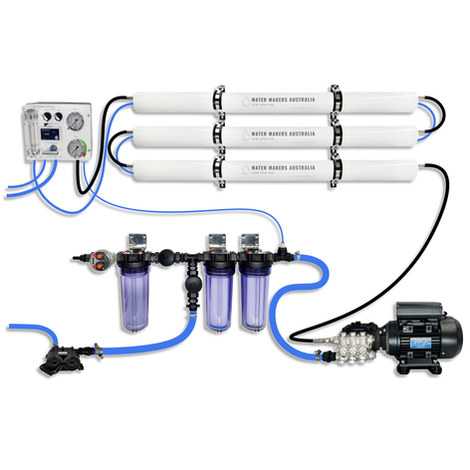
A three-membrane modular watermaker with 200 L/h nominal output and up to 240 L/h family-level marketing, for larger crews and heavy use.
Explore →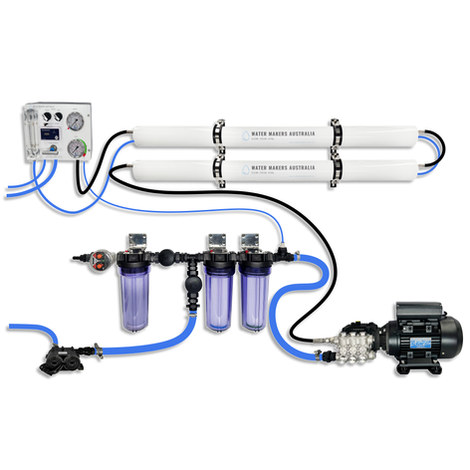
A two-membrane modular watermaker with 140 L/h nominal output, aimed at families and liveaboards that want more water per run.
Explore →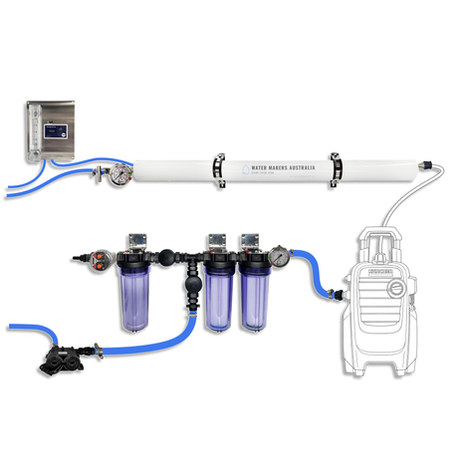
A one-membrane modular marine watermaker with 80 L/h nominal output, remote stainless control panel, standard consumables and direct Australian support.
Explore →