Loading this page…

Loading this page…
Sailing club
Coffin Bay Yacht Club is a volunteer-run, not-for-profit sailing club on the Coffin Bay foreshore (146 Esplanade, Coffin Bay SA). The club runs a seasonal sailing program (generally October–May) that welcomes all ages and emphasises junior development. The clubhouse has a licensed bar and meals (including fish & chips nights) and the facilities — including lawns, a small sandy beach and a recently opened jetty — are available for hire. The club also hosts sailing events and regattas.
About
Coffin Bay Yacht Club is a volunteer-run, not-for-profit sailing club on the Coffin Bay foreshore (146 Esplanade, Coffin Bay SA). The club runs a seasonal sailing program (generally October–May) that welcomes all ages and emphasises junior development. The clubhouse has a licensed bar and meals (including fish & chips nights) and the facilities — including lawns, a small sandy beach and a recently opened jetty — are available for hire. The club also hosts sailing events and regattas.
Service area: Coffin Bay, SA
Keep exploring
Fifty years of sailing on the Eyre Peninsula deserved a proper celebration, and Coffin Bay Yacht Club marked the occasion the only way a sailing club knows how: with boats on the water. From 12 to 17 April 2025 the club ran a week-long anniversary regatta that folded in the South Australian Heron and 125 state titles and drew classes ranging from Optimists through to A Class catamarans.
It capped a half-century that began, by the club's own telling, with an offer from Phil Hurrell to teach John Rogers to sail — a generous gesture that grew into a public meeting, twenty-two inaugural members and a joining fee of two dollars. The club that officially formed on 26 January 1975 now sits within Australian Sailing's smallest affiliation fee band, yet it has hosted national championship racing and reached the finals of the 2025 Clubs SA Clubs and Community Awards, in both the Medium Club of the Year category and a community and heritage category.
Run as a not-for-profit by volunteers alongside a small staff, it keeps meals reasonably priced and opens its clubhouse to functions as a venue for hire. The Australian Sailing club directory characterises it as a mixed bay sailing and cruising club, which suits a town whose identity is so closely tied to the water. For a small regional community, the clubhouse also serves a civic purpose few sporting venues can claim: it is an official refuge of last resort in an emergency, equipped with an automatic generator so the lights stay on when the town's do not.
Coffin Bay's approach to developing sailors starts early and stays personal: on Sunday mornings through the season, junior sailors gather for coaching in the club's Optimist dinghies under qualified coaching staff. That weekly rhythm sits inside a broader racing calendar running from October through to Easter, with races held every Sunday — a structure that lets young sailors move straight from instruction into competition as their confidence builds.
The club does not appear in Australian Sailing's accredited course listings, and no formal learn-to-sail or Discover Sailing Centre program is advertised on its own site, so families seeking certified tuition would typically find it through the pathways common to small regional clubs: short introductory courses delivered by accredited instructors, usually in club-owned dinghies, often scheduled as school-holiday intensives to suit country families travelling in from outlying districts.
What Coffin Bay offers in abundance is race experience in the classes it actually sails — Herons and 125s at senior level, Optimists for the youngest members — and the sheltered setting means coaching can proceed in conditions that would cancel sessions at more exposed venues. The coaching uses the club's own Optimist dinghies, sparing families the cost of boat ownership while children learn.
As an Australian Sailing member club, Coffin Bay has adopted the national body's Member Protection Policy, Code of Conduct and Child Safeguarding Policy, which frame every program it runs for young people. The club's standing within South Australian sailing was underlined when it welcomed the national body's South Australian Sailing Summit to the Eyre Peninsula on 19 July 2025, hosting a club and class development conference.
It has also demonstrated championship-level organisational capability, hosting the 125 Association's 47th Australian Championships from late December 2025 into early January 2026 and running triangle windward-leeward courses against a 45-minute target race time.
The club's home waters need little selling: Coffin Bay itself, a broad, protected sheet of water on the western side of the Eyre Peninsula, which the club describes as ideal for sailors of every experience level. Spectators fare almost as well as competitors, since the racing can be watched from both inside and outside the clubhouse — a rare luxury that turns an ordinary Sunday into theatre.
Senior fleets here are the Heron and the 125, two dinghy classes with deep roots in South Australian sailing, and the calibre of the venue is confirmed by the championship traffic it attracts: the 125 class held its 47th Australian Championships in these waters, with racing conducted in neighbouring Kellidie Bay. That national title series came with a practical warning in its notice of race — razor fish on the bottom in front of the clubhouse can injure bare feet during launching and retrieval, so adequate footwear is recommended.
It is the sort of detail that marks a genuine working waterfront rather than a manicured one. When the big anniversary regatta ran in April 2025, the Trailer Sailer Association of South Australia timed its Coffin Bay Cruise, from 6 to 11 April, to lead straight into the celebration, with a trailer-sailer race series following from 14 to 17 April. For visiting crews, the club's new pontoon and jetty — opened by the Member for Grey, Rowan Ramsey, and Commodore Chris Stenson, backed by a federal Building Better Regions grant, the Community Bank branch at Cummins and the Lower Eyre Council — has made arriving by water considerably easier.
Coffin Bay was a town without a meeting place, and that fact shaped everything that followed. The club's founding story, as recorded on its own history page, began when Phil Hurrell offered to teach John Rogers to sail. Interest spread, a public meeting was called in 1975, and from that gathering came a club with twenty-two foundation members paying two dollars each; the official formation date, per the club's anniversary announcement, was 26 January 1975.
One of the young club's first decisive moves was to buy a shack on the foreshore — the building that had been the original Coffin Bay Store and residence — and for a town with no social meeting place of its own, the purchase mattered well beyond sailing. That first clubhouse was eventually demolished, and its replacement went up in two stages, in 1980 and 1985.
The volunteer ethic that built the club kept sustaining it: in 2006, members funded new sailing dinghies and rescue boats while carrying out major renovations that delivered a new bar, fresh floor coverings, updated lighting and a life membership wall. Facilities ashore matter here because the clubhouse doubles as an official refuge of last resort in emergencies, complete with an automatic generator.
The fiftieth birthday in April 2025 was celebrated with a week of racing incorporating two state championships, and the occasion drew the Trailer Sailer Association of South Australia to schedule its Coffin Bay Cruise as a lead-in. Half a century on, the two-dollar club remains committee-run and volunteer-driven, with meals served three nights a week and the bar kept open largely by the same volunteer labour that has always carried it.
Apollo Bay is a small working harbour on Victoria’s Great Ocean Road where sheltered inshore sailing meets the Southern Ocean. The character is a mix of protected harbour berths and an exposed open coast: pleasant day-sails and sheltered weekend cruising inside the bay, with demanding coastal passages immediately offshore where south‑westerly swell and strong winds from the Southern Ocean dominate. It suits coastal cruisers, trailer sailors who launch at the ramp, and experienced coastal sailors who understand bar and swell behaviour; it is not a casual open‑ocean anchorage for unprepared or

Anchor in rocky coves, sandy bays and tidal flats by choosing the right ground and anchor, giving plenty of scope, setting the anchor slowly and testing it, and planning for tidal change and swing room.
Explore →
Look for a friendly club with beginner-focused training, accessible facilities and boats, a supportive community, clear safety practices, and opportunities to progress at your own pace.
Explore →
Watch for shallow entrance bars, shifting sandbanks and channels, tidal streams that accelerate through narrow channels or around headlands, drying mudflats and sills that expose at low water, and localised eddies or overfalls — and always confirm conditions for the specific estuary before you enter.
Explore →
Use ramps and beaches with respect for local conditions: check ramp layout, tide and swell, wind direction, vehicle access and crowding; prepare boat and crew before you launch or retrieve; and follow local signage, courtesy and safety practices. Specifics vary by ramp and beach, so confirm details for the exact site before you go.
Explore →
A practical guide for new sailors on picking the right Australian sailing club: training, boat access, racing, social fit, costs and the key questions to ask before joining.
Explore →A practical guide for recreational sailors planning day sails or short cruises around Batemans Bay, Broulee and the Clyde River. Covers local conditions, safe approaches, anchorages, launching, tides, common hazards, and checklists for trip planning and on-water decisions.
Explore →A practical guide to the coastal weather systems that affect sailing along Western Australia's coast, focusing on the Fremantle Doctor, local sea breezes, and linked coastal phenomena. Explains how these systems form, when they tend to occur, how they influence boat handling and passage planning, common mistakes, and a
Explore →Practical guide for recreational sailors planning passage on the Hawkesbury River: how to plan around tides, choose anchorages, read local conditions and prepare the boat and crew for a safe, comfortable trip.
Explore →Burke Yachtsman Gear Bag 40L - Shop Now Zip Pay | Tamar Marine Skip to content 59 – 63 Holbrook Street, Invermay Online Shop Open 24/7 Products search Contact us 1300 MARINE $ 0.00 0 Cart Burke Yachtsman Gear Bag 40L $ 79.90 Colour Choose an option Black Blue Black Blue Clear - Burke Yachtsman Gear Bag 40L quantity + Add to cart Enquire about this product SKU BAGB-Y24/BLACK* Category Bags - Sail & Gear A Burke classic and customer favourite, the Yachtsman’s Gear Bag is built tough to handle wet, salty conditions while keeping your gear dry and protected. Made from double coated waterproof…
Explore →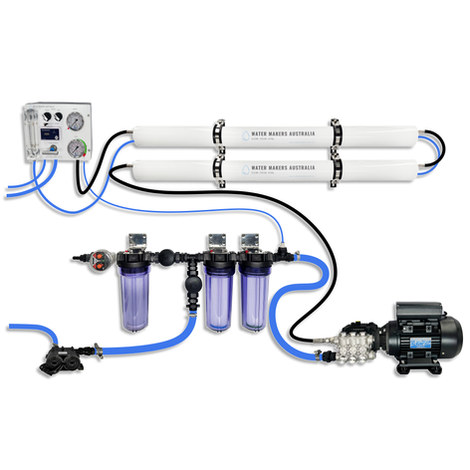
A two-membrane modular watermaker with 140 L/h nominal output, aimed at families and liveaboards that want more water per run.
Explore →
Self-contained, battery-powered plug‑and‑play autopilot designed for standard hydraulic steering systems.
Explore →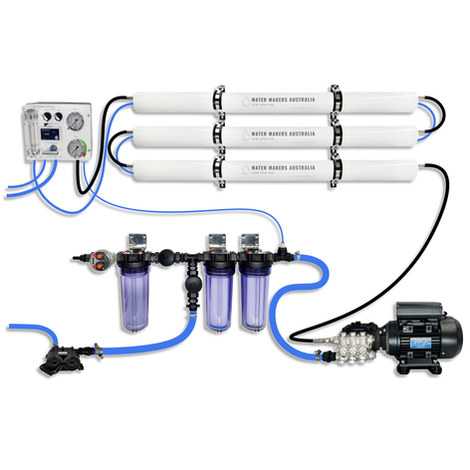
A three-membrane modular watermaker with 200 L/h nominal output and up to 240 L/h family-level marketing, for larger crews and heavy use.
Explore →