Loading this page…

Loading this page…
Sailing club
Family-friendly, volunteer-run club on the Murray at Goolwa and an accredited Discover Sailing Centre, grown from a junior sail-training program that began in 1995. Low-cost memberships keep kids on the water.
About
Family-friendly, volunteer-run club on the Murray at Goolwa and an accredited Discover Sailing Centre, grown from a junior sail-training program that began in 1995. Low-cost memberships keep kids on the water.
Service area: Goolwa, SA
Keep exploring
Some clubs are born from racing rivalries; Goolwa Sailing Club was born from a classroom. Its roots lie in a junior sail training program that began on the Murray at Goolwa in 1995, and the full club followed in 2011 — an origin story that explains everything about its priorities. This is an accredited Australian Sailing Discover Sailing Centre, affiliated with the national body and listed in fee Band 20 on the national affiliation list, and it operates as a family-oriented, volunteer-driven organisation where annual junior membership costs eighty dollars.
The committee's stated aim is keeping costs low enough that families are never priced off the water: members pay nothing extra for race nominations or boat hire, on the reasoning, as the club puts it, that everyone is a volunteer and the focus is getting kids out sailing. Australian Sailing profiled the club in a Discover Sailing Centre in Focus feature published in January 2026, singling out the striking number of instructors such a small club has developed.
That teaching culture has earned formal recognition — Commodore Adam Spees collected the 2024 South Australian Instructor of the Year title. One clarification matters in this town: Goolwa has three separately affiliated sailing clubs. This is not the Goolwa Regatta Yacht Club, nor the Goolwa Vintage Boat Club — both of those hold their own distinct places on the affiliation list.
At Goolwa Sailing Club, the coaching happens where it counts: in the middle of actual races. On non-championship days, coaches work with sailors during club racing itself — because, in the club's view, that is where the learning really happens — while championship days stay coaching-free in the interests of fairness. It is a distinctive philosophy, and it sits inside a full Discover Sailing offering that runs from Start Sailing 1 and 2 through Safety Boat Operator and powerboat training, with dedicated coaching for juniors and youth in the ILCA and Optimist fleets.
Sunday junior training in the 2025/26 season runs on a pay-as-you-go basis at twenty dollars a session including boat use, open to ages seven and up, led by Yossi Jagger and Commodore Adam Spees with a bench of assistant instructors. Those assistants are not incidental: the club emphasises team teaching and deliberately mentors its assistant instructors, bringing them into training and instructor conferences — the pipeline behind the instructor depth Australian Sailing praised.
A junior learn-to-sail course in January 2026, built on the national Start Sailing 1 syllabus, took beginners through terminology, equipment, launching and returning, and capsize recovery across four days. Each March the program leaves the river entirely for a three-day outdoor education excursion with a local high school, combining sailing and camping in the Coorong National Park using dinghies and keelboats.
Participation by girls is a point of effort rather than accident: girls accounted for forty per cent of one recent Learn to Sail Week, the club takes part in SheSails initiatives and hosts girls' clinics with the International Optimist Dinghy Association of South Australia. Newcomers can test the water through SailPass, which covers insurance while keeping barriers low, and the club planned Discover Sailing Days for the coming season. It even recognises sailing toward the Duke of Edinburgh's International Award.
The Murray at Goolwa is a forgiving place to learn, and the club's home on the Barrage Road bank puts that calm water at the end of a short walk. Australian Sailing describes the setting as ideal for sailors of all ages and abilities, and the club exploits the geography with imagination: rather than drilling juniors around what it calls the usual trapezoid course, sessions are built around destination sails and destination races, so adventure and competition share the same afternoon.
Morning coaching flows straight into afternoon club racing, and juniors are urged to stay on and race or to shadow the fleet aboard the safety boat — the river doubling as classroom and arena in a single day. The same waters, however, have tested the club hard in recent years. Major flooding in 2023 forced a six-month closure, and widespread algal blooms across 2024, returning in 2025, sharply limited the places where the club could safely operate, ruling out affected beaches and lake areas and confining activity to clearer stretches of the river or pausing on-water programs altogether.
The club's response showed the resilience of a volunteer organisation: when conditions eased in January, it expanded its Learn to Sail capacity by half and put more sailors on the water than in a normal season. Sailing here means understanding a living river system — levels that rise and fall, water quality that shifts with the seasons, and reaches that open or close accordingly.
For a teaching club, that variability is almost an asset: its sailors graduate with a practical, environmental literacy that sailors raised on an open bay may never need to acquire.
The club's timeline is short, but it has been eventful. The story opens in 1995 with a junior sail training program on the Murray at Goolwa — the seed from which everything else grew. Sixteen years later, in 2011, that program matured into a fully fledged sailing club, established as a community-focused, family-oriented body on the riverbank and built from the outset on volunteer labour.
Accreditation as an Australian Sailing Discover Sailing Centre formalised its teaching identity, and affiliation placed it on the national register in Band 20, quite separately from the town's two older clubs. Then the river itself intervened. The major flooding of 2023 closed the club for six months — a severe blow to an organisation whose entire product is access to the water.
Recovery had barely consolidated when algal blooms swept the lower Murray in 2024 and returned in 2025, closing beaches and lake areas and forcing the club to shift its programs to clearer river sections or suspend them entirely. Through all of this, the club kept building its people: its commodore, Adam Spees, took out the Instructor of the Year honour at the 2024 state sailing awards, and the number of instructors the club has developed drew specific praise when Australian Sailing profiled it as a Discover Sailing Centre in Focus in January 2026.
In the January following the blooms, the club expanded its Learn to Sail intake by fifty per cent, turning lost water time into a surge of new sailors. Barely a decade and a half old, Goolwa Sailing Club has already lived through flood, bloom and recovery — and emerged, by the national body's own account, as one of the more productive teaching clubs in the state.

Look for a friendly club with beginner-focused training, accessible facilities and boats, a supportive community, clear safety practices, and opportunities to progress at your own pace.
Explore →
Before your first sail in South Australian waters check the weather and tide, make sure the boat and safety equipment are fit for the trip, confirm local rules and any area-specific hazards, and tell someone your plan.
Explore →
Yes — South Australian coastal waters include marine parks, aquatic reserves, harbour bylaws and local council restrictions that can affect anchoring, fishing, mooring and access; check the relevant state agencies, local councils and Notices to Mariners for location-specific rules and permit requirements.
Explore →
Give everyone a simple, clearly defined role (helm, main trimmer, headsail trimmer, lookout/tactician and bow/lines), use short standard calls for manoeuvres, and keep communications positive and concise so the day stays safe and relaxed.
Explore →
A practical guide for new sailors on picking the right Australian sailing club: training, boat access, racing, social fit, costs and the key questions to ask before joining.
Explore →A practical guide for recreational sailors planning visits to Albany and King George Sound. Covers the main anchorage areas, typical local weather patterns, tidal and current considerations, navigational hazards, on-the-water etiquette and a pre-departure checklist to help you plan a safe passage and enjoyable stopover
Explore →A practical guide to the coastal weather systems that affect sailing along Western Australia's coast, focusing on the Fremantle Doctor, local sea breezes, and linked coastal phenomena. Explains how these systems form, when they tend to occur, how they influence boat handling and passage planning, common mistakes, and a
Explore →
A concise, practical guide to the points of sail and how to trim sails effectively for common Australian conditions. Learn the basics of wind angles, sail shape, telltales, reefing considerations and simple steps to improve boat speed and balance.
Explore →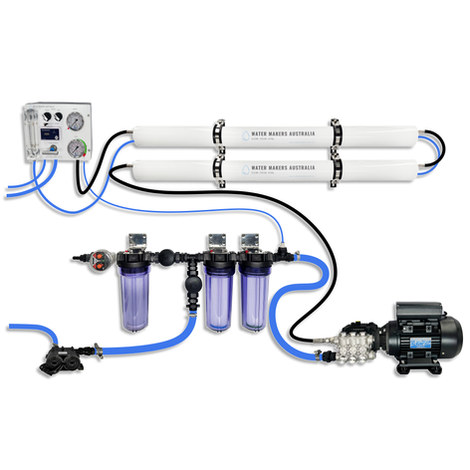
A two-membrane modular watermaker with 140 L/h nominal output, aimed at families and liveaboards that want more water per run.
Explore →Burke Yachtsman Gear Bag 40L - Shop Now Zip Pay | Tamar Marine Skip to content 59 – 63 Holbrook Street, Invermay Online Shop Open 24/7 Products search Contact us 1300 MARINE $ 0.00 0 Cart Burke Yachtsman Gear Bag 40L $ 79.90 Colour Choose an option Black Blue Black Blue Clear - Burke Yachtsman Gear Bag 40L quantity + Add to cart Enquire about this product SKU BAGB-Y24/BLACK* Category Bags - Sail & Gear A Burke classic and customer favourite, the Yachtsman’s Gear Bag is built tough to handle wet, salty conditions while keeping your gear dry and protected. Made from double coated waterproof…
Explore →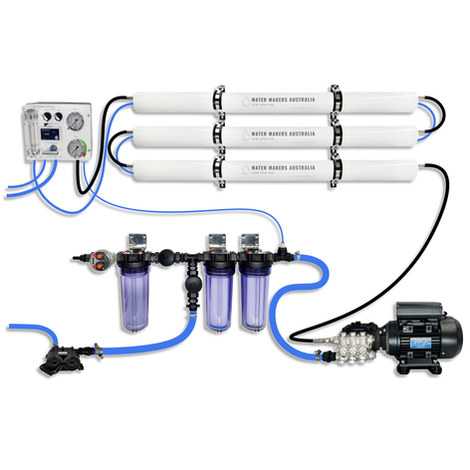
A three-membrane modular watermaker with 200 L/h nominal output and up to 240 L/h family-level marketing, for larger crews and heavy use.
Explore →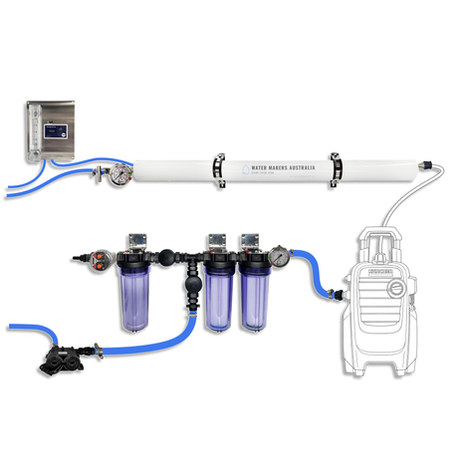
A one-membrane modular marine watermaker with 80 L/h nominal output, remote stainless control panel, standard consumables and direct Australian support.
Explore →