Loading this page…

Loading this page…
Sailing club
Goolwa Vintage Boat Club brings together lovers of vintage and wooden boats at Goolwa, on the River Murray near its mouth in South Australia. It is based on Barrage Road alongside Goolwa's other sailing clubs, and shares news, boats and historic results through its website.
About
Goolwa Vintage Boat Club brings together lovers of vintage and wooden boats at Goolwa, on the River Murray near its mouth in South Australia. It is based on Barrage Road alongside Goolwa's other sailing clubs, and shares news, boats and historic results through its website.
Service area: Goolwa, South Australia
Keep exploring
Plenty of clubs keep an old boat or two as ornaments; the Goolwa Vintage Boat Club keeps an entire fleet in racing trim. Based at Goolwa on the lower Murray, the club began life as the Vintage Boats Association and exists to keep historic wooden craft doing what they were built to do. It is affiliated with Australian Sailing in the smallest fee band, Band 22, on both the state and national lists — and it matters to get the identity right, because Goolwa has three separate affiliated clubs.
This one is entirely distinct from the Goolwa Regatta Yacht Club and the Goolwa Sailing Club, though its boats race in mixed company with the former and its activities are also listed under the umbrella of the Goolwa Aquatic Club at 92 Barrage Road, which counts Goolwa Vintage Boats among its five constituent clubs. Much of what is known about the club's past comes from its long-time secretary and record-keeper, Geoff Byrnes, whose careful preservation of documents gives this small club an unusually firm documentary footing.
The fleet itself is the attraction. Some of the boats launched in the 1800s are still afloat and competing on the river around Goolwa, and they have been joined by refugees from around the country — a pair of Derwent Class yachts from Hobart and the former Sorrento Couta Boat Leeuwin among them. A third-party directory pegs membership at around three hundred dollars and describes friendly vintage racing and social gatherings on the Fleurieu Peninsula, though that listing is unverified.
What no source disputes is the philosophy: these boats are, as one wooden-boat writer put it, never treated like classic collectibles.
Skills in this club travel by osmosis rather than syllabus. The Goolwa Vintage Boat Club doesn't advertise accredited Australian Sailing courses. What the club indisputably offers is an apprenticeship of an older kind. Vintage sailing is a craft discipline: keeping nineteenth- and early-twentieth-century timber boats competitive demands knowledge of traditional construction, spar-making, sail care and river seamanship that no weekend course teaches, and in a club like this that knowledge passes hand to hand, from owners who have restored and raced these boats for decades to newcomers who arrive with enthusiasm and leave with calluses.
Members seeking formal qualifications would typically enrol with an accredited sailing school — most Australian towns with an active sailing scene have at least one, and Goolwa's own sailing community offers structured pathways through its other organisations — and then bring those fundamentals back to the vintage fleet. The closest thing the club has to a curriculum is its racing calendar: boats go out most weeks of the year, pitted against far more modern designs in fibreglass and even carbon fibre, which means newer owners learn boat-handling under genuine competitive pressure against faster rivals.
Each January, vintage yacht racing takes its place in the Goolwa Regatta Week program, with presentations at the Goolwa Regatta Yacht Club, giving the fleet a showcase before a wider sailing audience. For a certain kind of sailor — the one who wants to know how a gaff rig actually behaves — this informal, immersive model is not a gap in the club's offering but its essential character.
The lower Murray keeps its own time, and the vintage fleet sails to it. Competition takes place on the river reaches around Goolwa, waters that shaped these boats long before any club existed to celebrate them. This was the working river of the pre-barrage era, when sail-driven fishing boats and rivercraft plied the lower Murray — the shared early story the club traces alongside the Goolwa Regatta Yacht Club — and the surviving fleet still races through the same scenery.
The shallow lower Murray lakes and the tidal waters toward the Coorong favour boats with lifting keels or centreboards, a design constraint written into the hulls of the vintage classes generations ago. Racing here is remarkably democratic: the club's day-sailers and Restricted 21s start most weeks of the year in mixed company, wooden hulls and gaff rigs holding their own against fibreglass and even carbon-fibre rivals fresh from the mould. The wider region gives the fleet a second stage.
Each January the vintage yachts take their place in Goolwa Regatta Week, and every second year the South Australian Wooden Boat Festival turns Goolwa's historic wharf precinct into a gathering of paddle steamers, classic motorboats — from celebrated Halvorsens to backyard houseboats — and the vintage racing fleet itself. Among the steamers is the Oscar W, built at Echuca in 1908 and counted among the flagships of the Murray fleet.
Boats have been rescued from around Australia to join the Goolwa fleet, including Derwent Class yachts brought north from Hobart and the former Sorrento Division 1 Couta Boat Leeuwin, drawn to a stretch of river where old boats are not exhibits but competitors. This is, in every sense, a working waterfront rather than a marina museum.
A single letter preserves this club's birthday. Dated 16 December 1981 and addressed by Geoff Parsons, secretary of the Goolwa Regatta Yacht Club, to Geoffrey Byrnes, it acknowledges the formation of a body called the Vintage Boats Association, and records the senior club's committee support for coordinating the new body's activities — documentary proof that the separate vintage organisation was formed in 1981. The association later became today's Goolwa Vintage Boat Club.
Its roots, though, run far deeper than 1981: the club's own history page explains that it shares its early story with the Goolwa Regatta Yacht Club, reaching back to the sail-driven fishing boats and rivercraft of the lower Murray before the barrages, and to the regatta tradition, organised from around August 1854, that once pitted Goolwa's fishing fleet against Victor Harbor's whalers. The name most tied to the club's golden era is Endeavour, a Restricted 21 purchased in April 1981 by Jock Veenstra of Goolwa, just as the local fleet of 21s was growing.
Between 1988 and 1995 Endeavour sailed in every race organised by the Vintage Boat Club and the Goolwa Regatta Yacht Club, and in 1994 she became the first South Australian Restricted 21 ever to defeat the Victorians on Lake Wendouree at Ballarat. Around her gathered a fleet that keeps growing by rescue: Derwent Class yachts from Hobart, a Couta Boat from Sorrento, and other craft recovered from around the country.
The club is now digitising its records and has published excerpts online from the 1959 journal of Goolwa identity Frank Bedford — fitting work for an organisation whose secretary, Geoff Byrnes, has been its memory for decades.
Dangar Island sits in the lower Hawkesbury River close to Brooklyn and is one of Sydney’s small, boat‑access communities. From the water it reads as a wooded, low island with sandy foreshore, a public jetty and private moorings; its position at the mouth of Cowan Creek and close to the main river channel makes it an attractive short‑cruise destination for trailer sailors, runabouts and small cruisers but also one that requires careful local knowledge and respect for resident berths, ferry operations and tidal currents.

Legal safety equipment for recreational boats in South Australia depends on the type, size and where you operate; you must check the current SA government requirements for your vessel. Independently of legal minimums, carry a sensible set of recommended items (lifejackets, means of communication, signaling, fire protection, anchor and basic tools) and make them usable and maintained.
Explore →
Do a seasonal inspection and servicing routine that focuses on hull and antifouling, through-hulls and seacocks, rigging and sails, engine and fuel systems, electricals and batteries, safety gear and bilge systems. Tailor exact tasks to your boat type, age and where you sail in South Australia, and follow manufacturer and marine service advice for anything technical.
Explore →
Look for a friendly club with beginner-focused training, accessible facilities and boats, a supportive community, clear safety practices, and opportunities to progress at your own pace.
Explore →
Tidal streams and local wind patterns can change trip time, fuel use, helm balance and safety margins on short coastal runs — plan your departure and route to use favourable tidal flow, allow margin for wind-driven sea and gusts, and check up-to-date local tide and weather information before you go.
Explore →
A practical guide for new sailors on picking the right Australian sailing club: training, boat access, racing, social fit, costs and the key questions to ask before joining.
Explore →
A practical, Australia‑focused introduction to sailing: key terms, common boat types, basic manoeuvres, where to learn, licence and club options, and planning your first trips with safety and local conditions in mind.
Explore →A practical guide to the coastal weather systems that affect sailing along Western Australia's coast, focusing on the Fremantle Doctor, local sea breezes, and linked coastal phenomena. Explains how these systems form, when they tend to occur, how they influence boat handling and passage planning, common mistakes, and a
Explore →Practical guide for recreational sailors planning passage on the Hawkesbury River: how to plan around tides, choose anchorages, read local conditions and prepare the boat and crew for a safe, comfortable trip.
Explore →Burke Yachtsman Gear Bag 40L - Shop Now Zip Pay | Tamar Marine Skip to content 59 – 63 Holbrook Street, Invermay Online Shop Open 24/7 Products search Contact us 1300 MARINE $ 0.00 0 Cart Burke Yachtsman Gear Bag 40L $ 79.90 Colour Choose an option Black Blue Black Blue Clear - Burke Yachtsman Gear Bag 40L quantity + Add to cart Enquire about this product SKU BAGB-Y24/BLACK* Category Bags - Sail & Gear A Burke classic and customer favourite, the Yachtsman’s Gear Bag is built tough to handle wet, salty conditions while keeping your gear dry and protected. Made from double coated waterproof…
Explore →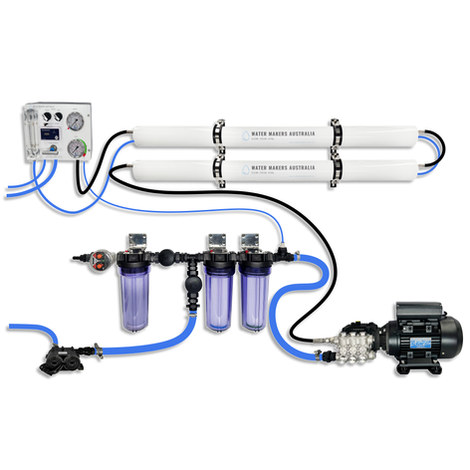
A two-membrane modular watermaker with 140 L/h nominal output, aimed at families and liveaboards that want more water per run.
Explore →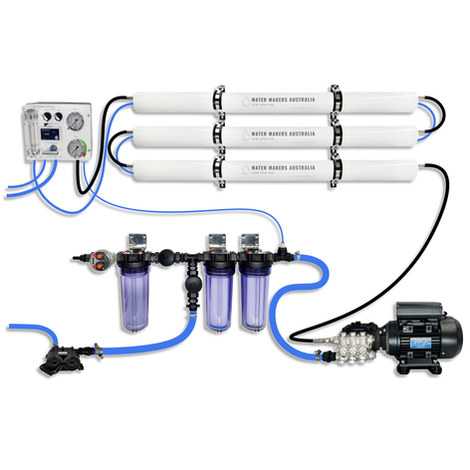
A three-membrane modular watermaker with 200 L/h nominal output and up to 240 L/h family-level marketing, for larger crews and heavy use.
Explore →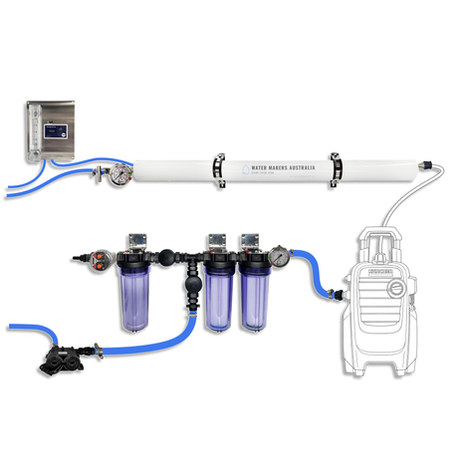
A one-membrane modular marine watermaker with 80 L/h nominal output, remote stainless control panel, standard consumables and direct Australian support.
Explore →