Loading this page…

Loading this page…
Sailing club
Henley Sailing Club is an off-the-beach dinghy club on West Beach, Adelaide, with an unbroken history dating to 1911. The volunteer-run club operates from a member-built clubhouse on Seaview Road and offers casual sailing, club racing, accredited Discover Sailing courses, powerboat training and community-focused events. Facilities are beach-orientated with broad sand launching, lawns, generous parking and beach tractors/buggies for moving boats.
About
Henley Sailing Club is an off-the-beach dinghy club on West Beach, Adelaide, with an unbroken history dating to 1911. The volunteer-run club operates from a member-built clubhouse on Seaview Road and offers casual sailing, club racing, accredited Discover Sailing courses, powerboat training and community-focused events. Facilities are beach-orientated with broad sand launching, lawns, generous parking and beach tractors/buggies for moving boats.
Service area: West Beach, Adelaide metropolitan coastline
Keep exploring
From a first tentative sail to sharper race craft, Henley's teaching follows the full Discover Sailing Pathway. The club runs programs from come-and-try sessions through to Better Racing, delivered by accredited instructors, with structured sail training for juniors and seniors running from October through March — the length of the beach sailing season. Because an off-the-beach club lives and dies by its support craft, Henley also runs Power Boat Handling and Safety Boat courses to keep its volunteer skills current, an investment that pays off every Saturday when the fleet hits the water.
The Mirror class holds a special place in the calendar: in conjunction with the class association, the club helps host the Mirror sailing and camping weekend at Goolwa, mixing tuition with the kind of family expedition that binds members to the sport. Women have been central to the instruction side for decades — Australian Sailing's profile of the club notes their sustained presence as regular sailors and instructors as well as leaders — which gives junior girls visible pathways that many clubs still struggle to provide.
Racing itself functions as a classroom here: most members sail on Saturdays, and the club has trialled a Club Heat format in which each class gets its own heat weekend, guaranteeing class champions are decided while also spreading on-water volunteer duties fairly across the season. The class mix shapes the coaching: with O'pen Skiffs for the youngest sailors, Lasers in all three rigs, Mirrors for families and a spread of performance classes up to the International 14 and the A Class cat, instructors can place sailors in boats that match their size, strength and ambition rather than forcing a single pathway.
For a club of about seventy members, the breadth of the pathway is notable — and it is entirely volunteer-delivered.
West Beach offers something rare on a city coastline: open water without obstruction. Henley launches straight off the sand into Gulf St Vincent, and the community directory's assessment — that clear of land influences, Henley provides some of the best dinghy sailing waters in the country — explains why the club has stayed put for three-quarters of a century on this site.
The beach itself is part of the infrastructure: a wide strip of sand with large accessible parking behind it and expanses of lawn, with tractors and beach buggies on hand to haul boats to the waterline. Fleets here are as varied as any off-the-beach club in the state. Lasers race in Radial, Full Rig and 4.7 rigs; Mirrors, 505s, International 14s, Cherubs, National Es and O'pen Skiffs fill out the monohull ranks; and the International A Class and Arrow represent the catamarans.
The club welcomes any class and races mostly on yardstick, a pragmatic choice that keeps mixed fleets competitive and entry easy. Most members sail on Saturdays, and the club's own commentary stresses the camaraderie and friendly atmosphere of those afternoons as much as the results. Historically, the club's racing revolved around the Henley Jetty, from which its 14-foot dinghy fleets once started; a 1925 newspaper account records the club — then racing as the Henley and Grange Sailing Club — fielding boats with names like White Cloud, Disturber, Radiant and Stelma, alongside the state champion 14-footer Sunny South, sailed by O.
O'Grady of Henley. The jetty starts are long past, but the essential geography is unchanged: a sandy beach, a reliable gulf breeze and open water within minutes of the city.
Storms and shifting sand have shaped Henley's story as much as sailing has. Founded in 1911, the club is recorded by Australian Sailing as the state's oldest surviving off-the-beach club, and it marked its centenary in 2011. The earliest premises were humble even by beach-club standards: the club operated first out of the local council depot, then from a spot members knew as the hole in the wall, on the site where the Henley Surf Life Saving Club now stands. Disaster arrived in 1948, when a storm washed the premises away entirely.
What happened next defines the club's character: rather than fold or merge, the members bought land at West Beach and built the clubhouse themselves — the same building that serves the club today and is now, more than seventy years on, the subject of a fundraising campaign for a new balcony and roof, improved inclusive access and a renewed ballroom floor. The sailing identity has been equally constant.
Traditionally, Henley's racing centred on the 14-foot dinghy, starting from the Henley Jetty, and newspaper records from 1925 show it competing under an earlier combined name, the Henley and Grange Sailing Club, with the state champion 14-footer Sunny South — sailed by Mr O. O'Grady — among a fleet including White Cloud, Disturber, Radiant and Stelma. Over recent decades the club has kept women in leadership roles, both on the water and in instruction, a continuity Australian Sailing highlighted in its Club in Focus profile.
Governance has stayed personal, too: Damian Carey was commodore in 2019, with Brenton Scott as secretary by 2024, presiding over a membership of roughly seventy whose average age of forty-one suggests the club keeps renewing itself. Through humble beginnings, storm and rebuilding, the off-the-beach tradition has never once lapsed.
Apollo Bay is a small working harbour on Victoria’s Great Ocean Road where sheltered inshore sailing meets the Southern Ocean. The character is a mix of protected harbour berths and an exposed open coast: pleasant day-sails and sheltered weekend cruising inside the bay, with demanding coastal passages immediately offshore where south‑westerly swell and strong winds from the Southern Ocean dominate. It suits coastal cruisers, trailer sailors who launch at the ramp, and experienced coastal sailors who understand bar and swell behaviour; it is not a casual open‑ocean anchorage for unprepared or

Look for a friendly club with beginner-focused training, accessible facilities and boats, a supportive community, clear safety practices, and opportunities to progress at your own pace.
Explore →
Rig and de-rig a small dinghy by following a consistent, step-by-step sequence: prepare the boat on shore, fit spars and foils in a stable order, control sails and running rigging so lines don’t tangle, check fittings and safety gear, and reverse the process when coming ashore—always working with a partner when possible and staying aware of wind and tide.
Explore →
Pick a stable, simple, forgiving dinghy with a single sail or basic sloop rig, affordable handling and easy maintenance—ideally one with a local class or school nearby so you can access coaching and spare parts.
Explore →
Late spring to summer is usually the best time for beginners to start learning to sail in Tasmania because the weather is generally warmer, days are longer and conditions are often more settled. Expect lighter to moderate winds with regular afternoon sea breees in summer, while spring and autumn bring more changeable and sometimes stronger conditions; winter is colder, wetter and typically windier with more fronts and swell.
Explore →A practical guide for recreational sailors planning visits to Albany and King George Sound. Covers the main anchorage areas, typical local weather patterns, tidal and current considerations, navigational hazards, on-the-water etiquette and a pre-departure checklist to help you plan a safe passage and enjoyable stopover
Explore →
A practical guide for new sailors on picking the right Australian sailing club: training, boat access, racing, social fit, costs and the key questions to ask before joining.
Explore →A concise, practical introduction to the essential parts of a recreational sailing boat for beginners in Australia. Covers hull, deck, rigging, sails, steering, below-decks spaces and safety equipment, with simple explanations, common mistakes and a pre-decast checklist to help new sailors communicate and get underway.
Explore →A practical guide to the coastal weather systems that affect sailing along Western Australia's coast, focusing on the Fremantle Doctor, local sea breezes, and linked coastal phenomena. Explains how these systems form, when they tend to occur, how they influence boat handling and passage planning, common mistakes, and a
Explore →Burke Yachtsman Gear Bag 40L - Shop Now Zip Pay | Tamar Marine Skip to content 59 – 63 Holbrook Street, Invermay Online Shop Open 24/7 Products search Contact us 1300 MARINE $ 0.00 0 Cart Burke Yachtsman Gear Bag 40L $ 79.90 Colour Choose an option Black Blue Black Blue Clear - Burke Yachtsman Gear Bag 40L quantity + Add to cart Enquire about this product SKU BAGB-Y24/BLACK* Category Bags - Sail & Gear A Burke classic and customer favourite, the Yachtsman’s Gear Bag is built tough to handle wet, salty conditions while keeping your gear dry and protected. Made from double coated waterproof…
Explore →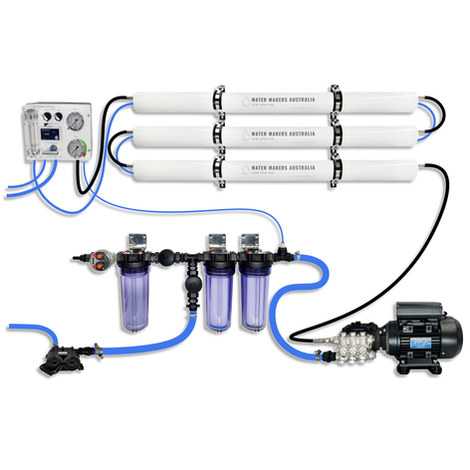
A three-membrane modular watermaker with 200 L/h nominal output and up to 240 L/h family-level marketing, for larger crews and heavy use.
Explore →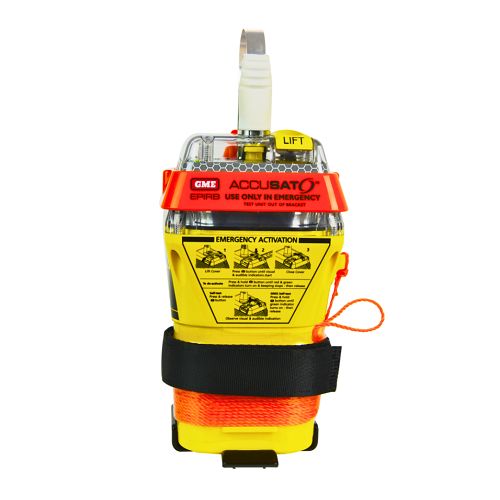
A 10‑year battery EPIRB with integrated GNSS (supports GPS and Galileo), infrared strobe and 121.5 MHz homing signal. Approved for worldwide COSPAS‑SARSAT operation.
Explore →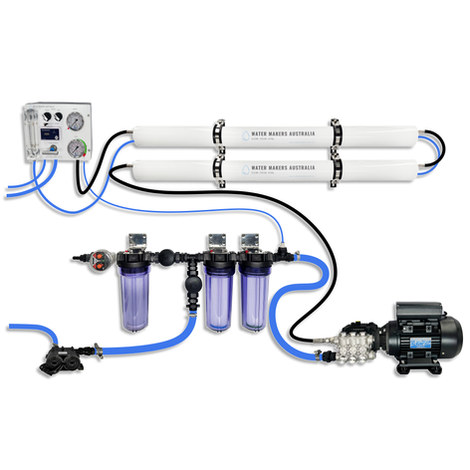
A two-membrane modular watermaker with 140 L/h nominal output, aimed at families and liveaboards that want more water per run.
Explore →