Loading this page…

Loading this page…
Sailing club
Port Lincoln Yacht Club (PLYC) is the principal sailing club on Boston Bay in Port Lincoln, South Australia. The club runs active weekend racing for dinghies and keelboats, junior and youth training including a Learn to Sail programme for children aged 8+, and hosts major events such as Lincoln Week and the finish of the Adelaide to Port Lincoln Yacht Race. PLYC also offers venue hire with waterfront views.
About
Port Lincoln Yacht Club (PLYC) is the principal sailing club on Boston Bay in Port Lincoln, South Australia. The club runs active weekend racing for dinghies and keelboats, junior and youth training including a Learn to Sail programme for children aged 8+, and hosts major events such as Lincoln Week and the finish of the Adelaide to Port Lincoln Yacht Race. PLYC also offers venue hire with waterfront views.
Service area: Port Lincoln, Boston Bay
Keep exploring
Port Lincoln Yacht Club (PLYC) sits on the Boston Bay foreshore at 1 Eyre Street, Port Lincoln, and calls itself the home of sailing in Port Lincoln. It's also the finishing club for one of Australia's great ocean races, the Adelaide to Port Lincoln, and the host of Lincoln Week, one of South Australia's biggest regattas.
What the club offers
Community and facilities. PLYC welcomes sailors of all ages and experience levels, with casual sailing options, newcomer incentives (including trial race days) and social events. The clubhouse, overlooking Boston Bay, is also available for private and corporate functions.
See our Port Lincoln page and Port Lincoln sailing clubs for more.
PLYC runs a Learn to Sail program for beginners aged 8 and over, delivered by qualified instructors with safety-boat support. The club supports junior fleets (Optimist, Cadet, 420, ILCA/Laser) with regular Saturday sessions (mornings for Optimists, afternoons for Cadets and 420s) and has club-owned boats for hire. For keelboats, the club offers training and casual crew opportunities, including two training keelboats so newcomers can experience weekend racing.
The pathway is well worn. Port Lincoln has long produced strong sailors, and the progression from Optimists to Cadets and 420s, then into ILCA dinghies or keelboat crews, gives young sailors a clear route. Adults can start with a trial race day on a training keelboat and move into regular crewing from there. Before heading out, see our FAQ on checks before your first sail in SA waters.
The club fronts Boston Bay at Port Lincoln on the Eyre Peninsula. The bay's sheltered inshore areas suit dinghy racing and junior sessions, while the broader bay hosts keelboat courses and Lincoln Week events.
Boston Bay is one of the largest natural harbours in Australia, protected by Boston Island and the surrounding headlands, so it offers big-bay racing with less of the open-ocean swell found outside. Beyond the bay lies lower Spencer Gulf, with the Sir Joseph Banks Group and the islands off the southern Eyre Peninsula making great cruising destinations. Port Lincoln is also home to a large fishing fleet, including the famous tuna boats, so expect working traffic.
Planning a passage? See our FAQ on crossing Spencer Gulf or heading to Kangaroo Island and the Eyre Peninsula page.
Sailing on Boston Bay goes back almost to the town's founding. Regattas were recorded as early as 29 February 1840, and by the 1880s a Port Lincoln Sailing Club was racing in blue and white colours. An 1885 report in the Adelaide Observer lists winners including Bill Haigh in Albatross and Tom Tait in Canowie. The First World War and the Depression eventually closed the early sailing and regatta clubs.
The modern club was formed on 23 October 1931 as the Port Lincoln Yachting Club, with F. Medwell as Commodore. Its founding aim was "to foster a love of the sea, the education of members into the art of sailing, and the promotion of the best interests of yachting", and its first race was sailed on 5 November 1931. The Second World War drained its membership and the club went into recess after 1940.
On 8 December 1948 a public meeting led by figures including Roy King revived the club, and organised racing resumed on 1 January 1949. A year later, on 4 February 1950, seven yachts started the first Adelaide to Port Lincoln Ocean Race, now one of Australia's premier offshore events. The Charlton family donated beachfront land for a clubhouse, completed in 1953–54, and a bequest from Harold Blomberry later funded a second storey, opened by Sir James Hardy in 1974. The 505 class arrived in 1958, and in the 1960s the Moth and Heron classes sparked a golden era, with 90 to 100 boats racing on the bay on weekends. The first Lincoln Week Regatta followed in 1976.
Batemans Bay and the Clyde River form a classic NSW South Coast cruising region where a sheltered, tidal estuary meets a short, island‑dotted entrance to the Tasman Sea. It’s distinctive for easy access from Canberra, a mix of river and bay sailing, a compact marina and mooring network, and a river entrance (the Clyde River bar) that can change rapidly. The area suits day sails, weekend cruising, trailer‑boat exploration and sheltered coastal passages; offshore or long‑passage plans require careful timing and local knowledge. Preparation for tidal flow, variable southerly swells and shallow, s

Legal safety equipment for recreational boats in South Australia depends on the type, size and where you operate; you must check the current SA government requirements for your vessel. Independently of legal minimums, carry a sensible set of recommended items (lifejackets, means of communication, signaling, fire protection, anchor and basic tools) and make them usable and maintained.
Explore →
Do a seasonal inspection and servicing routine that focuses on hull and antifouling, through-hulls and seacocks, rigging and sails, engine and fuel systems, electricals and batteries, safety gear and bilge systems. Tailor exact tasks to your boat type, age and where you sail in South Australia, and follow manufacturer and marine service advice for anything technical.
Explore →
Look for a friendly club with beginner-focused training, accessible facilities and boats, a supportive community, clear safety practices, and opportunities to progress at your own pace.
Explore →
Tidal streams and local wind patterns can change trip time, fuel use, helm balance and safety margins on short coastal runs — plan your departure and route to use favourable tidal flow, allow margin for wind-driven sea and gusts, and check up-to-date local tide and weather information before you go.
Explore →
A practical guide for new sailors on picking the right Australian sailing club: training, boat access, racing, social fit, costs and the key questions to ask before joining.
Explore →A practical guide for recreational sailors planning day sails or short cruises around Batemans Bay, Broulee and the Clyde River. Covers local conditions, safe approaches, anchorages, launching, tides, common hazards, and checklists for trip planning and on-water decisions.
Explore →
A practical, Australia-focused guide for planning and sailing around the Whitsunday Islands: weather and seasons, navigation and anchoring, moorings and parks, provisioning and charters, safety and common mistakes, plus checklists and next steps.
Explore →A practical guide for recreational sailors planning passages to, from or around Eden and Twofold Bay. Covers sheltered anchorages, shore facilities, local weather and tidal considerations, preparing for Bass Strait conditions and a focused equipment and safety checklist.
Explore →Burke Yachtsman Gear Bag 40L - Shop Now Zip Pay | Tamar Marine Skip to content 59 – 63 Holbrook Street, Invermay Online Shop Open 24/7 Products search Contact us 1300 MARINE $ 0.00 0 Cart Burke Yachtsman Gear Bag 40L $ 79.90 Colour Choose an option Black Blue Black Blue Clear - Burke Yachtsman Gear Bag 40L quantity + Add to cart Enquire about this product SKU BAGB-Y24/BLACK* Category Bags - Sail & Gear A Burke classic and customer favourite, the Yachtsman’s Gear Bag is built tough to handle wet, salty conditions while keeping your gear dry and protected. Made from double coated waterproof…
Explore →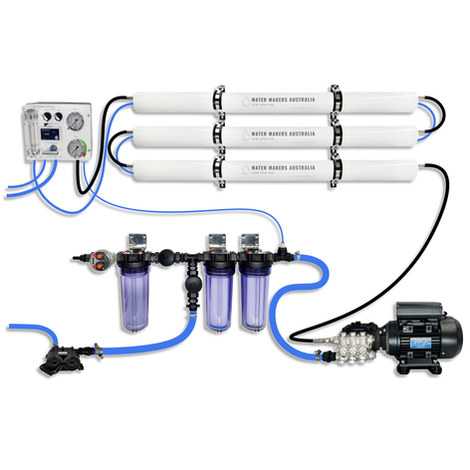
A three-membrane modular watermaker with 200 L/h nominal output and up to 240 L/h family-level marketing, for larger crews and heavy use.
Explore →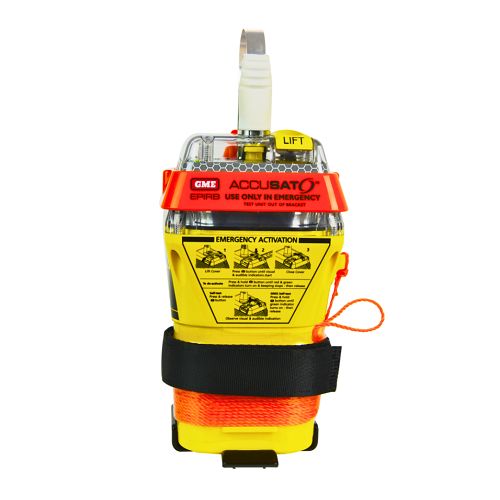
A 10‑year battery EPIRB with integrated GNSS (supports GPS and Galileo), infrared strobe and 121.5 MHz homing signal. Approved for worldwide COSPAS‑SARSAT operation.
Explore →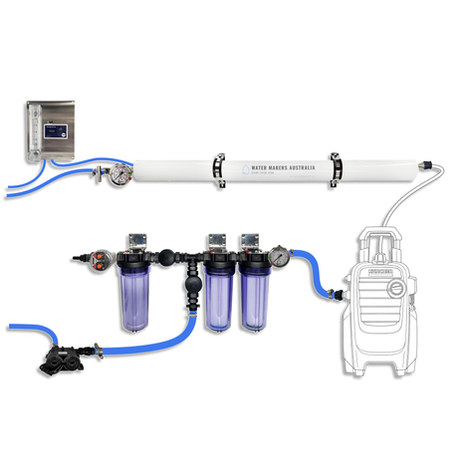
A one-membrane modular marine watermaker with 80 L/h nominal output, remote stainless control panel, standard consumables and direct Australian support.
Explore →