Loading this page…

Loading this page…
Sailing club
Royal Port Pirie Yacht Club is a community yacht club based in Solomontown / Port Pirie, South Australia. The club sails on the Port Pirie River and the north‑eastern side of Spencer Gulf, runs an active Saturday racing season (October to Easter), operates sail training using Pacers and Tasars, and supports a mixture of trailerable yachts and keelboats. The club hosts local events including a Spencer Gulf cruise and the regional Cockle Spit Cricket event, and maintains volunteer rescue and committee boats.
About
Royal Port Pirie Yacht Club is a community yacht club based in Solomontown / Port Pirie, South Australia. The club sails on the Port Pirie River and the north‑eastern side of Spencer Gulf, runs an active Saturday racing season (October to Easter), operates sail training using Pacers and Tasars, and supports a mixture of trailerable yachts and keelboats. The club hosts local events including a Spencer Gulf cruise and the regional Cockle Spit Cricket event, and maintains volunteer rescue and committee boats.
Service area: Port Pirie / Spencer Gulf (north‑eastern Spencer Gulf and Port Pirie River)
Keep exploring
Royal Port Pirie Yacht Club is on the north-eastern side of Spencer Gulf at Port Pirie. Its clubrooms at 61 Main Road, Solomontown, overlook the Port Pirie River with the Southern Flinders Ranges on the skyline. The club promotes community sailing and social activity, and the clubhouse River Bar is a favourite spot to watch the river at sunset.
What the club does
Facilities and safety. Volunteer-crewed rescue and committee boats support all on-water activity. The clubhouse is available for hire and is a social centre for members and visitors.
Membership and contact. Membership and club information is on the club's website. Contact the clubhouse on (08) 8632 1292 or info@royalportpirieyachtclub.org.au.
See our Port Pirie sailing clubs page and Spencer Gulf page for more.
The club uses Pacers for sail training and runs come-and-try sessions and a sailing school, with dates varying by season. Its "Kidtober" come-and-try events usually lead into the sailing school, so October is a great time for families to start. The club also races Tasars and provides on-water support with volunteer rescue and committee boats.
The pathway suits beginners well. The Pacer is a stable, forgiving two-person dinghy that's ideal for learning, and the step up to the Tasar, a fast, well-balanced two-hander, gives confident sailors a competitive class to race. Adults can also crew on the club's trailable and keel yachts. Before your first sail, see our FAQ on checks before your first sail in SA waters.
Sailing is conducted on the Port Pirie River and the neighbouring waters of north-eastern Spencer Gulf. The clubhouse overlooks the river, with views to the Flinders Ranges and the harbour lights.
The river gives the club a sheltered racecourse, which is ideal for training and dinghy racing, while the upper gulf opens up bigger water for trailable and keel yachts. Upper Spencer Gulf is shallow with extensive tidal flats and sandbanks, so channels and tides matter, especially for keelboats. Local knowledge from members is invaluable. See our FAQ on tidal streams and local winds in SA and our Spencer Gulf page.
Royal Port Pirie Yacht Club has a long history of regattas and community sailing on the Port Pirie River. Its royal title reflects its standing as one of the older clubs on Spencer Gulf, and community posts on the club site discuss historic trophies and regattas from its long past.
The club has long been at the centre of sailing in the upper gulf. It runs the Spencer Gulf Cruise, a multi-day tour of the gulf's ports and bays, and the Cockle Spit Cricket with Whyalla Yacht Club, a quirky local tradition that mixes sailing and sport. It also hosted the sailing at the Pura Light Start State Masters Games in April 2008 and again in 2010.
Today the club keeps that tradition going with Saturday racing, come-and-try days, a sailing school and a busy riverside clubhouse at the heart of the Port Pirie community.

Plan passages across Spencer Gulf or to Kangaroo Island by basing fuel on your boat’s actual consumption plus a generous reserve, choosing sensible staging/stop options that match your boat and crew, and prioritising shelter and weather windows (gale fronts, strong winds and tidal streams can make the gulf uncomfortable or unsafe). Confirm fuel availability, safe anchorages or marinas on your route, and check up-to-date local weather, tide and navigation information before you go.
Explore →
Legal safety equipment for recreational boats in South Australia depends on the type, size and where you operate; you must check the current SA government requirements for your vessel. Independently of legal minimums, carry a sensible set of recommended items (lifejackets, means of communication, signaling, fire protection, anchor and basic tools) and make them usable and maintained.
Explore →
Do a seasonal inspection and servicing routine that focuses on hull and antifouling, through-hulls and seacocks, rigging and sails, engine and fuel systems, electricals and batteries, safety gear and bilge systems. Tailor exact tasks to your boat type, age and where you sail in South Australia, and follow manufacturer and marine service advice for anything technical.
Explore →
Tidal streams and local wind patterns can change trip time, fuel use, helm balance and safety margins on short coastal runs — plan your departure and route to use favourable tidal flow, allow margin for wind-driven sea and gusts, and check up-to-date local tide and weather information before you go.
Explore →A practical, Australian-focused guide explaining how sails generate drive, the points of sail, and how to trim sails for different conditions. Includes simple explanations of aerodynamic concepts, step-by-step trim checks, common mistakes and clear next steps for practice on the water.
Explore →
A practical guide for new sailors on picking the right Australian sailing club: training, boat access, racing, social fit, costs and the key questions to ask before joining.
Explore →A concise, practical introduction to the essential parts of a recreational sailing boat for beginners in Australia. Covers hull, deck, rigging, sails, steering, below-decks spaces and safety equipment, with simple explanations, common mistakes and a pre-sail checklist to help new sailors communicate and get underway.
Explore →A practical guide for recreational sailors planning day sails or short cruises around Batemans Bay, Broulee and the Clyde River. Covers local conditions, safe approaches, anchorages, launching, tides, common hazards, and checklists for trip planning and on-water decisions.
Explore →
Push-to-talk radio that uses 4G mobile networks where there is coverage and a built-in 16-channel analog radio where there is none, with GPS and SOS. Sold as a two-pack.
Explore →
Metal-bodied 4G push-to-talk radio with GPS and SOS in the GPS variant and a lifetime SIM plan included. Sold as a two-pack.
Explore →
The entry-level Poclink push-to-talk radio: 4G mobile network only, three years of service included, sold as a two-pack for half the price of the Pro and Ultra.
Explore →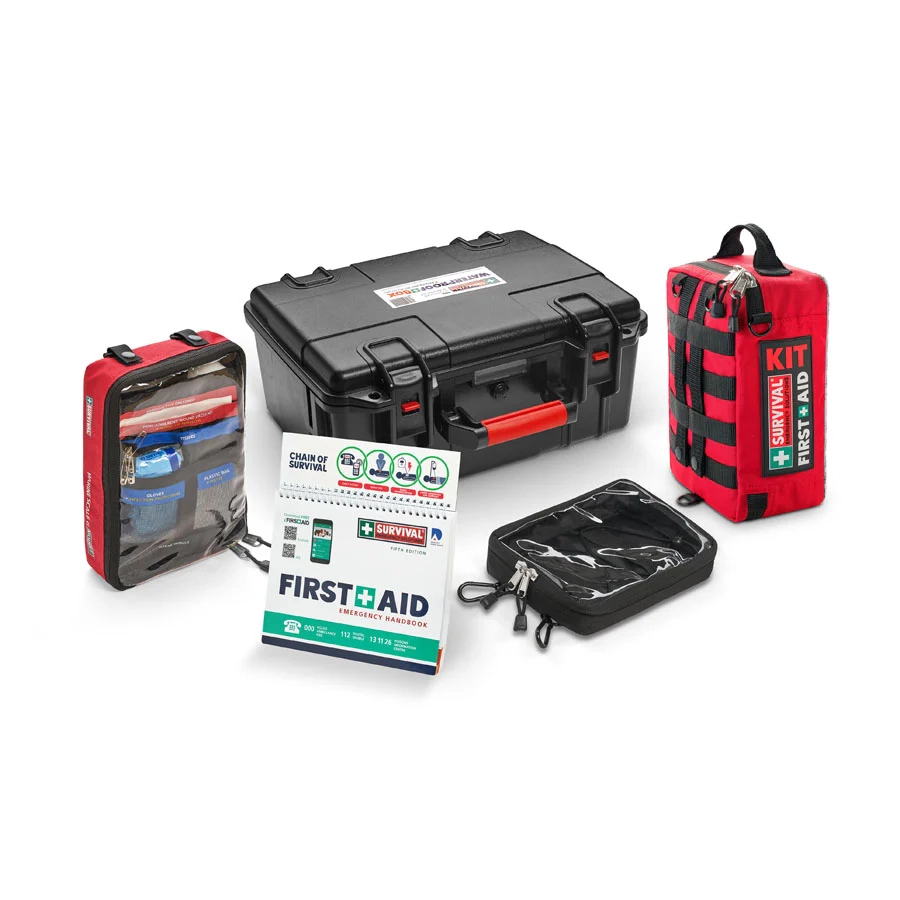
A 142-item marine first aid kit built around the Australian Scale G requirement, with a workplace kit, a Scale G module and a handbook packed in a large waterproof box.
Explore →