Loading this page…

Loading this page…
Sailing club
Established in 1869, the Royal South Australian Yacht Squadron (RSAYS) is a historic keelboat-focused sailing club based at Outer Harbor, Adelaide. The Squadron offers marina berths, slipway and launch facilities, an active racing and cruising programme, junior and adult learn-to-sail activities and a full social calendar for members and guests.
About
Established in 1869, the Royal South Australian Yacht Squadron (RSAYS) is a historic keelboat-focused sailing club based at Outer Harbor, Adelaide. The Squadron offers marina berths, slipway and launch facilities, an active racing and cruising programme, junior and adult learn-to-sail activities and a full social calendar for members and guests.
Service area: Outer Harbor (Adelaide), South Australia
Keep exploring
Founded in 1869, the Royal South Australian Yacht Squadron is one of Australia's oldest yacht clubs and the grand old lady of Adelaide sailing. It's based at 161 Oliver Rogers Road, Outer Harbor, at the mouth of the Port River, where its own marina opens straight onto Gulf St Vincent.
On the water. The Squadron runs a full program: inshore and offshore racing, twilight racing, a women's series, cruising events and a junior program. Adults can get a taste through "Come & Try" sailing.
Marina and yard. The marina has berths from about 10 to 30 metres, with power and water. An 18-tonne slipway and on-site maintenance, rigging and repair services make it a practical base for big-boat owners.
Ashore. Members and guests have a clubhouse with dining, a bar and function spaces. The club offers a range of membership types, and the office can help with berth, membership and function enquiries.
Exploring the area? See other clubs at Outer Harbor, North Haven marinas and our Gulf St Vincent page.
RSAYS runs a Junior Sailing Program and adult "Come & Try" sailing days. The club's calendar lists junior sessions, come-and-try days and season racing nominations, and its sailing pages and noticeboard offer race coaching and crew-finder resources.
For adults, crewing is the fastest way in. Plenty of keelboat owners need reliable crew for twilight and weekend racing, and the club's crew-finder connects the two. A season of twilights on the gulf teaches boat handling, sail trim and racing rules faster than almost anything else. For juniors, the program builds from basic boat handling toward club racing.
Want to compare learn-to-sail options around Adelaide? Browse sailing courses on YouSail or sailing academies at North Haven.
The Squadron is at Outer Harbor on Adelaide's northern foreshore, at the mouth of the Port River. Its marina gives sheltered berths, slipway access and year-round launching for club racing and cruising.
From the marina it's a short motor into Gulf St Vincent, a large, fairly sheltered gulf that suits everything from twilight racing to overnight passages. Summer brings reliable afternoon sea breezes, often building into the high teens of knots. Winter fronts can bring strong westerlies and a short, steep sea, so local knowledge matters. The gulf also opens a cruising ground that runs to Kangaroo Island, Yorke Peninsula and beyond.
For more on local conditions, see our FAQ on wind and sea conditions in Gulf St Vincent and the Adelaide location page.
The club began as the South Australian Yacht Club on 5 November 1869, and its first recorded race was held on 1 January 1870. On 25 October 1890 Queen Victoria granted the title Royal South Australian Yacht Squadron, and an Admiralty Warrant allowing members to fly the Blue Ensign followed on 4 November 1890.
In its early decades the Squadron sailed from Birkenhead on the Port River, the heart of Adelaide's working port. In 1926 it moved to Outer Harbor, which gave members better facilities and much quicker access to open water. That move shaped the modern club: a marina-based squadron on the gulf, with keelboat racing and cruising at its core.
More than 150 years on, the Squadron still carries its royal title and Blue Ensign heritage, while running a busy modern program of racing, junior sailing and marina services. The RSAYS History Group keeps records of the club's long story.
Apollo Bay is a small working harbour on Victoria’s Great Ocean Road where sheltered inshore sailing meets the Southern Ocean. The character is a mix of protected harbour berths and an exposed open coast: pleasant day-sails and sheltered weekend cruising inside the bay, with demanding coastal passages immediately offshore where south‑westerly swell and strong winds from the Southern Ocean dominate. It suits coastal cruisers, trailer sailors who launch at the ramp, and experienced coastal sailors who understand bar and swell behaviour; it is not a casual open‑ocean anchorage for unprepared or

Before your first sail in South Australian waters check the weather and tide, make sure the boat and safety equipment are fit for the trip, confirm local rules and any area-specific hazards, and tell someone your plan.
Explore →
Yes — South Australian coastal waters include marine parks, aquatic reserves, harbour bylaws and local council restrictions that can affect anchoring, fishing, mooring and access; check the relevant state agencies, local councils and Notices to Mariners for location-specific rules and permit requirements.
Explore →
A regular, layered maintenance routine combining hull cleaning, targeted anti-fouling management, cathodic protection and systems checks will substantially reduce marine growth and corrosion for boats kept year‑round in South Australian waters. Focus on preventing attachment and electrochemical attack, then inspect and act more often if you’re in warm, nutrient-rich or high‑traffic sheltered waters.
Explore →
Choose an anchor type and size matched to your boat, seabed and expected conditions; set it by lowering steadily, backing down under power to bury the fluke or hook, and scope the rode to suit tidal range and wind/sea state. Regularly inspect your set and use trip lines or secondary anchors where risk of wind or current change is high.
Explore →
A practical guide for new sailors on picking the right Australian sailing club: training, boat access, racing, social fit, costs and the key questions to ask before joining.
Explore →
A practical, Australia-focused guide for planning and sailing around the Whitsunday Islands: weather and seasons, navigation and anchoring, moorings and parks, provisioning and charters, safety and common mistakes, plus checklists and next steps.
Explore →A practical guide for recreational sailors planning passages to, from or around Eden and Twofold Bay. Covers sheltered anchorages, shore facilities, local weather and tidal considerations, preparing for Bass Strait conditions and a focused equipment and safety checklist.
Explore →
A practical step‑by‑step guide to planning a safe, realistic coastal sailing passage in Australian waters: choosing a route, estimating distance and time, checking weather and tides, fuel and daylight planning, identifying safe harbours and anchorages, and preparing backup plans.
Explore →Burke Yachtsman Gear Bag 40L - Shop Now Zip Pay | Tamar Marine Skip to content 59 – 63 Holbrook Street, Invermay Online Shop Open 24/7 Products search Contact us 1300 MARINE $ 0.00 0 Cart Burke Yachtsman Gear Bag 40L $ 79.90 Colour Choose an option Black Blue Black Blue Clear - Burke Yachtsman Gear Bag 40L quantity + Add to cart Enquire about this product SKU BAGB-Y24/BLACK* Category Bags - Sail & Gear A Burke classic and customer favourite, the Yachtsman’s Gear Bag is built tough to handle wet, salty conditions while keeping your gear dry and protected. Made from double coated waterproof…
Explore →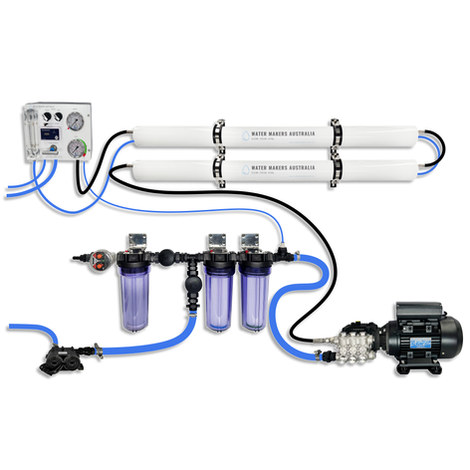
A two-membrane modular watermaker with 140 L/h nominal output, aimed at families and liveaboards that want more water per run.
Explore →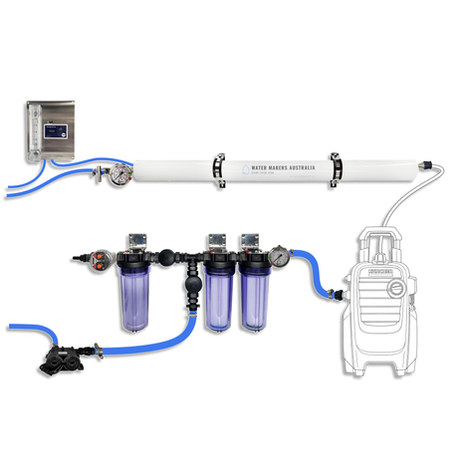
A one-membrane modular marine watermaker with 80 L/h nominal output, remote stainless control panel, standard consumables and direct Australian support.
Explore →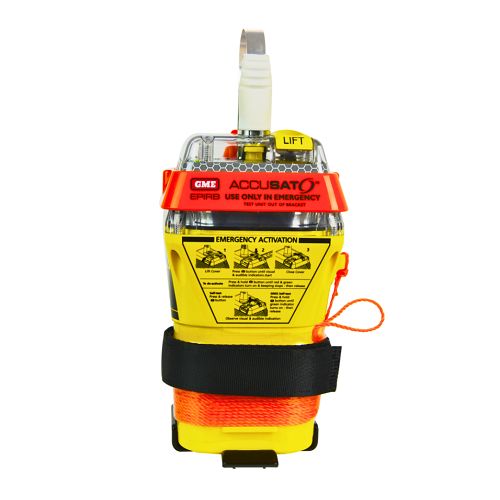
A 10‑year battery EPIRB with integrated GNSS (supports GPS and Galileo), infrared strobe and 121.5 MHz homing signal. Approved for worldwide COSPAS‑SARSAT operation.
Explore →