Loading this page…

Loading this page…
Sailing club
A family‑oriented, member‑run river club on the Parramatta River, Abbotsford 12ft Sailing Club preserves a long tradition of twelve‑foot skiff sailing while welcoming juniors and a broad range of dinghy sailors. The clubhouse sits on piles at Werrell Reserve, Abbotsford Point, and the club runs weekend racing from September to Easter with social and volunteer activities that support affordable community sailing.
About
A family‑oriented, member‑run river club on the Parramatta River, Abbotsford 12ft Sailing Club preserves a long tradition of twelve‑foot skiff sailing while welcoming juniors and a broad range of dinghy sailors. The clubhouse sits on piles at Werrell Reserve, Abbotsford Point, and the club runs weekend racing from September to Easter with social and volunteer activities that support affordable community sailing.
Service area: Abbotsford, Parramatta River (Sydney), NSW
Keep exploring
Abbotsford 12ft Sailing Club is a family-oriented sailing club on the Parramatta River (Werrell Reserve / Abbotsford Point) that runs organised weekend racing and activities from September through to April. The club supports a variety of dinghy classes (12' skiffs, Cherubs, Lasers and junior fleets such as Optimists and Sabots), operates a junior program and “try sailing” opportunities, and fields support craft and a race management team. On-race-day facilities include a canteen and bar, and the club runs social events and member volunteer activities. Contact via abbotsfordsailing@gmail.com or the listed Saturday phone number.
The clearest measure of what Abbotsford's pathway produces is Hit & Run: the 12ft skiff crewed in 2025 by Huon Saul and Simon Mercer, both of whom came through Cherubs at the club before stepping up into the senior class. That conveyor belt — junior dinghy to Cherub to twelve-footer — is the club's real training system, and it has been quietly feeding the skiff fleet for generations.
At the entry level the club runs a junior fleet in Optimists and Sabots, the proven nursery classes for river sailing, with learn-to-sail registration available for new families. The strong Laser division gives teenagers and adults a competitive single-handed home, and the Open class means no sailor with a serviceable dinghy is ever turned away from the start line. In January 2026 the club hosted an Australian Sailing Dinghy Assistant Instructor course, investing in the accredited coaching workforce that underpins the whole pathway.
What makes the instruction here unusually effective is the classroom itself: the Parramatta River. As one account of Abbotsford racing puts it, sailors on this stretch learn to read tides and shifts, to capsize and recover, and to hold their own among the river cats — boat-handling education that sheltered harbour water simply cannot teach. Behind the scenes, a well-kept fleet of support and rescue craft and a committed race management crew keep weekly events running every Saturday from September through to Easter, pausing only over Christmas and the first two weekends of January.
The association with the Sea Scouts and Venturers adds another channel for young people to find their way onto the water, often before their families have any sailing background at all.
The clubhouse stands at Werrell Reserve on Abbotsford Point, at the very end of Great North Road, where the suburb runs out of land. Abbotsford sits on a peninsula separating Abbotsford Bay from Hen and Chicken Bay, roughly ten kilometres from the Sydney CBD, and the club occupies one of the harbour's most evocative structures: a clubhouse standing on piles above the water, its canteen and bar open on race days.
The sailing water is the Parramatta River, and it shapes everything about the racing. Tidal flow bends and accelerates around the points, breezes funnel and shift between the bays, and crews learn to play current against wind in a way open-water sailors rarely have to. It is technical, tactical sailing on a narrow stage, which is precisely why the river has produced so many accomplished skiff sailors over the decades. The club shares the river with neighbours Concord & Ryde Sailing Club at Putney and Parramatta River Sailing Club at Gladesville, making this reach one of the busiest small-boat corridors in the state.
The season runs from September to Easter, with racing every Saturday apart from the Christmas break. On a race afternoon the routine has changed little in decades: boats rig on the reserve, the start boat heads out into the bay, and the fleet works its way around the tide while families watch from the deck of the clubhouse. For visitors arriving by road, Great North Road ends at the club's gate; for those coming by water, the clubhouse on its piles is unmistakable, a structure that has greeted returning sailors since 1954.
In early December 1935, a group of twelve-foot skiff owners and crews gathered informally in Cabarita Park's old band rotunda to talk about forming a club. A month later, on 6 January 1936, they did exactly that, founding the Concorde 12 Foot Flying Squadron. The renaming began almost immediately: the Concord, Abbotsford, Gladesville Flying Squadron arrived in 1937 and stuck in sailors' mouths as "CAGS"; in 1952 the club became the Abbotsford 12 Foot Flying Squadron; and in August 2013 it settled on its present name, Abbotsford 12ft Sailing Club.
The clubhouse story is the one members tell with most pride. Built entirely through members' efforts and opened in 1954 on the former Abbotsford Swimming Baths site, the pile-built structure came with the club's first rescue boat, named Scout. Through the post-war decades the club kept the 12ft skiff class alive on the river, fielding teams in events such as the 1979 Sydney Festival under the Abbotsford 12ft Skiffs banner. A published history, Seventy Five Years and Still Flying, marked the first major anniversary milestone, and on 30 January 2016 the club celebrated its 80th birthday.
The club counts nearly ninety years of continuous sailing support, and the thread is visible in the racing calendar. It runs the Parramatta River Championship for 12ft skiffs — the November 2025 edition formed part of the NSW circuit — and current crews such as the Hills in Arrogant Frog, and Saul and Mercer in Hit & Run, carry the tradition forward. From a rotunda conversation in 1935 to a pile-built clubhouse still hosting weekly racing, the thread has never broken.
A detailed cruising guide to Brunswick Heads and the Brunswick River on the far north coast of New South Wales. Covers river and harbour geography, seasonal wind and swell patterns, principal sailing areas and anchorages, approach issues at the bar, shore facilities, local hazards and the legal/regulatory environment, plus suggested day sails, weekend cruises and island circuits suitable for a range of recreational craft.

Look for a friendly club with beginner-focused training, accessible facilities and boats, a supportive community, clear safety practices, and opportunities to progress at your own pace.
Explore →
Keep the boat balanced by steering a consistent course for the sail trim and by moving crew weight fore/aft and side-to-side to control helm and reduce weather or lee helm. Upwind you aim for a slight weather helm and a heel that lets the sails work efficiently; downwind you flatten the boat a little, ease sheets to prevent luffing or accidental broaches, and shift weight aft as the apparent wind drops.
Explore →
Learn boat-handling basics (steering, points of sail and sail trim), safety and seamanship (personal flotation, wind awareness, man-overboard procedure), and simple anchoring/mooring — these give you the core skills to sail safely and enjoyably.
Explore →
Late spring to summer is usually the best time for beginners to start learning to sail in Tasmania because the weather is generally warmer, days are longer and conditions are often more settled. Expect lighter to moderate winds with regular afternoon sea breees in summer, while spring and autumn bring more changeable and sometimes stronger conditions; winter is colder, wetter and typically windier with more fronts and swell.
Explore →Practical guide for recreational sailors navigating the Swan River and coastal waters around Perth. Covers local weather patterns, tides and currents, river navigation, launching and berthing options, safety equipment, common hazards, and step-by-step pre-departure and on-water checklists tailored to Western Australian
Explore →
A practical guide for new sailors on picking the right Australian sailing club: training, boat access, racing, social fit, costs and the key questions to ask before joining.
Explore →Practical guide for recreational sailors planning passage on the Hawkesbury River: how to plan around tides, choose anchorages, read local conditions and prepare the boat and crew for a safe, comfortable trip.
Explore →A practical guide for recreational sailors planning day sails or short cruises around Batemans Bay, Broulee and the Clyde River. Covers local conditions, safe approaches, anchorages, launching, tides, common hazards, and checklists for trip planning and on-water decisions.
Explore →Burke Yachtsman Gear Bag 40L - Shop Now Zip Pay | Tamar Marine Skip to content 59 – 63 Holbrook Street, Invermay Online Shop Open 24/7 Products search Contact us 1300 MARINE $ 0.00 0 Cart Burke Yachtsman Gear Bag 40L $ 79.90 Colour Choose an option Black Blue Black Blue Clear - Burke Yachtsman Gear Bag 40L quantity + Add to cart Enquire about this product SKU BAGB-Y24/BLACK* Category Bags - Sail & Gear A Burke classic and customer favourite, the Yachtsman’s Gear Bag is built tough to handle wet, salty conditions while keeping your gear dry and protected. Made from double coated waterproof…
Explore →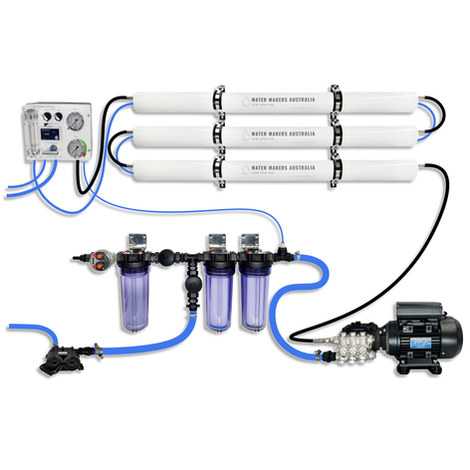
A three-membrane modular watermaker with 200 L/h nominal output and up to 240 L/h family-level marketing, for larger crews and heavy use.
Explore →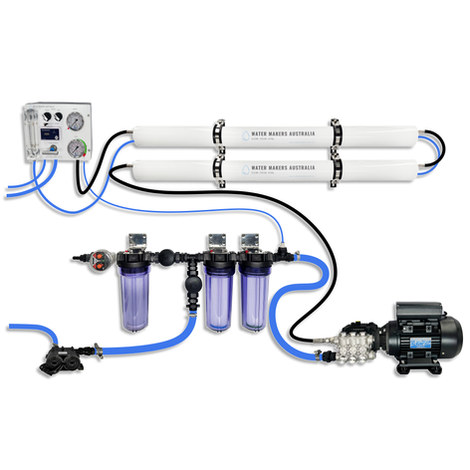
A two-membrane modular watermaker with 140 L/h nominal output, aimed at families and liveaboards that want more water per run.
Explore →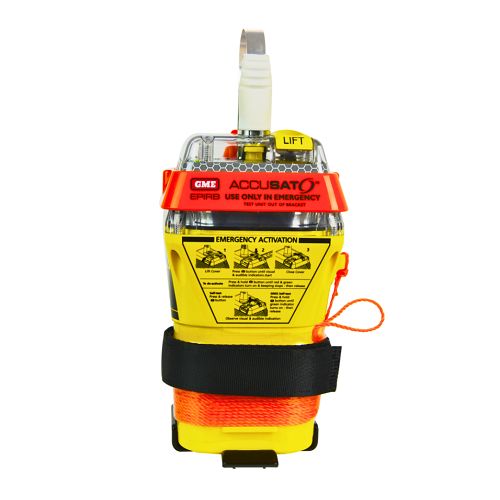
A 10‑year battery EPIRB with integrated GNSS (supports GPS and Galileo), infrared strobe and 121.5 MHz homing signal. Approved for worldwide COSPAS‑SARSAT operation.
Explore →