Loading this page…

Loading this page…
Sailing club
Avalon Sailing Club is a family‑focused sailing club on Clareville Beach, Pittwater (NSW). The club runs junior learn‑to‑sail groups, adult learn‑to‑sail and centreboard/yacht racing programmes, maintains club moorings and an organised cruising division, and promotes community volunteering and social events.
About
Avalon Sailing Club is a family‑focused sailing club on Clareville Beach, Pittwater (NSW). The club runs junior learn‑to‑sail groups, adult learn‑to‑sail and centreboard/yacht racing programmes, maintains club moorings and an organised cruising division, and promotes community volunteering and social events.
Service area: Clareville / Pittwater, Northern Beaches, New South Wales
Keep exploring
Family-oriented sailing club based at Clareville on Pittwater (Sydney's Northern Beaches). The club runs learn-to-sail programs for children and adults, organised centreboard (dinghy) and yacht racing series (inshore and offshore), social events, and maintains permanent and casual club moorings for members. The club also publishes safety/audit information and offers trial sailing opportunities and temporary Sailpass membership for newcomers.
A colour-coded pathway carries Avalon's juniors from first sail to first championship: children start around seven or eight in the "Blue" learn-to-sail group, move through "Red" for better sailing and start racing, and graduate to "Gold" for the racing fleet. As an accredited Australian Sailing Discover Sailing Centre, the club backs the structure with training races every Sunday and regular training camps, and the breadth of classes — Manly Junior, Open Skiff, Flying 11, Spiral, Laser, Waszp and Puffin Pacer, with the 29er also raced — means a developing sailor never needs to leave the club to find the right boat.
Adults get a proper run too. Learn-to-sail classes cater for newcomers, trial sails are available on club Spiral dinghies or through yacht crew spots, and a free Australian Sailing Sailpass provides temporary membership with insurance while people test the water. It is the same philosophy the club applies to its annual Try Sailing Day, which it advertises as being for ages "8 to 88".
The racing development ladder is where Avalon distinguishes itself among Pittwater clubs. The yacht program runs three inshore and two offshore series on Sundays, tracked live through the club's eStela app, giving crews data to learn from as well as results to chase. The centreboard program hosts class events — the club ran Round 1 of the NSW Spiral Championship in a recent season — and the junior training races feed sailors straight into the Sunday afternoon fleets. Add the organised cruising division and club moorings for passage-making around Broken Bay, and the pathway genuinely covers everything from a seven-year-old's first tack to offshore miles.
The clubhouse sits right on the beach at Clareville, on Pittwater's western shore, facing a sheltered body of water locals call "the Pond" — the club's preferred learner area in the morning and its racing arena in the afternoon. From the verandah there are commanding views up and down Pittwater, and permanent and casual moorings lie off the beach for members' boats. It is a setting that has anchored the suburb of Clareville for more than eighty-five years.
The Pond and its surrounds are close to ideal teaching water: protected enough for beginners yet open enough for genuine racing, with the historic course area lying between Taylors Point, Paradise Beach and Long Nose Point just offshore. Pittwater itself does the rest. The estuary offers reliable sea breezes, clean wind off the national park shores and room to stretch, which is why the club can run kids' sessions from 8.30am, adult centreboards from 12.30, and full yacht series all on the same Sunday.
Beyond the club's front beach, the cruising ground opens up dramatically. Pittwater flows into Broken Bay and the Hawkesbury system, where the club maintains moorings for members, and the coastline invites passage-making; some members compete in offshore events including the Sydney Hobart. The season runs from early September to Easter, but the water earns its keep year-round through the cruising division. Clareville's position part-way up the western shore also means sailors are minutes from quiet anchorages — a rarity this close to a capital city, and a large part of why generations of families have kept their sailing lives centred on this one beach.
The club's roots reach back to 1932, when J.G. Vaughan, an engineer with Wakefield Oil, bought a holiday home with a boatshed to the southwest of Clareville Park. His sons had sailed with the Middle Harbour Skiff Club, and the family built its first Vaucluse Junior, Defiance, in that boatshed. By 1935 half a dozen cedar-planked, home-built VJs were sailing off Clareville Beach, and in 1937 Vaughan set a course linking Taylors Point, Paradise Beach and Long Nose Point, starting boats on coloured-flag handicaps with a two-shilling entry fee and prize money.
The club proper was founded in 1938, with Vaughan presenting the silver cup contested as the annual VJ Championship; his son Harold took the first title in Defiant.
War intervened brutally. A Defence order cleared all boats from Pittwater within 24 hours, the trophy was inscribed "1943/44 Activities suspended due war service", and the RAN ran a Torpedo Range at Taylors Point behind a boom gate strung from West Head to Barrenjoey. The club reopened on 14 October 1944, unanimously adopting the name Avalon Sailing Club at a meeting in the Vaughan boatshed; sixteen VJs fronted the first post-war race the next day. The Vaucluse Senior class followed in 1949, and Vaughan became the first honorary life member in 1950.
The clubhouse was its own saga. Permissive occupancy of the present site came in August 1955 after the personal intervention of local MP Rob Askin; volunteers began building on Boxing Day that year, lost the roof trusses to a westerly gale in March 1956, rebuilt, and held the first committee meeting in the unfinished building in January 1957. The clubhouse was officially completed in 1958. Renovation fundraising continues today through the Australian Sports Foundation.
A comprehensive cruising guide to Pittwater, the sheltered estuarine waterway north of Sydney framed by Ku-ring-gai Chase National Park and the Northern Beaches. The guide explains the waterway’s geography, seasonal wind and swell patterns, principal sailing zones, recommended anchorages, shore facilities, navigation and port interactions, local hazards and regulatory constraints, plus several practical day and weekend sailing experiences and the types of sailors and craft best suited to the area.

Look for a friendly club with beginner-focused training, accessible facilities and boats, a supportive community, clear safety practices, and opportunities to progress at your own pace.
Explore →
Legal requirements can change — check Transport for NSW for the current rules. As a practical baseline for coastal day sailing from NSW shores: keep the right number and type of lifejackets for everyone, have a means of calling for help, show navigation lights if you’ll be out after dusk, and carry basic items to manage a man‑overboard or abandon‑ship situation. Add anchor, bilge/bailer, sun/protection and basic repair kit as recommended items.
Explore →
Late spring to summer is usually the best time for beginners to start learning to sail in Tasmania because the weather is generally warmer, days are longer and conditions are often more settled. Expect lighter to moderate winds with regular afternoon sea breees in summer, while spring and autumn bring more changeable and sometimes stronger conditions; winter is colder, wetter and typically windier with more fronts and swell.
Explore →
Before the season: confirm seaworthiness — hull, rig, engine, electrics, sails and safety gear — and replace or service wearable items. After the season: wash, dry and protect gear, service consumables and record what you did so the boat’s ready and reliable next season.
Explore →
A concise, practical guide to the points of sail and how to trim sails effectively for common Australian conditions. Learn the basics of wind angles, sail shape, telltales, reefing considerations and simple steps to improve boat speed and balance.
Explore →
A practical guide for new sailors on picking the right Australian sailing club: training, boat access, racing, social fit, costs and the key questions to ask before joining.
Explore →
A practical, Australia-focused guide for planning and sailing around the Whitsunday Islands: weather and seasons, navigation and anchoring, moorings and parks, provisioning and charters, safety and common mistakes, plus checklists and next steps.
Explore →A practical guide for recreational sailors planning visits to Albany and King George Sound. Covers the main anchorage areas, typical local weather patterns, tidal and current considerations, navigational hazards, on-the-water etiquette and a pre-departure checklist to help you plan a safe passage and enjoyable stopover
Explore →Burke Yachtsman Gear Bag 40L - Shop Now Zip Pay | Tamar Marine Skip to content 59 – 63 Holbrook Street, Invermay Online Shop Open 24/7 Products search Contact us 1300 MARINE $ 0.00 0 Cart Burke Yachtsman Gear Bag 40L $ 79.90 Colour Choose an option Black Blue Black Blue Clear - Burke Yachtsman Gear Bag 40L quantity + Add to cart Enquire about this product SKU BAGB-Y24/BLACK* Category Bags - Sail & Gear A Burke classic and customer favourite, the Yachtsman’s Gear Bag is built tough to handle wet, salty conditions while keeping your gear dry and protected. Made from double coated waterproof…
Explore →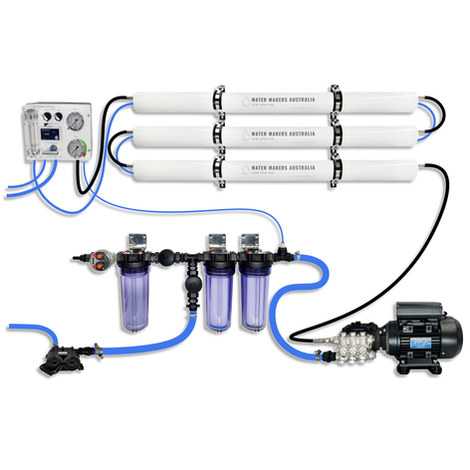
A three-membrane modular watermaker with 200 L/h nominal output and up to 240 L/h family-level marketing, for larger crews and heavy use.
Explore →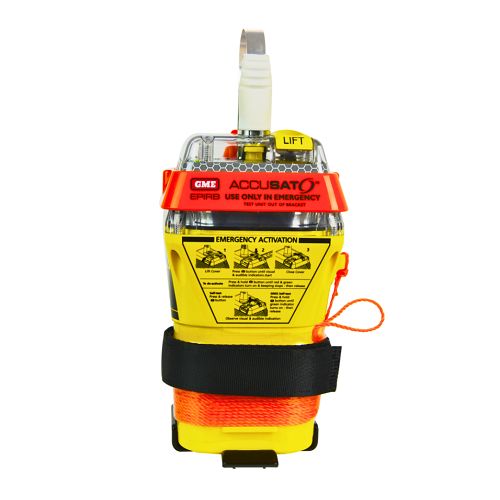
A 10‑year battery EPIRB with integrated GNSS (supports GPS and Galileo), infrared strobe and 121.5 MHz homing signal. Approved for worldwide COSPAS‑SARSAT operation.
Explore →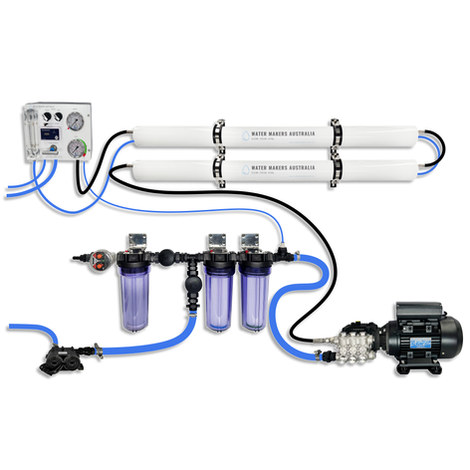
A two-membrane modular watermaker with 140 L/h nominal output, aimed at families and liveaboards that want more water per run.
Explore →