Loading this page…

Loading this page…
Sailing club
Balmain Sailing Club is a community-focused sailing club on the Balmain peninsula (Water Street, Birchgrove) in Sydney’s inner west. Re-established in 1995 from a historic 1885 waterfront club, it runs active Friday twilight and Sunday race programmes for a mixed keelboat and dinghy membership, operates a sailing school, hosts the long-running Balmain Regatta and offers a waterfront clubhouse and event venue overlooking Snails Bay and West Harbour.
About
Balmain Sailing Club is a community-focused sailing club on the Balmain peninsula (Water Street, Birchgrove) in Sydney’s inner west. Re-established in 1995 from a historic 1885 waterfront club, it runs active Friday twilight and Sunday race programmes for a mixed keelboat and dinghy membership, operates a sailing school, hosts the long-running Balmain Regatta and offers a waterfront clubhouse and event venue overlooking Snails Bay and West Harbour.
Service area: Birchgrove / Balmain peninsula, Sydney (NSW)
Keep exploring
Balmain Sailing Club is a community sailing club on Water Street (Birchgrove/Balmain), Sydney Harbour. The club runs organised racing (twilight series, Sunday races, West Harbour series), an active sailing school for people learning to sail, and operates a waterfront venue used for hospitality, events and functions. The club also maintains modern floating docks and launch facilities at its waterfront location.
Balmain's sailing school does something few clubs attempt: it teaches adults only, and it does its dinghy coaching one-on-one. The personal-trainer model puts a single instructor with a single learner on a Laser, with the explicit aim of graduating students into the club's racing fleet. Children under eighteen aren't turned away so much as redirected — the club refers 7-to-12-year-olds to Hunters Hill Sailing Club's courses rather than duplicating what a neighbour does well.
The keelboat stream is equally purposeful. Yacht courses run on Magic 25s — boats that won't capsize but stay responsive enough to teach real feel — in groups of no more than three students, over three four-hour or two six-hour sessions on consecutive weekend days. At $600 plus GST per person with a minimum age of 18, the courses target charter-holiday sailors, aspiring race crew and prospective boat buyers.
The curriculum runs from sailing principles and safe practice through manoeuvres, helming, sail trim, rope handling and knots to capsize recovery, and lessons are called off in winds over 20 knots or gale warnings. The school holds Australian Sailing accreditation as a Discover Sailing Centre, staffed by AS-certified instructors.
The cleverest detail is what happens after graduation: new sailors receive six SailPASS temporary membership vouchers so they can join race crews immediately. That feeds straight into a racing structure built for absorption — the keelboat fleet races as one division on Sundays and splits into three divisions (A, B and C) for the Friday Twilight Series, while the dinghy fleet, with its strong Laser/ILCA contingent, races in a single division. Signature twilight racing runs every Friday through spring and summer, with Sunday racing every second weekend all year.
The clubhouse occupies a waterfront site at the end of Water Street, Birchgrove, on the Balmain peninsula, looking across Snails Bay to the working western harbour. The venue — deck, bar and function space over the water — is known for its sunset "Golden Hour" and is popular for weddings and events, but on race evenings it belongs to the sailors. The Birchgrove ferry wharf nearby links the peninsula to Circular Quay and Cockatoo Island.
The sailing water is West Harbour, the reach of Sydney Harbour west of the Bridge that gave the region's skiff culture its name in the nineteenth century. Keelboat courses work the open harbour while the dinghy fleet races "up river", and the area's character remains distinctive: less trafficked than the eastern harbour, shaped by the snarl of bays around the Balmain peninsula, and steeped in the maritime industry that once lined its shores. Courses for the Friday twilight series keep racing close to home, ideal for after-work starts, while the West Harbour Winter Series draws sixty-odd boats through the cooler months — a sign of how sailable this stretch of water stays year-round.
There's an added pleasure in racing here that no other Sydney venue quite matches: the Balmain Bug serves as the club's unofficial flagship — believed to be the only six-footer still fully operational anywhere. The tiny boat — six feet of hull but twenty-two feet from bowsprit tip to boom end — is a living reminder that these waters invented a whole branch of Australian sailing. Watching her ghost across Snails Bay on a summer evening connects the modern twilight fleet to the shipwrights who started it all.
The Balmain Regatta predates the club itself. First held in 1849, it was already an institution when the original Balmain Sailing Club was formed in October 1885, at the heart of the maritime industry on Sydney's western harbour. The early sailors were tradesmen of the sea — shipwrights, sailmakers, watermen — and the boats they created were extraordinary. Smallest were the six-footers dubbed Balmain Bugs, tiny crewed skiffs with spars three times their hull length; there were even unmanned model bug fleets from six to thirty-two inches, with clubs of their own.
The over-canvassed, single-length-rule skiffs bred on this waterfront are the direct forebears of every modern skiff class from the 18s down to the 12s — and on to the Olympic 49er.
The progressive streak ran deep in these fleets: they admitted women as skippers and crews before anyone else, and took up sponsorship, prize money and betting with equal readiness. Yet by the middle of the twentieth century activity had faded, and for nearly fifty years the club existed mostly in memory.
Revival came in 1995, when a community group assumed the lease on the old Balmain 12ft Skiff Club premises down at the end of Water Street in Birchgrove. Several of that 1995 crew are now life members. They restored the run-down building and deck, built the yacht and dinghy fleets up from nothing, and took on organisation of the regatta. Three decades on, the results speak plainly: seventy-plus boats on Friday twilight evenings, thirty on summer Sundays, sixty or more through the winter series, and the Balmain Regatta still rocking — as the club puts it — more than 170 years after its first running.
The club acknowledges the Gadigal and Wangal peoples of the Eora nation as Traditional Custodians of the water on which it all happens.
Introductory paragraphs for a Mornington Peninsula sailing guide describing what makes the area distinctive from the water, the sailing experience, suitability for different types of sailing and connections to nearby cruising grounds.

Expect the usual IALA-B lateral system (red and green), cardinal and isolated-danger marks, safe-water and special marks, plus harbour-specific fairway buoys, leading/transit marks and exclusion or speed‑limit buoys. Check local harbour charts and Notices to Mariners for exact positions and light characteristics before entry.
Explore →
Before your first sail in South Australian waters check the weather and tide, make sure the boat and safety equipment are fit for the trip, confirm local rules and any area-specific hazards, and tell someone your plan.
Explore →
Maybe — it depends. In NSW you often need registration and a boat operator licence for motorised vessels, but many small trailerable sailing dinghies without engines don’t require boat registration or a licence. Check the specific rules for your craft, trailer and engine.
Explore →
Yes — South Australian coastal waters include marine parks, aquatic reserves, harbour bylaws and local council restrictions that can affect anchoring, fishing, mooring and access; check the relevant state agencies, local councils and Notices to Mariners for location-specific rules and permit requirements.
Explore →
A practical guide for new sailors on picking the right Australian sailing club: training, boat access, racing, social fit, costs and the key questions to ask before joining.
Explore →
A practical, Australia‑focused introduction to sailing: key terms, common boat types, basic manoeuvres, where to learn, licence and club options, and planning your first trips with safety and local conditions in mind.
Explore →Practical guide for recreational sailors planning a coastal cruise from Sydney north to the Queensland border. Covers route options, weather and tidal considerations, planning checklists, common hazards, anchorages and practical examples for a safe, enjoyable trip.
Explore →
A practical guide to Queensland’s top sailing areas, what to expect from each region, seasonal and safety considerations, suggested itineraries and useful planning checklists for recreational sailors.
Explore →Burke Yachtsman Gear Bag 40L - Shop Now Zip Pay | Tamar Marine Skip to content 59 – 63 Holbrook Street, Invermay Online Shop Open 24/7 Products search Contact us 1300 MARINE $ 0.00 0 Cart Burke Yachtsman Gear Bag 40L $ 79.90 Colour Choose an option Black Blue Black Blue Clear - Burke Yachtsman Gear Bag 40L quantity + Add to cart Enquire about this product SKU BAGB-Y24/BLACK* Category Bags - Sail & Gear A Burke classic and customer favourite, the Yachtsman’s Gear Bag is built tough to handle wet, salty conditions while keeping your gear dry and protected. Made from double coated waterproof…
Explore →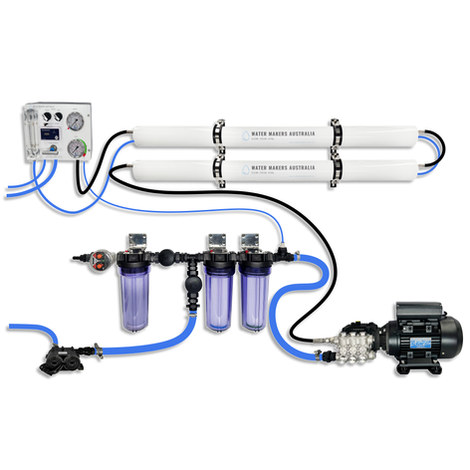
A two-membrane modular watermaker with 140 L/h nominal output, aimed at families and liveaboards that want more water per run.
Explore →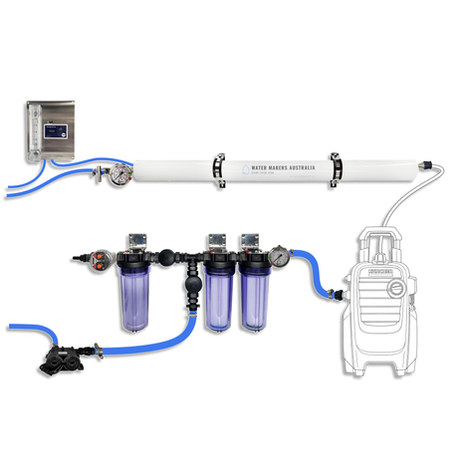
A one-membrane modular marine watermaker with 80 L/h nominal output, remote stainless control panel, standard consumables and direct Australian support.
Explore →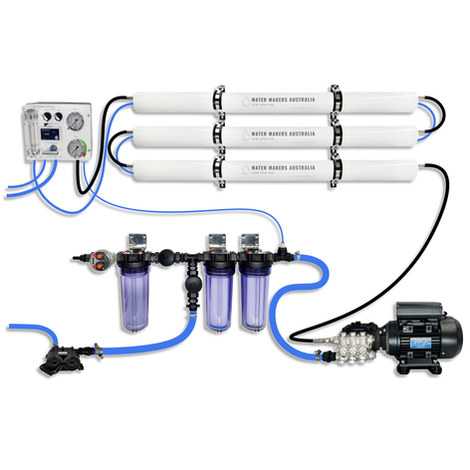
A three-membrane modular watermaker with 200 L/h nominal output and up to 240 L/h family-level marketing, for larger crews and heavy use.
Explore →