Loading this page…

Loading this page…
Sailing club
The Australian 18 Footers League is the home of 18‑foot skiff racing on Sydney Harbour. Based at Double Bay, the League is an elite, single‑class racing organisation that runs the modern 18‑footer season, administers the JJ Giltinan world championship and operates a waterfront clubhouse, spectator ferry service and professional race broadcast operation.
About
The Australian 18 Footers League is the home of 18‑foot skiff racing on Sydney Harbour. Based at Double Bay, the League is an elite, single‑class racing organisation that runs the modern 18‑footer season, administers the JJ Giltinan world championship and operates a waterfront clubhouse, spectator ferry service and professional race broadcast operation.
Service area: Double Bay / Sydney Harbour, NSW
Keep exploring
The Australian 18 Footers League is a sailing club based at 77 Bay Street, Double Bay (Sydney Harbour). The club organises and promotes 18-foot skiff racing (season calendars, race results and event galleries), provides membership, hosts on-site hospitality including a bar, café and dining/function facilities, sells spectator ferry tickets for race viewing, and maintains a training register. The site also includes a menu item for Moorings and club contact details (phone and email listed on the website).
The League's pathway begins at other clubs. As an elite single-class racing organisation it runs no learn-to-sail program at all; instead it sits at the apex of a development pyramid, recruiting sailors who have already proven themselves in junior dinghies and the 12ft skiff clubs dotted around the harbour. John 'Woody' Winning and John Winning Jr, for instance, are both products of the Vaucluse Amateur 12ft Sailing Club — the classic route into the eighteens.
The club does actively cultivate that feeder system. It hosted the 63rd 12ft Skiff Interdominion Championship — Australia versus New Zealand — on Sydney Harbour in January 2026, keeping close ties with the class that supplies so many of its crews. Within the club, the season from October to around Easter is built on Sunday racing: short-course series and club championship events that keep teams sharp between the major regattas. The ultimate prize is the JJ Giltinan Trophy, the world championship of the class, which the League has administered since 1938 and which now draws entries from more than twenty countries.
Two adjacent programs round out the picture. The historical 18s — replicas of 1910s-to-1950s-style boats established in 1999 with John Winning's involvement — race with the Sydney Flying Squadron on Saturdays, preserving the class's heritage in afloat form. And the SailMedia operation, the creation of John and Kerrie Winning together with the late Bob Killick, delivers professional live coverage of all racing, which functions as a development tool in its own right: young crews can study the world's best skiff sailors from the commentary boat's-eye view. For a sailor with ambition, the League is where Australian skiff racing's ladder tops out.
The clubhouse stands at Double Bay beside the public ferry wharf, with a rigging area alongside — a compact, purposeful base that puts eighteen-foot skiffs on the water within minutes of arriving. The site has a remarkable backstory: homeless for its first two decades, the League secured the land in the late 1950s, when the skipper Alf Beashel — a Sydney County Council draftsman — took early retirement and spent his superannuation buying the old Ireland Boat Shed site. The clubhouse opened in 1961 and was rebuilt in 1991 under president Tony Reynolds.
The sailing water is Sydney Harbour, and the eighteens use all of it. Sunday racing in season takes the fleet through the harbour's famous wind lanes — the working breezes off the eastern suburbs, the shifts under the Heads, the tactical lottery of a harbour full of ferries and moored yachts. The class was born on this water in 1892, and no other stretch of Australian water carries so much continuous racing history. The spectator ferry that follows each Sunday's racing gives the venue a theatre-like quality: nowhere else in the country can the public watch elite racing from a floating grandstand as a matter of weekly routine.
Double Bay's position on the harbour's southern shore also suits the club's international calendar. The JJ Giltinan Championship has been contested here since 1938 — interrupted only by wartime and occasional overseas editions, including regattas the League supported in the United States and Europe from the 1960s — and the harbour's summer nor'easters provide the brisk, honest conditions the class demands. For visiting crews from Auckland, Britain or America, racing the JJs on Sydney Harbour remains the defining experience of the skiff world.
The League was born in a split. In 1935, when the Sydney Flying Squadron banned the new seven-foot-beam "heel-less" eighteen-footers such as Bob Cuneo's The Mistake, a group of competitors broke away to form the NSW 18 Footers (Sailing) League, with rugby league entrepreneur James Giltinan organising the meeting. The new club's opening event — Race 1 of the 1934-35 Australian Championship on 3 February 1935 — was run jointly with the Brisbane 18 Footers Sailing Club and won by Brisbane's Aberdare. Racing on Sundays while the Squadron kept Saturdays, the League drew enormous crowds — and gambling money — with up to seven spectator ferries per race before the war.
Giltinan, the League's first president, conceived a world championship for the class to mark Sydney's 150th anniversary. The first World 18 Footer Championship, for what became the JJ Giltinan Trophy, was held in 1938: four New Zealand boats faced seventeen Australians, Bert Swinbourne's Taree won, and some 8,000 spectators watched the opening heat. Auckland hosted 1939, where a protest row saw Swinbourne refuse to hand over the trophy until 1946.
The decades since brought a Double Bay home in 1961, eight consecutive world titles from 1964 to 1971 during the TraveLodge sponsorship era — a 17-year partnership that claimed six world championships — and a 1970s golden age of Bruce Farr designs and three-handed boats. Rule changes in 1993, modelled on Julian Bethwaite's AAMI, opened the class to the world: JJ winners have since come from the UK, the USA and New Zealand, and the first all-female teams contested in 2013. Through it all the club has kept Giltinan's dream alive, with the Winning Group backing every championship since 2007.
Bernier Island is a remote, conservation-focused island on the north-west edge of the Shark Bay World Heritage Area. It offers quiet, wildlife-rich cruising close to Dorre Island and the Shark Bay entrance, but the place is conservation-sensitive, has restricted visitor access and limited facilities — making it best for experienced cruising sailors planning day visits or short anchorage stops from Denham rather than casual overnight island-hopping.

Use a sensible scope (line length), pick good ground, set the anchor with a controlled reverse to load it, and check you’re not dragging by noting fixed references and using a stern line or anchor alarm if needed.
Explore →
Expect very different seasonal systems across Western Australia: the south‑west (Perth to Albany) has a strong summer afternoon sea breeze (the “Fremantle Doctor”) and winter westerly fronts, while northern WA follows a wet/dry monsoonal cycle with strong seasonal onshore winds, thunderstorms and cyclone risk in the wet season. Local headlands, estuaries and tidal flows often change what you actually feel on the water, so learn the local timing and sheltered venues first.
Explore →
Tasmania has a mix of state marine parks, local harbour bylaws and environmental protections that affect where and how you anchor—so check the specific area’s rules before you go, aim to use designated anchorages or soft seabeds, and follow standard anchoring and biosecurity good practice.
Explore →
Yes — South Australian coastal waters include marine parks, aquatic reserves, harbour bylaws and local council restrictions that can affect anchoring, fishing, mooring and access; check the relevant state agencies, local councils and Notices to Mariners for location-specific rules and permit requirements.
Explore →A practical, step‑by‑step guide for recreational sailors on Sydney Harbour covering navigation, local weather and tides, safe anchoring, berthing, common routes, rules of the road, and useful checklists tailored to Australian conditions.
Explore →
A practical guide for new sailors on picking the right Australian sailing club: training, boat access, racing, social fit, costs and the key questions to ask before joining.
Explore →
A concise, practical guide to the points of sail and how to trim sails effectively for common Australian conditions. Learn the basics of wind angles, sail shape, telltales, reefing considerations and simple steps to improve boat speed and balance.
Explore →A practical, Australian-focused guide explaining how sails generate drive, the points of sail, and how to trim sails for different conditions. Includes simple explanations of aerodynamic concepts, step-by-step trim checks, common mistakes and clear next steps for practice on the water.
Explore →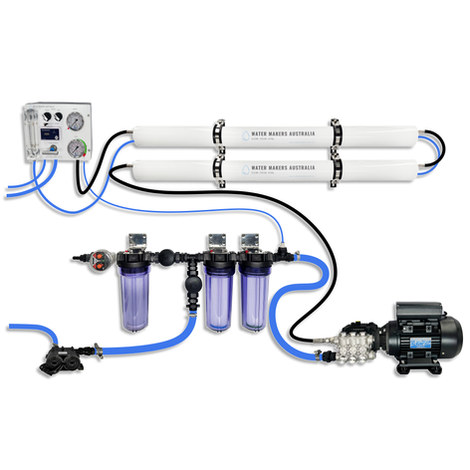
A two-membrane modular watermaker with 140 L/h nominal output, aimed at families and liveaboards that want more water per run.
Explore →Burke Yachtsman Gear Bag 40L - Shop Now Zip Pay | Tamar Marine Skip to content 59 – 63 Holbrook Street, Invermay Online Shop Open 24/7 Products search Contact us 1300 MARINE $ 0.00 0 Cart Burke Yachtsman Gear Bag 40L $ 79.90 Colour Choose an option Black Blue Black Blue Clear - Burke Yachtsman Gear Bag 40L quantity + Add to cart Enquire about this product SKU BAGB-Y24/BLACK* Category Bags - Sail & Gear A Burke classic and customer favourite, the Yachtsman’s Gear Bag is built tough to handle wet, salty conditions while keeping your gear dry and protected. Made from double coated waterproof…
Explore →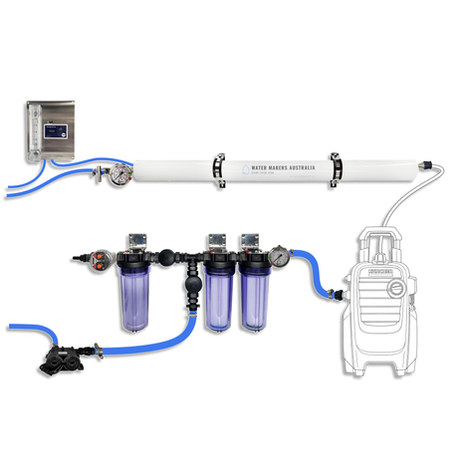
A one-membrane modular marine watermaker with 80 L/h nominal output, remote stainless control panel, standard consumables and direct Australian support.
Explore →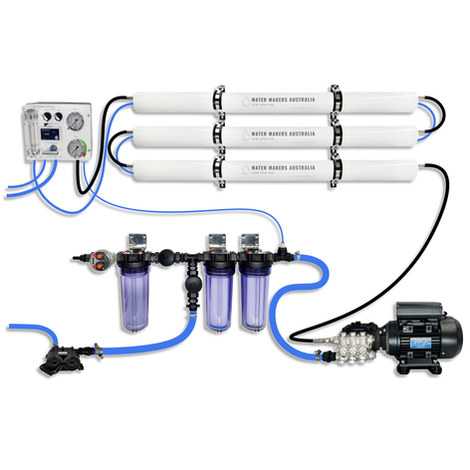
A three-membrane modular watermaker with 200 L/h nominal output and up to 240 L/h family-level marketing, for larger crews and heavy use.
Explore →