Loading this page…

Loading this page…
Sailing club
Augusta Yacht Club is a small, member-run yacht club on the banks of the Blackwood River at Hardy Inlet, Augusta, in the Shire of Augusta‑Margaret River, Western Australia. Founded in 1994, the club runs informal but organised Sunday racing for a mixed fleet of catamarans, trailable keelboats (including RL24s) and monohulls, and in recent years has developed a significant St Ayles skiff rowing programme run in partnership with the local Augusta Rowers group. The clubhouse opened in 2000 and was substantially renovated by members in 2020 to store skiffs and provide a clubroom.
About
Augusta Yacht Club is a small, member-run yacht club on the banks of the Blackwood River at Hardy Inlet, Augusta, in the Shire of Augusta‑Margaret River, Western Australia. Founded in 1994, the club runs informal but organised Sunday racing for a mixed fleet of catamarans, trailable keelboats (including RL24s) and monohulls, and in recent years has developed a significant St Ayles skiff rowing programme run in partnership with the local Augusta Rowers group. The clubhouse opened in 2000 and was substantially renovated by members in 2020 to store skiffs and provide a clubroom.
Service area: Hardy Inlet / Blackwood River estuary, Augusta, WA
Keep exploring
Ask what makes Augusta Yacht Club different and the honest answer is: the rowing. In 2020 the club introduced St Ayles skiff rowing from its premises, with crews heading out three mornings a week in most weather conditions. The effect on membership was immediate — around twenty-five people joined in that year alone, taking the roll close to seventy — and the clubhouse was rebuilt internally by members to give the skiffs a home. It is an unusual second paddle for a yacht club, and it has made the place a genuine dual-craft operation.
The sailing side runs on a relaxed but organised weekly rhythm. Racing is held on Sundays: sailors gather from about twelve noon for a 1.30pm start, two races are usually sailed, and the afternoon finishes with a social wind-up at the clubhouse. Catamarans and monohulls race their own courses from separate starts, reflecting a strong cat fleet alongside the keelboats, and RL24 trailable yachts have been a fixture of the racing since at least the mid-2000s.
The season follows the southern summer — the 2020/21 season began with informal shake-down sails from 1 November and an Opening Day on 6 December, while an earlier season on record opened on 28 October 2007. No Discover Sailing Centre accreditation, Tackers program or structured junior training is advertised, so newcomers usually learn the way small-club sailors generally do — by crewing with experienced members on a Sunday afternoon.
Giving the cats and the monohulls their own starts keeps the racing fair across a fleet with very different speeds, and it lets each group sail courses that suit its boats.
The clubhouse looks out over the Blackwood River, and the racing happens on Hardy Inlet, the river's broad estuary. Courses are set according to wind and tide, running over the estuary's broad upper reach and down toward the town jetty — a flexible playground of sheltered water that suits the club's mixed fleet of catamarans, monohulls and trailable yachts. The rowing skiffs use the same water, heading out in most conditions three mornings a week.
The wider setting deserves explanation as general context: Augusta sits where the Blackwood reaches the sea, a few kilometres from Cape Leeuwin, the headland where the Southern and Indian Oceans are regarded as meeting. That gives the town a maritime character out of proportion to its size — the estuary offers protected small-boat sailing, while the ocean beyond is among the most exposed coasts in the country, a contrast sailors here live with daily.
The town's boating culture extends beyond the yacht club's gates: the Augusta Rowers stage their annual Picnic Regatta, a St Ayles skiff gathering held on the Blackwood that draws crews to the town, and the yacht club's own skiff fleet feeds into that scene. For visitors, the practical details are simple. The club is reachable through its secretary by email or phone; the racing is on Sundays through the warmer months; and the clubhouse on the riverbank — renovated by members in 2020 with external cladding and a clubroom for about fifty — is where everyone ends up afterwards for the social wind-up.
Augusta Yacht Club is a young club by Australian standards, and its outline is refreshingly well documented. It was founded in 1994, and before the present clubhouse existed, members launched from a spot slightly north of where the club stands today. In 2000 the club opened its permanent riverside clubhouse, giving the growing membership — by then past fifty — a permanent base. The founders' names aren't published, but the pattern is the familiar one of regional Western Australia: local boat owners pooling effort until a club takes shape.
The modern chapter is the most interesting. In 2020, under Commodore Peter Wallace, the membership renovated the clubhouse with their own hands — cladding the exterior, reworking the interior to house St Ayles rowing skiffs, and creating a clubroom for about fifty people. That same year the club introduced skiff rowing three mornings a week, drawing roughly twenty-five new members and lifting the roll toward seventy. Even the fundraising has a regional flavour: in 2020 the club signed up to receive benefits from the Lions recycling centre.
The sailing heritage runs through the RL24 class — trailable yachts have raced at Augusta since at least the 2004–05 season, and by 2007–08 a fleet of four or more RL24s plus a mixed fleet was competing on Hardy Inlet, with that season opening on 28 October 2007. Three decades on from its founding, the club's documented trajectory is one of steady, member-built growth — and, lately, a second life as a rowing hub.
A practical cruising guide for the Moyne River port at the mouth of the Moyne River on Victoria’s south-west coast. It explains harbour geometry, seasonal conditions, principal sailing zones, anchorages, visitor facilities, known local hazards (bar, reefs, strong currents, surf and commercial traffic), regulatory controls and realistic experiences for day sailors, trailer-sailors and coastal cruisers. The guide draws on local port plans, state boating authorities, the yacht club’s visiting-boat practice and regional marine management documents.

Look for a friendly club with beginner-focused training, accessible facilities and boats, a supportive community, clear safety practices, and opportunities to progress at your own pace.
Explore →
Expect very different seasonal systems across Western Australia: the south‑west (Perth to Albany) has a strong summer afternoon sea breeze (the “Fremantle Doctor”) and winter westerly fronts, while northern WA follows a wet/dry monsoonal cycle with strong seasonal onshore winds, thunderstorms and cyclone risk in the wet season. Local headlands, estuaries and tidal flows often change what you actually feel on the water, so learn the local timing and sheltered venues first.
Explore →
There are legal obligations in Western Australia for recreational boat owners and skippers covering vessel registration, carriage of safety equipment and general skipper responsibilities, but the exact requirements depend on vessel type, size, where you sail and whether the vessel is commercial or recreational. Check the Western Australian Department of Transport (DoT WA) and the national authority for the precise checklist that applies to your boat and voyage.
Explore →
Pick a protected bay, estuary or river reach where you can rig, launch and arrive on calm water within a short, sheltered transit; choose a site with a good ramp or jetty, clear recovery options and a nearby sailing club, marina or commercial operator for local knowledge and help.
Explore →
A practical guide for new sailors on picking the right Australian sailing club: training, boat access, racing, social fit, costs and the key questions to ask before joining.
Explore →A practical guide to the coastal weather systems that affect sailing along Western Australia's coast, focusing on the Fremantle Doctor, local sea breezes, and linked coastal phenomena. Explains how these systems form, when they tend to occur, how they influence boat handling and passage planning, common mistakes, and a
Explore →A concise, practical introduction to the essential parts of a recreational sailing boat for beginners in Australia. Covers hull, deck, rigging, sails, steering, below-decks spaces and safety equipment, with simple explanations, common mistakes and a pre-decast checklist to help new sailors communicate and get underway.
Explore →Practical guidance for recreational sailors planning coastal and remote cruising in Western Australia, focusing on tidal planning, reef awareness, navigation and safety preparation tailored to local conditions.
Explore →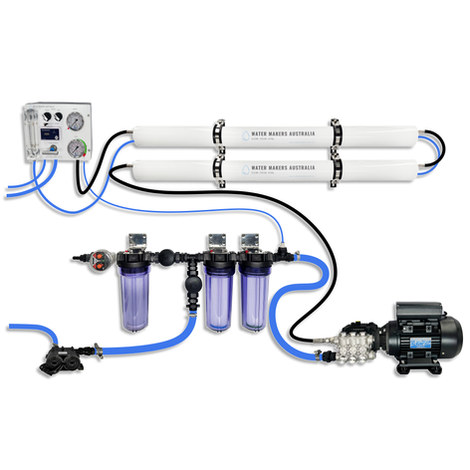
A two-membrane modular watermaker with 140 L/h nominal output, aimed at families and liveaboards that want more water per run.
Explore →Burke Yachtsman Gear Bag 40L - Shop Now Zip Pay | Tamar Marine Skip to content 59 – 63 Holbrook Street, Invermay Online Shop Open 24/7 Products search Contact us 1300 MARINE $ 0.00 0 Cart Burke Yachtsman Gear Bag 40L $ 79.90 Colour Choose an option Black Blue Black Blue Clear - Burke Yachtsman Gear Bag 40L quantity + Add to cart Enquire about this product SKU BAGB-Y24/BLACK* Category Bags - Sail & Gear A Burke classic and customer favourite, the Yachtsman’s Gear Bag is built tough to handle wet, salty conditions while keeping your gear dry and protected. Made from double coated waterproof…
Explore →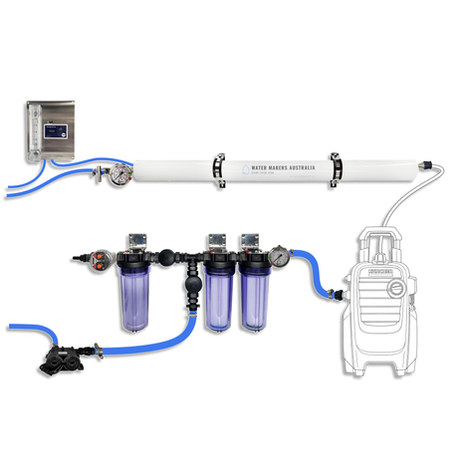
A one-membrane modular marine watermaker with 80 L/h nominal output, remote stainless control panel, standard consumables and direct Australian support.
Explore →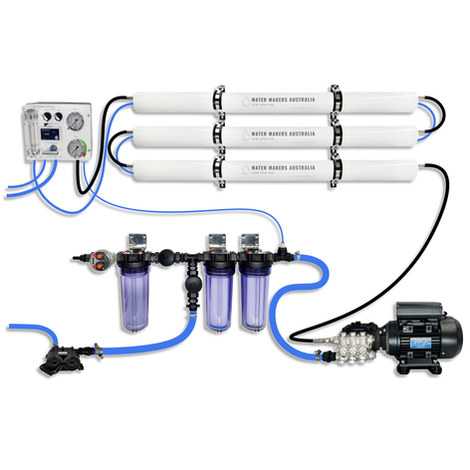
A three-membrane modular watermaker with 200 L/h nominal output and up to 240 L/h family-level marketing, for larger crews and heavy use.
Explore →