Loading this page…

Loading this page…
Sailing club
Denmark Sailing Club runs community dinghy sailing on the Wilson Inlet from the Denmark rivermouth (Pibbulman and Menang Country). The club operates a fleet of club boats (Optimists, Mirrors and 420s and welcomes other dinghy classes), offers accredited/qualified dinghy instructors for beginners, and runs seasonal club sailing days and "come and try" events. Membership is open to all ages and experience levels; members can use club boats or bring their own.
About
Denmark Sailing Club runs community dinghy sailing on the Wilson Inlet from the Denmark rivermouth (Pibbulman and Menang Country). The club operates a fleet of club boats (Optimists, Mirrors and 420s and welcomes other dinghy classes), offers accredited/qualified dinghy instructors for beginners, and runs seasonal club sailing days and "come and try" events. Membership is open to all ages and experience levels; members can use club boats or bring their own.
Service area: Denmark, WA
Keep exploring
In Denmark, on Western Australia's Great Southern coast, the local sailing club puts children at the centre of everything it does. Denmark Sailing Club states its purpose openly: it is committed to giving kids and families an environment where they can discover the beauty of sailing, and that family-first character shapes the whole operation. The club sails the waters of Wilson Inlet, with boats put in at the Denmark Rivermouth, and acknowledges that it sails on Pibbulman and Menang Country.
It is a summer club — the season runs from October to early April — and a small one, sitting in category 22 of Australian Sailing's affiliation schedule. Its reach, though, extends well beyond its size: Australian Sailing WA counts it among the Great Southern's recognised clubs, in company with Princess Royal Sailing Club in Albany and Walpole Yacht Club, and in January 2026 the club hosted a state-association catch-up attended by the National Race Officer and the Yachting WA President.
The fleet tells the family story too — Optimists for the juniors, friendly Mirror dinghies with their red sails, and 420s for teenagers stepping up. Local businesses line up behind the club as sponsors, from the hardware store to the butcher, which is usually the surest sign of a club woven into its town. The website is denmarksailing.com.au, with Facebook and Instagram alongside, and the invitation is open: members of all ages and experience levels are welcome, as skipper or as crew.
The seasonal calendar suits the south-coast climate, when long summer days and reliable breezes make weekend sailing a pleasure rather than an endurance test. Everything about the presentation — from the named training boats to the open invitation — is pitched at lowering the barrier for a family's first day afloat.
Instruction at Denmark Sailing Club is personal and practical: accredited instructors take beginners through the fundamentals of sailing, and club boats are available for newcomers and members alike, so nobody needs to own a boat to start. The training and racing fleet is named and specific — Optimists, split between training boats and racing boats for the juniors; Mirror dinghies, the two-handed classics with red sails that can carry mainsail, jib and spinnaker; and 420s, the natural next step for growing teenagers.
Other dinghy classes are welcome alongside, with 125s, Lasers (ILCA), Windrushes and Nacras all accepted, which gives families the flexibility to bring whatever boat they own. The weekly rhythm is simple: sailing runs on Saturdays through the season, and the 2026 season opened at 8.30am on Saturday 17 October at the Denmark Rivermouth, continuing through to 3 April.
Membership is deliberately inclusive — all ages and experience levels, skipper or crew by preference — which matches the club's stated mission of giving families a place to discover sailing together. A couple of honest caveats apply. No Discover Sailing Centre accreditation or Tackers branding is advertised, and no hosted regattas are published — though accredited instructors on the beach are the substance that matters most.
As general context, small seasonal clubs like this typically grow their sailors through exactly this model: a junior starts in an Optimist, graduates to a Mirror or 420 with a friend, and ends up teaching the next crop of kids a few summers later.
Wilson Inlet is the club's sailing ground — a broad, shallow coastal inlet at Denmark, with boats launched at the Denmark Rivermouth where the inlet meets the ocean side of town. As general context, south-coast inlets like Wilson offer sheltered, flat-water sailing protected from the Southern Ocean swell, with reliable summer sea breezes and scenery of paperbarks, dunes and farmland running down to the water — ideal terrain for teaching children and for relaxed club racing.
The seasonal rhythm follows the southern summer: the club sails only from October to early April, which concentrates all of its energy into the warmer months and makes opening day each October a genuine community event. The club acknowledges that it sails on Pibbulman and Menang Country, recognising the inlet's first custodians. There is no clubhouse detail in the public record — no published street address or facilities list — so visitors should treat the Rivermouth launching area as the club's front door and check the website or social channels before travelling.
The inlet supports a wider small-boat culture as well: the Denmark Rowers, a separate community organisation, row St Ayles skiffs on the same water, adding to the town's quiet reputation as a place where people build their own fun afloat. And the club's sponsor list reads like a walk down Denmark's main street — Thornton's Mitre 10, Denmark Butchers, Denmark Mechanical Repairs, Jenkins Dairy, the Denmark Good Food Factory and an Albany bathroom-and-tiles business — evidence of a sailing ground sustained by a whole town.
The founding year of Denmark Sailing Club is not recorded anywhere accessible — no history page exists on the club's website and no local-press coverage could be located — so this account works from what is documented and says the rest honestly. What the record does show is a club increasingly recognised within the state structure. Australian Sailing WA places Denmark in company with the region's other recognised clubs, Princess Royal Sailing Club in Albany and Walpole Yacht Club, and the club has been an active participant in the region's recent collective life.
On 18 May 2025, club representatives exchanged information and built networks at the Great Southern Sailing Summit, hosted by Princess Royal Sailing Club in Albany — the kind of regional gathering where small clubs swap knowledge on everything from instructor development to volunteer recruitment. Then, in January 2026, the club stepped onto a slightly bigger stage, hosting a club-support gathering of Great Southern and South West clubs run by Australian Sailing WA in Denmark, attended by both the National Race Officer and the Yachting WA President — a meaningful vote of confidence in a category-22 club.
The sponsorship roll adds its own quiet testimony: hardware, butchery, mechanical, dairy and food businesses of the district all back the club, the sort of support base that takes years to build. As general context, many south-coast clubs grew out of informal family sailing on the inlets through the late twentieth century — but Denmark's own founding chapter remains for a member to document. What is already clear is where the club now stands.
Batemans Bay and the Clyde River form a classic NSW South Coast cruising region where a sheltered, tidal estuary meets a short, island‑dotted entrance to the Tasman Sea. It’s distinctive for easy access from Canberra, a mix of river and bay sailing, a compact marina and mooring network, and a river entrance (the Clyde River bar) that can change rapidly. The area suits day sails, weekend cruising, trailer‑boat exploration and sheltered coastal passages; offshore or long‑passage plans require careful timing and local knowledge. Preparation for tidal flow, variable southerly swells and shallow, s

Pick a protected bay, estuary or river reach where you can rig, launch and arrive on calm water within a short, sheltered transit; choose a site with a good ramp or jetty, clear recovery options and a nearby sailing club, marina or commercial operator for local knowledge and help.
Explore →
Late spring to summer is usually the best time for beginners to start learning to sail in Tasmania because the weather is generally warmer, days are longer and conditions are often more settled. Expect lighter to moderate winds with regular afternoon sea breees in summer, while spring and autumn bring more changeable and sometimes stronger conditions; winter is colder, wetter and typically windier with more fronts and swell.
Explore →
Watch for shallow entrance bars, shifting sandbanks and channels, tidal streams that accelerate through narrow channels or around headlands, drying mudflats and sills that expose at low water, and localised eddies or overfalls — and always confirm conditions for the specific estuary before you enter.
Explore →
Use ramps and beaches with respect for local conditions: check ramp layout, tide and swell, wind direction, vehicle access and crowding; prepare boat and crew before you launch or retrieve; and follow local signage, courtesy and safety practices. Specifics vary by ramp and beach, so confirm details for the exact site before you go.
Explore →
A practical guide for new sailors on picking the right Australian sailing club: training, boat access, racing, social fit, costs and the key questions to ask before joining.
Explore →A practical guide for recreational sailors planning visits to Albany and King George Sound. Covers the main anchorage areas, typical local weather patterns, tidal and current considerations, navigational hazards, on-the-water etiquette and a pre-departure checklist to help you plan a safe passage and enjoyable stopover
Explore →A concise, practical introduction to the essential parts of a recreational sailing boat for beginners in Australia. Covers hull, deck, rigging, sails, steering, below-decks spaces and safety equipment, with simple explanations, common mistakes and a pre-decast checklist to help new sailors communicate and get underway.
Explore →
A practical, Australia-focused guide for planning and sailing around the Whitsunday Islands: weather and seasons, navigation and anchoring, moorings and parks, provisioning and charters, safety and common mistakes, plus checklists and next steps.
Explore →Burke Yachtsman Gear Bag 40L - Shop Now Zip Pay | Tamar Marine Skip to content 59 – 63 Holbrook Street, Invermay Online Shop Open 24/7 Products search Contact us 1300 MARINE $ 0.00 0 Cart Burke Yachtsman Gear Bag 40L $ 79.90 Colour Choose an option Black Blue Black Blue Clear - Burke Yachtsman Gear Bag 40L quantity + Add to cart Enquire about this product SKU BAGB-Y24/BLACK* Category Bags - Sail & Gear A Burke classic and customer favourite, the Yachtsman’s Gear Bag is built tough to handle wet, salty conditions while keeping your gear dry and protected. Made from double coated waterproof…
Explore →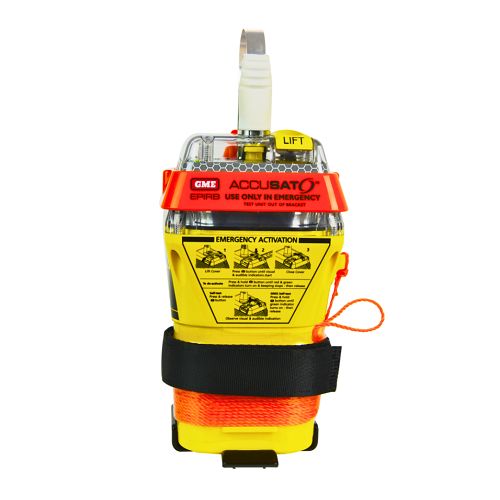
A 10‑year battery EPIRB with integrated GNSS (supports GPS and Galileo), infrared strobe and 121.5 MHz homing signal. Approved for worldwide COSPAS‑SARSAT operation.
Explore →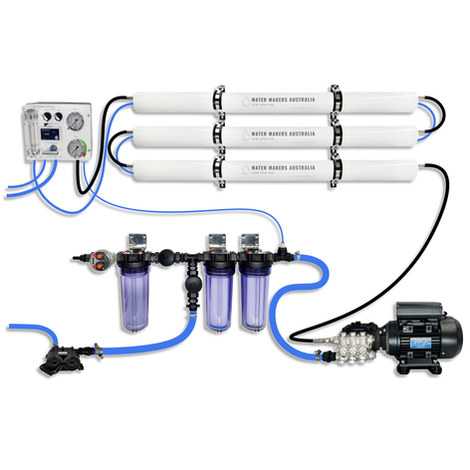
A three-membrane modular watermaker with 200 L/h nominal output and up to 240 L/h family-level marketing, for larger crews and heavy use.
Explore →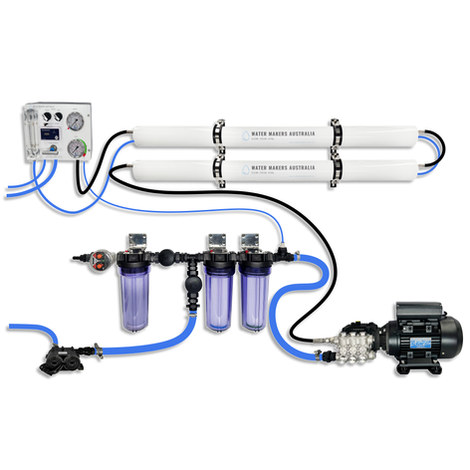
A two-membrane modular watermaker with 140 L/h nominal output, aimed at families and liveaboards that want more water per run.
Explore →