Loading this page…

Loading this page…
Sailing club
Carnarvon Yacht Club is a small, affiliated yacht club on Babbage Island at the mouth of the Gascoyne River in Carnarvon, Western Australia. The club operates a clubhouse with regular Friday-evening activities and is the traditional host and finish venue for the Fremantle to Carnarvon Yacht Race and Rally. The club is active in regional event hosting and community sailing, and is contactable via its official website and listed club secretary details.
About
Carnarvon Yacht Club is a small, affiliated yacht club on Babbage Island at the mouth of the Gascoyne River in Carnarvon, Western Australia. The club operates a clubhouse with regular Friday-evening activities and is the traditional host and finish venue for the Fremantle to Carnarvon Yacht Race and Rally. The club is active in regional event hosting and community sailing, and is contactable via its official website and listed club secretary details.
Service area: Carnarvon and surrounding Gascoyne coastal waters
Keep exploring
On formal training, the record is silent: no Discover Sailing Centre accreditation, no Tackers program, no raced-class list and no junior pathway appear on the club's website or in Australian Sailing's course finder at research time, so this section will not pretend otherwise. What the club demonstrably runs is its own social sailing rhythm — "Friday night at the yacht club", as it bills the fixture, with the kitchen and bar open from 5.30pm — the kind of weekly anchor around which regional sailing communities organise themselves.
The club's larger contribution to the sport is as an event host and a coastal waypoint. It is the traditional host of the Fremantle to Carnarvon Yacht Race and Rally, returning to the yachting calendar for 7–12 May 2027 — an event that turns the clubhouse into the finish-line welcome for a fleet that has raced some nine hundred kilometres up the coast. And in May 2025, Australian Sailing's WA Club Support Officer visited Carnarvon to work directly with the club, alongside Exmouth Yacht Club and the local department office, as part of a Gascoyne development swing — evidence that the state body sees an active club worth investing in.
As general context, regional clubs of this scale typically build skills informally: new sailors crewing on members' boats, juniors learning in whatever club dinghies exist, and accredited instruction brought in from larger centres when numbers justify it. Whether Carnarvon follows that pattern is a question for the club itself, and the secretary's inbox is the honest place to ask it.
The geography here is the story. Carnarvon stands at the mouth of the Gascoyne River, roughly nine hundred kilometres north of Perth, and the yacht club occupies Babbage Island — the same island that carries the historic One Mile Jetty, a remnant of the town's port days. The sailing waters are the river mouth, the sheltered reaches behind the island and the open bay beyond; as general context, this coastline sits at the southern edge of the tropics, where the weather is warm and dry for much of the year and afternoon sea breezes are a dependable feature — the kind of conditions that let a small club plan a season with confidence.
The club itself leans into this advantage, promoting its passion for sailing and for what it calls the local perfect climate. The wider region adds real depth for visiting sailors: Carnarvon is the recognised gateway to Shark Bay with its sheltered gulfs, and the coral coast running north toward Exmouth and Ningaloo — all regional context rather than club program, but exactly the waters that make a Fremantle-to-Carnarvon race finish feel like an arrival worth celebrating.
On land, the club's documented footprint is modest — the record confirms the address at 2 West Street, South Carnarvon, and the Friday-evening kitchen and bar, but says little about pens, moorings or hardstand, so visitors should ask ahead. What is certain is the setting: a club on an island, beside a jetty a mile long, at the mouth of the river that gives the whole region its name.
No founding year is published for Carnarvon Yacht Club, and the club's website carries no historical material, so its story is best told through the events on the record. The most stirring documented moment belongs to Jon Sanders. In December 2016 the veteran solo sailor departed Carnarvon on what became his record tenth circumnavigation, later writing that the Carnarvon Yacht Club was the outfit that, in his words, sent him off solo.
He arrived back at Carnarvon aboard his S&S 39, Perie Banou II, on 20 December 2017 — fourteen months after departing Fremantle — closing the loop where the club had waved him out. Few clubs anywhere can claim a send-off and homecoming like that. The club's other signature role is as traditional host of the Fremantle to Carnarvon Yacht Race and Rally, announced as returning to the calendar for 7–12 May 2027 — a revival that restores one of the coast's classic ocean passages to the town it honours.
More recent history is administrative but telling: in May 2025, Australian Sailing's WA Club Support Officer worked with the club during a Gascoyne region visit, and the committee list for 2026 names Chris Hutchinson as Commodore. As general context, Gascoyne port towns grew sailing clubs out of their maritime trades through the twentieth century — but Carnarvon's own founding chapter awaits someone with access to the club's minute books.
The race's return is presented by the club as a homecoming for an event with deep roots in the town, and the May 2027 dates are already published on its events page for crews planning the long passage north.
Dangar Island sits in the lower Hawkesbury River close to Brooklyn and is one of Sydney’s small, boat‑access communities. From the water it reads as a wooded, low island with sandy foreshore, a public jetty and private moorings; its position at the mouth of Cowan Creek and close to the main river channel makes it an attractive short‑cruise destination for trailer sailors, runabouts and small cruisers but also one that requires careful local knowledge and respect for resident berths, ferry operations and tidal currents.

Expect very different seasonal systems across Western Australia: the south‑west (Perth to Albany) has a strong summer afternoon sea breeze (the “Fremantle Doctor”) and winter westerly fronts, while northern WA follows a wet/dry monsoonal cycle with strong seasonal onshore winds, thunderstorms and cyclone risk in the wet season. Local headlands, estuaries and tidal flows often change what you actually feel on the water, so learn the local timing and sheltered venues first.
Explore →
There are legal obligations in Western Australia for recreational boat owners and skippers covering vessel registration, carriage of safety equipment and general skipper responsibilities, but the exact requirements depend on vessel type, size, where you sail and whether the vessel is commercial or recreational. Check the Western Australian Department of Transport (DoT WA) and the national authority for the precise checklist that applies to your boat and voyage.
Explore →
Look for a friendly club with beginner-focused training, accessible facilities and boats, a supportive community, clear safety practices, and opportunities to progress at your own pace.
Explore →
Use ramps and beaches with respect for local conditions: check ramp layout, tide and swell, wind direction, vehicle access and crowding; prepare boat and crew before you launch or retrieve; and follow local signage, courtesy and safety practices. Specifics vary by ramp and beach, so confirm details for the exact site before you go.
Explore →Practical guidance for recreational sailors planning coastal and remote cruising in Western Australia, focusing on tidal planning, reef awareness, navigation and safety preparation tailored to local conditions.
Explore →A practical guide to the coastal weather systems that affect sailing along Western Australia's coast, focusing on the Fremantle Doctor, local sea breezes, and linked coastal phenomena. Explains how these systems form, when they tend to occur, how they influence boat handling and passage planning, common mistakes, and a
Explore →
A practical guide for new sailors on picking the right Australian sailing club: training, boat access, racing, social fit, costs and the key questions to ask before joining.
Explore →A practical guide for recreational sailors planning visits to Albany and King George Sound. Covers the main anchorage areas, typical local weather patterns, tidal and current considerations, navigational hazards, on-the-water etiquette and a pre-departure checklist to help you plan a safe passage and enjoyable stopover
Explore →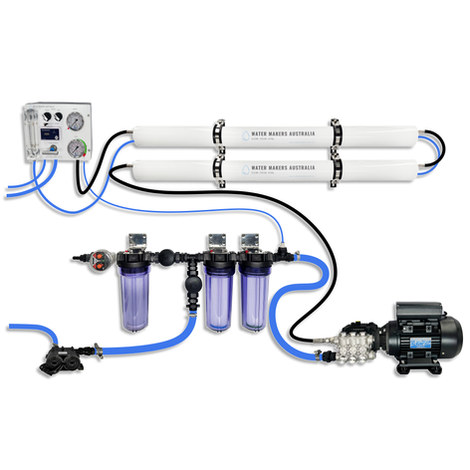
A two-membrane modular watermaker with 140 L/h nominal output, aimed at families and liveaboards that want more water per run.
Explore →Burke Yachtsman Gear Bag 40L - Shop Now Zip Pay | Tamar Marine Skip to content 59 – 63 Holbrook Street, Invermay Online Shop Open 24/7 Products search Contact us 1300 MARINE $ 0.00 0 Cart Burke Yachtsman Gear Bag 40L $ 79.90 Colour Choose an option Black Blue Black Blue Clear - Burke Yachtsman Gear Bag 40L quantity + Add to cart Enquire about this product SKU BAGB-Y24/BLACK* Category Bags - Sail & Gear A Burke classic and customer favourite, the Yachtsman’s Gear Bag is built tough to handle wet, salty conditions while keeping your gear dry and protected. Made from double coated waterproof…
Explore →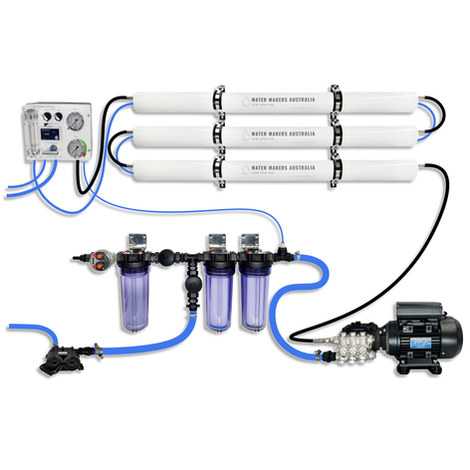
A three-membrane modular watermaker with 200 L/h nominal output and up to 240 L/h family-level marketing, for larger crews and heavy use.
Explore →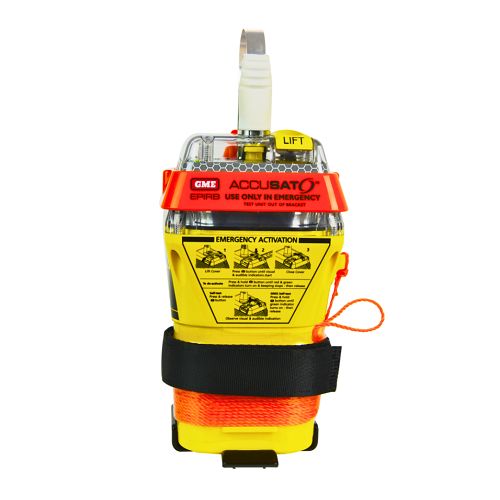
A 10‑year battery EPIRB with integrated GNSS (supports GPS and Galileo), infrared strobe and 121.5 MHz homing signal. Approved for worldwide COSPAS‑SARSAT operation.
Explore →