Loading this page…

Loading this page…
Sailing club
Claremont Yacht Club is a long-established, member-run yacht club on Freshwater Bay of the Swan River in Claremont, Western Australia. Founded in 1905, the club supports dinghy, keelboat and powerboat activity, operates a waterfront clubhouse with licensed bar and dining, manages a marina and pens, runs regular racing including Saturday and winter Frostbite series, twilight cruises, sells fuel to members, and offers skipper/boat licence courses.
About
Claremont Yacht Club is a long-established, member-run yacht club on Freshwater Bay of the Swan River in Claremont, Western Australia. Founded in 1905, the club supports dinghy, keelboat and powerboat activity, operates a waterfront clubhouse with licensed bar and dining, manages a marina and pens, runs regular racing including Saturday and winter Frostbite series, twilight cruises, sells fuel to members, and offers skipper/boat licence courses.
Service area: Freshwater Bay / Swan River
Keep exploring
The doorway into sailing at Claremont Yacht Club is deliberately wide. Newcomers may sign on as crew, taking out Associate Crew Membership, and the club states plainly that it opens its doors to all levels of experience — a crew-pathway model that lets newcomers learn aboard racing keelboats rather than in a classroom. The gentlest entry point is the Wednesday-evening Twilight Cruise, which runs from mid-November to April: boats depart at 18:25, and newcomers who arrive by 18:00 are allocated a place aboard.
It is hard to imagine a lower-friction introduction to the sport. The competitive program runs deep as well. Weekend keelboat racing starts at 14:00 most Saturdays through the season, which spans October to April, with one weekend a month shifting to Sunday; races last two to three hours and finish with presentations back at the clubhouse. Winter brings the aptly named Frostbite program from May to September, so members genuinely sail every month of the year.
The club also runs skipper courses for boat licences, and its on-water activities span dinghies, keelboats and powerboats. On junior training, honesty applies: no Discover Sailing Centre accreditation or Tackers branding appears in the record, and dinghy-class detail is not published, so families should ask the club directly what the current junior offering looks like. What is not in doubt is the breadth — from a first twilight sail on a November evening to winter series racing, the calendar offers a full year on the water.
Presentations after racing bring the whole fleet back together ashore, so even the competition doubles as a social program.
Freshwater Bay is one of the Swan River's great natural sailing arenas — a broad, sheltered reach of the river at Claremont, sitting almost midway between Fremantle Harbour and the Perth city centre, and the club has faced onto it since 1905. The position is practical as well as pretty: as general context, Perth's famous afternoon sea breeze sweeps up the river on summer days, giving the bay reliable wind while the surrounding foreshores take the edge off any chop — conditions that suit everything from Wednesday-evening cruising to close keelboat racing.
The club even publishes its own Swan River course map, marking every buoy used for its sail races and powerboat time trials, which tells you how thoroughly the water is worked. Ashore, the facilities reflect a century-old institution: a fully licensed bar, casual and formal dining overlooking the bay, a marina whose gate serves as the rendezvous point for twilight sailing, and fuel sold to members at prices published on the homepage.
The club also acknowledges the Wajuk Nyungar people as the inhabitants of the Freshwater Bay area before 1830, a recognition that this sailing ground had a long human history before any yacht was launched on it. For visitors, the essentials are simple — the clubhouse stands at 4 Victoria Avenue, the reception desk answers on (08) 9384 8226 and at reception@claremontyachtclub.org.au, and the view from the dining room across the bay at sunset is, by the club's own cheerful account, part of the membership package.
The bay's position between the ocean port and the city also made it a natural home for a club founded in the era when river transport still mattered.
The club's founding story is unusually well preserved, and it begins with a meeting. The club opened its books at the Continental Hotel on the night of 17 February 1905, when forty-seven enthusiasts attended the first general meeting; the sailors who signed on then are honoured to this day as the Foundation Members. Sydney Stubbs became the first Commodore, with W.K.
Potter as his Vice Commodore, and the fees they set — a one-guinea nomination and a two-guinea subscription — sat well above the average weekly wage of the day, marking this as a serious undertaking from the start. The first race followed quickly, on 25 March 1905, for a trophy donated by Commodore Stubbs: twenty-six boats entered, eighteen started, and Alexandra won from Ozone, Minora and Nyrvea, with just eighteen seconds separating the last three and more than two hundred visitors entertained ashore. Then came the move that secured the club's future.
Stubbs negotiated the purchase of the foreshore property Deepdene — a house completed in 1883 and originally named Lucknow — from Secretary of Railways Alpin Thomson, at a price of £1,250 under an arrangement that began as a lease carrying a purchase option. On 20 December 1910 the title transferred to the club, making Claremont the earliest WA yacht club to hold freehold over its own land and buildings.
A century later, the milestone was marked in style: the 2005 centenary included a centenary race on 20 March with live music, dancing and fireworks, and the club published a 240-page centenary history, edited by Rob Nunn, documenting its first hundred years. Few Australian clubs can read their own beginnings in such detail.
American River (Kangaroo Island, SA) is a small, sheltered inlet and township on the north‑eastern side of Kangaroo Island that acts as a calm staging point for cruising the eastern part of the island and for short hops through Backstairs Passage. It’s distinctive for its protected anchorage inside Eastern Cove and the adjacency of Pelican Lagoon — a shallow, ecologically important lagoon with sanctuary zoning — which shapes how and where boats can move. The area suits sheltered day sailing, weekend cruising and short coastal passages; it’s appropriate for trailer sailors, small cruisers and a

Look for a friendly club with beginner-focused training, accessible facilities and boats, a supportive community, clear safety practices, and opportunities to progress at your own pace.
Explore →
Expect very different seasonal systems across Western Australia: the south‑west (Perth to Albany) has a strong summer afternoon sea breeze (the “Fremantle Doctor”) and winter westerly fronts, while northern WA follows a wet/dry monsoonal cycle with strong seasonal onshore winds, thunderstorms and cyclone risk in the wet season. Local headlands, estuaries and tidal flows often change what you actually feel on the water, so learn the local timing and sheltered venues first.
Explore →
There are legal obligations in Western Australia for recreational boat owners and skippers covering vessel registration, carriage of safety equipment and general skipper responsibilities, but the exact requirements depend on vessel type, size, where you sail and whether the vessel is commercial or recreational. Check the Western Australian Department of Transport (DoT WA) and the national authority for the precise checklist that applies to your boat and voyage.
Explore →
Pick a protected bay, estuary or river reach where you can rig, launch and arrive on calm water within a short, sheltered transit; choose a site with a good ramp or jetty, clear recovery options and a nearby sailing club, marina or commercial operator for local knowledge and help.
Explore →Practical guide for recreational sailors navigating the Swan River and coastal waters around Perth. Covers local weather patterns, tides and currents, river navigation, launching and berthing options, safety equipment, common hazards, and step-by-step pre-departure and on-water checklists tailored to Western Australian
Explore →Practical guidance for recreational sailors planning coastal and remote cruising in Western Australia, focusing on tidal planning, reef awareness, navigation and safety preparation tailored to local conditions.
Explore →A practical guide to the coastal weather systems that affect sailing along Western Australia's coast, focusing on the Fremantle Doctor, local sea breezes, and linked coastal phenomena. Explains how these systems form, when they tend to occur, how they influence boat handling and passage planning, common mistakes, and a
Explore →
A practical guide for new sailors on picking the right Australian sailing club: training, boat access, racing, social fit, costs and the key questions to ask before joining.
Explore →Burke Yachtsman Gear Bag 40L - Shop Now Zip Pay | Tamar Marine Skip to content 59 – 63 Holbrook Street, Invermay Online Shop Open 24/7 Products search Contact us 1300 MARINE $ 0.00 0 Cart Burke Yachtsman Gear Bag 40L $ 79.90 Colour Choose an option Black Blue Black Blue Clear - Burke Yachtsman Gear Bag 40L quantity + Add to cart Enquire about this product SKU BAGB-Y24/BLACK* Category Bags - Sail & Gear A Burke classic and customer favourite, the Yachtsman’s Gear Bag is built tough to handle wet, salty conditions while keeping your gear dry and protected. Made from double coated waterproof…
Explore →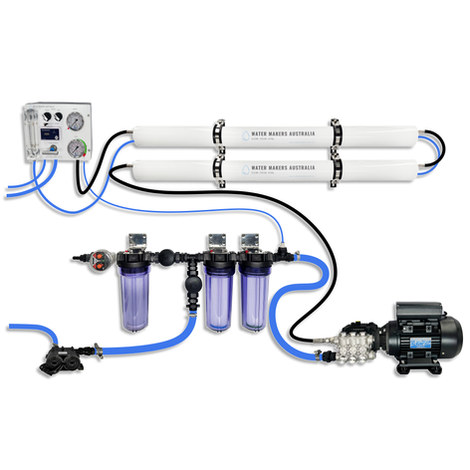
A two-membrane modular watermaker with 140 L/h nominal output, aimed at families and liveaboards that want more water per run.
Explore →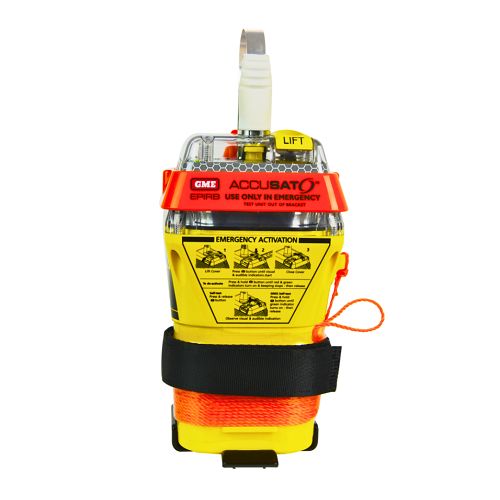
A 10‑year battery EPIRB with integrated GNSS (supports GPS and Galileo), infrared strobe and 121.5 MHz homing signal. Approved for worldwide COSPAS‑SARSAT operation.
Explore →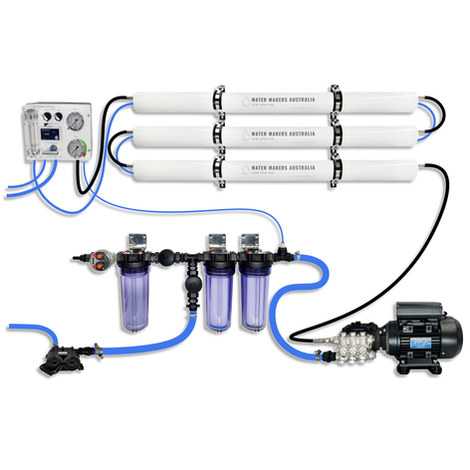
A three-membrane modular watermaker with 200 L/h nominal output and up to 240 L/h family-level marketing, for larger crews and heavy use.
Explore →