Loading this page…

Loading this page…
Sailing club
Dunsborough Bay Yacht Club is a volunteer-run, family-oriented sailing club on Geographe Bay in Dunsborough, Western Australia. The club runs junior and learn-to-sail programs, organises regattas and social events, maintains a clubhouse with bar and amenities, and supports dinghy, trailer-sailer and keelboat sailing. The club site mentions Quindalup Moorings and a 'Book a Mooring' option and provides facilities including beach launching, rigging lawn, showers and upstairs alfresco viewing areas.
About
Dunsborough Bay Yacht Club is a volunteer-run, family-oriented sailing club on Geographe Bay in Dunsborough, Western Australia. The club runs junior and learn-to-sail programs, organises regattas and social events, maintains a clubhouse with bar and amenities, and supports dinghy, trailer-sailer and keelboat sailing. The club site mentions Quindalup Moorings and a 'Book a Mooring' option and provides facilities including beach launching, rigging lawn, showers and upstairs alfresco viewing areas.
Service area: Dunsborough, WA
Keep exploring
On the edge of Geographe Bay, where peppermint trees lean over the sand at Quindalup, stands a clubhouse its members quite literally raised themselves. Dunsborough Bay Yacht Club is a not-for-profit community organisation at 307 Geographe Bay Road, Dunsborough, run entirely by volunteers — a mixture, by the club's own account, of locals and of sailors who travel down from Perth and further afield. It sits on Australian Sailing's national affiliation schedule, yet it has kept the character of the beach gathering it grew from: boats launch straight off the sand, rigs go up on a grassed lawn, and the social centre is a member-run bar whose balcony looks across what members like to call the Quindalup panorama.
The setting does much of the persuading. Quindalup Beach fronts the calm northern sweep of the bay, and the moorings just offshore fill through summer with power and sailing vessels making the seasonal migration down the coast from Perth. Australian Sailing's Western Australian general manager has described this stretch of water as arguably among the finest places anywhere on earth to sail — praise the club is understandably pleased to repeat.
Amenities are practical rather than showy: a bar and kitchen, hot showers, an upstairs alfresco deck, free parking, wifi, and a PA system with projector for events. A capital works program is under way to improve accessibility, and anyone with access requirements is invited to raise them directly with the club secretary. Across the year the calendar blends regattas with social occasions, keeping the volunteer engine that powers the place well fuelled and the balcony well occupied on a summer evening.
Junior sailing carries the load here, and it is built around a fleet of Minnows and 125s — a blend of club-owned boats and privately owned ones — that gives young sailors a clear line from first wobbly tack to confident racing. For children taking their very first steps, the club delivers Australian Sailing's Learn to Sail 1 and 2 junior courses, a games-led introduction aimed squarely at kids between seven and twelve. Behind those courses stands a dedicated training fleet of five Pacers and four Windrush 14 catamarans, with several Lasers expected to be added to the shed.
Once sailors graduate, the open classes take over. Racing at Dunsborough is dominated by Windrush 14 catamarans and Laser dinghies (now known as the ILCA), a pairing that suits the bay's friendly conditions and keeps competition tight without demanding deep pockets. Ordinary full members enjoy a useful perk: access to club boats at scheduled times whenever support boats are on the water, which lowers the barrier for anyone who has the skills but not yet a boat of their own.
Beyond instruction, the club hosts a variety of regattas and social events through the season, giving training graduates immediate racing experience close to home. One honest caveat: while the courses follow the national syllabus, the club publishes no formal Discover Sailing Centre accreditation statement, and its programs are not badged under the Tackers brand — they are simply the equivalent Australian Sailing junior courses delivered by a volunteer club that has made teaching the next generation a core part of its identity.
Few clubs can claim a front yard like this one. The clubhouse sits along Geographe Bay Road on the shoreline at Dunsborough, screened by peppermint trees and looking straight out over Quindalup Beach toward the mooring ground that shares its name. Geographe Bay itself is a broad, protected curve of water on Western Australia's South West coast, and the Dunsborough end of it enjoys the calm, clear conditions that draw cruising boats south every summer. The Quindalup Moorings, directly in front of the club, host a shifting population of power and sailing vessels travelling between Perth and the cape region through the warmer months, which gives the waterfront a pleasantly nautical bustle.
That endorsement from Australian Sailing's WA general manager — who singled out Quindalup while sailing a Windrush 14 there and called it arguably one of the best sailing spots in the world — reflects what locals already knew: flat water, reliable breezes and a sandy launching beach right at the clubhouse door.
Onshore, the layout serves sailors first. The grassed rigging lawn runs between clubhouse and beach, launching is straight off the sand, and after racing there are hot showers, a bar and kitchen, and an upstairs alfresco deck for debriefs. Free parking, wifi, a PA system and a projector round out the practical side for regatta days and presentations. It is a compact, beach-centred operation — no marina, no hardstand, just sand, lawn and some of the most forgiving sailing water in the state, with Dunsborough's town centre and the wider Margaret River region close at hand for visiting crews.
The club began, fittingly, on the beach. Through the 1990s a band of local dinghy sailors gathered on the sand at Dunsborough to race informally, and from that loose circle grew the resolve to form a real club. Several of that original core — people who, in the club's own telling, built the place through their own labour, savings and sheer initiative — remain involved today.
The formal founding came in 2001, when twenty-four members signed on and a marquee on the beach served as headquarters. For its first decade the club sailed off-the-beach with no boat storage on site, but ambition was building toward a permanent home. That home arrived in December 2010, when a two-storey headquarters — boatshed below, clubroom and verandah above — was officially opened after what those involved described as almost a decade of effort.
The opening ceremony was a community affair. Club patron and South West MLC Barry House performed the honours, Joan Embry was commodore, Peter Ryall acted as master of ceremonies, and Sarah Hales raised the flag on a pole her father Peter had made. Behind the scenes, building project manager Noel Fogarty received the shire's Permit to Use at the event, builder Charles Grist was rewarded with a ten-year Platinum Membership, and treasurer Jim Major had steered the project's finances and grant applications. Jim "Toddy" Todd was remembered on the day as one of the original instigators of a yacht club for the district.
By that point the club already supported five sailing classes and ran continuing sail training for both adults and juniors, with a Sailability yacht for sailors with disability due to join the fleet — evidence that the beach group of the 1990s had grown into a complete community club.
Bathurst Harbour (Port Davey system), in south‑west Tasmania, is a vast, almost land‑locked estuarine harbour inside the Southwest National Park and World Heritage Area. It offers a remote, sheltered anchoring environment protected from the Roaring Forties, but demands careful planning, an awareness of marine‑reserve rules, and a willingness to operate in shallow, tannin‑stained waters. Best suited to experienced coastal cruisers and small expedition yachts prepared for self‑sufficiency, Bathurst Harbour is more a place to linger and explore on foot and by tender than a port of call for busy,

Expect very different seasonal systems across Western Australia: the south‑west (Perth to Albany) has a strong summer afternoon sea breeze (the “Fremantle Doctor”) and winter westerly fronts, while northern WA follows a wet/dry monsoonal cycle with strong seasonal onshore winds, thunderstorms and cyclone risk in the wet season. Local headlands, estuaries and tidal flows often change what you actually feel on the water, so learn the local timing and sheltered venues first.
Explore →
Look for a friendly club with beginner-focused training, accessible facilities and boats, a supportive community, clear safety practices, and opportunities to progress at your own pace.
Explore →
There are legal obligations in Western Australia for recreational boat owners and skippers covering vessel registration, carriage of safety equipment and general skipper responsibilities, but the exact requirements depend on vessel type, size, where you sail and whether the vessel is commercial or recreational. Check the Western Australian Department of Transport (DoT WA) and the national authority for the precise checklist that applies to your boat and voyage.
Explore →
Late spring to summer is usually the best time for beginners to start learning to sail in Tasmania because the weather is generally warmer, days are longer and conditions are often more settled. Expect lighter to moderate winds with regular afternoon sea breees in summer, while spring and autumn bring more changeable and sometimes stronger conditions; winter is colder, wetter and typically windier with more fronts and swell.
Explore →
A practical guide for new sailors on picking the right Australian sailing club: training, boat access, racing, social fit, costs and the key questions to ask before joining.
Explore →Practical guide for recreational sailors planning day sails and short cruises in Geographe Bay, focusing on launching, local conditions, anchorages and safety around Busselton, Dunsborough and Cape Naturaliste.
Explore →A practical guide to the coastal weather systems that affect sailing along Western Australia's coast, focusing on the Fremantle Doctor, local sea breezes, and linked coastal phenomena. Explains how these systems form, when they tend to occur, how they influence boat handling and passage planning, common mistakes, and a
Explore →
A concise, practical guide to the points of sail and how to trim sails effectively for common Australian conditions. Learn the basics of wind angles, sail shape, telltales, reefing considerations and simple steps to improve boat speed and balance.
Explore →Burke Yachtsman Gear Bag 40L - Shop Now Zip Pay | Tamar Marine Skip to content 59 – 63 Holbrook Street, Invermay Online Shop Open 24/7 Products search Contact us 1300 MARINE $ 0.00 0 Cart Burke Yachtsman Gear Bag 40L $ 79.90 Colour Choose an option Black Blue Black Blue Clear - Burke Yachtsman Gear Bag 40L quantity + Add to cart Enquire about this product SKU BAGB-Y24/BLACK* Category Bags - Sail & Gear A Burke classic and customer favourite, the Yachtsman’s Gear Bag is built tough to handle wet, salty conditions while keeping your gear dry and protected. Made from double coated waterproof…
Explore →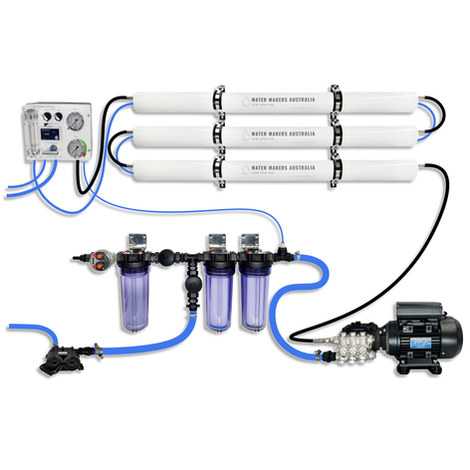
A three-membrane modular watermaker with 200 L/h nominal output and up to 240 L/h family-level marketing, for larger crews and heavy use.
Explore →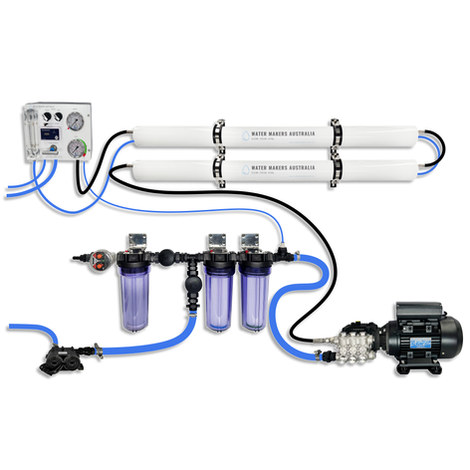
A two-membrane modular watermaker with 140 L/h nominal output, aimed at families and liveaboards that want more water per run.
Explore →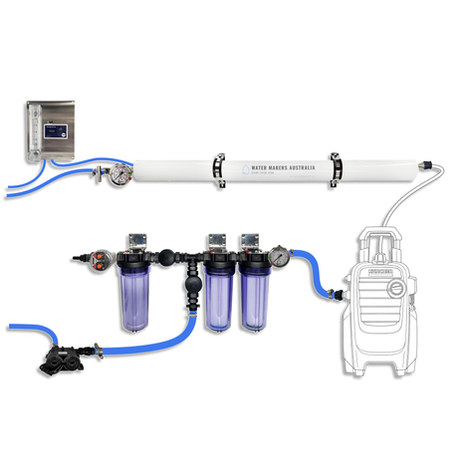
A one-membrane modular marine watermaker with 80 L/h nominal output, remote stainless control panel, standard consumables and direct Australian support.
Explore →