Loading this page…

Loading this page…
Sailing club
Belmont 16ft Sailing Club (trading as Belmont 16s) is a purpose-built skiff club on the western shore of Lake Macquarie, NSW. Founded in 1922 and centred on 16ft skiff racing, the club runs a broad season of skiff and dinghy competition, formal learn-to-sail and junior development pathways, and regularly hosts state, national and international championships from its redeveloped waterfront clubhouse.
About
Belmont 16ft Sailing Club (trading as Belmont 16s) is a purpose-built skiff club on the western shore of Lake Macquarie, NSW. Founded in 1922 and centred on 16ft skiff racing, the club runs a broad season of skiff and dinghy competition, formal learn-to-sail and junior development pathways, and regularly hosts state, national and international championships from its redeveloped waterfront clubhouse.
Service area: Lake Macquarie (Belmont Bay), New South Wales
Keep exploring
Belmont 16s (Belmont 16ft Sailing Club) is a sailing club based in Belmont, on Lake Macquarie in the Hunter Region, NSW. The club promotes 16' and 13' skiff classes and runs a range of on-water programs from Learn to Sail (including junior Tackers) through to competitive development pathways. The venue also features modern club facilities, a function centre and hospitality outlets, and the club operates an associated Foundation for sports fundraising.
What sets Belmont's pathway apart is where it finishes: not in a generic dinghy fleet but on the wire of a senior 16ft skiff. Sailing Manager Nadine Steenson reported in 2024 that junior participation had doubled on previous years, with older juniors now crewing and helming senior 16s — an apprenticeship into one of sailing's most demanding three-man boats that no textbook program can replicate. The feeder structure makes that jump possible.
The 13ft skiff, racing Sundays at 2.30pm from September to March, bridges the gap between junior classes and the full-size boat, while the Green Fleet program introduces post-learn-to-sail sailors to racing on Saturday mornings in Terms 1 and 4 alongside the Pelican and O'pen Skiff classes, for a $140 entry fee.
The learn-to-sail entry point is the standard Tackers program for ages seven to twelve — three levels run as school-holiday intensives or term-length courses, with all equipment supplied, Australian Sailing-qualified instructors at a one-to-six ratio and NSW Active Kids vouchers accepted; 2025 fees sat at $300 for Tackers 1 and $320 for the later levels, covering up to 25 hours of tuition. As an accredited Discover Sailing Centre the club also supports the broader class mix — Lasers, Cherubs, Flying 11s and the skiff fleets — that keeps teenagers on the water after their first certificates.
Racing development is built into the calendar. The season from early September to late March includes club competition across every fleet, the annual Hahn Super Dry 16ft Skiff Sprint Series each February, and a rotation of state, national and world championship hosting duties that lets young sailors watch elite skiff racing from their own deck. The redevelopment's purpose-built training rooms and regatta office give those programs a permanent home.
The clubhouse stands over the water at Belmont Bay, on the western shore of Lake Macquarie about twenty minutes south of Newcastle. The lake — Australia's largest coastal saltwater lake, on Awabakal country — gives the club an enormous racing arena, and the historical record describes Belmont Bay's prevailing north-easterly sea breezes and wide expanse of flat water as a combination that has repeatedly attracted Australian and world championships to the club's doorstep. Flat water and a reliable afternoon breeze suit skiff racing perfectly: big, fast courses with room for full-length work and tactical runs.
The club has sailed this corner of the lake for over a century. The first race in October 1922 started near the foot of Macquarie Street, Belmont and worked across to Marks Point, and the original clubhouse stood over the water on Brooks Parade from 1923. In 1952 the club shifted to its present site at Mill Creek, Belmont, and the address has anchored its identity ever since — close enough to the bay's open water for serious courses, sheltered enough for junior training off the beach.
Since December 2023 the venue itself has matched the calibre of the sailing. The redeveloped clubhouse includes race control with enhanced technology connectivity, a panoramic viewing deck for spectators, custom skiff storage, and hospitality spaces — the Martha restaurant, named for the Martha, the first British ship into Lake Macquarie back in 1800, the Salt Kitchen bistro, Bay Bar, Boat Shed Bar and a rooftop terrace — that make race day as much a spectator occasion as it was when 400 people lined the foreshore for the club's very first start.
Belmont 16s began with a public meeting at the Belmont School of Arts on Saturday 13 May 1922, advertised in the Newcastle Sun and promoted by a young Albert Smith of Marks Point. Sailing on Belmont Bay was nothing new — regattas dated back to Easter Monday 1881 — but the new Belmont Sailing Club resolved to race under Port Jackson skiff rules, and eight skiffs were committed on the spot. Seven made the first start on 7 October 1922, with Jim Parker's Clift winning on handicap before about 400 foreshore spectators; the £12 first prize was roughly a month's wages at the time, and club rules formally directed funds into skiff prize money.
The founding office bearers carried serious weight. Patron John C. Reid and President Mark C. Reid were nephews of fourth prime minister Sir George Houston Reid, and the first Commodore, J. Arthur Wood, came from the Castlemaine Wood & Co brewery family. The Reids bought the reigning state titleholder Arlene from the Port Jackson fleet, and Charlie Newton sailed her to the club's first championship in 1922–23.
The club innovated from the start: two-foot-high sail numbers so spectators could identify boats, uniform sailing costumes for crews, and a blue triangular burgee with a yellow cross. A volunteer-built clubhouse opened over the water on Brooks Parade in October 1923 and served for thirty years, through a brief Great Depression disruption, until the move to Mill Creek in 1952.
Licensed trading began in 1958, gradually building the commercial engine that now funds the sailing. The centenary year of 2022 brought the Red Pumps Australian 16ft Skiff Championships with a 45-boat fleet, and the club marked the milestone with the $20 million Centenary Project, completed in December 2023 — a rebuild that restored the full Belmont 16s Sailing Club name and a logo drawn from the original 1922 burgee. Under CEO Scott Williams, at the helm since 2005, the club enters its second century with its founding purpose intact.
American River (Kangaroo Island, SA) is a small, sheltered inlet and township on the north‑eastern side of Kangaroo Island that acts as a calm staging point for cruising the eastern part of the island and for short hops through Backstairs Passage. It’s distinctive for its protected anchorage inside Eastern Cove and the adjacency of Pelican Lagoon — a shallow, ecologically important lagoon with sanctuary zoning — which shapes how and where boats can move. The area suits sheltered day sailing, weekend cruising and short coastal passages; it’s appropriate for trailer sailors, small cruisers and a

Before the season: confirm seaworthiness — hull, rig, engine, electrics, sails and safety gear — and replace or service wearable items. After the season: wash, dry and protect gear, service consumables and record what you did so the boat’s ready and reliable next season.
Explore →
Expect very different seasonal systems across Western Australia: the south‑west (Perth to Albany) has a strong summer afternoon sea breeze (the “Fremantle Doctor”) and winter westerly fronts, while northern WA follows a wet/dry monsoonal cycle with strong seasonal onshore winds, thunderstorms and cyclone risk in the wet season. Local headlands, estuaries and tidal flows often change what you actually feel on the water, so learn the local timing and sheltered venues first.
Explore →
Legal requirements can change — check Transport for NSW for the current rules. As a practical baseline for coastal day sailing from NSW shores: keep the right number and type of lifejackets for everyone, have a means of calling for help, show navigation lights if you’ll be out after dusk, and carry basic items to manage a man‑overboard or abandon‑ship situation. Add anchor, bilge/bailer, sun/protection and basic repair kit as recommended items.
Explore →
Pack sun protection and lightweight, quick-drying layers for summer; insulation, waterproof outer layers and warm accessories for winter — plus basic safety and comfort gear for both seasons.
Explore →
A practical guide for new sailors on picking the right Australian sailing club: training, boat access, racing, social fit, costs and the key questions to ask before joining.
Explore →A practical guide for recreational sailors planning day sails or short cruises on Lake Macquarie. Covers the entrance, navigation considerations, popular anchorages, local weather and tide influences, mooring etiquette, safety checks and suggested itineraries around the lake.
Explore →A practical guide to the coastal weather systems that affect sailing along Western Australia's coast, focusing on the Fremantle Doctor, local sea breezes, and linked coastal phenomena. Explains how these systems form, when they tend to occur, how they influence boat handling and passage planning, common mistakes, and a
Explore →A practical guide for recreational sailors planning visits to Albany and King George Sound. Covers the main anchorage areas, typical local weather patterns, tidal and current considerations, navigational hazards, on-the-water etiquette and a pre-departure checklist to help you plan a safe passage and enjoyable stopover
Explore →Burke Yachtsman Gear Bag 40L - Shop Now Zip Pay | Tamar Marine Skip to content 59 – 63 Holbrook Street, Invermay Online Shop Open 24/7 Products search Contact us 1300 MARINE $ 0.00 0 Cart Burke Yachtsman Gear Bag 40L $ 79.90 Colour Choose an option Black Blue Black Blue Clear - Burke Yachtsman Gear Bag 40L quantity + Add to cart Enquire about this product SKU BAGB-Y24/BLACK* Category Bags - Sail & Gear A Burke classic and customer favourite, the Yachtsman’s Gear Bag is built tough to handle wet, salty conditions while keeping your gear dry and protected. Made from double coated waterproof…
Explore →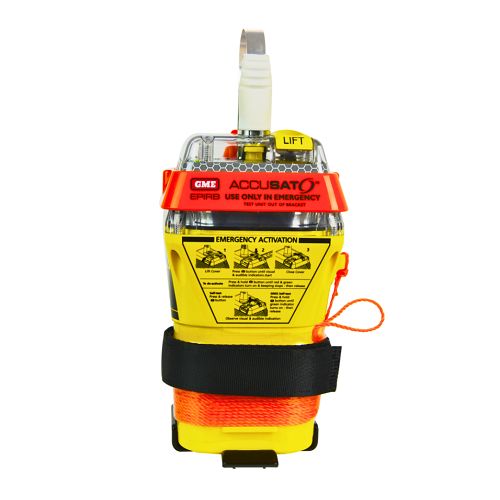
A 10‑year battery EPIRB with integrated GNSS (supports GPS and Galileo), infrared strobe and 121.5 MHz homing signal. Approved for worldwide COSPAS‑SARSAT operation.
Explore →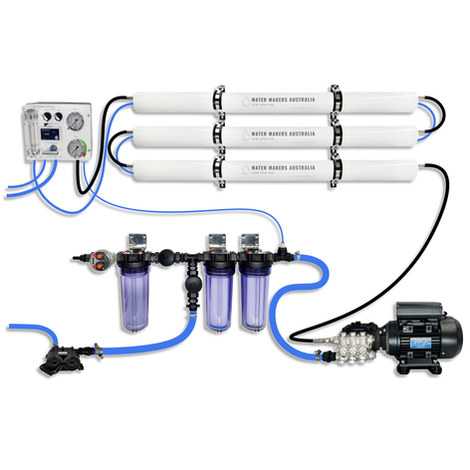
A three-membrane modular watermaker with 200 L/h nominal output and up to 240 L/h family-level marketing, for larger crews and heavy use.
Explore →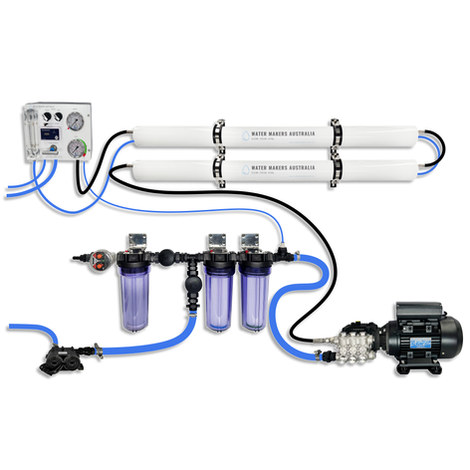
A two-membrane modular watermaker with 140 L/h nominal output, aimed at families and liveaboards that want more water per run.
Explore →