Loading this page…

Loading this page…
Sailing club
Big River Sailing Club is a volunteer-run dinghy club based on Harwood Island in the Northern Rivers of New South Wales. It races a mixed fleet across the wide Clarence River, runs seasonal learn-to-sail sessions using Australian Sailing’s Sail Pass, and stages the long-distance Bridge to Breakers regatta each November.
About
Big River Sailing Club is a volunteer-run dinghy club based on Harwood Island in the Northern Rivers of New South Wales. It races a mixed fleet across the wide Clarence River, runs seasonal learn-to-sail sessions using Australian Sailing’s Sail Pass, and stages the long-distance Bridge to Breakers regatta each November.
Service area: Harwood Island / Clarence River, Northern Rivers, NSW
Keep exploring
Big River Sailing Club is a community sailing club based on Harwood Island, NSW. The club runs an annual sailing season and organised racing and regattas (including events such as Personal Handicap Series, Club Championship, Bridge to Breakers and annual regattas). The club welcomes new members and visiting sailors from clubs affiliated with Australian Sailing. Contact options shown on the club site include an email (bigriversailingclub@gmail.com) and a phone number (0409 664 511).
Breadth is the distinguishing mark of Big River's training effort. Across its fifty years the club has fostered junior sailors, hosted school groups, taught raw beginners and welcomed sailors with disabilities, and the North Coast Academy of Sport has trained at its facilities — an unusually wide teaching brief for a club of this size. That inclusive streak persists in the modern setup: sail training runs most Saturday mornings from 10am through the season, which spans late August to April, pausing only on the three regatta weekends.
Rather than locking newcomers into membership from day one, the club runs on the Sail Pass system, Australian Sailing's introductory membership, which covers every learn-to-sail participant and lets families test the water before committing. Discover Sailing branding anchors the program's presentation, and local sponsors including SPAR Maclean and Corporate Insurance Brokers help keep a country training fleet afloat. Once sailors are confident, the racing program absorbs them gently: a Personal Handicap Series gives improving skippers a genuine shot at silverware while they develop, alongside the Club Championship Series, a Single Handed Regatta for those who like to sail solo, and the two big regattas.
Because the fleet spans everything from NS14s to catamarans, trailable yachts and Wetas, a graduate of Saturday-morning training can find a competitive home in almost any boat they can beg, borrow or buy. Visiting sailors from other Australian Sailing-affiliated clubs are welcome to join club racing, so the standard on the water is regularly sharpened by outsiders. For a small club, it is a complete pathway — first lesson to personal handicap trophy to regatta division — delivered by volunteers on a river that gives everyone room to learn.
The club sits on Harwood Island in the Clarence River, beside the Harwood Marine yard and just downstream of the Harwood Bridge, in the heart of Northern Rivers cane country. Sugar-cane farms press in on both banks, the Harwood sugar mill anchors the township's economy, and Maclean lies about three miles upriver. The Clarence itself is the attraction: a wide, spacious waterway with room for long beats, big fleet starts and the kind of distance racing that most enclosed venues simply cannot offer.
Conditions lean on the afternoon nor'easter, the sea breeze that funnels up the valley; the 2025 Bridge to Breakers was sailed in a nor'easter that rarely topped fifteen knots, ideal river-racing weather. That regatta's course tells you everything about the scale of the place — from the club downriver to Iluka, hard by the ocean mouth, and back again. The defining landmark overhead is the Harwood Bridge, completed in 1967 to carry the Pacific Highway. Skippers of anything with a mast taller than 8.5 metres can arrange an opening in advance, an event that stops the national highway for around twenty minutes while the river traffic passes through.
Regatta logistics are delightfully low-tech. Competitors pitch tents or park vans at the club for the weekend, wander across to the Harwood Hotel for dinner and gather for the Big River evening meal that has become part of the event's folklore. There are no marinas or gated hardstands here — just a friendly clubhouse on a big river, a short drive off the Pacific Highway between Grafton and Ballina, and enough open water to make every visiting sailor wonder why they don't race rivers more often.
Big River Sailing Club was established at Harwood in 1973, and the club marked the milestone publicly on 30 September 2023 with a fiftieth anniversary celebration that invited past members back to rejoin the current fleet. The earliest racing took place near the Harwood Pub, a suitably informal birthplace for a club whose social life still revolves around the hotel, before the club shifted to its present home beside the Harwood Marine yard near the bridge. Founding details beyond that are thin on the ground — the club has never been much for self-promotion — but the half-century since tells its own story.
What the record does show is a club that put participation first from the beginning. Over five decades it has fostered junior sailing, welcomed school groups and sailors with disabilities and taught countless raw beginners, with the North Coast Academy of Sport among the organisations making use of its facilities. Anniversary coverage noted that a few members have progressed to sailing at the highest level, though the club is too modest to name names. The Harwood Bridge overhead, opened in 1967, predates the club by only six years; the two have grown up together, and the bridge's name now bookends the club's great race.
The defining story of the modern era is the transformation of the Bridge to Breakers Regatta into a memorial. Malcolm Eggins, a Grafton sailing identity and an icon of the NS14 class, left such a mark on the club and the river that the November regatta now carries his memory. At the 2025 edition his sons Darryl and Gary handed the winner's trophy to Adam Humphries, and NS14 Association president Stephen Jones made the trip to bestow a posthumous life membership on Malcolm — a moment that said everything about how this small river club honours its people. Fifty years in, the next chapter looks much like the first: family sailing on the big river, open to anyone who turns up.
Dangar Island sits in the lower Hawkesbury River close to Brooklyn and is one of Sydney’s small, boat‑access communities. From the water it reads as a wooded, low island with sandy foreshore, a public jetty and private moorings; its position at the mouth of Cowan Creek and close to the main river channel makes it an attractive short‑cruise destination for trailer sailors, runabouts and small cruisers but also one that requires careful local knowledge and respect for resident berths, ferry operations and tidal currents.

Look for a friendly club with beginner-focused training, accessible facilities and boats, a supportive community, clear safety practices, and opportunities to progress at your own pace.
Explore →
Expect very different seasonal systems across Western Australia: the south‑west (Perth to Albany) has a strong summer afternoon sea breeze (the “Fremantle Doctor”) and winter westerly fronts, while northern WA follows a wet/dry monsoonal cycle with strong seasonal onshore winds, thunderstorms and cyclone risk in the wet season. Local headlands, estuaries and tidal flows often change what you actually feel on the water, so learn the local timing and sheltered venues first.
Explore →
Before your first sail in South Australian waters check the weather and tide, make sure the boat and safety equipment are fit for the trip, confirm local rules and any area-specific hazards, and tell someone your plan.
Explore →
Late spring to summer is usually the best time for beginners to start learning to sail in Tasmania because the weather is generally warmer, days are longer and conditions are often more settled. Expect lighter to moderate winds with regular afternoon sea breees in summer, while spring and autumn bring more changeable and sometimes stronger conditions; winter is colder, wetter and typically windier with more fronts and swell.
Explore →
A practical guide for new sailors on picking the right Australian sailing club: training, boat access, racing, social fit, costs and the key questions to ask before joining.
Explore →
A concise, practical guide to the points of sail and how to trim sails effectively for common Australian conditions. Learn the basics of wind angles, sail shape, telltales, reefing considerations and simple steps to improve boat speed and balance.
Explore →A practical guide to selecting and using anchorages around New South Wales for cruising sailors. Covers sheltered bays, tidal considerations, holding, approach planning, and example anchorages with local conditions to check before you go.
Explore →Practical guidance for recreational sailors planning to cross coastal bars in New South Wales. Explains how to assess conditions, plan a crossing, prepare equipment and crew, recognise hazards and manage emergencies, with checklists and realistic examples relevant to NSW waters.
Explore →Burke Yachtsman Gear Bag 40L - Shop Now Zip Pay | Tamar Marine Skip to content 59 – 63 Holbrook Street, Invermay Online Shop Open 24/7 Products search Contact us 1300 MARINE $ 0.00 0 Cart Burke Yachtsman Gear Bag 40L $ 79.90 Colour Choose an option Black Blue Black Blue Clear - Burke Yachtsman Gear Bag 40L quantity + Add to cart Enquire about this product SKU BAGB-Y24/BLACK* Category Bags - Sail & Gear A Burke classic and customer favourite, the Yachtsman’s Gear Bag is built tough to handle wet, salty conditions while keeping your gear dry and protected. Made from double coated waterproof…
Explore →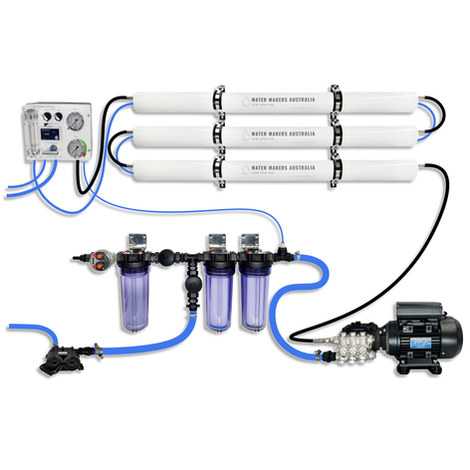
A three-membrane modular watermaker with 200 L/h nominal output and up to 240 L/h family-level marketing, for larger crews and heavy use.
Explore →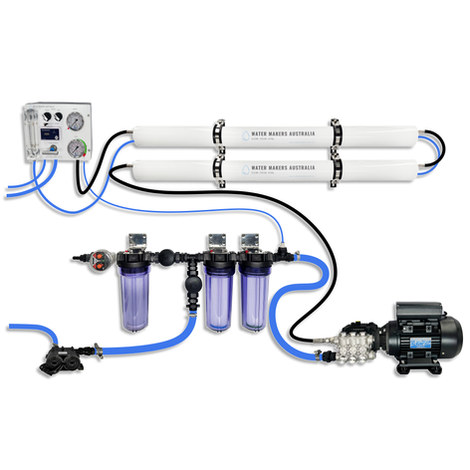
A two-membrane modular watermaker with 140 L/h nominal output, aimed at families and liveaboards that want more water per run.
Explore →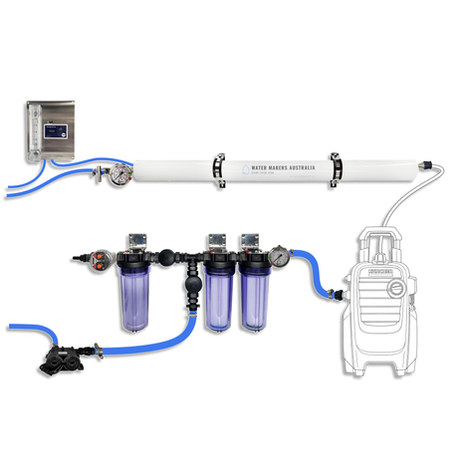
A one-membrane modular marine watermaker with 80 L/h nominal output, remote stainless control panel, standard consumables and direct Australian support.
Explore →