Loading this page…

Loading this page…
Sailing club
Blues Point Yacht Club (BPYC) is a community-focused sailing club based at McMahons Point that organises yacht racing and club events on Sydney Harbour. The club describes itself as friendly and inclusive, runs seasonal race series (Autumn/Spring) with published sailing instructions and race notices, and maintains event calendars, galleries and member information on its website.
About
Blues Point Yacht Club (BPYC) is a community-focused sailing club based at McMahons Point that organises yacht racing and club events on Sydney Harbour. The club describes itself as friendly and inclusive, runs seasonal race series (Autumn/Spring) with published sailing instructions and race notices, and maintains event calendars, galleries and member information on its website.
Service area: Sydney Harbour (McMahons Point, NSW)
Keep exploring
Blues Point Yacht Club (BPYC) is a community-focused sailing club based at McMahons Point that organises yacht racing and club events on Sydney Harbour. The club describes itself as friendly and inclusive, runs seasonal race series (Autumn/Spring) with published sailing instructions and race notices, and maintains event calendars, galleries and member information on its website.
Blues Point's contribution to developing sailors is deliberately unconventional: it runs no learn-to-sail courses, no Tackers fleet and no training boats at all. What it offers instead is arguably Sydney Harbour's gentlest on-ramp to yacht racing. The club positions itself as ideal for people just starting their racing careers, and the reason is logistical as much as cultural — races are scheduled roughly every third week through the year, deliberately dodging holiday periods and the harbour's most crowded weekends, so new skippers learn their craft without being intimidated by wall-to-wall traffic or cut-throat start lines.
The racing format does the rest. Starts are normally pursuits, where each boat's handicap sets its individual departure time, meaning there is usually only one yacht on the start line at a time — the least stressful beginning in the sport, and a brilliant way to build confidence in boat-handling, trim and tactics without a ten-boat scrum. From there the fleet settles into a chasing race to the finish, with handicap and results handled through SailSys. Spring and Autumn point-score series run on Sundays, with racing typically between midday and half past four.
The program beyond the series has a cruising flavour unusual in a harbour club. The Don Deller Pittwater Weekend sends the fleet north each year for an overnight stay and club dinner, giving newer crews a supported taste of passage-making out the Heads and up the coast. Informal mentoring happens where you'd expect it to — back at the pub, where the after-race analysis is as much a classroom as any whiteboard session, and where prizes are awarded after every race thanks to community support. For sailors who already have a boat, or a berth as crew, and want to become racers, this is a low-pressure finishing school.
Everything revolves around the Blues Point Hotel at 116 Blues Point Road in McMahons Point, on the lower North Shore of Sydney — a pub with a restaurant, bar and gaming room about fifteen minutes' stroll from Luna Park and the Bridge. There is no marina, no hardstand, no boat storage; members keep their yachts on moorings around the harbour and converge on the start line.
The point itself carries two centuries of maritime history: it is named for William (Billy) Blue, an ex-convict who in 1807 became the colony's first official ferryman, rowing passengers between here and Dawes Point, and who was granted eighty acres on the point by Governor Macquarie in 1817. Blues Point remained the North Shore's principal ferry landing until 1886, and its vehicular ferry wharf served as the main cross-harbour terminal while the Bridge was being built.
The racing happens east of the Bridge, on the waters around Clark Island and the harbour's eastern reaches — the stretch the club describes, with some justification, as the best sailing water on the Harbour. Courses here offer deep water, room to work shifts off the headlands and a backdrop that visiting sailors pay money to experience. The scheduling, roughly every third Sunday, is designed around the water rather than the fixture list: the club picks weekends when ferries, regatta traffic and holiday crowds thin out, giving its pursuit fleet clean air and clear lanes.
On shore, the landmark is Harry Seidler's Blues Point Tower, the 24-storey apartment block completed in 1962 that was then Australia's tallest flat building and remains the peninsula's most debated silhouette. After racing, the fleet's social centre of gravity is the pub itself, where the Thursday-night meat raffle is an institution and members can be found most evenings. It is a sailing club whose entire waterfront infrastructure is a bar tab and a mooring — and it works.
Blues Point Yacht Club was founded in 1980, in the front bar culture of the Blues Point Hotel at McMahons Point, and it has never left. Where other clubs of that era built clubhouses, bought rescue fleets and took on mortgages, BPYC simply stayed at the pub, keeping overheads low and the atmosphere democratic. Its constitution has been periodically refreshed — the current version dates from July 2019 — but the founding formula, serious racing followed by unserious socialising, has proved durable across four decades.
The club's trophy cabinet tells its human history. The Allan Rintoul Trophy anchors the Spring Series, the Trevor and Finn Memorial the Autumn Series, and the Don Deller Pittwater Weekend and Sue Heyder Christmas Race and Lunch keep the names of past members on the calendar season after season. Around 2019 the club established the Sheep Station Trophy with Sydney Amateur Sailing Club — a four-race interclub series scored on the top three boats per club, with a perpetual trophy modelled on sheep station buildings donated by BPYC's Chris Winston to encourage interclub cooperation and participation in harbour racing. SASC took the honours in 2025.
Individual members have carried the burgee well beyond the club's relaxed circuit. Nicholas Hoskin's Lexcen 40 contested the 2019 Rolex Sydney Hobart Yacht Race listed under BPYC, and the classic 1964 sloop Valhalla — a veteran of four Sydney Hobarts with a best of ninth in 1966 — still campaigned by owner Rory O'Connor, who races her with the club, linking its start lines to offshore history.
Friendships stretch further still: the club counts Avalon Sailing Club on Pittwater (with a mooring exchange by arrangement), Largs Sailing Club in Scotland, Minima Yacht Club in London and the Sydney Flying Squadron among its kindred spirits. Four decades on, a small Australian Sailing-affiliated club with no real estate continues to prove that a yacht club needs little more than good water, fair handicaps and a pub that knows your name.
Devonport is a port city at the mouth of the Mersey River on Tasmania’s north coast. The river is a working harbour used by the Bass Strait ferries and a landfall for yachts crossing from Victoria.

Expect the usual IALA-B lateral system (red and green), cardinal and isolated-danger marks, safe-water and special marks, plus harbour-specific fairway buoys, leading/transit marks and exclusion or speed‑limit buoys. Check local harbour charts and Notices to Mariners for exact positions and light characteristics before entry.
Explore →
Plan to transit Sydney Heads and northern NSW estuary entrances to take advantage of favourable tidal streams or slack water; account for local acceleration over shoals, eddies, wind-on-current effects and river discharge, and always check the latest local observations and tide/stream products before departure.
Explore →
Plan as a chain of conservative daily legs tied to your boat’s real-world fuel and speed in the expected sea state, with confirmed primary and alternate anchorages/berths, fuel legs and back-up fuel options, and a documented emergency/diversion plan (comms, tow and med-evac). Build tidal and weather gates into each leg and carry chart and comms redundancy.
Explore →
Usually not for a small sailing dinghy. In NSW a boat driving licence is needed only to drive at 10 knots or more, or to drive a personal watercraft, and a vessel must be registered if it has an engine of 4 kW or more, is 5.5 m or longer, or needs a mooring licence or marina berth. A trailer towed on public roads needs its own registration.
Explore →
A practical guide for new sailors on picking the right Australian sailing club: training, boat access, racing, social fit, costs and the key questions to ask before joining.
Explore →
A practical, Australia-focused guide for planning and sailing around the Whitsunday Islands: weather and seasons, navigation and anchoring, moorings and parks, provisioning and charters, safety and common mistakes, plus checklists and next steps.
Explore →A practical guide to the coastal weather systems that affect sailing along Western Australia's coast, focusing on the Fremantle Doctor, local sea breezes, and linked coastal phenomena. Explains how these systems form, when they tend to occur, how they influence boat handling and passage planning, common mistakes, and a
Explore →A practical, step‑by‑step guide for recreational sailors on Sydney Harbour covering navigation, local weather and tides, safe anchoring, berthing, common routes, rules of the road, and useful checklists tailored to Australian conditions.
Explore →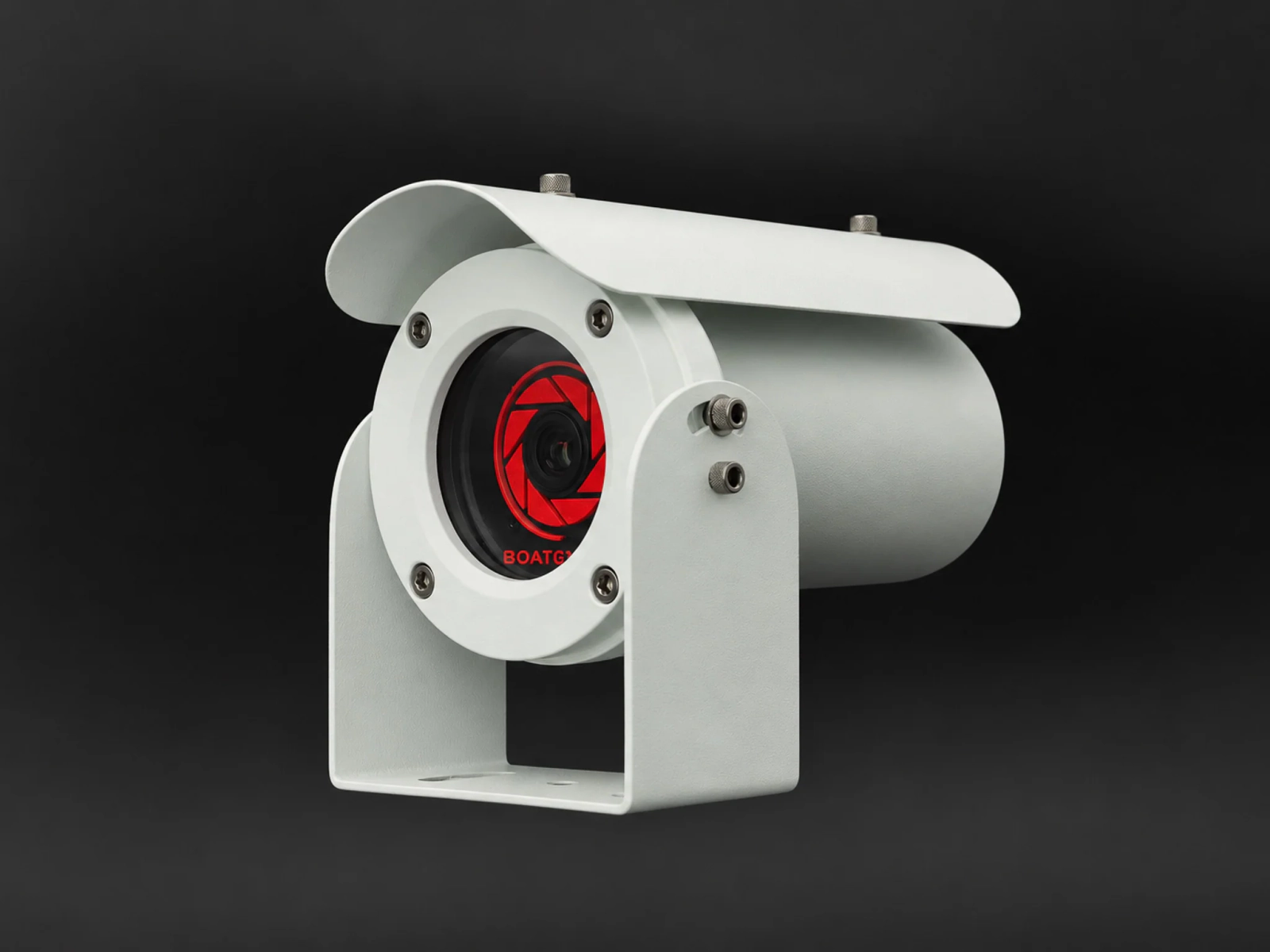
The original BoatEye360 full-colour low-light camera: the same 0.0001 lux sensor as the V2 in a larger 316L stainless housing, with HDMI and analog output, at a lower price.
Explore →
Push-to-talk radio that uses 4G mobile networks where there is coverage and a built-in 16-channel analog radio where there is none, with GPS and SOS. Sold as a two-pack.
Explore →
Metal-bodied 4G push-to-talk radio with GPS and SOS in the GPS variant and a lifetime SIM plan included. Sold as a two-pack.
Explore →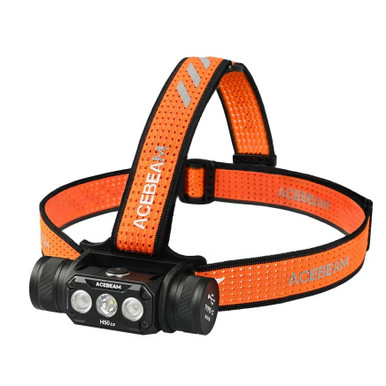
A 2000 lumen headlamp with spot and flood beams, rated IP68 and submersible to 2 metres, with a 141 metre beam and up to 30 hours on low.
Explore →