Loading this page…

Loading this page…
Sailing club
The only keelboat club on Botany Bay, racing and cruising from Sans Souci since 1963–64. Volunteer-run, with 180+ members and around 75 yachts sailing Kogarah Bay, Botany Bay and the Georges River.
About
The only keelboat club on Botany Bay, racing and cruising from Sans Souci since 1963–64. Volunteer-run, with 180+ members and around 75 yachts sailing Kogarah Bay, Botany Bay and the Georges River.
Service area: Sans Souci, NSW
Keep exploring
Botany Bay Yacht Club carries a distinction no other club on the bay can match: by its own account the only keelboat club on the whole of Botany Bay, a fact that has defined its character since a handful of yacht owners began racing each other out of Sans Souci in the summer of 1963–64. Sixty seasons on, the not-for-profit, volunteer-run club counts more than 180 members and around 75 registered yachts — moored keelboats, lift-keelers and sports boats, most drawing under 1.8 metres — racing and cruising on the enclosed waters of Kogarah Bay, Botany Bay and the Georges River. The membership is drawn largely from the southern Sydney suburbs around the Georges River, and a long-term member's testimonial calling it simply the friendliest club around sets the tone; with no restaurant or bistro, the social engine is the clubhouse bar, the Friday-night barbecue and the balcony over Kogarah Bay.
Everything about the place nods deliberately to where it sits. The address is Endeavour Street, the blue burgee carries HMS Endeavour, and the club leans into the heritage of Cook's April 1770 landing just across the bay. Racing runs eleven months of the year across four distinct series, and the cruising fleet heads out on the last Sunday of every month. Club yachts also travel outward — to the Sydney Harbour Regatta, Wollongong's Coal Classic and Cronulla's Navigators Cup — and the annual Blue Book records every result.
Accessible keelboat sailing on sheltered water, rather than grand prix theatre, is the promise, and Australian Sailing's 2024 club profile found a club delivering exactly that.
The distinctive feature of sailing development at BBYC is that it runs on a partnership model. Rather than staffing its own school, the club hosts AusSea Sailing School, a commercial Australian Sailing school based at the clubhouse — barely twenty minutes from the Sydney CBD — which handles formal tuition while the club concentrates on what happens after the lessons stop.
For newcomers who want to try crewing or racing before committing, the club offers the SailPass introductory membership, a low-friction way onto a rail that has turned plenty of curious sailors into regulars. Junior dinghy training in the area is handled by the neighbouring Kogarah Bay Sailing Club at Blakehurst, leaving BBYC focused squarely on keelboats.
Development here happens through racing, and the structure is unusually thoughtful. Saturday afternoons rotate through three formats that each teach something different: the Bay Series sails Olympic-style courses, the Sprint Series runs sharp windward-leeward races, and the Transit Series is a handicap-start pursuit around fixed marks starting and finishing off the clubhouse — a format that builds navigation sense and time-on-distance judgement without start-line pressure. Friday-evening twilight racing fills the daylight-saving months, and the calendar runs eleven months: a September-to-May regular season, a June–July Winter Series, then an August pause for slipping and maintenance.
The cruising program doubles as the club's finishing school for seamanship. On the last Sunday of each month the fleet heads for La Perouse or Towra Point, goes whale-watching off the Botany Bay heads in season, or makes longer passages down to Port Hacking or up the coast to Sydney Harbour and Pittwater, with local cruises ending at a barbecue on the clubhouse balcony. Results, courses and records are kept digitally and preserved in the club's annual Blue Book, a small tradition that keeps standards and memories intact.
The clubhouse stands at 44 Endeavour Street in Sans Souci, fronting the eastern shore of Kogarah Bay — a broad embayment of the Georges River where it opens into Botany Bay. For racing sailors the setting is close to ideal: enclosed, uncrowded water that allows accurate courses whatever the wind direction, with little land interference to make the breeze streaky or confused. Race officers can set fair tracks in conditions that would have open-coast venues reaching for the postponement flag, which helps explain the club's eleven-month season.
Practical depth governs the fleet. The deepest draft boat in the club draws about 2.4 metres and most are under 1.8, and racing yachts heading out must thread the Captain Cook Bridge's middle three spans, where clearance is 16.6 metres above high-water spring tide — a neat natural filter that keeps the fleet in the sports-boat and moderate-keelboat range. The on-water facilities cover every need: pontoons and two club tenders, a hardstand, hot showers, parking for full members, and a clubhouse whose balcony over the bay hosts the post-cruise barbecues and Friday-evening gatherings.
A genuine working boatyard shares the site. Commercial tenant Endeavour Boatshed operates a slipway for vessels up to eighteen tonnes, a hardstand crane and moorings, with full members saving ten per cent on slipping, and sailmaker Herrick Sails works on-site for new sails and repairs — a level of marine trade support most volunteer clubs can only envy. Beyond the bay, the context is pure Australia: Cook's 1770 landing place, the Towra Point wetlands and nature reserve next door, and the Captain Cook Bridge carrying Taren Point Road across the Georges River on the bay's western edge.
The club began, as so many good ones do, with a private grudge. In late 1963 a challenge match between Reg Gardner's Thunderbird and Alan Hearne's Bluebird pulled a circle of friends together as an informal fleet of about seven boats; the first recorded club race followed on 19 January 1964 with nine yachts entered, and the club was formally established that March. Growth was immediate — roughly twelve boats and 35 members by August 1964, and around thirty yachts and a hundred members by the middle of the decade.
The pivotal decision came in 1972, when the club bought the Endeavour Boat Shed in Sans Souci — a working boatshed dating to the 1870s, with over a hundred years of building, repair, sales, hire and chandlery behind it. Botany Bay Yacht Club Ltd was incorporated concurrently to hold the premises, securing the club's waterfront forever. A major redevelopment in 1985 delivered the two-storey clubhouse along with the hardstand, wharf and pontoon that members use today.
A small mystery from the era endures at the foot of Endeavour Street: an anchor monument set in concrete, found by local mussel farmer Paul Jensen and placed outside the boatshed with a plaque dated May 1973, remains a noted local curiosity.
Milestones have stacked up steadily since. The club marked fifty years of sailing in 2014 and celebrated its sixtieth season in 2024, when Australian Sailing profiled it as a club in focus under Commodore Karen Ballantyne, Vice Commodore Phil Widders and Rear Commodore Dimitrios Houridis. The sailing record speaks quietly but broadly — the club notes that many current and past members have taken out regional, state, national and world skiff or yacht titles, that members regularly cruise the east coast, and that some have circumnavigated the globe.
From a two-boat challenge to the only keelboat club on Botany Bay, the Endeavour Street outfit has kept its founding mix of competition and companionship intact for six decades.
Batemans Bay and the Clyde River form a classic NSW South Coast cruising region where a sheltered, tidal estuary meets a short, island‑dotted entrance to the Tasman Sea. It’s distinctive for easy access from Canberra, a mix of river and bay sailing, a compact marina and mooring network, and a river entrance (the Clyde River bar) that can change rapidly. The area suits day sails, weekend cruising, trailer‑boat exploration and sheltered coastal passages; offshore or long‑passage plans require careful timing and local knowledge. Preparation for tidal flow, variable southerly swells and shallow, s

Use ramps and beaches with respect for local conditions: check ramp layout, tide and swell, wind direction, vehicle access and crowding; prepare boat and crew before you launch or retrieve; and follow local signage, courtesy and safety practices. Specifics vary by ramp and beach, so confirm details for the exact site before you go.
Explore →
Look for a friendly club with beginner-focused training, accessible facilities and boats, a supportive community, clear safety practices, and opportunities to progress at your own pace.
Explore →
Late spring to summer is usually the best time for beginners to start learning to sail in Tasmania because the weather is generally warmer, days are longer and conditions are often more settled. Expect lighter to moderate winds with regular afternoon sea breees in summer, while spring and autumn bring more changeable and sometimes stronger conditions; winter is colder, wetter and typically windier with more fronts and swell.
Explore →
Pick a protected bay, estuary or river reach where you can rig, launch and arrive on calm water within a short, sheltered transit; choose a site with a good ramp or jetty, clear recovery options and a nearby sailing club, marina or commercial operator for local knowledge and help.
Explore →A practical guide for recreational sailors planning day sails or short cruises around Batemans Bay, Broulee and the Clyde River. Covers local conditions, safe approaches, anchorages, launching, tides, common hazards, and checklists for trip planning and on-water decisions.
Explore →Practical guide for recreational sailors navigating the Swan River and coastal waters around Perth. Covers local weather patterns, tides and currents, river navigation, launching and berthing options, safety equipment, common hazards, and step-by-step pre-departure and on-water checklists tailored to Western Australian
Explore →Practical guide for recreational sailors planning passage on the Hawkesbury River: how to plan around tides, choose anchorages, read local conditions and prepare the boat and crew for a safe, comfortable trip.
Explore →
A practical, Australia-focused guide for planning and sailing around the Whitsunday Islands: weather and seasons, navigation and anchoring, moorings and parks, provisioning and charters, safety and common mistakes, plus checklists and next steps.
Explore →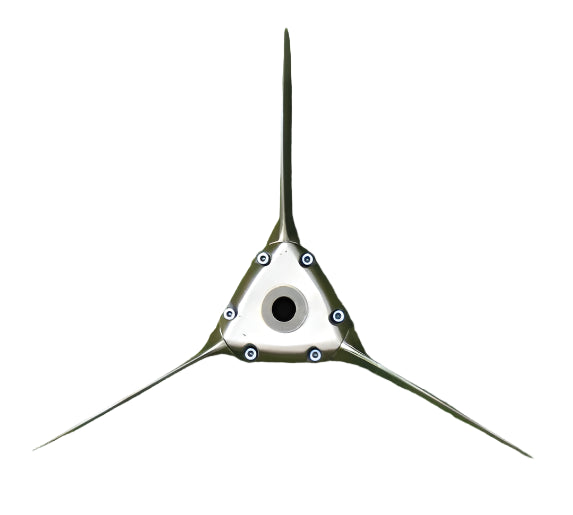
Feathering propeller designed for larger cruising yachts. Diameter range 18"–25"; shaft range 1¼"–1¾"; hub lengths 120mm or 165mm (with anode). Sail drive option available.
Explore →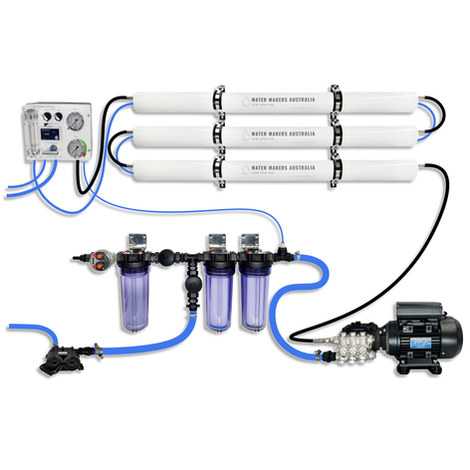
A three-membrane modular watermaker with 200 L/h nominal output and up to 240 L/h family-level marketing, for larger crews and heavy use.
Explore →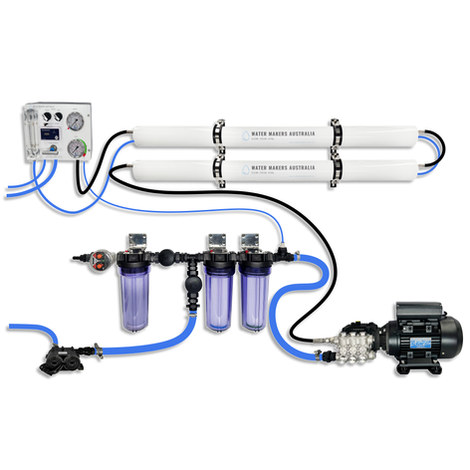
A two-membrane modular watermaker with 140 L/h nominal output, aimed at families and liveaboards that want more water per run.
Explore →Burke Yachtsman Gear Bag 40L - Shop Now Zip Pay | Tamar Marine Skip to content 59 – 63 Holbrook Street, Invermay Online Shop Open 24/7 Products search Contact us 1300 MARINE $ 0.00 0 Cart Burke Yachtsman Gear Bag 40L $ 79.90 Colour Choose an option Black Blue Black Blue Clear - Burke Yachtsman Gear Bag 40L quantity + Add to cart Enquire about this product SKU BAGB-Y24/BLACK* Category Bags - Sail & Gear A Burke classic and customer favourite, the Yachtsman’s Gear Bag is built tough to handle wet, salty conditions while keeping your gear dry and protected. Made from double coated waterproof…
Explore →