Loading this page…

Loading this page…
Sailing club
Carcoar Dam Sailing Club (CDSC) is a small, family-oriented sailing club on Carcoar Dam in the Central West of New South Wales. Established at the dam in 1973, the club runs Sunday racing and social sailing in the warmer months, an annual March regatta, community open days and accredited Learn to Sail programs backed by Australian Sailing Discover Sailing Centre status. The clubhouse is off-grid and the site includes basic amenities and unpowered camping for visiting sailors.
About
Carcoar Dam Sailing Club (CDSC) is a small, family-oriented sailing club on Carcoar Dam in the Central West of New South Wales. Established at the dam in 1973, the club runs Sunday racing and social sailing in the warmer months, an annual March regatta, community open days and accredited Learn to Sail programs backed by Australian Sailing Discover Sailing Centre status. The clubhouse is off-grid and the site includes basic amenities and unpowered camping for visiting sailors.
Service area: Carcoar Dam / Central West NSW
Keep exploring
There is no mains electricity at Carcoar Dam Sailing Club — not a single 240-volt outlet — and the members would have it no other way. The clubhouse on the shore of Carcoar Dam, in the Central West between Orange and Blayney, runs entirely off-grid on a septic system, with hot showers, a kitchen, a barbecue and a camping ground for visiting sailors, all wrapped in native bush overlooking the water.
It calls itself, without a flicker of irony, a humble club, and the friendly, family atmosphere draws its almost sixty members from Orange, Blayney, Bathurst and the wider Central West. As the only sailing club in the Blayney shire and the home base of Sailability Central West, it carries a community responsibility well beyond its size.
The sailing itself is gloriously unpretentious. Racing and social cruising share every Sunday through the warmer months, and the fleet takes all comers — catamarans and monohulls, dinghies through to trailer-sailors. The Club Championship plays out across Spring, Summer and Autumn series, and the season is bookended by rituals that tell you everything about the place: a Santa visit at the December sail, and a twilight barbecue and bonfire where championship awards are handed out at season's end.
The signature fixture is the annual CDSC Regatta each March, a two-day affair with a regatta dinner at the clubhouse and unpowered camping trackside, and members return the favour by travelling to the neighbouring inland regattas at Wallerawang and Oberon. Inland sailing, country style, is the whole proposition.
The big news at Carcoar is that training has just gone professional. The club recently secured Australian Sailing Discover Sailing Centre accreditation — a landmark for a club of this size — with five members freshly qualified as sailing instructors to get Learn to Sail programs going for both adults and children, scheduled to begin in late 2026. A NSW Sport grant application aims to maintain the training fleet and add two larger training boats, and Commodore Ren Reimers is herself an accredited Australian Sailing Coach, giving the program credentialed leadership at the top. For a self-described humble club, it is a serious statement of intent.
The fleet backing that ambition is already on hand. Members have use of club dinghies — Lasers, Spirals and Open Bics — along with windsurfers, kayaks and a rescue boat, and the club runs the Australian Sailing Powerboat Handling Certificate plus Safety Boat Operator courses, building the volunteer skills that keep country sailing safe. Sailability Central West operates through the club, extending access to sailors with disabilities, and each November's Open Day throws the gates wide with demonstration sails, a coffee cart, a sausage sizzle and membership enquiries — with a Sailability day proposed in the 2025–26 season.
On Sundays through the warmer months, training blends seamlessly into participation: racing and social cruising from ten in the morning, a Club Championship spread across the seasonal series, and a deliberately inclusive fleet policy where catamarans, monohulls and trailer-sailors all start together. The annual regatta — three races Saturday, two on Sunday, early-bird entry at fifty dollars a vessel, dinner at the clubhouse — gives developing sailors a genuine event to aim at, and the away trips to Wallerawang and Oberon expose members to fleets and waters beyond their own dam.
Carcoar Dam sits on the Belubula River, about six kilometres east of historic Carcoar village and roughly fifty-five kilometres south-west of Bathurst — around 260 kilometres west of Sydney by the Great Western and Mid Western highways. The dam holds about 36,000 megalitres and covers 385 hectares when full, a long, narrow lake of roughly five square kilometres built for irrigation, stock and household supply across the Belubula Valley's lucerne, pasture and cereal country. The wall itself is worth the drive: a rare thin double-parabolic concrete arch, 187 metres long and 52 metres high, with a spillway running the entire crest.
The club occupies a site just off Carcoar Dam Road, with a boat ramp about a kilometre north of the wall, a clubhouse with kitchen, hot showers, amenities and barbecue, and a camping ground for visiting sailors — all of it completely off-grid, which lends regatta weekends a campfire-and-stars quality no coastal club can replicate. A wind farm turns on the ridges overlooking the dam, and the surrounding native trees frame long views down the water.
Conditions reward the adaptable sailor. The water runs very cold — WaterNSW advises it is unsuitable for swimming — and strong northerlies can turn the exposed lake genuinely rough, so when Carcoar sailors travel to other venues they arrive well-schooled in heavy air. The lake shares its surface happily with water skiers, jet skis, canoeists and fishers chasing stocked Murray cod, golden perch, silver perch and trout, with free foreshore camping nearby.
The one adversary is drought: low water once silenced the club's regatta for more than seven years, and lake level remains the first topic of clubhouse conversation. When the dam is full and a northerly is building, though, there are few inland venues to match it.
The club's story begins not at Carcoar but at Lake Canobolas, Orange, where its predecessor sailed through the 1960s. When Carcoar Dam — construction started 1969, completed 1970 — filled on the Belubula River, the club followed the water, relocating in 1973 and taking the name Carcoar Dam Sailing Club. It has sailed the dam ever since, making 1973 the date the club itself headlines as its establishment, just three years after the wall was finished.
Inland clubs live and die by rainfall, and Carcoar's hardest stretch came with the drought years, when minimal water levels kept the lake barely sailable and the club's regatta disappeared for more than seven years. The comeback, when it arrived, was emphatic: over the weekend of 25–26 February 2012 the club staged its first regatta in more than seven years, drawing more than forty boats for five races across four classes — including the Maricat National Titles — with about eighty people attending and many camping on site.
Ash and Andrew Diver, the latter a past club junior, organised the event with Jono and Ian, under then-Commodore Don MacLennan, and a roll-call of Central West businesses from Dairy Park to Canobolas Caravan & Marine chipped in as sponsors. It remains the template for the club's March regatta today.
The most recent chapter has been about consolidation and growth. Under Commodore Ren Reimers and Vice Commodore Ash Johnson, the club achieved Australian Sailing Discover Sailing Centre accreditation, put five members through instructor qualifications and laid plans for Learn to Sail programs from late 2026, backed by a grant application for new training boats. Sailability Central West operating through the club has deepened its community role, and the November Open Day has become a fixture.
From a 1960s lake club that packed its boats and followed a new dam into the hills, Carcoar Dam Sailing Club has grown into the sailing hub of the Blayney district — proof that drought, distance and an absent power bill are no obstacles to a determined country club.
American River (Kangaroo Island, SA) is a small, sheltered inlet and township on the north‑eastern side of Kangaroo Island that acts as a calm staging point for cruising the eastern part of the island and for short hops through Backstairs Passage. It’s distinctive for its protected anchorage inside Eastern Cove and the adjacency of Pelican Lagoon — a shallow, ecologically important lagoon with sanctuary zoning — which shapes how and where boats can move. The area suits sheltered day sailing, weekend cruising and short coastal passages; it’s appropriate for trailer sailors, small cruisers and a

Expect very different seasonal systems across Western Australia: the south‑west (Perth to Albany) has a strong summer afternoon sea breeze (the “Fremantle Doctor”) and winter westerly fronts, while northern WA follows a wet/dry monsoonal cycle with strong seasonal onshore winds, thunderstorms and cyclone risk in the wet season. Local headlands, estuaries and tidal flows often change what you actually feel on the water, so learn the local timing and sheltered venues first.
Explore →
Look for a friendly club with beginner-focused training, accessible facilities and boats, a supportive community, clear safety practices, and opportunities to progress at your own pace.
Explore →
Expect the usual IALA-B lateral system (red and green), cardinal and isolated-danger marks, safe-water and special marks, plus harbour-specific fairway buoys, leading/transit marks and exclusion or speed‑limit buoys. Check local harbour charts and Notices to Mariners for exact positions and light characteristics before entry.
Explore →
Pick a stable, simple, forgiving dinghy with a single sail or basic sloop rig, affordable handling and easy maintenance—ideally one with a local class or school nearby so you can access coaching and spare parts.
Explore →
A practical guide for new sailors on picking the right Australian sailing club: training, boat access, racing, social fit, costs and the key questions to ask before joining.
Explore →A practical guide to preparing, planning and executing a recreational offshore passage along the New South Wales coast. Covers route selection, weather and tidal considerations, vessel and crew checks, safety equipment, communication, watchkeeping and common mistakes, with clear pre‑departure and underway checklists.
Explore →A practical guide to selecting and using anchorages around New South Wales for cruising sailors. Covers sheltered bays, tidal considerations, holding, approach planning, and example anchorages with local conditions to check before you go.
Explore →Practical guidance for recreational sailors in New South Wales on navigating marine parks, using moorings and anchoring responsibly. Covers how to plan passages, approach moorings, set and retrieve an anchor, minimise environmental impact and follow local rules.
Explore →Burke Yachtsman Gear Bag 40L - Shop Now Zip Pay | Tamar Marine Skip to content 59 – 63 Holbrook Street, Invermay Online Shop Open 24/7 Products search Contact us 1300 MARINE $ 0.00 0 Cart Burke Yachtsman Gear Bag 40L $ 79.90 Colour Choose an option Black Blue Black Blue Clear - Burke Yachtsman Gear Bag 40L quantity + Add to cart Enquire about this product SKU BAGB-Y24/BLACK* Category Bags - Sail & Gear A Burke classic and customer favourite, the Yachtsman’s Gear Bag is built tough to handle wet, salty conditions while keeping your gear dry and protected. Made from double coated waterproof…
Explore →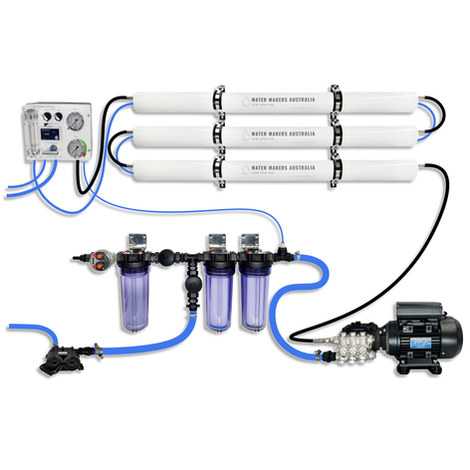
A three-membrane modular watermaker with 200 L/h nominal output and up to 240 L/h family-level marketing, for larger crews and heavy use.
Explore →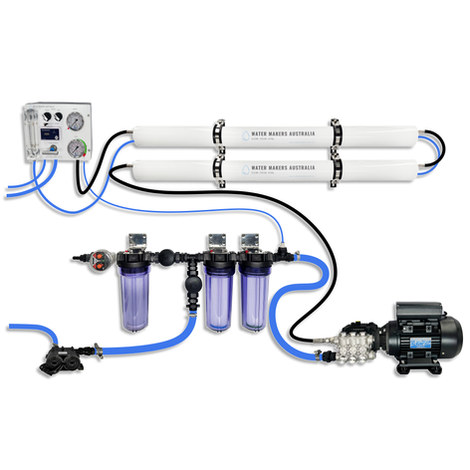
A two-membrane modular watermaker with 140 L/h nominal output, aimed at families and liveaboards that want more water per run.
Explore →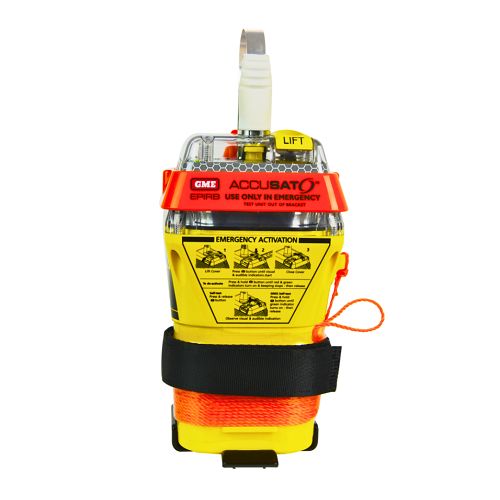
A 10‑year battery EPIRB with integrated GNSS (supports GPS and Galileo), infrared strobe and 121.5 MHz homing signal. Approved for worldwide COSPAS‑SARSAT operation.
Explore →