Loading this page…

Loading this page…
Sailing club
Chipping Norton Lake Sailing Club is a community-focused dinghy sailing club on Chipping Norton Lake in south‑west Sydney. Established in 1995 and operating from the Lakes Boat Shed at Angle Park, the club runs regular Saturday afternoon racing, volunteer-led learn-to-sail programs for juniors and adults, Sailability and an Access dinghy for sailors with disability, and a strong social culture centred on post-race barbecues and fundraising.
About
Chipping Norton Lake Sailing Club is a community-focused dinghy sailing club on Chipping Norton Lake in south‑west Sydney. Established in 1995 and operating from the Lakes Boat Shed at Angle Park, the club runs regular Saturday afternoon racing, volunteer-led learn-to-sail programs for juniors and adults, Sailability and an Access dinghy for sailors with disability, and a strong social culture centred on post-race barbecues and fundraising.
Service area: Chipping Norton, south‑west Sydney (Liverpool LGA)
Keep exploring
Chipping Norton Lake Sailing Club is a community sailing club on Chipping Norton Lake (NSW) offering organised sailing activity and member programs. The club runs Learn to Sail courses for adults and juniors, hosts races and events, provides venue-hire opportunities, and promotes volunteering and membership. Contact options are listed on the club website for lessons, try-outs and enquiries.
Volunteer instruction is in this club's DNA, and it has the credentials to prove it. Chipping Norton Lake was historically an Australian Yachting Federation-approved training centre, endorsed for learn-to-sail and coaching across dinghies and catamarans as well as TL3 powerboat courses with rescue boat endorsement — a broad brief delivered entirely by qualified volunteers, with instruction on Saturday mornings through the warmer months. The quality of that volunteer corps was recognised at the highest level when club instructor Wayne Loder was named a finalist in the Instructor of the Year category at the 2019 NSW/ACT State Sailing Awards.
The entry points are deliberately low-friction: Learn to Sail courses for adults and juniors, free try-out sessions for the curious, and the SailPass introductory membership for newcomers edging towards racing. The junior fleet has a genuinely resourceful backstory — early on, the club arranged to maintain and insure eight Puffin Pacer dinghies owned by All Saints Catholic Boys College in exchange for their use, then bought the eight Pacers and a powerboat outright in 2001 for $1,000, payable over four years. Federal grant funding added further junior boats, including an Access dinghy for sailors with disabilities, and Sailability's presence on the lake keeps the pathway open to everyone.
Graduates move straight into a racing structure built for development. The season's three short series let sailors reset and rebuild between blocks, with championship divisions — NS14, Laser, Open and Pacer — with results scored on Scratch, Yardstick and Corrected Time so every boat has a live chance. Unusually, separate trophies are awarded for skippers and for crews, honouring the people on the wire as well as the helm; the Autumn series has drawn up to twenty entries a race in open handicap. From free try-out to Saturday pointscore, the ladder has no missing rungs.
The club sails from the Lakes Boat Shed at Angle Park, on Ascot Drive, Chipping Norton — a two-storey facility built with a Federal Government grant made to the Chipping Norton Lakes Authority, topped up with council money, with the club leasing the ground floor from Liverpool Council and the upper floor available for community hire. Races start and finish at the gazebo on Ascot Point, funded by a Sport & Recreation grant in 2002. The lake itself is a man-made sheet of freshwater on the Georges River, created by the sand-mining operations that ran through the suburb from the 1960s to the 1980s; once mining wound up, the Chipping Norton Lakes Authority reshaped the landscape with native plantings for passive recreation.
The waterway forms part of the Chipping Norton Lakes Scheme, run by the state Authority, with the Fairfield, Bankstown and Liverpool councils holding the land in trust, and the naming of the lakes honoured both early settlers and Aboriginal names. Sailing, canoeing and rowing groups share the water recreationally, with additional boating access points at Wharf Road Lansvale, Dowling Beach on Floyd Bay and Lawrence Beach on Dhurawal Bay. The lake even hosts a devoted radio-controlled yacht scene through the Harrington Park Radio Yacht Club — a measure of how friendly the enclosed water is to anything with a sail.
For racing, an enclosed freshwater lake brings its own pleasures: flat water, courses set without sea or swell, and the tactical challenge of reading breeze filtered through lakeside parkland. At roughly thirty kilometres south-west of the Sydney CBD, the venue gives the families of Liverpool, Fairfield and Bankstown a sailing club on their doorstep — no tide tables, no coastal bar, just a rigging lawn, a duty boat and a starting gazebo on a Saturday afternoon.
The club began with a meeting of Liverpool-area locals, among them John and Lee Bowles, who saw potential in the newly created lake and incorporated on 18 January 1995 as the Liverpool Boating Association. Racing commenced around September that year after a newspaper notice invited people down for a test sail in club boats, and momentum came quickly: an open regatta in October of that year attracted 18-foot skiffs, B14s and assorted other classes across a full weekend. The early fleet was gloriously mixed — Lasers, Leaders, NS14s, 420s, Sabres, Fireballs, Enterprises, Flying 11s, catamarans and trailer sailors all graced the lake.
The name evolved as the identity settled. In 2001 the association became the Liverpool Boating Association Chipping Norton Lake Sailing Club, and on 10 January 2002 it adopted the cleaner Chipping Norton Lake Sailing Club Inc. Practical milestones marked the same period: the move into the purpose-built Boat Shed at Angle Park, the ingenious Pacer arrangement with All Saints Catholic Boys College culminating in the 2001 purchase of the eight Pacers plus a powerboat for $1,000 over four years, a 2002 grant for the Ascot Point gazebo where races still start and finish, and a 2014 Sport & Recreation grant for a new duty boat complete with trailer, motor and bimini.
Over three decades the club has staged regattas and state championships on the lake, and its sailors have raced at state, national and international level, in the club's words, with some great success. Individual stories give that claim texture — Jim Ley, the former NSW OK Dinghy champion and 1973 OK Dinghy Worlds campaigner who crossed from Botany Bay Yacht Club in 2011 and took the club championship in a twenty-eight-year-old Finn, and instructor Wayne Loder's state-award recognition in 2019.
The Spiral class brought a Travellers Trophy race to the lake in April 2019. Thirty years on, the club that grew from a newspaper notice and a borrowed fleet remains exactly what its founders imagined: south-west Sydney's community sailing club, run on membership fees, canteen sales and volunteer goodwill.
Bathurst Harbour (Port Davey system), in south‑west Tasmania, is a vast, almost land‑locked estuarine harbour inside the Southwest National Park and World Heritage Area. It offers a remote, sheltered anchoring environment protected from the Roaring Forties, but demands careful planning, an awareness of marine‑reserve rules, and a willingness to operate in shallow, tannin‑stained waters. Best suited to experienced coastal cruisers and small expedition yachts prepared for self‑sufficiency, Bathurst Harbour is more a place to linger and explore on foot and by tender than a port of call for busy,

Legal safety equipment for recreational boats in South Australia depends on the type, size and where you operate; you must check the current SA government requirements for your vessel. Independently of legal minimums, carry a sensible set of recommended items (lifejackets, means of communication, signaling, fire protection, anchor and basic tools) and make them usable and maintained.
Explore →
A regular, layered maintenance routine combining hull cleaning, targeted anti-fouling management, cathodic protection and systems checks will substantially reduce marine growth and corrosion for boats kept year‑round in South Australian waters. Focus on preventing attachment and electrochemical attack, then inspect and act more often if you’re in warm, nutrient-rich or high‑traffic sheltered waters.
Explore →
Do a seasonal inspection and servicing routine that focuses on hull and antifouling, through-hulls and seacocks, rigging and sails, engine and fuel systems, electricals and batteries, safety gear and bilge systems. Tailor exact tasks to your boat type, age and where you sail in South Australia, and follow manufacturer and marine service advice for anything technical.
Explore →
Look for a friendly club with beginner-focused training, accessible facilities and boats, a supportive community, clear safety practices, and opportunities to progress at your own pace.
Explore →
A practical guide for new sailors on picking the right Australian sailing club: training, boat access, racing, social fit, costs and the key questions to ask before joining.
Explore →
Buying a Sailing Boat
Explore →A practical guide for recreational sailors planning day sails or short cruises on Lake Macquarie. Covers the entrance, navigation considerations, popular anchorages, local weather and tide influences, mooring etiquette, safety checks and suggested itineraries around the lake.
Explore →Practical guide for recreational sailors planning passage on the Hawkesbury River: how to plan around tides, choose anchorages, read local conditions and prepare the boat and crew for a safe, comfortable trip.
Explore →Burke Yachtsman Gear Bag 40L - Shop Now Zip Pay | Tamar Marine Skip to content 59 – 63 Holbrook Street, Invermay Online Shop Open 24/7 Products search Contact us 1300 MARINE $ 0.00 0 Cart Burke Yachtsman Gear Bag 40L $ 79.90 Colour Choose an option Black Blue Black Blue Clear - Burke Yachtsman Gear Bag 40L quantity + Add to cart Enquire about this product SKU BAGB-Y24/BLACK* Category Bags - Sail & Gear A Burke classic and customer favourite, the Yachtsman’s Gear Bag is built tough to handle wet, salty conditions while keeping your gear dry and protected. Made from double coated waterproof…
Explore →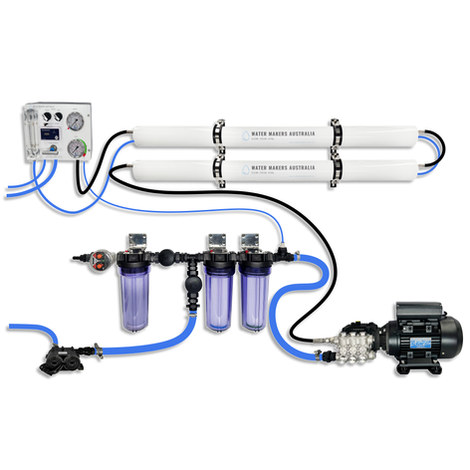
A two-membrane modular watermaker with 140 L/h nominal output, aimed at families and liveaboards that want more water per run.
Explore →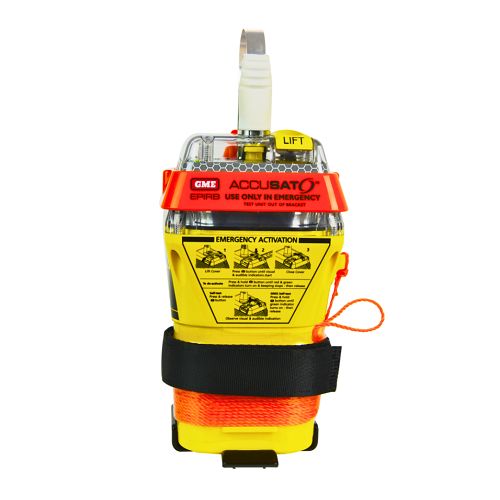
A 10‑year battery EPIRB with integrated GNSS (supports GPS and Galileo), infrared strobe and 121.5 MHz homing signal. Approved for worldwide COSPAS‑SARSAT operation.
Explore →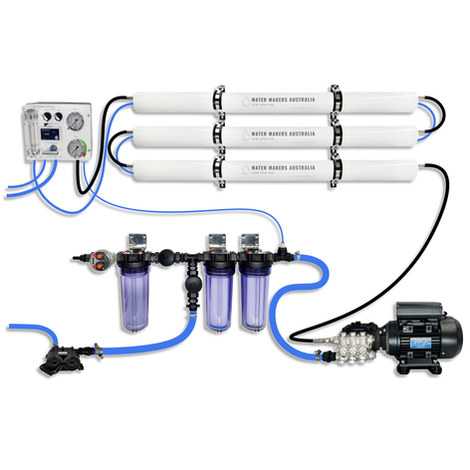
A three-membrane modular watermaker with 200 L/h nominal output and up to 240 L/h family-level marketing, for larger crews and heavy use.
Explore →