Loading this page…

Loading this page…
Sailing club
Clarence River Sailing Club (CRSC) is a volunteer-run dinghy and catamaran club based beside the Grafton Bridge on the Clarence River, Grafton NSW. The club runs a grass-roots Saturday racing programme from September to April, supports junior sailing with club-owned Open Bic trainers, admits visitors via SailPass and publishes results and notices on its official website.
About
Clarence River Sailing Club (CRSC) is a volunteer-run dinghy and catamaran club based beside the Grafton Bridge on the Clarence River, Grafton NSW. The club runs a grass-roots Saturday racing programme from September to April, supports junior sailing with club-owned Open Bic trainers, admits visitors via SailPass and publishes results and notices on its official website.
Service area: Grafton / Clarence River (Northern Rivers, NSW)
Keep exploring
Clarence River Sailing Club is a community sailing club based in Grafton on the Clarence River. The club runs an organised sailing season (September–April) with Saturday racing, posts race results and media on its website, and offers membership (including temporary SailPass) and event information. Contact details and location are published on the club site.
Junior sailing here has always run on boats the club owns outright — and the story of how it got its current fleet says plenty. From 1964 the training boat was the Sabot, many of the early ones built by members themselves; when that fleet grew long in the tooth, the club replaced it from 2011 with Open Bics, buying three initially and adding three more with the help of a government grant. Those six Bics are now the junior pathway, feeding young sailors up into the Lasers and catamarans that make up the Saturday racing fleet.
There is no evidence of a branded Tackers program or formal Discover Sailing Centre accreditation, so the model is the traditional country-club one: juniors learn in the club boats alongside racing families, graduating into fleet racing when they're ready. Adults and visitors are welcomed through SailPass, which lets a newcomer sail a handful of days before taking out full membership, and memberships themselves can be joined online with published terms for boat storage on the reserve by the bridge.
The racing calendar runs September to April, with starts at 1.00pm on Saturdays. What the club lacks in paid-course infrastructure it makes up for in depth of class knowledge — this is a place where members have designed and built their own boats, where a Moth called Tempest was drawn, constructed and sailed by the same man, Malcolm Eggins, who later wrote the club's 50-year history. Skills transfer here is personal, hands-on and intergenerational rather than syllabus-driven.
The clubhouse stands on a public recreation reserve at the corner of Kent and Fitzroy Streets, hard against the Grafton Bridge on the bank of the Clarence River. It's a working river town setting — the Clarence at Grafton is wide, tidal and deep enough to have shaped everything about how the club operates. The first shed on this site, completed in 1947, stood on piers of railway sleepers sunk into the mud, and at high tide the water flowed beneath the floor. Boats went in down a wooden ramp also built from sleepers; the 1970 rebuild added a concrete apron that made launching considerably easier.
The river itself is the venue and the challenge. Flood is the defining environmental fact here — the Clarence has twice destroyed the club's buildings, in 1945 when the original Scout's shed at Duke Street was swept away, and in March 2000 when silt built up on the clubhouse roof until it gave way. No formal wind or sea-breeze guide is published for the Grafton reach, but sailors work a tidal river with island marks: Susan Island and Elizabeth Island lie on the cruising ground documented by local Clarence sailors, giving courses real navigational texture.
Grafton is the major centre on the Clarence in Northern NSW, so the club draws from a genuine regional catchment rather than a suburb. The reserve frontage, the bridge overhead and the town behind make it a conspicuous, accessible base — sailing here is plainly visible to the community it draws from.
The founding meeting, in 1944, convened beneath a street light in Grafton's Duke Street, where W.M. Newman took the presidency, K.C. "Salty" Seller keeping the books and J.B. Murdock the minutes. Seller's own introduction to sailing had come around 1935 in a cedar-planked skiff called DY, moored near the old baths at the bottom of Duke Street. Pre-war the river carried plenty of informal sail — flat-bottomed punts, cedar and pine skiffs, fishing boats under canvas — but the war saw most of them impounded and abandoned to rot in a paddock at Calliope. When late-war social sailing turned competitive, an organised club was the obvious next step.
The first boats were kept in a Scout's shed at Duke Street's far end, the fleet running to VJs, VSs and 12- and 16-foot skiffs. A 1945 flood disposed of that shed; the club applied to council for a site near the bridge, gaining permission on 5 October 1945, and the new shed — funded by local business donations and volunteer labour — was finished by August 1947. A 1946 motion standardised new boats as VJs and VSs, and by the 1950s fourteen VJs and sixteen VSs were registered, racing hard against Richmond River and Manning River clubs.
Class evolution marks the decades: the Moth in 1962, the NS14 as senior monohull in 1963–64 after Frank Bethwaite and Rodger Smith brought their boats to Grafton for a demonstration, catamarans and the Sabot from 1964, Lasers in 1993 with Tony Smith's purchase of Rawhide. The dilapidated original shed was demolished in 1970 for a rebuild with starter's tower, canteen and concrete apron. Then came the March 2000 flood, which destroyed the clubhouse entirely; the building used today rose on the same footprint with council and state flood-recovery assistance. Malcolm Eggins's 1994 book Clarence River Sailing Club – 50 Years records the first half-century.
A detailed sailing guide to the Tollgate Islands area on the NSW south coast, focused on Batemans Bay, the Clyde River entrance and nearby sheltered waters. The guide explains geography, typical conditions, principal sailing zones, anchorages and moorings, facilities ashore and practical arrival notes. It highlights local hazards — exposed heads, shifting sand, bird-protection restrictions and commercial traffic — and outlines local rules and responsible-access requirements. Several suggested sailing experiences are provided for day sailors, weekend cruisers and passagemakers, with clear notes

Look for a friendly club with beginner-focused training, accessible facilities and boats, a supportive community, clear safety practices, and opportunities to progress at your own pace.
Explore →
Late spring to summer is usually the best time for beginners to start learning to sail in Tasmania because the weather is generally warmer, days are longer and conditions are often more settled. Expect lighter to moderate winds with regular afternoon sea breees in summer, while spring and autumn bring more changeable and sometimes stronger conditions; winter is colder, wetter and typically windier with more fronts and swell.
Explore →
Legal requirements can change — check Transport for NSW for the current rules. As a practical baseline for coastal day sailing from NSW shores: keep the right number and type of lifejackets for everyone, have a means of calling for help, show navigation lights if you’ll be out after dusk, and carry basic items to manage a man‑overboard or abandon‑ship situation. Add anchor, bilge/bailer, sun/protection and basic repair kit as recommended items.
Explore →
Pick a protected bay, estuary or river reach where you can rig, launch and arrive on calm water within a short, sheltered transit; choose a site with a good ramp or jetty, clear recovery options and a nearby sailing club, marina or commercial operator for local knowledge and help.
Explore →
A practical guide for new sailors on picking the right Australian sailing club: training, boat access, racing, social fit, costs and the key questions to ask before joining.
Explore →Practical guide for recreational sailors planning passage on the Hawkesbury River: how to plan around tides, choose anchorages, read local conditions and prepare the boat and crew for a safe, comfortable trip.
Explore →A practical guide for recreational sailors planning visits to Albany and King George Sound. Covers the main anchorage areas, typical local weather patterns, tidal and current considerations, navigational hazards, on-the-water etiquette and a pre-departure checklist to help you plan a safe passage and enjoyable stopover
Explore →A practical guide for recreational sailors planning day sails or short cruises around Batemans Bay, Broulee and the Clyde River. Covers local conditions, safe approaches, anchorages, launching, tides, common hazards, and checklists for trip planning and on-water decisions.
Explore →Burke Yachtsman Gear Bag 40L - Shop Now Zip Pay | Tamar Marine Skip to content 59 – 63 Holbrook Street, Invermay Online Shop Open 24/7 Products search Contact us 1300 MARINE $ 0.00 0 Cart Burke Yachtsman Gear Bag 40L $ 79.90 Colour Choose an option Black Blue Black Blue Clear - Burke Yachtsman Gear Bag 40L quantity + Add to cart Enquire about this product SKU BAGB-Y24/BLACK* Category Bags - Sail & Gear A Burke classic and customer favourite, the Yachtsman’s Gear Bag is built tough to handle wet, salty conditions while keeping your gear dry and protected. Made from double coated waterproof…
Explore →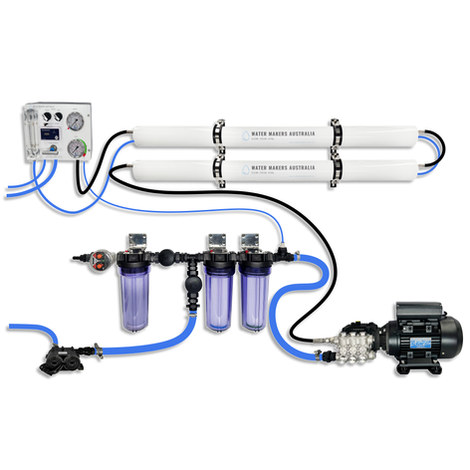
A two-membrane modular watermaker with 140 L/h nominal output, aimed at families and liveaboards that want more water per run.
Explore →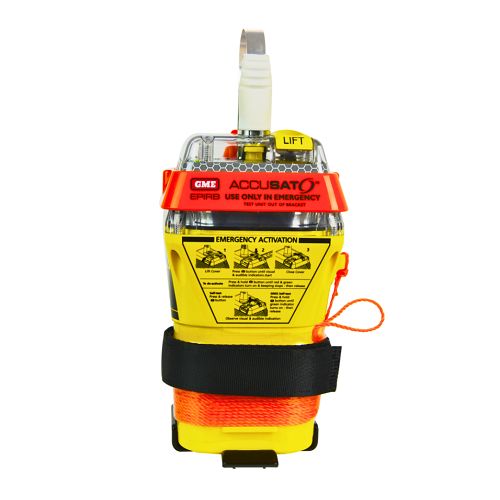
A 10‑year battery EPIRB with integrated GNSS (supports GPS and Galileo), infrared strobe and 121.5 MHz homing signal. Approved for worldwide COSPAS‑SARSAT operation.
Explore →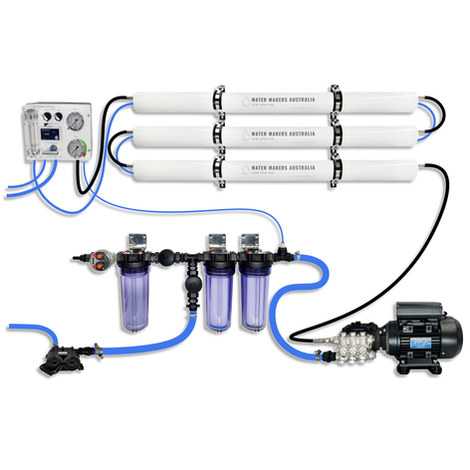
A three-membrane modular watermaker with 200 L/h nominal output and up to 240 L/h family-level marketing, for larger crews and heavy use.
Explore →