Loading this page…

Loading this page…
Sailing club
Clarence River Yacht Club (CRYC) is the keelboat- and trailer-sailer-focused club based at Grafton on the Clarence River, Northern New South Wales. The club runs a regular racing programme (twilight and weekend racing), an annual Easter regatta tied to the Highland Festival, social post-race events at its North Street clubhouse, and organised cruises along the lower Clarence from Grafton toward Yamba. CRYC publishes a Clarence Cruising Guide for the river and welcomes visiting yachts and beginner crew who want to learn by crewing on club racing and cruises.
About
Clarence River Yacht Club (CRYC) is the keelboat- and trailer-sailer-focused club based at Grafton on the Clarence River, Northern New South Wales. The club runs a regular racing programme (twilight and weekend racing), an annual Easter regatta tied to the Highland Festival, social post-race events at its North Street clubhouse, and organised cruises along the lower Clarence from Grafton toward Yamba. CRYC publishes a Clarence Cruising Guide for the river and welcomes visiting yachts and beginner crew who want to learn by crewing on club racing and cruises.
Service area: Clarence River: navigable stretches from Grafton downstream toward Yamba and Iluka
Keep exploring
Clarence River Yacht Club (CRYC) is a sailing and yacht club based in Grafton on the Clarence River in northern New South Wales. The club promotes membership-based sailing activities, camaraderie and skill development for recreational sailors, and publishes a Clarence Cruising Guide for the river. Contact details listed on the site include an email (secretary@cryc.com.au) and a phone number (0439 692 140).
Forget the standard dinghy-school ladder — what Clarence River Yacht Club offers instead is something rarer: an apprenticeship in river and coastal cruising, backed by its own published guide to the waterway. The club produces and distributes the Clarence Valley Mariners Guide, a cruising reference for the river, and within it appears the Yaegl Dreamtime story of Dirrangun, published with the approval of Elder Uncle Ron Heron. That combination of practical seamanship and genuine cultural engagement is not something many Australian clubs can claim, and it sets the tone for how knowledge passes between members here.
There are no formal Tackers, Start Sailing or keelboat courses on the record, and no Discover Sailing Centre accreditation — the club's own pitch is simpler: come along, whether you're an experienced sailor or a beginner, and learn some new skills. In practice that means learning crewed into a racing or cruising yacht: trimming on a twilight race, navigating the river's reaches, anchoring off a beach near Iluka on a club cruise.
The event calendar doubles as the development pathway. Weekly twilight racing gives newer crews low-stakes time on the water; the fortnightly Sunday competition sharpens skills; the annual Easter regatta, described to podcast listeners as a very big event, tests them against visitors. Two cruises were reported in late 2020 alone, and club boats made the traditional Australia Day passage to Yamba around that period. For a sailor whose ambition is coastal cruising rather than an Olympic-pathway dinghy career, this is a natural finishing school.
Few Australian clubs can call on a cruising ground like this one. The Clarence ranks as Australia's second-largest river system, running some 400 kilometres from source to sea, and the stretch navigable by yachts is roughly the final hundred kilometres from Grafton down to Yamba. It's a working port river — deep in places, with soundings of 30 to 50 feet, a big maintained channel to the port at Yamba, and coastal freighters and a tug to keep a helmsman honest. Keelboats cannot sail upstream beyond Grafton, which makes the town the natural head of navigation and the logical base for a yacht club.
The club operates from Corcoran Park, where a public jetty and wharf sit alongside fishing facilities, with public launching ramps strung along the Grafton foreshore. Its clubhouse stands in North Street, with a secure boat storage yard available to both members and visiting yachts — a practical asset for trailer-sailers arriving from elsewhere. Council's 2012 Open Space Strategic Plan formally records the club's Corcoran Park base.
Downstream, the river unfolds into genuine cruising country. The club's own material names the landmarks: The Gorge, Susan Island, Elizabeth Island, and The Pinnacles at Maclean, before the river widens toward its mouth between Yamba and Iluka. River and coastal cruising between those three towns is the club's stated stomping ground. For race officers the deep, broad lower reaches allow proper courses; for cruisers there are anchorages, island stops and a river town every so often. It's sailing country with a scale that harbour clubs simply can't replicate.
The club's own founding date isn't recorded in its public material — by one unverified inference it traces back to the mid-1980s, when a "Clarence River Yacht Club 25th Anniversary Regatta" was advertised on a trailer-sailer forum for a February around 2012, which would place the club's beginnings near 1986 or 1987. Treat that as indicative rather than confirmed; what's certain is that by 2010 the club was an established fixture, running a Classic Cruise and Race for trailer sailors that October and holding its anniversary regattas on the river.
The documented record firms up through council archives. Clarence Valley Council's 2012 Open Space Strategic Plan lists the club operating from Corcoran Park, and from 2019 onward the club appears as an active delegate on council's sports committee, with members including Max Dickson, Margy Dougherty and Alex Purvis representing it across several years of minutes. Those records show a small club punching methodically: reporting successful cruises, coordinating the Easter event alongside the Highland Festival, and in 2026 reporting two break-ins at the club yard — the unglamorous reality of maintaining boats and gear on a public foreshore.
The clearest portrait of the racing scene comes from 2016, when Andrew Randell described the club's programme on the Ocean Sailing Podcast: weekly twilight racing, competitive starts about every second Sunday, roughly a dozen yachts on a race day from a pool of 25 to 30, and the big Easter regatta. Cruising culture was documented in council minutes around 2020–21, including the Australia Day run to Yamba. Through it all the North Street clubhouse has served as the social anchor — the venue for post-race dinners that visiting sailors still mention years later.
Batemans Bay and the Clyde River form a classic NSW South Coast cruising region where a sheltered, tidal estuary meets a short, island‑dotted entrance to the Tasman Sea. It’s distinctive for easy access from Canberra, a mix of river and bay sailing, a compact marina and mooring network, and a river entrance (the Clyde River bar) that can change rapidly. The area suits day sails, weekend cruising, trailer‑boat exploration and sheltered coastal passages; offshore or long‑passage plans require careful timing and local knowledge. Preparation for tidal flow, variable southerly swells and shallow, s

Use ramps and beaches with respect for local conditions: check ramp layout, tide and swell, wind direction, vehicle access and crowding; prepare boat and crew before you launch or retrieve; and follow local signage, courtesy and safety practices. Specifics vary by ramp and beach, so confirm details for the exact site before you go.
Explore →
Keep a pet on board by establishing daily cleaning, weekly deep-clean, and regular pest-control routines; focus on waste management, ventilation, washable bedding, food storage and hull inspection to prevent fouling, odour and pests.
Explore →
A regular, layered maintenance routine combining hull cleaning, targeted anti-fouling management, cathodic protection and systems checks will substantially reduce marine growth and corrosion for boats kept year‑round in South Australian waters. Focus on preventing attachment and electrochemical attack, then inspect and act more often if you’re in warm, nutrient-rich or high‑traffic sheltered waters.
Explore →
Watch for shallow entrance bars, shifting sandbanks and channels, tidal streams that accelerate through narrow channels or around headlands, drying mudflats and sills that expose at low water, and localised eddies or overfalls — and always confirm conditions for the specific estuary before you enter.
Explore →A practical guide to preparing, planning and executing a recreational offshore passage along the New South Wales coast. Covers route selection, weather and tidal considerations, vessel and crew checks, safety equipment, communication, watchkeeping and common mistakes, with clear pre‑departure and underway checklists.
Explore →Practical guide for recreational sailors planning passage on the Hawkesbury River: how to plan around tides, choose anchorages, read local conditions and prepare the boat and crew for a safe, comfortable trip.
Explore →A practical guide for recreational sailors planning day sails or short cruises around Batemans Bay, Broulee and the Clyde River. Covers local conditions, safe approaches, anchorages, launching, tides, common hazards, and checklists for trip planning and on-water decisions.
Explore →A practical guide to selecting and using anchorages around New South Wales for cruising sailors. Covers sheltered bays, tidal considerations, holding, approach planning, and example anchorages with local conditions to check before you go.
Explore →Burke Yachtsman Gear Bag 40L - Shop Now Zip Pay | Tamar Marine Skip to content 59 – 63 Holbrook Street, Invermay Online Shop Open 24/7 Products search Contact us 1300 MARINE $ 0.00 0 Cart Burke Yachtsman Gear Bag 40L $ 79.90 Colour Choose an option Black Blue Black Blue Clear - Burke Yachtsman Gear Bag 40L quantity + Add to cart Enquire about this product SKU BAGB-Y24/BLACK* Category Bags - Sail & Gear A Burke classic and customer favourite, the Yachtsman’s Gear Bag is built tough to handle wet, salty conditions while keeping your gear dry and protected. Made from double coated waterproof…
Explore →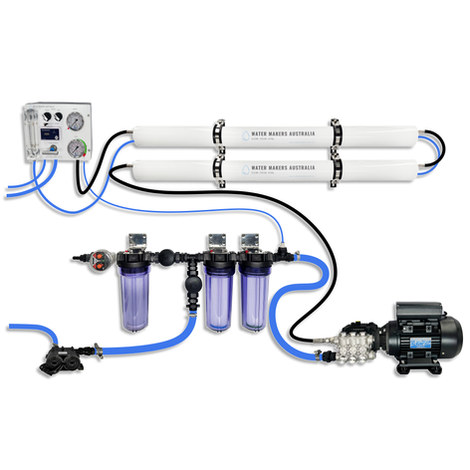
A two-membrane modular watermaker with 140 L/h nominal output, aimed at families and liveaboards that want more water per run.
Explore →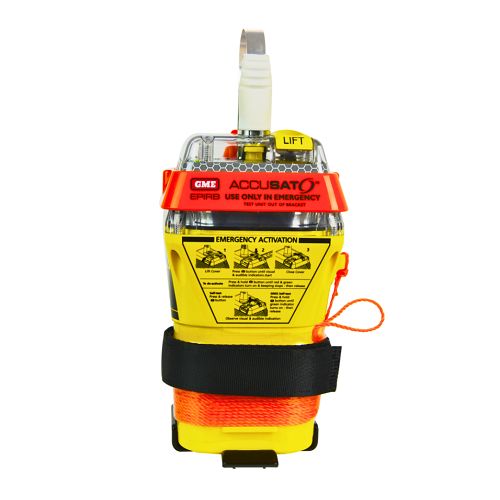
A 10‑year battery EPIRB with integrated GNSS (supports GPS and Galileo), infrared strobe and 121.5 MHz homing signal. Approved for worldwide COSPAS‑SARSAT operation.
Explore →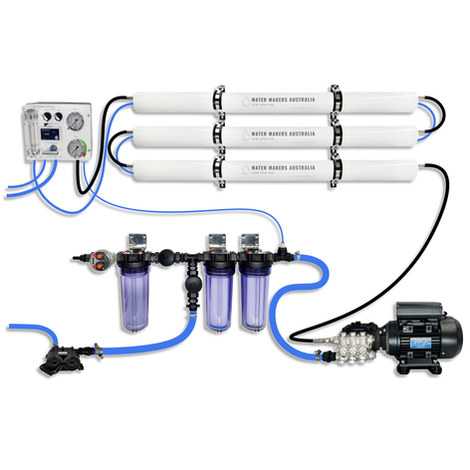
A three-membrane modular watermaker with 200 L/h nominal output and up to 240 L/h family-level marketing, for larger crews and heavy use.
Explore →