Loading this page…

Loading this page…
Sailing club
Concord & Ryde Sailing Club (CRSC) is a family-oriented sailing club on the Parramatta River based at Bennelong Park, Putney. Sailing has run here since 1945 with organised dinghy and catamaran racing (fleet classes including Firebug, Catamaran, Heron, Moth, NS14, Paper Tiger, Spiral, Tasar) typically on Saturdays at 14:00 during the season (September–April). The club offers extensive training programs and Learn to Sail courses for juniors and adults, maintains a clubhouse and canteen (open Saturdays 09:00 during the season), and runs community events and development activities.
About
Concord & Ryde Sailing Club (CRSC) is a family-oriented sailing club on the Parramatta River based at Bennelong Park, Putney. Sailing has run here since 1945 with organised dinghy and catamaran racing (fleet classes including Firebug, Catamaran, Heron, Moth, NS14, Paper Tiger, Spiral, Tasar) typically on Saturdays at 14:00 during the season (September–April). The club offers extensive training programs and Learn to Sail courses for juniors and adults, maintains a clubhouse and canteen (open Saturdays 09:00 during the season), and runs community events and development activities.
Service area: Putney, NSW — Parramatta River (between Putney and Rhodes)
Keep exploring
Concord & Ryde Sailing Club (CRSC) is a family-oriented sailing club on the Parramatta River based at Bennelong Park, Putney. Sailing has run here since 1945 with organised dinghy and catamaran racing (fleet classes including Firebug, Catamaran, Heron, Moth, NS14, Paper Tiger, Spiral, Tasar) typically on Saturdays at 14:00 during the season (September–April). The club offers extensive training programs and Learn to Sail courses for juniors and adults, maintains a clubhouse and canteen (open Saturdays 09:00 during the season), and runs community events and development activities.
The signature here is a complete club-owned training ladder that lets a family arrive with nothing and end up racing. Junior Learn to Sail, for ages 8 to 15, runs across eight consecutive Saturday mornings — Start Sailing 1, Start Sailing 2 and Better Sailing, each an eight-week block from 9am to midday — at $345 per child, with member, returning-sailor and family discounts and Active Kids vouchers accepted. Beginners start in Optimists and graduate to Firebugs, all supplied by the club. School holiday camps compress the Start Sailing 1 module into three consecutive days for families who can't commit to a full term.
Adults and teens over 15 get their own stream in the club's Spiral dinghy fleet, backed up by club Moths, with a pathway into two-handed sailing in the club's Herons — an arrangement pitched squarely at families learning together. The clever part is the exit ramp: course graduates can keep using club dinghies for the rest of that season in Intermediate lunchtime races, free of any extra charge subject to availability, so nobody finishes a course and then stalls for want of a boat.
As an Australian Sailing-accredited Discover Sailing Centre, the club delivers outcome-based courses on the national syllabus with qualified trainers. SheSails sessions cater to women, SailPass covers the introductory membership step, and the Making Waves partnership extends the club's reach to sailors who might not otherwise find their way to a start line. The training fleet has been purpose-bought for decades — archives record JH8 dinghies purchased specifically for instruction. It's a system refined over sixty years, since the 1964 Cadet Division introduced the club's first formal learn-to-sail course in Manly Juniors.
Bennelong Park, on the corner of Yaralla Road and Waterview Street in Putney, gives the club one of the roomier foreshore setups on the Parramatta River: an expansive grass rigging area, off-street parking for cars and trailers, and the river immediately in front. Getting there is straightforward — ten minutes from the M4's Homebush Bay exit, a ten-minute riverside walk from Meadowbank station, or five minutes on foot from the Kissing Point ferry wharf.
The racing water is the Parramatta River between Putney and Rhodes, a reach with genuine tactical character. Historic courses worked marks around Majors Bay, Brays Bay and Fischers Bay. Summer north-easterlies predominate — fleet accounts describe the "noreaster" building across race days — while light morning westerlies frequently surrender to it as the afternoon develops. Tides and still patches reward local knowledge, and there's a traffic consideration unique to this waterway: RiverCat ferries pass through the course area, and skippers learn early to allow for both the boats themselves and their wash.
The club has history on both banks. From its original base beside Ryde Bridge at Uhrs Point, rigging space eventually ran out, and for roughly twenty years the Herons and then the catamaran fleet trailered across to Kissing Point Park on the northern side — half the fleet rigging north, half south. The 1988 clubhouse at the present Putney site consolidated everything on one bank. Older members remember the river at its worst, when the Parramatta was effectively dead from pollution by the late 1960s; its regulated recovery since — marked for one member by the thrill of seeing a pelican return — is part of what sailing here now celebrates.
In the winter of 1945, parents from the Yarralla Sea Scouts met in a Concord back room and resolved to start a sailing club; forty-odd adults attended. The new body was christened the Concord and Rhodes Open Sailing Club, becoming Concord & Ryde Sailing Club in 1960 — a name kept even when a mooted 50th-anniversary rebrand to "Ryde Sailing Club" was rejected over clashing initials.
The early fleet was a motley collection of home-built skiffs sailing from a reserve beside Ryde Bridge, boats wheeled to the water on hand carts and buoys laid by rowboat; with an on-course umpire watching, any infringement meant instant disqualification. Members built their own VJs — roughly a thousand screws apiece — and by 1950 about forty VJs and VSs were racing weekly in A and B Divisions. The club's first boatshed on Uhrs Point Reserve went up around 1952 under Clive Ellis's guidance.
Skates arrived in the late 1950s, then big fleets of Herons and NS14s. The club hosted the annual interclub Uhrs Point Regatta, the traditional season opener in the VJ Central Branch championship, and its early-1970s VJ fleet of 20-odd boats produced champions like Greg and Craig Fryer's Retroflect.
Trouble had been brewing since the late 1950s, when the club learned the Department of Main Roads had resumed its reserve for future bridgeworks. On 17 July 1986 — remembered as D-Day — the club was given three weeks to vacate — mid-boom, with 127 boats registered and Saturday fleets running 80 to 100 strong. After a season sailed off the beach at Kissing Point Park, a basic new building went up at the eleventh hour, swallowing the club's entire savings; the present Putney clubhouse opened in 1988. The club's 75th season fell in 2020–21, and eighty years on the river arrived in 2025, counting among its alumni America's Cup measurer Ken McAlpine and Tasar world podium finisher Warwick Wood.
Adelaide’s metropolitan coast fronts the eastern side of Gulf St Vincent and mixes short, sheltered bay sailing around Holdfast Bay and the Patawalonga with more exposed, open-water sailing north toward Outer Harbour and along the Le Fevre Peninsula. The area suits a wide range of activity — sheltered day sails, club and trailer-sailer racing, short coastal cruising into the Fleurieu and Yorke Peninsula, and launch-and-home-port racing — but demands local knowledge about shipping channels, tidal flows in the Port River/Outer Harbour approaches, and seasonal wind patterns.

Look for a friendly club with beginner-focused training, accessible facilities and boats, a supportive community, clear safety practices, and opportunities to progress at your own pace.
Explore →
Late spring to summer is usually the best time for beginners to start learning to sail in Tasmania because the weather is generally warmer, days are longer and conditions are often more settled. Expect lighter to moderate winds with regular afternoon sea breees in summer, while spring and autumn bring more changeable and sometimes stronger conditions; winter is colder, wetter and typically windier with more fronts and swell.
Explore →
Pick a protected bay, estuary or river reach where you can rig, launch and arrive on calm water within a short, sheltered transit; choose a site with a good ramp or jetty, clear recovery options and a nearby sailing club, marina or commercial operator for local knowledge and help.
Explore →
A good float plan and a well-stocked emergency kit significantly improve your chances of a safe outcome when cruising remote parts of South Australia’s coastline. The float plan should give someone ashore all the information they need to find you and raise help if you don’t return; the emergency kit should allow you to stabilise the boat, care for injuries, signal for rescue and survive until help arrives.
Explore →
A practical guide for new sailors on picking the right Australian sailing club: training, boat access, racing, social fit, costs and the key questions to ask before joining.
Explore →Practical guide for recreational sailors planning passage on the Hawkesbury River: how to plan around tides, choose anchorages, read local conditions and prepare the boat and crew for a safe, comfortable trip.
Explore →A practical guide for recreational sailors planning visits to Albany and King George Sound. Covers the main anchorage areas, typical local weather patterns, tidal and current considerations, navigational hazards, on-the-water etiquette and a pre-departure checklist to help you plan a safe passage and enjoyable stopover
Explore →A practical guide for recreational sailors planning day sails or short cruises around Batemans Bay, Broulee and the Clyde River. Covers local conditions, safe approaches, anchorages, launching, tides, common hazards, and checklists for trip planning and on-water decisions.
Explore →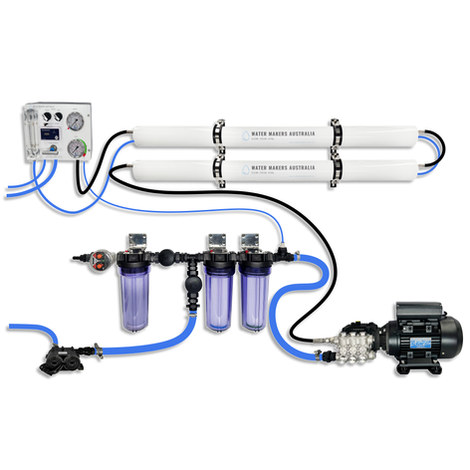
A two-membrane modular watermaker with 140 L/h nominal output, aimed at families and liveaboards that want more water per run.
Explore →Burke Yachtsman Gear Bag 40L - Shop Now Zip Pay | Tamar Marine Skip to content 59 – 63 Holbrook Street, Invermay Online Shop Open 24/7 Products search Contact us 1300 MARINE $ 0.00 0 Cart Burke Yachtsman Gear Bag 40L $ 79.90 Colour Choose an option Black Blue Black Blue Clear - Burke Yachtsman Gear Bag 40L quantity + Add to cart Enquire about this product SKU BAGB-Y24/BLACK* Category Bags - Sail & Gear A Burke classic and customer favourite, the Yachtsman’s Gear Bag is built tough to handle wet, salty conditions while keeping your gear dry and protected. Made from double coated waterproof…
Explore →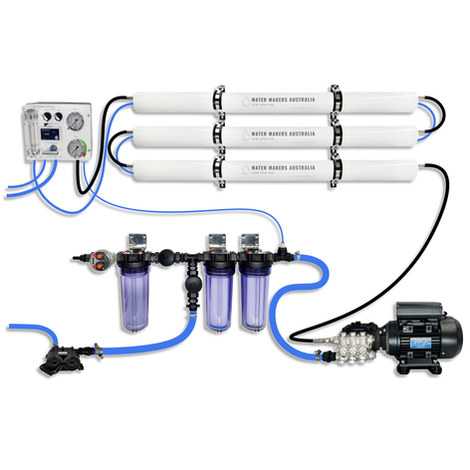
A three-membrane modular watermaker with 200 L/h nominal output and up to 240 L/h family-level marketing, for larger crews and heavy use.
Explore →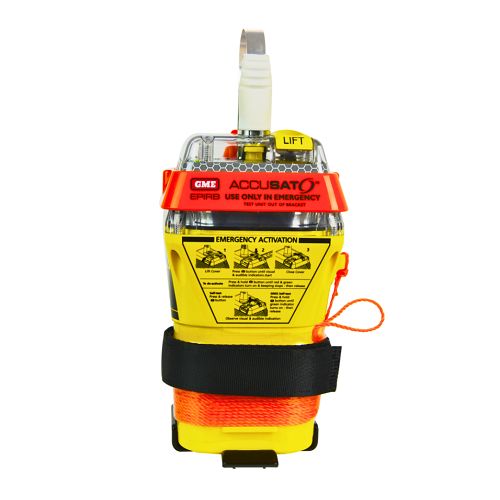
A 10‑year battery EPIRB with integrated GNSS (supports GPS and Galileo), infrared strobe and 121.5 MHz homing signal. Approved for worldwide COSPAS‑SARSAT operation.
Explore →